This One Thing Could Wreck Your Mortgage — Are You Prepared for the July Fed Meeting?
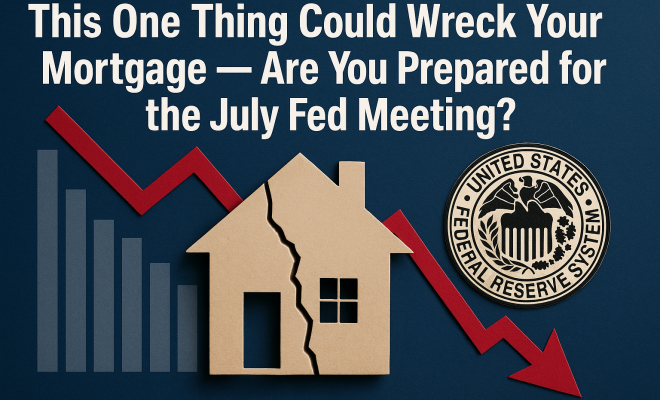
The air is thick with anticipation, almost crackling, as we hurtle towards the Federal Reserve’s next policy gathering. While it might sound like just another bureaucratic meeting on a calendar, the truth is, the July Fed meeting, scheduled for July 28-29, has morphed into something far more consequential. What was once considered a routine affair, likely to see the central bank holding steady on interest rates, has suddenly become a high-stakes showdown. Why? Because persistent inflation, fueled in no small part by escalating energy prices, has thrown a wrench into the works, forcing financial markets to seriously price in the possibility of an interest rate hike.
This isn’t just Wall Street chatter; it’s a palpable shift in sentiment that directly impacts your wallet, particularly if you own a home or dream of buying one. The ripple effects are already being felt, and the potential for a rate increase at the July Fed meeting is sending shivers down the spines of many. We’re talking about direct consequences for mortgage rates, the housing market, and even the broader economic landscape. Understanding what’s truly at stake here, and how policymakers are grappling with this complex economic puzzle, is crucial for anyone trying to navigate these turbulent financial waters.
The Unsettling Turn: From Steady Holds to Hike Speculation
Just a few short weeks ago, the consensus among economists and market watchers was that the Fed would likely maintain its current interest rate trajectory. The narrative was one of cautious optimism, perhaps even a sense that the worst of the inflationary pressures were behind us. Fast forward to today, and that sentiment has evaporated. The latest economic data, particularly concerning inflation and energy costs, has painted a starkly different picture, one that suggests the fight against rising prices is far from over.
This dramatic pivot isn’t a random occurrence; it’s a direct response to tangible economic realities. We’ve seen consumer price indices continue their upward march, defying earlier predictions of a swift return to normalcy. Energy prices, a particularly volatile component, have been a significant driver, impacting everything from your gas tank to the cost of manufacturing goods. When the price of oil spikes, it doesn’t just affect your commute; it creates a cascade of inflationary pressures throughout the supply chain, inevitably reaching your local supermarket and beyond. This confluence of factors has pushed the Fed’s hand, making the July Fed meeting an unavoidable focal point for a potential policy shift.
Inflation’s Stubborn Grip: Why 2% Feels So Far Away
The Federal Reserve has a dual mandate: to achieve maximum employment and maintain price stability, which it generally defines as 2% annual inflation. For a while, it seemed like inflation might naturally decelerate towards that target. However, recent readings indicate a stubborn persistence that’s making policymakers increasingly uncomfortable. We’re not just talking about transient supply chain issues anymore; there are deeper, more entrenched inflationary forces at play.
Consider the core inflation metrics, which strip out volatile food and energy prices. Even these indicators have shown an unwillingness to cool down as rapidly as desired. This suggests that the inflationary impulse isn’t solely external; it’s also being driven by domestic demand, wage growth, and perhaps even inflationary expectations becoming embedded in the economic psyche. Fed officials, including influential voices like former Fed Chair Kevin Warsh, have openly expressed their growing concern about getting inflation back to that 2% sweet spot. Their public statements and internal discussions underscore the gravity of the situation, signaling that the Fed is ready to act decisively if necessary. The July Fed meeting will be their opportunity to demonstrate that commitment.
The Mortgage Market’s Jitters: A 17-Basis-Point Jump
If you’re a homeowner contemplating a refinance, or a prospective buyer eyeing the market, you’ve likely felt the tremors already. The mere speculation of a rate hike at the July Fed meeting has been enough to send mortgage rates climbing. As of July 26, 2026, we’ve already witnessed a notable 17-basis-point rise in rates for 30-year refinance loans. While 17 basis points might sound like a small number to some, it translates into real money over the life of a loan. On a $400,000 mortgage, that could mean hundreds of dollars more per month, and tens of thousands over 30 years.
This isn’t just an abstract financial statistic; it’s a direct blow to affordability and a source of considerable urgency for many. Homeowners who were on the fence about refinancing are now scrambling to lock in rates before they climb even higher. First-time buyers, already struggling with elevated home prices, face an additional hurdle as their purchasing power diminishes with each rate increase. The housing market, which has been a significant driver of economic activity, is now feeling the squeeze, and the outcome of the July Fed meeting will undoubtedly set its trajectory for the foreseeable future.
Why This Matters to You: Direct Impact on Personal Finances
Let’s be clear: the Fed’s decisions aren’t just for economists and traders. They have a profound and immediate impact on your personal finances. An interest rate hike at the July Fed meeting would touch nearly every aspect of your financial life. Beyond mortgages, think about credit card rates, which are often tied to the prime rate and would likely tick up. Car loans, personal loans, and even some student loan rates could see increases, making borrowing more expensive across the board.
For savers, there’s a silver lining: higher interest rates typically mean better returns on savings accounts, CDs, and money market funds. However, for the majority of households that carry some form of debt, a rate hike represents an increase in their monthly obligations. This can strain household budgets, especially for those already grappling with the rising cost of living due to inflation. It’s a delicate balancing act the Fed attempts to manage, but for individuals, the impact is very real and often requires swift financial adjustments.
The Global Context: Energy Prices and Geopolitical Tensions
It’s impossible to discuss inflation and the potential for a rate hike without acknowledging the broader global context. Energy prices, as mentioned, are a major culprit, and their volatility is often intertwined with geopolitical tensions. Supply disruptions, conflicts, and even policy decisions in major oil-producing nations can send shockwaves through global markets, directly impacting the price you pay at the pump and for your utility bills. (See: Federal Reserve official website.)
Furthermore, the strength of the U.S. dollar, influenced by interest rate differentials, also plays a role. A stronger dollar can make imports cheaper, potentially easing some inflationary pressures, but it can also hurt U.S. exports. The Fed must weigh these intricate global dynamics when making its decisions, recognizing that domestic policy choices don’t occur in a vacuum. The ongoing situation in Eastern Europe, for instance, continues to exert upward pressure on energy and food commodities worldwide, complicating the Fed’s task leading up to the July Fed meeting.
The Fed’s Dilemma: Taming Inflation Without Crushing Growth
This is the tightrope act the Federal Reserve constantly performs. Raising interest rates is the central bank’s primary tool for combating inflation. By making borrowing more expensive, they aim to cool down demand, slow economic activity, and bring prices back into line. However, push too hard, and you risk tipping the economy into a recession, leading to job losses and economic hardship. This is the ‘soft landing’ everyone hopes for but few central banks truly achieve.
Fed Chair Jerome Powell and his colleagues are acutely aware of this precarious balance. Their public remarks often emphasize their commitment to price stability, but always with an undercurrent of concern for economic growth and employment. The upcoming July Fed meeting will be a test of their resolve and their ability to interpret the latest data. Do they prioritize an aggressive stance against inflation, even if it means slowing the economy more significantly? Or do they opt for a more cautious approach, risking a longer period of elevated inflation? These are the difficult questions they grapple with, knowing that millions of livelihoods hang in the balance.
What to Watch For: Beyond the Headline Rate Hike
While the headline interest rate decision at the July Fed meeting will grab all the attention, it’s crucial to look beyond that single announcement. Pay close attention to the language used in the Fed’s accompanying statement. Any subtle shifts in tone or forward guidance can signal future policy intentions. For example, will they signal that more hikes are coming, or suggest a pause might be on the horizon? Markets scrutinize every word for clues.
Also, keep an eye on the updated economic projections, often released quarterly. These include the Fed’s forecasts for inflation, unemployment, and GDP growth. Changes in these projections can offer insight into how the Fed views the economic landscape and the likely path of interest rates. Finally, watch the press conference with the Fed Chair. This is where he explains the rationale behind the decisions and fields questions, often providing valuable context and clarification that can move markets.
Preparing Your Finances for the July Fed Meeting and Beyond
Given the uncertainty surrounding the July Fed meeting, now is an opportune time to review your personal financial situation. If you have adjustable-rate debt, such as certain mortgages or credit cards, consider strategies to mitigate the impact of rising rates. Could you refinance into a fixed-rate mortgage if rates are still palatable? Are there opportunities to pay down high-interest credit card debt?
For those looking to buy a home, it might be wise to get pre-approved for a mortgage soon, as pre-approvals often lock in a rate for a certain period. Keep a close eye on ‘mortgage rates today’ and ‘refinance options’ searches, as these will reflect market sentiment in real-time. Even for those without immediate debt concerns, understanding the broader economic implications can help you make informed decisions about investments and savings. The goal isn’t to panic, but to be proactive and prepared for whatever the Fed decides.
The Housing Market’s Future: A Viral Concern
The interplay between the July Fed meeting, interest rates, and the housing market is why this topic has gone viral. Searches for ‘housing market forecast’ are through the roof, and for good reason. A sustained period of higher mortgage rates can cool demand, potentially leading to slower home price appreciation or even price corrections in some areas. This can be a double-edged sword: while it might offer some relief to buyers struggling with affordability, it can also concern current homeowners who’ve seen their equity grow significantly.
Real estate investment platforms and mortgage lenders are keenly aware of this dynamic, which explains the high-CPC ads around these search terms. They’re vying for the attention of individuals facing immediate transactional and comparison-based decisions. The stakes are incredibly high for an industry that relies heavily on consumer confidence and affordable financing. The decisions made at the July Fed meeting will send clear signals about the future direction of housing, influencing everyone from first-time homebuyers to seasoned real estate investors.
Understanding the Mechanics: How Fed Rate Hikes Work
It’s one thing to know the Fed might raise rates, but it’s another to understand the actual mechanism. When the Federal Reserve announces an interest rate hike, they’re specifically referring to the federal funds rate. This is the target rate for overnight borrowing between banks. It’s not a rate that directly applies to consumers, but it serves as a crucial benchmark for the entire financial system.
Here’s how it ripples out: When the federal funds rate increases, banks suddenly face higher costs for borrowing money from each other. To maintain their profit margins, they pass these increased costs onto their customers. This is why you see the prime rate, which is the interest rate banks charge their most creditworthy customers, move in lockstep with the federal funds rate. From the prime rate, other consumer lending rates like those for credit cards, personal loans, and adjustable-rate mortgages are derived. So, while you won’t get a direct bill from the Fed, their action at the July Fed meeting will indirectly adjust the cost of almost all forms of credit you use.
Historical Precedents: Lessons from Past Tightening Cycles
This isn’t the first time the Fed has faced a challenging inflationary environment. Looking back at historical tightening cycles can offer some perspective, though every economic situation has its unique nuances. For example, the early 1980s saw former Fed Chair Paul Volcker implement aggressive rate hikes, pushing the federal funds rate to nearly 20% to conquer rampant inflation. While successful, it triggered a severe recession.
More recently, the Fed undertook a tightening cycle from 2004 to 2006, gradually raising rates to cool an overheating housing market. The aftermath, as we know, was the 2008 financial crisis. The current situation is often compared to the late 1990s, where the Fed managed to achieve a relatively soft landing amidst strong economic growth. Each era presents different challenges and tools. The key takeaway is that the Fed’s actions have profound consequences, and the July Fed meeting is part of a delicate dance that policymakers have rehearsed many times, albeit with varying results. (See: Understanding inflation and its effects.)
Expert Perspectives: Diverging Views on the Path Ahead
While there’s a broad consensus that inflation is a problem, the exact remedies and the Fed’s optimal path forward are subjects of intense debate among economists and market strategists. Some, often referred to as “hawks,” argue that the Fed has been too slow to act and needs to aggressively raise rates to regain control of inflation, even if it means risking a recession. They point to the risk of inflation becoming entrenched, which could be even more damaging in the long run.
On the other side are the “doves,” who advocate for a more cautious approach. They worry that aggressive tightening could prematurely stifle economic growth and lead to unnecessary job losses, especially if some inflationary pressures prove to be transitory. They might suggest that supply-side issues, which the Fed can’t directly control, are still a major factor. The discussions leading up to and during the July Fed meeting will undoubtedly reflect these internal tensions and differing economic philosophies among the Fed governors.
The Labor Market’s Role: A Key Indicator for the Fed
Beyond inflation, the state of the labor market is a critical piece of the puzzle for the Fed. With an unemployment rate near historical lows, the job market is considered tight. While strong employment is generally a good thing, a super-tight labor market can contribute to wage inflation. If employers are constantly competing for workers, they might offer higher wages, which can then be passed on to consumers as higher prices for goods and services, creating a wage-price spiral.
The Fed will be closely scrutinizing employment data, including wage growth figures, leading up to the July Fed meeting. A slight cooling in the labor market might be seen as a positive sign that inflationary pressures are easing without a significant rise in unemployment. However, any signs of a sharp slowdown in job creation could complicate the Fed’s tightening plans, forcing them to balance their dual mandate even more carefully.
Quantitative Tightening: Another Tool in the Fed’s Arsenal
It’s not just about interest rates. The Fed also has another powerful tool: quantitative tightening (QT). This involves reducing the size of its balance sheet by letting maturing bonds roll off without reinvesting the proceeds. During periods of economic stress, the Fed often engages in quantitative easing (QE), buying up vast amounts of government bonds and mortgage-backed securities to inject liquidity into the financial system and keep long-term interest rates low.
Now, with inflation high, the reverse is happening. QT essentially removes money from the financial system, putting upward pressure on long-term interest rates and further cooling demand. The pace and scale of QT are significant considerations. While less direct than a rate hike, it adds another layer of monetary tightening that complements interest rate increases. The July Fed meeting statement might offer updates or further details on the Fed’s QT plans, which could have implications for bond markets and, indirectly, for mortgage rates.
Navigating the Communication Challenge: Managing Market Expectations
A crucial aspect of the Fed’s role is its communication strategy. The central bank aims to be transparent and predictable in its actions to avoid unnecessary market volatility. This is why you often hear Fed officials giving speeches and interviews, attempting to telegraph their intentions well in advance of key meetings like the July Fed meeting.
However, unexpected economic data or sudden shifts in the global landscape can make this communication challenging. If market expectations for a rate hike are firmly set, and the Fed delivers as expected, the impact might be less dramatic. If the Fed surprises the market, either by hiking more aggressively or by taking a more dovish stance than anticipated, it can lead to significant market reactions. Managing these expectations is a constant balancing act, and every word in the post-meeting statement and press conference is carefully chosen to convey the Fed’s thinking.
Frequently Asked Questions About the July Fed Meeting
Q: What is the Federal Reserve, and what does it do?
A: The Federal Reserve is the central banking system of the United States. Its primary roles include conducting monetary policy to promote maximum employment and stable prices, supervising and regulating banks, and maintaining the stability of the financial system. It’s often referred to as “the Fed.”
Q: What is the federal funds rate?
A: The federal funds rate is the target interest rate set by the Federal Open Market Committee (FOMC), the Fed’s policymaking body. It’s the rate at which commercial banks borrow and lend their excess reserves to each other overnight. While not a direct consumer rate, it influences all other interest rates in the economy.
Q: Why is inflation such a big concern right now?
A: Inflation means that the purchasing power of money is decreasing, and prices for goods and services are rising. When inflation is high and persistent, it erodes savings, makes it harder for households to afford necessities, and creates economic uncertainty. The Fed aims for about 2% annual inflation, as that’s generally considered healthy for economic growth. (See: BBC coverage on interest rates.)
Q: How does a Fed interest rate hike affect my mortgage?
A: If you have an adjustable-rate mortgage (ARM), your interest rate and monthly payments will likely increase shortly after the Fed hikes rates. If you have a fixed-rate mortgage, your existing payments won’t change, but new fixed-rate mortgages will become more expensive, impacting those looking to buy or refinance.
Q: What about my credit card debt?
A: Most credit card interest rates are variable and tied to the prime rate, which moves with the federal funds rate. So, if the Fed raises rates, you can expect the interest rate on your credit card balances to increase, making your monthly payments (if you carry a balance) more expensive.
Q: Will a rate hike make my savings account earn more?
A: Generally, yes. When interest rates rise, banks tend to offer higher interest rates on savings accounts, certificates of deposit (CDs), and money market accounts to attract deposits. However, the increase might be modest and could take some time to fully materialize.
Q: What is a “soft landing” and why is it so hard to achieve?
A: A “soft landing” refers to the Fed successfully slowing down the economy to curb inflation without causing a recession and significant job losses. It’s difficult because monetary policy has a delayed and often unpredictable impact. The Fed has to tighten just enough to cool demand but not so much that it triggers a sharp downturn.
Q: What’s the difference between core inflation and headline inflation?
A: Headline inflation measures the total inflation in the economy, including all goods and services. Core inflation, on the other hand, excludes volatile food and energy prices. Economists often look at core inflation to get a clearer picture of underlying inflationary trends, as food and energy prices can fluctuate wildly due to external factors.
Q: What is “forward guidance” from the Fed?
A: Forward guidance refers to the Fed’s communication about the likely future path of monetary policy. By providing guidance, the Fed aims to influence market expectations and ensure that its actions are understood. This can come in the form of statements, meeting minutes, and speeches by Fed officials.
Q: How often does the Fed meet to discuss interest rates?
A: The Federal Open Market Committee (FOMC) holds eight regularly scheduled meetings per year, approximately every six weeks. They can also hold unscheduled meetings if economic conditions warrant immediate action.
As we approach the July Fed meeting, the financial world holds its breath. The shift from a likely steady hold to a potential rate hike underscores the dynamic and often unpredictable nature of economic forces. Inflation’s persistence, driven by a complex mix of factors including energy prices, has forced the Federal Reserve’s hand, placing immense pressure on policymakers to act. Whether they opt for an aggressive hike or a more measured approach, the ripple effects will be felt far and wide, touching everything from your mortgage payment to the broader health of the economy. Staying informed and preparing your finances now isn’t just smart; it’s essential.
Trending Now
Frequently Asked Questions
What will happen to mortgage rates if the Fed raises interest rates?
If the Federal Reserve raises interest rates, mortgage rates are likely to increase as well. Higher interest rates can lead to more expensive borrowing costs for homebuyers, making mortgages less affordable and potentially cooling down the housing market.
Why is the July Fed meeting so important for homeowners?
The July Fed meeting is crucial for homeowners because it could result in an interest rate hike due to persistent inflation. This decision directly impacts mortgage rates, which can affect affordability and the overall housing market.
How does inflation affect mortgage rates?
Inflation can lead to higher mortgage rates as the Federal Reserve may respond by increasing interest rates to combat rising prices. This makes borrowing more expensive for homebuyers and can slow down the housing market.
What economic factors are influencing the Fed's decision?
The Fed's decision is influenced by persistent inflation, particularly driven by rising energy prices. Economic data indicating ongoing inflationary pressures has shifted expectations towards a potential interest rate hike.
What should homebuyers do in anticipation of the Fed meeting?
Homebuyers should stay informed about the Fed's decisions and consider locking in mortgage rates if they anticipate a rate hike. Understanding the economic landscape can help in making informed decisions about purchasing a home.
Agree or disagree? Drop a comment and tell us what you think.