Car-Sized Asteroid 2025 GL to Safely Pass Earth in 2026
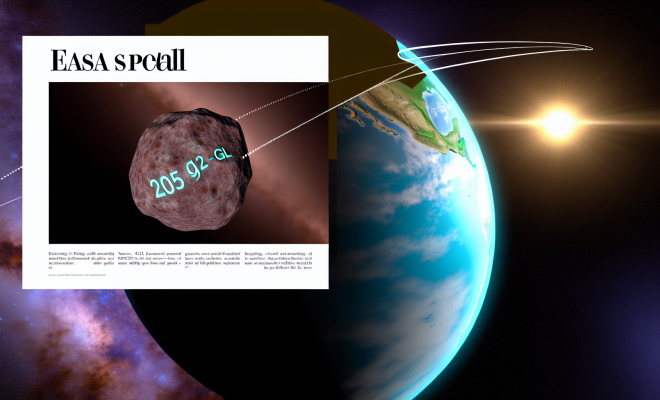
In an exciting development for space enthusiasts, NASA has confirmed that a small asteroid named 2025 GL will make a close approach to Earth on April 3, 2026. Measuring approximately 14 feet across, this car-sized celestial body poses no threat to our planet as it will pass at a distance of about 2.33 million miles—nearly ten times the distance from the Earth to the Moon.
Monitoring the Path of Asteroid 2025 GL
Asteroid 2025 GL has garnered attention not only due to its size but also because of the robust tracking efforts by NASA. The space agency has been keeping a close watch on the asteroid’s trajectory to ensure public safety. With advancements in technology and observation techniques, scientists are now able to closely monitor the orbits of near-Earth objects, allowing for accurate predictions of their paths.
What We Know About 2025 GL
Asteroid 2025 GL, classified as a near-Earth object (NEO), is part of a larger group of asteroids that orbit our Sun and occasionally come close to Earth. Here are some key details about this particular asteroid:
- Size: Approximately 14 feet (4.2 meters) in diameter.
- Passage Date: April 3, 2026.
- Closest Distance: 2.33 million miles (3.75 million kilometers).
- Classification: Near-Earth Object (NEO).
Significance of Close Approaches
While 2025 GL poses no risk of collision, its approach is a reminder of the importance of monitoring NEOs. Close encounters with asteroids provide valuable opportunities for scientists to study these celestial bodies, which can offer insights into the solar system’s formation and evolution. Understanding the composition and behavior of asteroids helps scientists prepare for potential future threats while also paving the way for future exploration missions.
Navigating the Risks of Near-Earth Objects
NASA has implemented several programs to track and study near-Earth objects, with the ultimate goal of identifying any that could pose a risk to Earth. The agency employs advanced telescopes and radar systems to detect and analyze the trajectories of asteroids like 2025 GL. Here’s a closer look at the efforts involved:
- Detection: Using powerful telescopes, scientists scan the skies for new NEOs.
- Tracking: Once detected, the trajectories of asteroids are calculated and monitored.
- Characterization: Understanding the physical and chemical properties of asteroids helps assess potential risks.
- Mitigation: If a threat is identified, plans can be devised to deflect or divert the asteroid.
Public Engagement and Transparency
NASA’s commitment to transparency ensures that the public is informed about the movements of NEOs like 2025 GL. Through regular updates and accessible data, the agency aims to foster public interest in space science and education. This engagement is crucial, as it helps demystify the complexities of space while also promoting awareness of the potential threats posed by larger asteroids.
The Future of Asteroid Research
Looking ahead, the study of asteroids will remain a vital area of research for scientists. As technology advances, our ability to detect and analyze these objects will improve, leading to greater understanding and preparedness for any future encounters. NASA plans to launch various missions targeting asteroids, including the DART (Double Asteroid Redirection Test) mission, which aims to test methods for asteroid deflection.
Conclusion
As April 3, 2026 approaches, the close passage of 2025 GL serves as a reminder of the dynamic nature of our solar system and the need for continued vigilance in monitoring near-Earth objects. With no risk of collision, this event is a perfect opportunity for the scientific community and the public alike to celebrate space exploration and the ongoing efforts to understand our cosmic neighborhood. NASA’s careful tracking of 2025 GL underscores the agency’s dedication to ensuring the safety of our planet while unraveling the mysteries of the universe.