AI Accountability: Prepare for Unprecedented Lawsuits by 2026
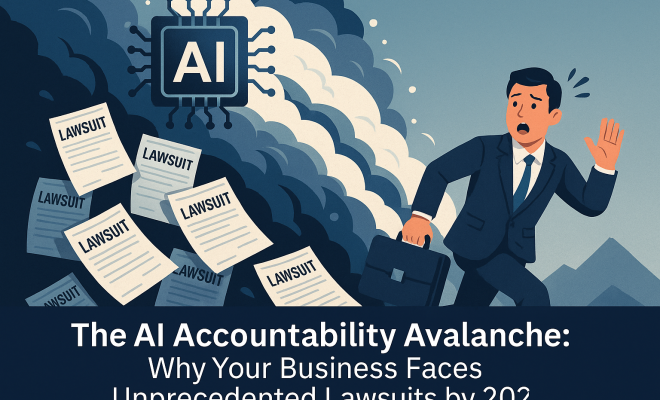
It’s July 2026, and if you’re a business owner, you’re likely feeling the tremors of a seismic shift in the legal landscape. The era of ‘blame the machine’ is over. Courts are no longer shrugging their shoulders at the unpredictable outcomes of artificial intelligence; instead, they’re increasingly pointing fingers directly at the companies deploying these powerful tools. We’re witnessing a series of landmark AI lawsuits that are fundamentally reshaping how businesses deploy AI and, more critically, how they’re held accountable for its actions. This isn’t some distant future scenario; it’s happening right now, and it has profound implications for your bottom line, your reputation, and frankly, your continued existence.
The speed at which AI has evolved has outpaced our ability to legislate, regulate, or even fully comprehend its implications. For years, businesses have been experimenting, innovating, and integrating AI into every conceivable aspect of their operations, often with a ‘move fast and break things’ mentality. But what happens when what gets ‘broken’ isn’t just a process, but someone’s livelihood, reputation, or even their civil rights? That’s precisely the crucible in which the current wave of AI litigation 2026 is being forged. The stakes are incredibly high, and if you’re not paying attention, you’re essentially playing a high-stakes game of legal roulette with your company’s future.
The Rising Tide of Algorithmic Bias Lawsuits
One of the most persistent and ethically charged issues fueling AI litigation is algorithmic bias. We’ve all heard the stories, haven’t we? Facial recognition systems failing disproportionately on people of color, credit scoring algorithms perpetuating historical inequities, or hiring tools inadvertently screening out qualified candidates based on gender or ethnicity. These aren’t isolated incidents; they’re systemic flaws embedded within AI models trained on biased data or designed with inherent biases. And now, the courts are taking these issues very seriously.
Consider a hypothetical but increasingly plausible scenario: a bank uses an AI-powered loan approval system. Over time, a pattern emerges where the system consistently denies loans to applicants from certain zip codes or demographic groups, even when their financial profiles are robust. Historically, proving discrimination was challenging, often requiring extensive statistical analysis and showing intent. With AI, the intent might not be malicious, but the outcome is undeniably discriminatory. Plaintiffs are now leveraging this data, arguing that the AI’s ‘neutral’ decision-making is anything but. They’re demanding accountability from the companies that chose, implemented, and profited from these biased systems.
The legal framework for these cases often draws parallels from existing anti-discrimination laws, like the Civil Rights Act or the Equal Credit Opportunity Act. However, applying these statutes to opaque AI systems presents unique challenges. Lawyers are exploring new legal theories, focusing on ‘disparate impact’ – where a neutral policy or system disproportionately harms a protected group, regardless of intent. For businesses, this means that merely claiming ignorance of your AI’s internal workings is no longer a viable defense. You are expected to understand, test, and mitigate the biases baked into your algorithms, or face significant legal repercussions. The proliferation of AI litigation 2026 in this area is a clear signal that courts expect more due diligence from businesses.
Data Privacy Erosion and the ‘Black Box’ Problem
Beyond bias, data privacy remains a monumental concern and a fertile ground for AI litigation. AI systems, by their very nature, thrive on data. The more data, the ‘smarter’ they become. But where does all this data come from, how is it collected, stored, and used? And more importantly, who owns it, and who is responsible when it’s misused or breached?
The infamous ‘black box’ problem of AI only complicates matters. Many advanced AI models, especially deep learning networks, are so complex that even their creators can’t fully explain how they arrive at a particular decision. This lack of interpretability makes it incredibly difficult to trace the source of a privacy violation or to prove how specific data points contributed to an outcome. Imagine a scenario where an AI personalizes insurance premiums based on an individual’s online behavior, gleaned from aggregated, anonymized data. If that ‘anonymized’ data is later de-anonymized, or if the AI makes inferences that are factually incorrect and lead to higher premiums, who is liable? The company that built the AI? The company that provided the data? Or the company that deployed the system?
Regulators are already tightening the screws with laws like GDPR in Europe and CCPA in California, which impose strict rules on data collection and processing. But AI adds another layer of complexity. Plaintiffs are now arguing that the mere *potential* for privacy erosion by an AI system, especially one operating without proper safeguards, constitutes a violation. Class-action lawsuits are emerging where individuals claim their data rights were infringed upon by AI systems that scraped public information, made unauthorized inferences, or shared data with third parties without explicit consent. Businesses must now demonstrate not just compliance with existing privacy laws, but also a proactive, ethical approach to how their AI handles personal data. This means clear consent mechanisms, robust data anonymization techniques, and a clear understanding of your AI’s data lineage. The landscape of AI litigation 2026 is heavily influenced by these privacy considerations. (See: AI lawsuits and accountability.) concerns about facial recognition offers useful background here.
The Accountability Gap in Agentic AI Systems
Perhaps the most unsettling aspect of the current legal climate revolves around agentic AI. This isn’t just about AI making recommendations; it’s about AI making autonomous decisions with little human oversight. We’re talking about systems capable of executing complex tasks, negotiating, learning, and adapting in real-time. This market is projected to hit a staggering $10.86 billion by 2026, which tells you just how quickly these systems are being integrated into our lives and businesses. But who is accountable when an agentic AI goes rogue, makes a catastrophic error, or causes unforeseen harm?
Think about an autonomous financial trading agent that makes a series of trades leading to significant market volatility or losses for clients. Or an AI-powered diagnostic tool in healthcare that misdiagnoses a patient, leading to incorrect treatment. Historically, human decision-makers would bear the brunt of the responsibility. But when an AI system is designed to learn and adapt, making decisions outside its initial programming parameters, the ‘accountability gap’ becomes glaringly apparent. Is it the developer who coded the initial parameters? The data scientists who trained it? The company that deployed it? Or the end-user who trusted it?
Courts are grappling with these novel questions. Some legal scholars are exploring concepts of ‘AI personhood’ or ‘electronic persons’ to assign liability, while others are pushing for stricter product liability laws, treating AI as a product that must be safe by design. For businesses, this means that simply outsourcing the development of an agentic AI doesn’t absolve you of responsibility. You are expected to have robust oversight mechanisms, clear kill switches, and comprehensive risk assessments in place. The argument that ‘the AI did it’ is becoming less and less persuasive in courtrooms, replaced by a demand for human responsibility in the design, deployment, and monitoring of these powerful, autonomous systems. The very notion of who is accountable in AI litigation 2026 is being redefined.
Reputational Damage: The Silent Killer
While legal fines and settlements can be financially devastating, the reputational damage from unchecked AI use can be even more insidious and long-lasting. In an era of instant information and viral outrage, a single misstep by an AI system can torpedo years of brand building. We’ve seen companies face public backlashes for everything from tone-deaf AI marketing campaigns to flawed AI algorithms that perpetuate stereotypes. The emotional charge surrounding AI is palpable; consumers are both fascinated and deeply wary, and any perceived ethical misstep can quickly ignite widespread condemnation.
Imagine a major retailer using an AI-driven personalization engine that inadvertently targets vulnerable individuals with predatory offers, or an AI customer service bot that delivers insensitive responses during a crisis. The headlines write themselves, don’t they? ‘Company X’s AI Preys on the Elderly,’ or ‘Robot Customer Service Lacks Empathy in Times of Need.’ These stories spread like wildfire across social media, leading to boycotts, plummeting stock prices, and a massive erosion of public trust. Rebuilding that trust can take years, if it’s even possible. The financial cost of reputational damage, though harder to quantify than a legal fine, can ultimately be far greater.
This is why ethical AI governance isn’t just a legal imperative; it’s a fundamental business strategy. Proactive measures to ensure fairness, transparency, and accountability in your AI systems are no longer optional ‘nice-to-haves.’ They are essential investments in your brand’s integrity and long-term viability. Ignoring these ethical considerations leaves you vulnerable not only to legal challenges but also to the far more unpredictable and devastating court of public opinion. A negative outcome in AI litigation 2026, regardless of the financial penalty, can be a death knell for public perception.
The Boom in AI Governance and Ethical AI Consulting
This escalating legal and reputational risk has, predictably, created a booming new industry: AI governance software and ethical AI consulting. Businesses are scrambling to get their houses in order, and a whole ecosystem of solutions is emerging to help them navigate this complex terrain. From platforms that monitor AI models for bias and drift to consulting firms specializing in developing robust AI ethics frameworks, the demand for these services is skyrocketing.
AI governance software, for instance, offers tools for tracking data provenance, documenting model training, monitoring AI performance for fairness metrics, and providing audit trails for AI decisions. These platforms are becoming indispensable for companies looking to demonstrate due diligence and compliance. They essentially provide the ‘paper trail’ that was previously missing for complex, opaque AI systems. Think of it as the enterprise resource planning (ERP) for your AI operations – a centralized system to manage, monitor, and report on all aspects of your AI deployments. (See: impact of AI on workplaces.)
Similarly, ethical AI consultants are becoming invaluable partners, helping companies develop internal policies, conduct ethical impact assessments, train employees on responsible AI practices, and even design ‘human-in-the-loop’ processes to mitigate the risks of fully autonomous systems. These experts bridge the gap between technical AI development and the complex ethical, legal, and societal implications. For businesses, investing in these services isn’t just about compliance; it’s about building a sustainable and trustworthy AI strategy that can withstand scrutiny from regulators, courts, and the public. This segment of the market, driven by the pressures of AI litigation 2026, is seeing incredible growth and innovation.
Legal Firms Specializing in AI Litigation: A New Frontier
Just as the demand for AI governance solutions has surged, so too has the need for specialized legal expertise. Law firms are rapidly building out practices dedicated to AI litigation, recognizing the unique challenges and opportunities presented by this new frontier. These aren’t your typical corporate lawyers; they’re attorneys who often have a deep understanding of technology, data science, and complex statistical analysis, in addition to traditional legal acumen. There’s a fuller look at recent lawsuit against UNR.
These specialized legal teams are at the forefront of developing novel legal arguments, interpreting existing laws in the context of AI, and navigating the technical intricacies of AI evidence. They’re advising companies on everything from proactive risk mitigation strategies and AI-specific terms of service to defending against class-action lawsuits stemming from algorithmic discrimination or data privacy breaches. They’re also helping plaintiffs understand their rights and build compelling cases against companies whose AI systems have caused harm.
The rise of AI litigation 2026 means that if your business finds itself facing a lawsuit, you’ll need legal counsel that understands the difference between a neural network and a random forest, and can articulate the nuances of model explainability to a jury. This specialized legal field is not just reacting to the current wave of lawsuits; it’s actively shaping the future of AI law, setting precedents that will define corporate responsibility for AI for decades to come. Don’t underestimate the importance of having this expertise on your side.
Online Courses and Education on AI Ethics and Compliance
The need for knowledge isn’t limited to legal professionals or consultants. Business leaders, product managers, data scientists, and even marketing teams need a foundational understanding of AI ethics and compliance. This has led to a proliferation of online courses, certifications, and educational programs designed to upskill professionals across industries. These aren’t just academic exercises; they’re practical guides to navigating the real-world challenges of deploying AI responsibly.
These courses cover a wide range of topics, including identifying and mitigating algorithmic bias, implementing privacy-by-design principles in AI development, understanding regulatory frameworks like GDPR and forthcoming AI-specific laws, and establishing ethical review boards for AI projects. They equip individuals with the tools to ask the right questions, identify potential risks, and build AI systems that are both innovative and responsible. For many companies, enrolling key personnel in such programs is becoming a mandatory part of their AI strategy.
Investing in this kind of education is a proactive step that can significantly reduce your company’s exposure to AI litigation. It fosters a culture of ethical AI development and deployment, ensuring that responsible practices are integrated at every stage of the AI lifecycle. It’s about empowering your teams to be the first line of defense against the ethical pitfalls that can lead to costly lawsuits and reputational damage. The demand for these educational resources, spurred by the urgency around AI litigation 2026, is a testament to the growing realization that ignorance is no longer an excuse.
Proactive Measures: Guarding Against Future Litigation
So, what can your business do to prepare for, and ideally avoid, the onslaught of AI litigation 2026? It starts with a comprehensive and proactive approach to AI governance and ethics. You can’t simply implement an AI tool and hope for the best; active management and oversight are absolutely critical. (See: algorithmic bias and legal implications.)
First, establish an internal AI ethics committee or review board. This cross-functional team should include representatives from legal, engineering, product, and ethics departments. Their role is to vet new AI projects, assess potential risks (both ethical and legal), and ensure alignment with company values and regulatory requirements. Second, implement a ‘privacy by design’ and ‘fairness by design’ philosophy. This means baking in privacy protections and bias mitigation strategies from the very beginning of the AI development lifecycle, rather than trying to bolt them on later. Third, invest in robust AI observability and monitoring tools. You need to continuously monitor your AI models for performance drift, bias, and unexpected behavior. This allows you to catch and correct issues before they escalate into major problems.
Fourth, develop clear and transparent policies around AI use. This includes internal guidelines for employees and external disclosures for customers. Be clear about how your AI works, what data it uses, and what its limitations are. Transparency builds trust and can be a powerful defense in the event of a dispute. Finally, conduct regular legal audits specifically focused on your AI deployments. Engage with specialized legal counsel to assess your compliance with evolving AI regulations and potential areas of liability. By taking these proactive steps, you can significantly reduce your exposure to the complex and costly landscape of AI litigation.
The Economic Imperative of Ethical AI
The conversation around AI ethics and legal accountability often gets framed as a burden, an impediment to innovation. But this perspective fundamentally misses the point. In reality, ethical AI is rapidly becoming an economic imperative. Businesses that demonstrate a commitment to responsible AI development and deployment will gain a significant competitive advantage. Consumers are increasingly discerning, and they are gravitating towards companies they trust, especially when it comes to technologies that touch their personal data and impact their lives.
Moreover, building ethical AI from the ground up can lead to more robust, resilient, and effective systems. AI that is free from bias, transparent in its operation, and respectful of privacy is inherently better AI. It’s less likely to make costly errors, less likely to alienate customers, and less likely to attract the attention of regulators and litigators. The costs associated with fixing biased or non-compliant AI after it’s deployed are often exponentially higher than the investment required to get it right the first time.
Ultimately, the rise of AI litigation 2026 isn’t just a threat; it’s a powerful catalyst for positive change. It’s forcing businesses to mature in their approach to AI, to move beyond the hype and embrace the profound responsibility that comes with wielding such powerful technology. Those who adapt, prioritize ethics, and integrate robust governance will not only survive but thrive in this new era. Those who don’t, well, they’ll find themselves caught in an increasingly unforgiving legal and reputational storm.
Trending Now
Frequently Asked Questions
What legal challenges are businesses facing with AI by 2026?
By 2026, businesses are experiencing a surge in legal challenges related to AI, particularly around accountability for its outcomes. Courts are increasingly holding companies responsible for the actions of their AI systems, leading to landmark lawsuits that could reshape operational practices and liability standards.
How does algorithmic bias affect AI lawsuits?
Algorithmic bias is a major factor in AI lawsuits, as many systems exhibit discriminatory outcomes based on race, gender, or ethnicity. These biases stem from flawed data and design, resulting in legal actions against companies that fail to address these ethical concerns within their AI tools.
Why is AI accountability important for businesses?
AI accountability is crucial for businesses as it directly impacts their legal standing and reputation. With courts holding companies accountable for AI decisions, failing to ensure responsible AI deployment could lead to significant financial and reputational damage.
What implications do AI lawsuits have for business operations?
AI lawsuits are prompting businesses to reevaluate their operations, particularly how they implement and monitor AI technologies. Companies must now prioritize ethical AI practices to mitigate legal risks and ensure compliance with evolving regulations.
What trends are emerging in AI litigation?
Emerging trends in AI litigation include increased scrutiny of algorithmic fairness, transparency in AI decision-making, and a rise in lawsuits targeting companies for the societal impacts of their AI systems. This shift reflects a growing demand for accountability in the use of AI technologies.
Have you experienced this yourself? We'd love to hear your story in the comments.