This Company’s Asteroid Mining Plan Could Spark a Trillion-Dollar Space Gold Rush
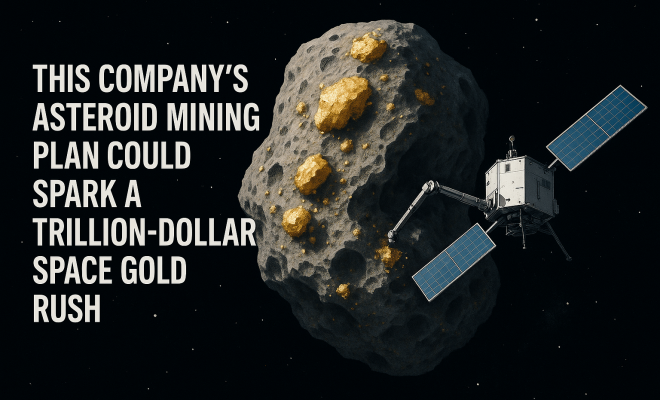
Imagine a future where the rarest, most valuable materials on Earth aren’t dug from precarious mines but plucked from the vast, silent expanse of space. It sounds like science fiction, doesn’t it? Yet, we’re on the precipice of that very reality. Private companies, like the ambitious AstroForge, are gearing up to launch their deep-space asteroid mining missions as early as late 2026. Their target? The celestial bodies rich in platinum-group metals and other rare resources, potentially worth trillions of dollars. This isn’t just about resource extraction; it’s about a fundamental shift in our economic and technological landscape, igniting a ‘space gold rush’ that promises both unprecedented opportunity and profound ethical dilemmas. Understanding the financial commitment, particularly the asteroid mining mission cost 2026, is absolutely crucial for anyone looking to invest in, legislate, or simply comprehend this burgeoning frontier.
The stakes are astronomically high, both literally and figuratively. This impending scramble for extraterrestrial wealth has already sparked a fierce international debate over the ownership of these cosmic treasures. The United Nations Committee on the Peaceful Uses of Outer Space (COPUOS), the very body tasked with guiding humanity’s endeavors beyond Earth, finds itself paralyzed, caught between conflicting national interests. On one side, nations like the U.S., Luxembourg, and the UAE have enacted laws that boldly permit private companies to claim ownership of resources they extract from space. On the other, global powers like China and Russia vehemently argue that such unilateral claims violate the spirit and letter of the foundational 1967 Outer Space Treaty, demanding comprehensive global rules to ensure that any wealth derived from asteroids benefits all of humanity, not just a select few corporations or nations. This isn’t just a legal squabble; it’s a battle for the very soul of space exploration, pitting ‘cosmic colonialism’ against the ideal of shared prosperity. And as we’ll explore, the asteroid mining mission cost 2026 is just one piece of this incredibly complex, high-stakes puzzle.
The Dawn of the Space Gold Rush: What’s Driving It?
Why are we suddenly talking about mining asteroids when just a few decades ago it felt like pure fantasy? The answer lies in a potent mix of dwindling terrestrial resources, technological breakthroughs, and insatiable demand. Our modern world runs on rare metals. Think about your smartphone, your electric car, the medical devices that save lives, or the catalysts that power industrial processes – all rely heavily on elements like platinum, palladium, rhodium, and iridium, collectively known as platinum-group metals (PGMs). These aren’t just scarce; they’re often concentrated in politically unstable regions, making their supply chains vulnerable and their prices volatile.
Enter the asteroids. These ancient remnants of the solar system’s formation are, in many cases, cosmic treasure chests. Scientists have long theorized that certain types of asteroids, particularly M-type (metallic) asteroids, are incredibly rich in PGMs, nickel, iron, and other valuable minerals. Some estimates suggest a single mid-sized asteroid could contain more platinum than has ever been mined on Earth. The allure is obvious: a virtually limitless supply of critical resources, free from geopolitical instability and the environmental damage associated with terrestrial mining. This potential abundance is the primary driver behind ventures like AstroForge, and it’s why understanding the asteroid mining mission cost 2026 has become such a hot topic in investment circles.
Beyond the raw materials, there’s also the strategic advantage. Imagine being able to fuel spacecraft directly from water ice found on asteroids, or construct orbital habitats using asteroid-derived metals. This isn’t just about bringing resources back to Earth; it’s about enabling a self-sustaining space economy, reducing our reliance on expensive launches from Earth, and truly opening up the solar system for human expansion. The ‘space gold rush’ isn’t just about profit; it’s about pioneering the next frontier of human civilization.
AstroForge’s Ambitious Plan: Targeting the Trillions
AstroForge isn’t just a concept; it’s a company with concrete plans. They represent the vanguard of private enterprise venturing into deep-space resource extraction. Their strategy focuses on identifying and characterizing asteroids rich in platinum-group metals. The company’s approach is methodical: first, locate a promising target, then send a small, robotic probe to verify its composition, and finally, develop the technology to extract and refine the valuable materials. The ultimate goal is to bring these high-value resources back to Earth, or perhaps, for future missions, process them in space to support other orbital or lunar ventures.
The specific timeline of late 2026 for their deep-space launch is incredibly aggressive, showcasing the rapid pace of innovation and investment in this sector. This isn’t a government-led, decades-long endeavor; it’s a lean, agile private company aiming for a quick turnaround. Their focus on PGMs is smart, given their high market value and relatively small mass, which makes them economically viable to transport across vast distances. While the exact asteroid mining mission cost 2026 for AstroForge specifically isn’t public, their overall strategy gives us a window into the types of expenditures involved.
What makes AstroForge, and similar companies, so compelling to investors is the immense potential return. If even a fraction of the theoretical PGM wealth on asteroids can be successfully brought to market, the profits could indeed be in the trillions. This isn’t just about a good quarterly report; it’s about fundamentally altering global commodity markets. Of course, the challenges are equally immense, from the technical hurdles of deep-space operations to the complex legal and ethical landscape we’re still trying to define. But the sheer scale of the potential reward is what drives this pioneering spirit.
The Multi-Million Dollar Question: Asteroid Mining Mission Cost 2026
Let’s get down to brass tacks: what’s the financial outlay for such an audacious undertaking? The asteroid mining mission cost 2026 is, to put it mildly, substantial. We’re talking about figures that easily stretch into the hundreds of millions, if not billions, for a fully operational, end-to-end mission. This isn’t a single line item; it’s a complex tapestry of expenses covering everything from groundbreaking research and development to the actual launch and sustained operations in the unforgiving environment of deep space. (See: Asteroid mining on Wikipedia.)
While precise, publicly disclosed figures for private asteroid mining ventures are scarce – companies generally guard their financial specifics closely – we can extrapolate from the costs of deep-space probes and satellite launches by established space agencies and commercial providers. For context, even a relatively modest scientific mission to an asteroid, like NASA’s OSIRIS-REx, can cost upwards of $800 million when you factor in everything from development to operations. Commercial lunar landers, while closer than asteroids, still clock in at hundreds of millions. So, when considering the asteroid mining mission cost 2026, be prepared for figures that reflect the incredible complexity and risk involved.
Investors and stakeholders need to understand that this isn’t a short-term play. The initial capital investment is massive, and the return on investment will likely take years, if not decades, to fully materialize. However, the long-term potential for a virtually inexhaustible supply of rare resources is what makes the upfront asteroid mining mission cost 2026 a calculated risk for those with deep pockets and a vision for the future. For more context, see fundamental shifts in our economic landscape.
Breaking Down the Costs: From R&D to Re-entry
When we talk about the asteroid mining mission cost 2026, we’re really talking about several distinct, hefty components. Think of it like building a skyscraper: it’s not just the bricks and mortar, but the architects, engineers, permits, and ongoing maintenance. Space is no different, only far more demanding.
Technology Development and Research (R&D)
This is often the largest, and perhaps least visible, chunk of the initial investment. We’re talking about developing entirely new technologies that simply don’t exist yet, or adapting existing ones for unprecedented conditions. This includes:
- Propulsion Systems: Efficient, long-duration propulsion capable of interplanetary travel. Electric propulsion (ion thrusters) is often favored for deep space due to its fuel efficiency, but it requires significant power and development.
- Autonomous Robotics and AI: Since human intervention will be limited, the mining vehicles need to be highly autonomous, capable of navigating, analyzing asteroid composition, drilling, extracting, and processing materials with minimal human input. This demands sophisticated AI and robust robotics designed to withstand radiation and extreme temperatures.
- Resource Extraction and Processing Equipment: This is where the real innovation lies. How do you drill into an asteroid in zero gravity? How do you separate valuable metals from bulk rock in a vacuum? This requires specialized drills, crushers, refiners, and storage solutions, all miniaturized and hardened for space.
- Communication Systems: Reliable, high-bandwidth communication over millions of miles is essential for mission control. This means powerful antennas and sophisticated signal processing.
- Environmental Hardening: Every component must be designed to survive the harsh radiation, extreme temperatures, and vacuum of space for years on end. This involves specialized materials and rigorous testing.
The R&D phase alone for a company like AstroForge could easily run into the hundreds of millions of dollars, representing a significant portion of the total asteroid mining mission cost 2026.
Launch Expenses
Getting anything into space is incredibly expensive, and getting something into deep space is even more so. Launch costs are a significant, unavoidable part of the asteroid mining mission cost 2026.
- Rocket Selection: The choice of launch vehicle depends on the mass of the payload and the required trajectory. For deep-space missions, you typically need a heavy-lift rocket capable of providing the necessary escape velocity from Earth’s gravity. Companies like SpaceX (Falcon Heavy), ULA (Vulcan Centaur), or ArianeGroup (Ariane 6) offer these capabilities, but they come at a premium.
- Launch Services: Beyond the rocket itself, there are costs associated with mission integration, range services, ground support, and insurance.
A single launch on a heavy-lift rocket can range from $90 million to well over $150 million, depending on the provider and specific mission requirements. For a company like AstroForge, planning a deep-space launch in 2026, this will be one of the most visible and hefty line items.
Operational Budgets
Once the mission is launched, the expenses don’t stop. Sustained operations are critical and costly.
- Mission Control and Staffing: A dedicated team of engineers, scientists, and operators will need to monitor the spacecraft 24/7, command it, analyze data, and troubleshoot problems over years.
- Deep Space Network Usage: Communication with deep-space probes relies on networks like NASA’s Deep Space Network (DSN), which are shared resources but incur usage fees or collaborative agreements.
- Fuel/Propellant for Maneuvers: While ion thrusters are efficient, they still require propellant for course corrections, orbital insertion around the asteroid, and potentially for the return journey.
- Data Processing and Storage: The mission will generate vast amounts of data that need to be processed, analyzed, and stored.
- Contingency Planning: Space is unforgiving. Budgets must include substantial contingency funds for unexpected technical issues, mission extensions, or even partial mission failures.
These operational costs can easily add tens of millions of dollars annually over the multi-year lifespan of a deep-space mining mission.
Return Journey and Re-entry (If Applicable)
If the plan is to bring resources back to Earth, this adds another layer of complexity and cost.
- Return Vehicle Development: A specialized capsule or vehicle capable of carrying the extracted resources back through Earth’s atmosphere.
- Re-entry and Recovery Services: Precision targeting for re-entry, parachute systems, and ground recovery teams.
- Regulatory Compliance: Navigating international regulations for bringing extraterrestrial materials back to Earth.
While some missions might focus on in-situ resource utilization (ISRU) in space, for the initial high-value PGM missions, bringing materials back to Earth is often the primary goal, significantly impacting the overall asteroid mining mission cost 2026 and beyond. (See: NASA's asteroid mission overview.)
Investment Landscape and Financial Commitments
The sheer scale of the asteroid mining mission cost 2026 means that only a few players can truly participate at this nascent stage. We’re talking about venture capitalists with an appetite for extremely high-risk, high-reward ventures, well-funded private companies, and potentially even sovereign wealth funds or state-backed initiatives.
Companies like AstroForge are typically funded through multiple rounds of venture capital. They raise seed money for initial R&D and concept validation, then Series A, B, and C rounds as they hit technical milestones and move towards launch. Each round brings in more capital but also dilutes ownership for early investors. The promise of ‘trillions of dollars’ in potential returns is what keeps these investors engaged, despite the astronomical costs and inherent risks. It’s not unlike the early days of the internet or biotechnology, where massive upfront investments were required for uncertain, but potentially transformative, payouts. For more context, see financial implications of resource extraction.
Beyond private funding, government incentives and partnerships could also play a role. While the U.S. and other nations have passed laws allowing private ownership of space resources, direct government funding for commercial mining operations is less common. However, governments might support fundamental research, provide access to infrastructure (like the DSN), or offer tax incentives that indirectly reduce the asteroid mining mission cost 2026 for these pioneering companies. The financial commitment required is so vast that a collaborative ecosystem of public and private investment might ultimately be necessary to fully realize the potential of asteroid mining.
The Legal Battlefield: Who Owns the Cosmic Gold?
Here’s where things get really contentious, and it has direct implications for the viability and profitability of any asteroid mining mission cost 2026. The moment a company successfully extracts valuable resources from an asteroid, the question of ownership explodes. The 1967 Outer Space Treaty, the foundational document of space law, states that outer space, including the Moon and other celestial bodies, is ‘not subject to national appropriation by claim of sovereignty, by means of use or occupation, or by any other means.’ This was designed to prevent a land grab in space, ensuring it remains the ‘province of all mankind.’
However, the interpretation of ‘appropriation’ is where the current debate rages. Nations like the U.S., Luxembourg, and the UAE have argued that while nations cannot claim sovereignty over a celestial body, private entities *can* own the resources they extract from it. They draw an analogy to international waters: no nation owns the ocean, but a company can catch and own the fish within it. The U.S. Commercial Space Launch Competitiveness Act of 2015 explicitly grants U.S. citizens the right to ‘possess, own, transport, use, and sell’ space resources. Luxembourg and the UAE have followed suit with similar legislative frameworks.
China and Russia, among others, vehemently disagree. They argue that allowing private ownership of extracted resources is a de facto appropriation, undermining the spirit of the 1967 treaty and paving the way for ‘cosmic colonialism.’ They contend that space resources should be managed under a global regime, perhaps similar to the Law of the Sea Treaty, which designates deep-sea resources as the ‘common heritage of mankind’ and requires benefit-sharing. This isn’t just an academic debate; it’s a high-stakes geopolitical standoff with implications for international relations, economic power, and the future of humanity’s expansion into space. Until these legal frameworks are harmonized or a new international consensus emerges, any asteroid mining mission cost 2026 must also factor in the potential for legal challenges, diplomatic friction, and regulatory uncertainty.
Ethical Considerations: Cosmic Colonialism vs. Shared Prosperity
Beyond the legal framework, the ethical dimensions of asteroid mining are profound. The phrase ‘cosmic colonialism’ isn’t just rhetoric; it encapsulates a genuine concern that the benefits of space wealth could be concentrated in the hands of a few wealthy nations or corporations, exacerbating global inequalities. If rare resources become abundant from space mining, what happens to the economies of developing nations that currently rely on terrestrial mining of those same resources? Will the ‘space gold rush’ create a new class of space barons while leaving others behind?
The counter-argument, often put forward by proponents of private space resource utilization, is that expanding the resource base benefits everyone. Increased supply could drive down prices for critical materials, making them more accessible for technologies that improve lives globally, such as clean energy and advanced medicine. They also argue that private innovation is the fastest, most efficient way to unlock these resources, ultimately accelerating human progress.
However, the question remains: how do we ensure that the vast wealth potentially derived from asteroids contributes to shared prosperity? What mechanisms can be put in place to ensure fair access, benefit-sharing, and environmental stewardship (even of space environments)? These aren’t easy questions, and the paralysis at the UN Committee on the Peaceful Uses of Outer Space highlights the difficulty in finding common ground. As we approach 2026 and the prospect of actual asteroid mining becomes tangible, these ethical debates will only intensify, influencing public opinion, government policy, and potentially even the social license for these ventures to operate. For more context, see ethical dilemmas in technology.
Monetization Potential: Beyond the Platinum
The ‘space gold rush’ isn’t just about the direct extraction and sale of platinum. The entire ecosystem around asteroid mining presents significant monetization potential across various sectors. For investors, this opens up a range of opportunities that go beyond just buying shares in mining companies.
Consider the demand for specialized legal services for international space law. As the debate over resource ownership intensifies, companies and nations will need expert legal counsel to navigate the complex, evolving regulatory landscape. This is a high-CPC (Cost Per Click) niche that will see increasing demand. Similarly, consulting firms specializing in space economics, risk assessment for deep-space missions, and strategic planning for space resource utilization will find a robust market.
Then there’s the technology itself. The innovations required for asteroid mining – advanced robotics, AI, propulsion systems, materials science, 3D printing in space – have vast terrestrial applications. Companies developing these technologies, even if they don’t directly mine asteroids, stand to benefit from their spin-off potential. Think about the improvements in automation for terrestrial mining, or new materials for extreme environments, or even better deep-sea exploration tech. The market for resource extraction technology, both for space and Earth, will be a significant area for investment and business development. Furthermore, new financial instruments like ‘space investment funds’ or specialized commodity derivatives tied to extraterrestrial resources could emerge, appealing to high-net-worth individuals and institutional investors looking to diversify into this frontier market. The asteroid mining mission cost 2026 might be high, but the ripple effects of this industry could be truly transformative for numerous sectors.
The Road Ahead: Challenges and Optimism for Asteroid Mining in 2026
The journey to profitable asteroid mining is fraught with challenges, both technical and non-technical. On the technical front, we still need to perfect autonomous operations in deep space, develop efficient and scalable extraction and processing methods, and ensure the reliability of hardware over multi-year missions. The sheer distance to asteroids means communication delays and limited opportunities for human intervention, demanding unprecedented levels of autonomy and resilience from our robotic explorers.
Beyond the engineering hurdles, the legal and ethical dilemmas remain formidable. Until an internationally recognized framework for space resource utilization is established, there will be inherent risks for any company investing hundreds of millions in an asteroid mining mission cost 2026. The specter of geopolitical conflict, or even just legal disputes, could undermine the economic viability of these ventures. Public perception and the ‘social license’ to operate will also be critical; companies will need to demonstrate that their activities are conducted responsibly and for the broader benefit of humanity.
Yet, despite these formidable obstacles, there’s a powerful undercurrent of optimism. The potential rewards are simply too great to ignore. The drive for innovation, the allure of untold wealth, and the human spirit of exploration are powerful forces. Companies like AstroForge are not waiting for perfect conditions; they are forging ahead, pushing the boundaries of what’s possible. Their planned deep-space launch in late 2026 isn’t just a corporate milestone; it’s a pivotal moment in human history, marking our serious entry into the era of extraterrestrial resource utilization. The asteroid mining mission cost 2026 might seem daunting, but it represents the price of admission to a future we’ve only dreamed of. The next few years will be crucial in determining whether this space gold rush becomes a shared triumph or a source of renewed global contention.
Trending Now
Frequently Asked Questions
What is asteroid mining and why is it important?
Asteroid mining involves extracting valuable resources from asteroids, including rare metals like platinum. It's important because it could potentially provide access to trillions of dollars in resources, revolutionizing industries on Earth and addressing resource scarcity.
When will asteroid mining missions start?
Private companies, such as AstroForge, are preparing to launch their asteroid mining missions as early as late 2026. This marks a significant step towards making space mining a reality and could trigger a new economic era.
What are the ethical concerns surrounding asteroid mining?
Asteroid mining raises ethical issues, particularly regarding ownership and exploitation of space resources. The debate includes concerns about 'cosmic colonialism' and the need for equitable distribution of wealth derived from space to benefit all of humanity.
How are countries responding to asteroid mining?
Countries like the U.S., Luxembourg, and the UAE have created laws allowing private companies to claim space resources, while others, including China and Russia, argue for global regulations to ensure that benefits from space mining are shared universally.
What is the financial commitment needed for asteroid mining?
Understanding the financial commitment for asteroid mining is crucial, as missions require significant investment. The costs associated with these endeavors are expected to be in the billions, making it essential for investors and policymakers to comprehend the economic landscape.
What did we miss? Let us know in the comments and join the conversation.