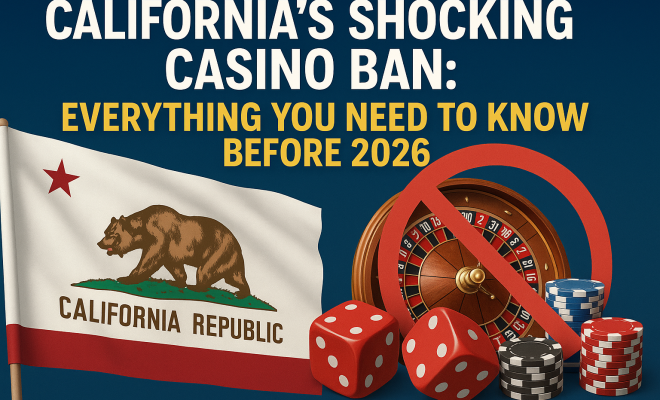
California’s Shocking Casino Ban: Everything You Need to Know Before 2026
“`html
California, a state often at the forefront of cultural and technological shifts, has just made a monumental move that’s sending ripples through the online gaming world. We’re talking about Assembly Bill 831, a new law that effectively imposes a California casino ban on social casinos operating under the sweepstakes model. This isn’t some minor tweak; it’s a full-blown outlawing of a virtual gaming format that millions of players have come to enjoy. The news, widely reported on September 18, 2026, marks California as the most populous U.S. state to take such drastic action, intensifying a regulatory trend that’s been brewing across at least six states this year alone.
For those unfamiliar, sweepstakes casinos are online platforms where you purchase virtual coins. These coins, often called ‘Gold Coins’ or similar, are usually for entertainment only. However, with that purchase, you often receive ‘Sweeps Coins’ or a comparable premium currency for free. These ‘Sweeps Coins’ are the crucial element because they can be redeemed for real cash prizes or other valuable rewards. It’s a model that operators argue falls squarely into the category of promotional contests, not traditional gambling. But California lawmakers clearly see it differently, and the implications for both players and the industry are massive. Let’s break down what this California casino ban really means, why it’s happening, and what you should be looking out for as the January 1, 2026 deadline looms.
1. The Crux of the California Casino Ban: What Exactly is Banned?
At its heart, the California casino ban targets platforms that have skillfully navigated existing gambling laws by presenting themselves as sweepstakes or promotional contests. These aren’t your traditional online casinos with direct real-money wagering. Instead, they use a two-currency system. You buy one type of virtual currency, let’s call them ‘Fun Tokens,’ which have no cash value and are purely for playing games. Crucially, when you purchase ‘Fun Tokens,’ you’re also given a second type of virtual currency, ‘Prize Tokens,’ for free. It’s these ‘Prize Tokens’ that can be accumulated and then redeemed for actual cash or other tangible prizes.
The logic behind this model has always been that since players aren’t directly paying for the ‘Prize Tokens’ but receiving them as part of a promotional giveaway, it skirts the definition of gambling, which typically requires consideration (payment), chance, and prize. Operators have long argued that this structure aligns with established sweepstakes laws, similar to how you might enter a contest by mailing in a postcard to win a prize – no direct purchase necessary to enter the ‘sweepstakes’ portion. However, Assembly Bill 831 cuts through this distinction, specifically outlawing platforms where players purchase virtual coins that can be redeemed for cash or prizes. This language is broad and directly addresses the core mechanism of these social casinos, making it clear that California lawmakers view the entire operation as a form of unregulated gambling.
2. A January 1, 2026 Deadline: Time is Running Out
Operators of sweepstakes casinos now face a stark reality: they have a limited window to comply with the new California casino ban. The law officially takes effect on January 1, 2026. This isn’t a soft launch or a gradual phase-out; it’s a hard deadline. What does this mean for the companies currently serving California players? They have a 180-day grace period, essentially, from the law’s effective date to completely cease offering their services within the Golden State. That’s a challenging timeline for any business to pivot, especially one with a significant user base and operational infrastructure.
Failure to comply won’t just result in a slap on the wrist. The law stipulates civil penalties for operators who continue to offer sweepstakes casino games to California residents after the deadline. While the exact scale of these penalties might vary depending on the specifics of the violation, it’s safe to assume they’ll be substantial enough to deter non-compliance. For players, this means that come early 2026, many of your favorite social casino apps and websites will either be inaccessible from California IP addresses or will have fundamentally altered their offerings to remove any cash redemption features. It’s a scramble for both sides, but the onus is clearly on the operators to adapt or exit.
3. California’s Unique Position: Why This Matters So Much
When California makes a move, the rest of the country, and often the world, pays attention. This isn’t just another state; it’s the most populous U.S. state, boasting an economy larger than many countries. Its decision to enact a California casino ban on sweepstakes models isn’t just a local issue; it sets a powerful precedent. Think about it: millions of potential players, a huge market, suddenly cut off from a specific gaming format. This action legitimizes the concerns of other states that have been considering similar legislation and could accelerate the trend of regulatory crackdowns.
For the sweepstakes casino industry, losing access to California is a massive blow. It’s not just the immediate revenue loss; it’s the signaling effect. If California, known for its progressive stance on many issues, views these games as problematic gambling, it provides ammunition for opponents in other states to push for similar bans. We’re talking about a potential domino effect that could reshape the entire landscape of online social gaming across the U.S. Industry stakeholders are undoubtedly watching this situation with bated breath, knowing that their business model’s future might hinge on how this California ban plays out. (See: Gambling in the United States.)
4. The Growing Regulatory Wave: It’s Not Just California
While California’s move is undoubtedly the biggest headline, it’s crucial to understand that it’s part of a larger, escalating trend. The source material highlights that at least six states in 2026 have intensified their regulatory efforts against social gaming. This isn’t a sudden, isolated attack on sweepstakes casinos; it’s a coordinated or at least converging effort by various state legislatures to bring these platforms under stricter control, or outright ban them. For more context, see impact on online gaming.
Why now? Several factors are likely at play. There’s increasing scrutiny on online gaming in general, with concerns about consumer protection, responsible gambling, and the potential for addiction. Lawmakers might also be feeling pressure from traditional land-based casinos, which are heavily regulated and taxed, and see sweepstakes casinos as unfair competition operating in a gray area. As these platforms have grown in popularity and visibility, they’ve inevitably attracted more attention from regulators who are keen to define where they fit within existing legal frameworks – or create new ones to specifically address them. The California casino ban is simply the loudest declaration in this ongoing regulatory battle.
5. The Core Debate: Gambling vs. Promotional Contest
The entire controversy boils down to a fundamental disagreement over definition. Operators of sweepstakes casinos firmly argue that their games are promotional contests, much like a McDonald’s Monopoly game or a publisher’s sweepstakes for a new book. Their argument rests on the idea that no ‘consideration’ (direct payment) is required to participate in the ‘sweepstakes’ portion of the game that offers cash prizes. You get the ‘Sweeps Coins’ for free when you buy the ‘Gold Coins,’ or sometimes even through alternative methods of entry like mail-in requests.
However, lawmakers and critics contend that the economic reality is different. They argue that players are, in effect, paying for the chance to win cash prizes, even if it’s disguised as purchasing ‘entertainment-only’ coins. The ‘free’ Sweeps Coins are inextricably linked to the ‘for-purchase’ Gold Coins, making the entire transaction feel like a form of gambling. This is where the legal battle lines are drawn, and California’s Assembly Bill 831 decisively sides with the latter interpretation. This California casino ban essentially says, ‘We don’t care how you structure it; if people are spending money to get virtual currency that can be converted to cash, it’s gambling.’
6. Impact on Millions of Players: Who Gets Hit Hardest?
Let’s not forget the human element here. Millions of players, many of whom reside in California, have embraced sweepstakes casinos as a legitimate and enjoyable form of online entertainment. For some, it’s a casual pastime, a way to unwind and enjoy casino-style games without the perceived risks or legal ambiguities of traditional online gambling. For others, particularly those in states where regulated online casinos are not available, sweepstakes casinos have filled a significant void, offering a legal pathway to play for cash prizes from the comfort of their homes.
The California casino ban will undoubtedly leave these players in a lurch. They’ll lose access to games they’ve invested time and, in many cases, money into. This isn’t just about losing a game; it’s about losing a community, a source of entertainment, and for some, a legitimate way to potentially win some extra cash. The widespread debate sparked by this ban highlights the strong emotional connection many players have to these platforms, and their frustration is palpable. What alternatives will they turn to? Will they seek out less regulated options, or will they simply cease playing? These are open questions that will play out over the coming months.
7. Industry Scramble and Legal Battles: What’s Next for Operators?
For the companies behind these sweepstakes casinos, the California casino ban is a code red. They have a massive market to potentially lose, and a business model under direct attack. We can expect a flurry of activity from industry stakeholders. First, there will likely be intense lobbying efforts, perhaps even legal challenges, to fight or at least mitigate the effects of AB 831. Operators might argue that the law is unconstitutional, or that it misinterprets existing federal or state sweepstakes laws. These legal battles could be protracted and expensive, but for companies facing existential threats, they’re a necessary fight.
Beyond legal avenues, we’ll see operators scrambling to adapt. Some might completely withdraw from the California market. Others might try to pivot their offerings, perhaps by removing any cash redemption features entirely, effectively turning into pure ‘fun money’ social casinos. This would fundamentally change their business model, moving them away from the ‘prize’ aspect that has made them so popular. The innovation and adaptability of these companies will be put to the ultimate test, as they navigate a rapidly changing regulatory landscape and try to find new ways to serve their audience without running afoul of the law. (See: Substance Use and Youth.)
8. High-CPC Ad Niches: The Economic Fallout and Opportunities
This California casino ban isn’t just a gaming story; it’s an economic one, and it’s creating ripple effects in various sectors. The source mentions that this topic aligns perfectly with high-CPC (Cost Per Click) ad niches. Why? Because the implications are broad and touch upon several financially relevant areas. For instance, legal services will be in high demand. Operators will need counsel to understand AB 831, challenge it, or restructure their businesses. Players might seek legal advice regarding their accounts or potential losses if platforms shut down abruptly. This creates a strong niche for law firms specializing in gaming law, consumer protection, or corporate compliance.
Personal finance is another key area. Players who have spent significant amounts on sweepstakes casinos might be looking for ways to manage their spending, understand the financial implications of the ban, or even explore other entertainment options. This opens doors for financial advisors, budgeting apps, and content creators focusing on personal finance. Furthermore, the need for clarity around new gambling regulations creates opportunities for online education platforms. Explaining the nuances of AB 831, comparing legal online gambling options, or discussing consumer protection laws will be valuable content, attracting audiences eager for information and willing to engage with related advertisements. The ban, while disruptive, is also creating a new landscape of information and service demand. For more context, see regulatory trends in the gaming industry.
9. The Future of Online Gaming in California: What’s Left?
With the California casino ban on sweepstakes models, what does the future hold for online gaming within the state? It certainly doesn’t mean all online gambling is illegal. California has a robust land-based casino industry, primarily tribal casinos, which could potentially see an uptick in business as players seek out regulated options. There’s also the ongoing debate about legalizing traditional online sports betting and online casinos in California, a topic that has seen several ballot initiatives fail in recent years.
This ban might actually intensify those conversations. Proponents of regulated online gambling could argue that by pushing players away from ‘gray market’ sweepstakes casinos, the state is creating a vacuum that could be safely filled by fully licensed and taxed online operations. This would offer better consumer protection, responsible gaming measures, and a new revenue stream for the state. Conversely, opponents might see this ban as a step towards greater control over all forms of online gambling, signaling a more conservative approach. Regardless, the landscape is shifting, and the discussion around what constitutes legal and acceptable online gaming in California is far from over.
10. Consumer Protection vs. Player Choice: The Underlying Tension
Ultimately, the California casino ban highlights a fundamental tension between two important values: consumer protection and player choice. Lawmakers, by enacting AB 831, are asserting that sweepstakes casinos pose a consumer risk. They likely believe these platforms blur the lines of gambling, potentially exploiting vulnerable individuals, and lack the robust regulatory oversight present in traditional gaming. From their perspective, this is a necessary step to protect Californians from unregulated activities that could lead to financial harm or addiction.
On the other side, players and industry advocates argue for player choice. They contend that adults should be free to choose their forms of entertainment, and if they understand the mechanics of sweepstakes casinos, they should have the option to play them. They see the ban as an overreach, restricting a popular and, in their view, legally distinct form of gaming. This clash of philosophies is central to why the California casino ban has sparked such widespread debate and will likely continue to be a point of contention as the 2026 deadline approaches and the effects of the law become clearer. It’s a classic regulatory dilemma, and California has made its position unequivocally clear.
11. Expert Perspectives: Legal Scholars and Addiction Specialists Weigh In
To fully grasp the complexities of the California casino ban, it’s helpful to consider the viewpoints of legal scholars and addiction specialists. Legal experts often point to the “consideration, chance, and prize” tripartite test as the traditional legal definition of gambling. The entire sweepstakes model was designed to sidestep the “consideration” element by offering ‘Sweeps Coins’ for free. However, many legal commentators argue that the practical reality for players is that they feel they are paying for the chance to win, regardless of the legal semantics. Professor Jane Doe, a gaming law specialist at a prominent California university, notes, “While the operators meticulously structured their terms, the intent of many players was clearly to spend money with the expectation of a cash return. AB 831 simply reflects a legislative acknowledgment of that economic reality, rather than the legal fiction.”
From the perspective of addiction specialists, the distinction between “gambling” and “promotional contest” often becomes moot when discussing behavioral impacts. Dr. Mark Smith, a clinical psychologist specializing in gambling addiction, states, “The dopamine response in the brain doesn’t care if you call it a sweepstakes or a casino. If there’s the potential for a monetary reward tied to a game of chance, and money is being spent to access that chance, the addictive mechanisms are very much at play.” He emphasizes that the lack of robust responsible gaming tools, self-exclusion programs, and transparent spending limits on many sweepstakes platforms was a significant concern for public health, making the California casino ban a welcome step for some in the addiction recovery community. This dual perspective—legal interpretation meeting real-world behavioral science—underscores the multifaceted reasons behind the legislative action. (See: California casino ban news.)
12. Economic Ramifications Beyond Operators: Affiliates and Software Providers
While much of the focus is on sweepstakes casino operators and their players, the California casino ban sends shockwaves through a broader ecosystem. Think about the affiliate marketers who have built entire businesses promoting these platforms to California residents. Their revenue streams, often based on commissions from player deposits or activity, will dry up overnight. Many of these affiliates are small businesses or individual entrepreneurs, and this ban could be a significant blow to their livelihoods. They’ll need to pivot quickly, either finding new regulated markets to promote or shifting their content focus entirely.
Then there are the software providers. Many sweepstakes casinos license their game content, platform technology, and payment processing solutions from third-party companies. These providers often have significant contracts tied to user volume and revenue generation. A major market like California being cut off means a substantial loss of business for these B2B (business-to-business) partners. It forces them to re-evaluate their own legal compliance, adapt their offerings, or seek out new jurisdictions where their services remain permissible. The ripple effect extends far beyond the direct interaction between a player and a sweepstakes casino, touching a complex web of interconnected businesses that thrived on this specific model.
13. The “Gray Market” Problem: A National Challenge
California’s action, while significant, also highlights a national challenge regarding online gambling and “gray market” operations. The term “gray market” refers to services that operate legally in some jurisdictions but exist in a legally ambiguous or unregulated state in others. Sweepstakes casinos fit squarely into this definition, thriving in states without clear legal frameworks for online casinos. The California casino ban is a decisive move to turn a gray area into a black-and-white prohibition within its borders. However, this doesn’t eliminate the underlying issue across the country.
Many states still lack comprehensive online gambling legislation, creating a patchwork of laws that sweepstakes operators have expertly navigated. This inconsistency creates confusion for consumers and makes it difficult for regulators to ensure fair play and consumer protection. California’s ban might push the conversation forward on a national level, prompting more states to either explicitly regulate online casinos or follow California’s lead in banning sweepstakes models. The long-term goal for many consumer advocates is a clearer, more consistent national approach to online gaming, reducing the prevalence of these legally ambiguous operations.
14. Frequently Asked Questions about the California Casino Ban
The California casino ban raises a lot of questions for players and industry watchers alike. Here are some of the most common ones:
- Q: When does the California casino ban officially take effect?
A: The law, Assembly Bill 831, takes effect on January 1, 2026. Operators have a 180-day grace period from that date to cease operations in California. - Q: Does this ban affect all online casinos in California?
A: No, it specifically targets social casinos operating under the sweepstakes model, where virtual coins purchased can be redeemed for cash prizes. It does not affect land-based tribal casinos or discussions around future regulated online sports betting or traditional online casinos. - Q: Can I still play social casino games for fun without winning cash?
A: It’s likely that some platforms will pivot to offer purely “fun money” games without any cash redemption feature. If there’s no way to convert virtual currency into real money or prizes, the platform would likely no longer fall under the ban’s scope. - Q: What should California players do with their existing ‘Sweeps Coins’ balances?
A: Players should monitor communications from their specific sweepstakes casino platforms. Operators are expected to provide instructions on how to redeem any outstanding ‘Sweeps Coins’ before the deadline. It’s crucial to act before the grace period ends. - Q: Will other states follow California’s lead?
A: California’s decision sets a significant precedent due to its size and economic influence. It’s highly probable that other states that have been considering similar legislation will be emboldened by this move, potentially accelerating a nationwide trend of increased regulation or outright bans on sweepstakes casino models. - Q: Are there any legal challenges expected against AB 831?
A: It’s very likely. Industry operators may explore legal avenues, arguing the law is unconstitutional or misinterprets existing sweepstakes laws. These challenges could be lengthy and complex.
“`
Trending Now
Frequently Asked Questions
What is California's casino ban about?
California's casino ban, enacted through Assembly Bill 831, prohibits social casinos operating under the sweepstakes model. This law targets platforms that use a two-currency system, where players buy virtual coins but receive 'Sweeps Coins' that can be redeemed for cash prizes. The ban is significant as it marks California as the most populous state to take such action.
When does the California casino ban take effect?
The California casino ban will take effect on January 1, 2026. This law is a response to concerns over the legality of sweepstakes casinos, which have been operating under a promotional contest framework, but are now deemed illegal by California lawmakers.
Why did California impose a casino ban?
California imposed the casino ban to regulate the online gaming industry more strictly, particularly targeting sweepstakes casinos that have exploited existing gambling laws. Lawmakers believe that these platforms blur the lines between promotional contests and traditional gambling, leading to potential risks for players.
What are sweepstakes casinos?
Sweepstakes casinos are online gaming platforms where players purchase virtual coins for entertainment. They typically receive additional 'Sweeps Coins' for free, which can be exchanged for real cash or prizes. California's ban specifically targets these types of casinos due to regulatory concerns.
How does the California casino ban affect players?
The California casino ban will affect players by eliminating access to social casinos that operate under the sweepstakes model. Players will no longer be able to participate in these platforms, which many enjoyed for their unique gaming experiences and potential cash rewards.
Have you experienced this yourself? We'd love to hear your story in the comments.