Unbelievable: Cloud Seeding Bans Are NOT Stopping Hurricanes – Here’s Why You’re Being Misled
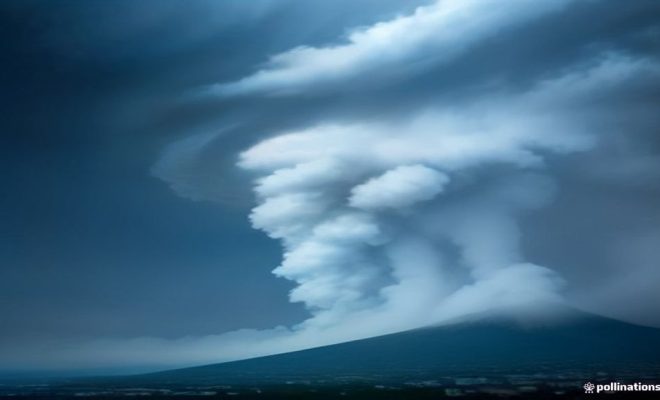
It’s an intriguing thought, isn’t it? The idea that we, as humans, could simply flip a switch, or in this case, stop a specific atmospheric intervention, and suddenly the chaotic fury of a hurricane season would just… vanish. That’s precisely the narrative that’s been sweeping across social media recently, particularly concerning Florida and its remarkably calm 2026 Atlantic hurricane season. Posts have gone viral, racking up millions of views and shares, all confidently asserting that the Sunshine State’s recent move to implement cloud seeding bans is the secret ingredient behind the tranquil skies.
But here’s the rub: While the idea is certainly compelling, and perhaps even comforting for those who dread hurricane season, it’s entirely unsubstantiated by scientific evidence. The truth, as often happens, is far more complex and, frankly, a lot less dramatic than internet rumors would have you believe. We’re talking about a classic case of correlation being mistaken for causation, amplified by the echo chambers of social media and a deep-seated public fascination with weather modification. Let’s dig into why this viral narrative, despite its widespread appeal, simply doesn’t hold water.
The Myth of Cloud Seeding Bans and Hurricane Prevention
The core of this viral sensation hinges on a simple, yet flawed, premise: Florida passed legislation restricting cloud seeding and geoengineering, and presto – no hurricanes. It sounds almost too good to be true, and well, it is. The legislation in question, House Bill 1569, did indeed pass in Florida and was signed into law, effectively banning certain types of weather modification and geoengineering activities, including local government-funded cloud seeding projects. This legislative action, combined with the subsequent quiet hurricane season, created fertile ground for conspiracy theories to sprout and flourish.
However, the leap from ‘Florida banned cloud seeding’ to ‘Florida stopped hurricanes’ ignores the fundamental physics of atmospheric science. Hurricanes are colossal, complex weather systems, fueled by vast amounts of ocean heat and atmospheric moisture, spanning hundreds of miles. The scale of energy involved in their formation and sustenance is staggering, far beyond anything that current cloud seeding technology could realistically influence, let alone prevent. It’s akin to trying to stop a freight train with a feather. The very notion that such a localized and limited intervention could disrupt something so immense is, quite frankly, a scientific impossibility given our current understanding and technological capabilities.
Understanding Cloud Seeding: What It Is and Isn’t
Before we can truly understand why cloud seeding bans have no bearing on hurricanes, we need to clarify what cloud seeding actually entails. At its heart, cloud seeding is a weather modification technique that attempts to increase precipitation (rain or snow) from existing clouds. It typically involves dispersing substances – most commonly silver iodide, but sometimes dry ice or even salt – into clouds. These particles act as ‘ice nuclei’ or ‘condensation nuclei,’ providing a surface for water vapor to condense onto, thereby potentially enhancing the formation of ice crystals or raindrops.
This technology has been around for decades, with the first experiments dating back to the 1940s. It’s primarily used in regions experiencing drought, to boost snowpack in mountainous areas for water supply, or to mitigate hail. For instance, countries like China and the United States have utilized cloud seeding for agricultural purposes or to augment water resources. However, it’s crucial to understand its limitations. Cloud seeding doesn’t ‘create’ clouds; it only works on clouds that are already present and contain sufficient moisture. Its effects are localized, often modest, and notoriously difficult to definitively prove with statistical certainty, though research continues to refine methodologies and assess efficacy.
The Real Reason for a Quiet Hurricane Season: El Niño
So, if cloud seeding bans aren’t the answer, what is responsible for the surprisingly calm 2026 Atlantic hurricane season? The overwhelming scientific consensus points to a powerful natural climate phenomenon known as El Niño. This isn’t some new, mysterious force; meteorologists and oceanographers have been studying El Niño for decades, and its impact on global weather patterns, including hurricane activity in the Atlantic basin, is well-established and predictable.
El Niño is characterized by warmer-than-average sea surface temperatures in the central and eastern tropical Pacific Ocean. This warming triggers a cascade of atmospheric responses, one of the most significant being an increase in vertical wind shear across the tropical Atlantic. Think of vertical wind shear as changes in wind speed or direction with altitude. For a hurricane to form and strengthen, it needs relatively calm, consistent winds throughout the atmosphere. Strong wind shear, on the other hand, acts like a disruptive force, tearing apart nascent storm systems and preventing them from organizing into powerful hurricanes. NOAA and other meteorological agencies accurately forecast the strong El Niño pattern months in advance, and with it, the likelihood of a suppressed Atlantic hurricane season. This was not a surprise to the scientific community; it was a predicted outcome of a known climate cycle.
The Science of Hurricane Formation: A Complex Dance
To truly grasp the disconnect between cloud seeding and hurricanes, it helps to briefly touch upon the intricate science of how these storms actually form. It’s a delicate balance of several critical ingredients, all converging in just the right way: (See: National Climate Data Center.)
- Warm Ocean Waters: Hurricanes need sea surface temperatures of at least 80°F (26.5°C) down to a depth of about 150 feet (50 meters). This warm water provides the immense energy and moisture needed for the storm to develop.
- Moist Air: Abundant moisture in the mid-troposphere allows thunderstorms to form and grow without drying out.
- Low Wind Shear: As mentioned, minimal vertical wind shear is crucial. Strong shear rips storms apart, while weak shear allows them to stack vertically and organize.
- Pre-existing Disturbance: Hurricanes typically begin as a cluster of thunderstorms, often originating from African easterly waves or tropical depressions.
- Coriolis Effect: This force, due to the Earth’s rotation, is necessary to impart the spinning motion to the storm. This is why hurricanes don’t form right on the equator.
Cloud seeding, in its current form, operates on a completely different scale. It aims to modify microphysical processes within individual clouds, not to alter the macro-scale atmospheric dynamics that govern hurricane genesis and intensification. The energy required to influence or stop a hurricane is orders of magnitude greater than anything we can currently muster. Claims of technology capable of creating or steering hurricanes remain firmly in the realm of science fiction, despite what some online posts might suggest.
The Allure of Conspiracy Theories and Weather Control
Why do these unsubstantiated claims gain such traction? It’s a fascinating look into human psychology and our relationship with powerful natural forces. Weather, particularly extreme weather, often feels uncontrollable and terrifying. The idea that someone, somewhere, is secretly controlling it – either for nefarious purposes or, in this case, for benevolent protection – can be oddly comforting. It implies a degree of order, even if it’s a sinister one, rather than the terrifying randomness of nature.
Conspiracy theories about weather modification, chemtrails, and government control of the atmosphere have been circulating for years, fueled by a distrust of institutions and a misunderstanding of scientific processes. The narrative linking cloud seeding bans to a quiet hurricane season taps directly into these pre-existing beliefs. It offers a simple, dramatic explanation for a complex phenomenon, one that fits neatly into a worldview where hidden forces are at play. It also provides a clear ’cause’ and ‘effect’ that feels intuitive, even if it’s scientifically baseless, making it highly shareable and emotionally resonant on platforms like Facebook, X (formerly Twitter), and TikTok.
Political Undertones and the Geoengineering Debate
The discussion around cloud seeding bans isn’t purely scientific; it also has distinct political dimensions. The very act of passing legislation to ban geoengineering and certain weather research, as seen in Florida and other states, signals a public and political discomfort with the idea of humans intentionally altering large-scale environmental systems. While the scientific community is generally cautious about large-scale geoengineering – proposals like solar radiation management or carbon capture on a grand scale – the public debate often conflates these ambitious, theoretical ideas with existing, localized practices like cloud seeding.
For politicians, taking a stance against ‘weather manipulation’ can be a way to appeal to constituents who are wary of scientific overreach, government control, or who hold existing conspiracy beliefs. The language used in some of these bills can be broad, encompassing everything from local rain enhancement projects to hypothetical global climate interventions. This legislative action, regardless of its scientific merit concerning hurricane prevention, provides a tangible event that social media users can point to as ‘proof’ of their theories. It’s a powerful feedback loop where political action, even if misguided in its premise, reinforces viral narratives, which in turn can influence further political action.
The Dangers of Misinformation in a Climate-Challenged World
While a quiet hurricane season is certainly welcome news for coastal communities, the spread of misinformation linking it to cloud seeding bans carries real risks. In an era where climate change is already making extreme weather events more frequent and intense, it’s crucial that public understanding of climate science remains accurate. When people are led to believe that simple legislative fixes or the cessation of minor weather interventions can prevent major disasters, it can foster a false sense of security and divert attention from genuine preparedness measures.
Moreover, it erodes trust in scientific institutions and expert advice. When organizations like NOAA – which dedicates immense resources to understanding and forecasting hurricanes – are dismissed in favor of viral internet theories, it creates a dangerous vacuum. Effective disaster preparedness, climate adaptation, and policy-making all rely on sound scientific understanding. If large segments of the population are operating under fundamentally incorrect assumptions about how weather systems work, it hampers our collective ability to respond to the very real challenges posed by our changing climate. It’s not just about one quiet hurricane season; it’s about setting a precedent for how we interpret and act upon scientific information.
Why Scientists Are Pushing Back So Hard
You might wonder why scientists, meteorologists, and organizations like NOAA are so keen to debunk these specific claims, especially when a quiet hurricane season is good news. It’s because their mission is rooted in evidence-based understanding and public safety. Allowing a baseless narrative to take hold undermines the credibility of their work and the vital public service they provide. When the public believes that cloud seeding bans stopped hurricanes, they might also believe other equally unfounded claims about weather, potentially leading them to ignore legitimate warnings or misallocate resources.
Experts like Dr. Philip Klotzbach at Colorado State University, a highly respected hurricane forecaster, consistently emphasize the role of natural phenomena like El Niño. They spend years studying these complex systems, developing sophisticated models, and issuing forecasts based on robust data. To see that work overshadowed by viral conspiracy theories is not just frustrating; it’s a threat to public understanding of science. Their pushback isn’t about being spoilsports; it’s about upholding scientific integrity and ensuring that critical information about natural hazards is communicated accurately and effectively.
Looking Ahead: Separating Fact from Fiction
As we move forward, especially as the climate continues to shift and extreme weather events become more common, the ability to discern fact from fiction regarding weather and climate science will only grow in importance. The story of cloud seeding bans and the quiet 2026 hurricane season serves as a powerful reminder of how easily misinformation can spread, particularly when it taps into existing anxieties and a desire for simple solutions to complex problems. (See: CDC on cloud seeding effects.)
It’s incumbent upon all of us to critically evaluate the information we encounter online, especially when it concerns topics with significant real-world implications. When you see a claim that sounds too good to be true, or that contradicts established scientific consensus, take a moment to pause. Look for reputable sources – scientific institutions, established news organizations that cite experts, and university research. Don’t just accept what’s presented in a viral post. The actual science of hurricanes and climate is fascinating enough without needing to invent sensational, baseless explanations.
Ultimately, the calm 2026 Atlantic hurricane season was a welcome reprieve, a fortunate outcome of natural oceanic and atmospheric cycles that scientists predicted. It had nothing to do with Florida’s cloud seeding bans. Understanding the actual mechanisms at play, like El Niño, not only satisfies our curiosity but also empowers us to make more informed decisions about our future in a world increasingly shaped by weather and climate.
The Global Context of Weather Modification: Beyond Hurricanes
It’s worth noting that while the focus here is on cloud seeding and hurricanes, weather modification efforts exist globally, often for very different reasons. For example, China has one of the world’s most extensive weather modification programs, using cloud seeding to clear skies for major events like the Olympics, combat droughts, and even reduce hail damage in agricultural regions. Countries in the Middle East, facing severe water scarcity, are also actively researching and implementing cloud seeding to increase rainfall. These programs highlight the diverse applications and motivations behind modifying local weather, yet none of them claim to or have demonstrated the ability to prevent or steer large-scale phenomena like hurricanes.
The substances used, like silver iodide, are generally considered safe in the quantities dispersed, but environmental concerns are often raised, prompting careful monitoring. The ethical implications of potentially altering weather patterns that could affect neighboring regions are also a continuous point of discussion among international scientific and policy communities. This broader context helps illustrate that cloud seeding isn’t a shadowy, secret operation, but a widely recognized, albeit limited, meteorological technique with specific, localized goals, none of which involve hurricane suppression.
Historical Attempts at Hurricane Mitigation: A Look Back
The desire to control or diminish hurricanes isn’t new; it’s a long-standing human aspiration. Project Stormfury, a U.S. government effort spanning from 1962 to 1983, was a prominent attempt to weaken hurricanes by cloud seeding. The theory was that seeding the eyewall region of a hurricane with silver iodide would cause the supercooled water droplets there to freeze, releasing latent heat and potentially creating a new eyewall further out from the storm’s center. This “eyewall replacement cycle” could, in theory, cause the hurricane to temporarily weaken.
However, after years of research and a limited number of actual seeding events (due to strict operational criteria and a lack of suitable storms), Project Stormfury ultimately concluded that its methods were inconclusive. The primary reason was the difficulty in proving a direct causal link between the seeding and any observed changes in storm intensity. Hurricanes naturally undergo fluctuations in strength, and separating natural variability from human intervention proved exceedingly difficult. The project was eventually abandoned, highlighting the immense challenge of influencing such powerful natural systems and underscoring why current cloud seeding technology is still considered ineffective for hurricane modification.
The Role of Climate Change in Hurricane Activity
While El Niño explained the quiet 2026 season, it’s crucial not to lose sight of the overarching trend: climate change is influencing hurricane activity in complex ways. While the number of storms might not necessarily increase globally, there’s growing evidence that climate change is contributing to:
- More Intense Storms: Warmer ocean waters provide more fuel, potentially leading to a higher proportion of Category 3, 4, and 5 hurricanes.
- Rapid Intensification: Storms are sometimes strengthening much faster than they used to, giving less time for preparation.
- Slower Storm Movement: Some storms are moving more slowly, leading to prolonged rainfall and higher flood risks.
- Increased Rainfall: A warmer atmosphere holds more moisture, resulting in heavier rainfall rates during hurricanes.
- Higher Storm Surge: Rising sea levels exacerbate storm surge impacts along coastlines.
Understanding these climate-driven trends is vital for long-term preparedness and adaptation. Distracting the public with myths about cloud seeding bans preventing hurricanes diverts attention and resources away from these serious, scientifically supported threats and the necessary policy responses.
Expert Perspectives: What Meteorologists Say
When claims about cloud seeding bans go viral, meteorologists and atmospheric scientists often find themselves on the front lines, trying to counter the misinformation. Dr. Rick Thoman, a climate specialist at the University of Alaska Fairbanks, often emphasizes the sheer scale difference: “A hurricane is a thermodynamic engine of enormous power. Cloud seeding is like blowing on a campfire to put out a forest fire.” This analogy effectively conveys the futility of applying a micro-scale intervention to a macro-scale phenomenon. (See: New York Times on cloud seeding.)
Similarly, hurricane specialists like Dr. Michael Lowry, a former NOAA hurricane hunter, frequently use their platforms to explain the known drivers of hurricane activity, consistently pointing to oceanic cycles like El Niño and La Niña as primary modulators of Atlantic seasons. Their message is consistent: the scientific community has a robust understanding of hurricane dynamics, and current weather modification technologies simply don’t have the capacity to stop them.
FAQ: Addressing Common Questions About Cloud Seeding and Hurricanes
Q1: Can cloud seeding create rain out of a clear sky?
No, absolutely not. Cloud seeding works by targeting existing clouds that already contain moisture, usually supercooled water droplets (water that’s below freezing but still liquid). It provides particles (like silver iodide) for these droplets to freeze onto, or for water vapor to condense around, potentially enhancing the precipitation process from an already present cloud. It can’t conjure rain from a blue sky.
Q2: If cloud seeding can increase rainfall, why can’t it affect hurricanes?
The key difference is scale and energy. Cloud seeding aims for modest, localized increases in precipitation, typically less than a 10-15% enhancement, over relatively small areas. Hurricanes are massive, self-sustaining heat engines that draw energy from hundreds of miles of warm ocean water. The energy released by an average hurricane in a single day can be equivalent to several hundred nuclear bombs. The microphysical changes induced by cloud seeding are utterly insignificant compared to the immense power and scale of a hurricane’s dynamics.
Q3: What exactly did Florida’s House Bill 1569 ban?
House Bill 1569 primarily banned state and local government entities in Florida from engaging in or funding certain weather modification activities, including cloud seeding and other forms of geoengineering. It explicitly targets interventions aimed at altering atmospheric conditions. This means private entities could still potentially engage in such activities, though any large-scale efforts would likely face significant regulatory hurdles. The bill was largely a response to public concerns and conspiracy theories rather than a scientific assessment of cloud seeding’s effectiveness against hurricanes.
Q4: Are there any legitimate research efforts to mitigate hurricanes?
Yes, but they are very different from cloud seeding. Research has focused on understanding hurricane dynamics better to improve forecasting, which is our most effective tool for saving lives and property. Some theoretical concepts have been explored, like using massive arrays of wind turbines to extract energy from the ocean surface (though this is purely theoretical and has its own environmental challenges) or developing floating platforms that could cool ocean surface temperatures locally. However, all these ideas face enormous engineering and logistical hurdles, and none are close to being viable solutions. The scientific consensus remains that our best defense against hurricanes is accurate forecasting, robust building codes, and effective evacuation plans.
Q5: How can I tell if information about weather modification or hurricanes is credible?
Always look for the source. Credible information comes from established scientific institutions (like NOAA, NASA, university meteorological departments), respected meteorological organizations (like the American Meteorological Society), or reputable news outlets that cite experts from these institutions. Be wary of claims made on social media without supporting evidence, especially if they appeal to conspiracy theories, offer overly simplistic explanations for complex phenomena, or contradict widely accepted scientific consensus. Cross-referencing information with multiple reliable sources is always a good practice.
Trending Now
Frequently Asked Questions
Does cloud seeding stop hurricanes?
No, cloud seeding does not stop hurricanes. While some believe that banning cloud seeding could prevent hurricanes, scientific evidence shows no correlation between weather modification and hurricane occurrence. The idea is a misconception that has gained popularity on social media without scientific backing.
What is the impact of cloud seeding on weather?
Cloud seeding is intended to enhance precipitation but does not have a direct impact on large-scale weather patterns like hurricanes. Its effectiveness is limited and often debated within the scientific community, making it an unreliable method for controlling significant weather events.
Why are cloud seeding bans being discussed?
Cloud seeding bans, such as Florida's House Bill 1569, have been enacted due to concerns about the environmental and ethical implications of weather modification. These discussions have gained traction, particularly during calm hurricane seasons, leading to misconceptions about their effectiveness in preventing hurricanes.
What are the myths surrounding cloud seeding and hurricanes?
The main myth is that cloud seeding bans can prevent hurricanes. This narrative misinterprets correlation as causation, failing to recognize that hurricane activity is influenced by various complex meteorological factors, not merely by the presence or absence of weather modification techniques.
How does social media influence perceptions of weather modification?
Social media amplifies misconceptions about weather modification, such as cloud seeding bans preventing hurricanes. Viral posts can create misleading narratives that oversimplify complex scientific issues, leading to widespread misunderstanding among the public about the actual effects and limitations of these interventions.
Have you experienced this yourself? We'd love to hear your story in the comments.