Unprecedented Showdown: Tesla’s Cybercab Faces Make-or-Break Deadline for NHTSA Approval
“`html
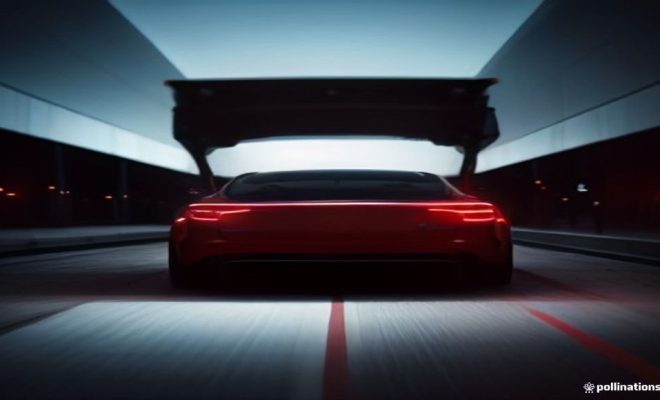
Imagine stepping into a vehicle with no steering wheel, no pedals, and not a single rearview mirror in sight. It sounds like something out of a science fiction movie, right? Yet, this is precisely the vision Tesla CEO Elon Musk has for the future of urban transport with his company’s audacious Cybercab. This fully autonomous robotaxi, designed from the ground up to operate without any human intervention, represents a radical departure from conventional automotive design. It’s a bold statement, to be sure, but one that is now squarely in the crosshairs of federal regulators.
The National Highway Traffic Safety Administration (NHTSA) has thrown down the gauntlet, issuing a critical set of 21 questions that Tesla must answer by September 30, 2026. This isn’t just a bureaucratic formality; it’s a make-or-break moment for the Cybercab and, arguably, for Tesla’s broader ambitions in the autonomous vehicle (AV) space. The core issue? The Cybercab’s revolutionary design directly challenges the very foundation of Federal Motor Vehicle Safety Standards (FMVSS), regulations largely conceived in an era when every car had a driver, a steering wheel, and pedals. Achieving Tesla Cybercab NHTSA approval is proving to be a much more complex endeavor than simply engineering the technology.
This isn’t merely an internal struggle for Tesla; it’s a saga unfolding on a very public stage. The high-profile nature of Tesla, coupled with the counterintuitive concept of a car without traditional controls, has ignited a firestorm of discussion and debate. Everyone, from industry analysts to daily commuters, is watching to see how this plays out. The implications are profound, touching on everything from public safety and regulatory precedent to the future competitive landscape of autonomous mobility. Will the Cybercab redefine urban transit, or will it hit a regulatory brick wall?
The Radical Vision: What Makes the Cybercab So Different?
Let’s unpack what makes the Cybercab such a departure from everything we know about cars. When we talk about a vehicle without a steering wheel, pedals, or mirrors, we’re not talking about a car that *can* drive itself; we’re talking about a car that *can only* drive itself. There’s no fallback for human intervention. This fundamental design choice is both its greatest strength and its most significant regulatory hurdle.
Traditional vehicles, even those with advanced driver-assistance systems (ADAS), are built around the assumption that a human operator is ultimately in control. Safety features like airbags, seatbelts, and even the placement of controls are all optimized for a human driver. The Cybercab, by contrast, is designed for occupants, not drivers. This shift in perspective means that many existing safety standards, written with human control in mind, simply don’t apply, or worse, directly conflict with the Cybercab’s design. For instance, how do you regulate a steering wheel’s strength or a pedal’s responsiveness when neither exists? This is the heart of the challenge for Tesla Cybercab NHTSA approval.
The vision behind the Cybercab is to create a purpose-built robotaxi that maximizes interior space and passenger comfort by eliminating the traditional cockpit. This allows for a more open, lounge-like cabin, optimizing the ride-sharing experience. Imagine a vehicle designed purely for mobility as a service, where the journey is seamless and the need for human input is entirely absent. This utopian vision, however, crashes head-first into the very real, very established regulatory framework designed for a different era of automotive engineering.
NHTSA’s 21 Questions: A Deep Dive into Regulatory Scrutiny
The 21 questions from NHTSA aren’t arbitrary; they represent a comprehensive effort to understand how a vehicle as unconventional as the Cybercab can possibly meet existing safety standards. These questions likely cover a wide array of topics, from crashworthiness without traditional driver-side protections to how the vehicle will handle emergency situations without human input. Think about it: if there’s no steering wheel, how does an emergency responder take control if the autonomous system fails or a medical emergency occurs inside the vehicle?
Another crucial area of inquiry would undoubtedly be cybersecurity. A fully autonomous vehicle, connected to a network, presents a tantalizing target for malicious actors. How does Tesla ensure the Cybercab’s systems are impervious to hacking, which could have catastrophic consequences? Furthermore, without mirrors, how does the vehicle perceive its surroundings with the same reliability and redundancy required for safe operation? These aren’t simple questions with straightforward answers; they demand detailed technical explanations, rigorous testing data, and a robust safety case.
It’s important to understand that NHTSA’s role isn’t to stifle innovation but to ensure public safety. Their mandate is to prevent accidents and protect lives on America’s roads. When a company proposes a vehicle that radically redefines the very concept of a car, it’s incumbent upon the agency to scrutinize every aspect of its design and operation. The deadline of September 30, 2026, isn’t just a date; it’s a testament to the complexity and seriousness of these inquiries, underscoring the monumental task ahead for Tesla in securing Tesla Cybercab NHTSA approval.
The Part 555 Exemption: A Potential Regulatory Bottleneck
One of the most significant concerns highlighted by regulatory analyst Rob Grant is the possibility that Tesla might be forced down the path of a Part 555 exemption. What exactly is a Part 555 exemption? It’s a provision within NHTSA regulations that allows manufacturers to temporarily introduce vehicles that don’t fully comply with all FMVSS, provided they demonstrate an equivalent or superior level of safety, or that the non-compliance is minor and inconsequential. However, there’s a catch, and it’s a big one for Tesla’s ambitions: these exemptions are typically capped at 2,500 vehicles per manufacturer per year.
For a company like Tesla, which operates on a scale of hundreds of thousands, if not millions, of vehicles annually, a 2,500-unit cap is essentially a non-starter for mass deployment. It would relegate the Cybercab to a niche pilot program at best, severely limiting its ability to compete in the burgeoning robotaxi market. This isn’t just about revenue; it’s about market penetration and establishing a dominant presence in a rapidly evolving sector. Imagine trying to revolutionize urban transport with only 2,500 vehicles a year across the entire United States – it’s simply not feasible for a company with Tesla’s aspirations. (See: National Highway Traffic Safety Administration.)
This potential bottleneck puts Tesla in a precarious position. While other AV companies like Waymo have also navigated regulatory challenges, their approaches often involve modified existing vehicles or designs that retain some level of human-operable controls, making their path to compliance potentially less arduous. The Cybercab’s ‘no controls’ philosophy, while innovative, creates a unique regulatory quagmire. The race for Tesla Cybercab NHTSA approval could hinge on avoiding this restrictive exemption.
Competitive Landscape: Tesla vs. Waymo and Others
When we talk about autonomous vehicles, it’s impossible not to consider the competitive landscape. While Tesla often dominates headlines, companies like Waymo (owned by Alphabet) and Cruise (GM’s autonomous unit) have been making significant strides, albeit with their own set of challenges. Waymo, for instance, has been operating fully autonomous robotaxi services in cities like Phoenix and San Francisco for some time, albeit with vehicles that often began as modified conventional cars.
The key differentiator here is design philosophy. Waymo’s vehicles, while highly autonomous, have historically maintained the capability for human remote assistance or even direct human intervention in certain scenarios. This hybrid approach, while perhaps less ‘pure’ in its autonomy, has allowed them a more incremental path through the regulatory maze. They aren’t trying to rewrite the FMVSS rulebook from scratch in the same way the Cybercab’s design demands. This isn’t to say Waymo hasn’t faced its own regulatory battles and public scrutiny, but their vehicles generally fit more neatly into existing frameworks.
Tesla, with its all-or-nothing approach to the Cybercab, is attempting a leap rather than a series of steps. If the 2,500-unit cap becomes a reality, it would give competitors a significant head start in scaling their operations. Waymo, for example, isn’t facing a similar cap on its deployments, allowing it to expand its service areas and fleet size more freely. This disparity could fundamentally reshape the race for autonomous dominance, making Tesla Cybercab NHTSA approval an even more critical differentiator.
Public Safety Concerns: The Human Factor, or Lack Thereof
Beyond the technical and regulatory intricacies, there’s the overarching question of public safety. The idea of a vehicle operating on public roads without any human in a position to take control is, for many, a deeply unsettling concept. While autonomous systems promise to reduce human error, which is the cause of the vast majority of accidents, the public’s trust is still fragile. High-profile incidents involving autonomous vehicles, even if rare, tend to amplify these fears.
Consider a scenario where a Cybercab encounters an unexpected road hazard, a sudden deluge of rain, or a unique traffic situation that its programming hasn’t fully anticipated. In a traditional car, a human driver makes split-second decisions based on instinct and experience. How does the Cybercab’s AI replicate this, and how can NHTSA be absolutely certain it will do so reliably across millions of miles and countless unforeseen variables? The agency needs to be convinced that the autonomous system is not just good, but demonstrably superior to human driving in every conceivable scenario, without the possibility of human override.
Then there’s the question of human interaction. How will pedestrians, cyclists, and other drivers react to a vehicle that has no visible driver? Communication on the road often involves subtle cues, eye contact, and hand gestures. Without a human presence, how does the Cybercab signal its intentions or react to the unpredictable nature of human behavior? These are not trivial concerns; they speak to the very fabric of how we interact with our environment, and they represent a significant hurdle for Tesla Cybercab NHTSA approval.
The Broader Implications for Autonomous Vehicle Deployment
The outcome of this regulatory showdown extends far beyond Tesla and the Cybercab itself. It will set a critical precedent for the entire autonomous vehicle industry. If NHTSA forces Tesla into a Part 555 exemption or demands significant design changes, it signals a cautious, incremental approach to AV regulation. This could mean a slower rollout for other highly innovative, purpose-built autonomous vehicles that deviate significantly from current FMVSS.
Conversely, if Tesla manages to convince NHTSA that the Cybercab’s design, despite its radical nature, meets or exceeds safety standards, it could pave the way for a more flexible regulatory framework that accommodates groundbreaking innovation. This would be a massive win for the industry, potentially accelerating the development and deployment of truly transformative autonomous mobility solutions. The challenge, however, is that FMVSS are designed to be technology-neutral, but in practice, they often reflect the technologies prevalent at the time of their creation.
The current situation highlights a fundamental tension: how do you regulate a future that hasn’t fully arrived with rules written for a past that’s rapidly fading? This isn’t just about the Cybercab; it’s about the future of transportation, urban planning, and even our relationship with technology. The decisions made regarding Tesla Cybercab NHTSA approval will reverberate across the automotive and tech sectors for years to come.
Rewriting the Rulebook: Challenges in Modernizing FMVSS
The Cybercab saga vividly illustrates the urgent need to modernize the Federal Motor Vehicle Safety Standards. These standards, while crucial for safety, were developed over decades, primarily with human-driven, human-controlled vehicles in mind. They specify everything from headlight brightness and seatbelt anchorage points to crash test dummies simulating human occupants in a driver’s seat. Many of these simply don’t make sense for a vehicle designed to be fully autonomous with no human controls.
Consider something as basic as a horn. FMVSS dictates the sound levels and operational requirements for a horn. For a human driver, it’s a direct input. For an autonomous vehicle, how does the system decide when and how to honk? More complex still, how do you certify the safety of a braking system that isn’t connected to a human-operated pedal? The entire paradigm needs to shift from human-centric safety to automated system safety, which requires entirely new metrics, testing protocols, and regulatory frameworks. (See: Centers for Disease Control and Prevention.)
The process of updating FMVSS is notoriously slow and complex, often taking years, if not decades, to implement significant changes. The pace of technological innovation, particularly in AI and robotics, far outstrips the speed of regulatory evolution. This creates a challenging gap, where cutting-edge technology is ready for deployment, but the legal and regulatory infrastructure is playing catch-up. Tesla’s attempt to secure Tesla Cybercab NHTSA approval is a direct confrontation with this systemic lag, forcing regulators to address these fundamental questions head-on.
The September 30, 2026 Deadline: What Happens Next?
The approaching deadline isn’t just a date on a calendar; it’s a point of no return for Tesla’s Cybercab strategy. By September 30, 2026, Tesla must provide comprehensive answers to NHTSA’s 21 questions, laying out its detailed safety case for a vehicle without traditional controls. This will involve extensive technical documentation, simulation results, real-world test data, and potentially new methodologies for demonstrating compliance with standards that weren’t designed for this kind of vehicle.
Failure to provide satisfactory answers could lead to several outcomes. The most restrictive, as Rob Grant suggested, is being pushed into the Part 555 exemption, effectively neutering the Cybercab’s market potential. Another possibility is that NHTSA could demand significant design modifications, forcing Tesla to reintroduce certain human-operable controls or incorporate entirely new safety systems to compensate for their absence. This would add considerable development time and cost, delaying deployment and potentially compromising the Cybercab’s core design philosophy.
The best-case scenario for Tesla is to convince NHTSA that the Cybercab’s autonomous systems provide an equivalent or superior level of safety to human-driven vehicles, allowing for a pathway to full compliance without the cap. This would require an unprecedented level of transparency and data sharing from Tesla, along with a compelling narrative that addresses every single one of NHTSA’s concerns. The stakes couldn’t be higher, not just for Tesla, but for the trajectory of autonomous vehicles globally. The world is watching to see if innovation can truly outpace regulation, or if the two must evolve in lockstep for the future of transportation to truly take hold.
Expert Perspectives: What Industry Leaders Are Saying
The debate around the Cybercab and its regulatory hurdles isn’t confined to Tesla and NHTSA; it’s a hot topic among automotive experts, tech pioneers, and transportation policy makers. Many view Tesla’s bold move as a necessary catalyst, forcing a long-overdue reevaluation of safety standards. Dr. Sarah Chen, a leading AI ethics researcher, points out that “traditional safety metrics, like driver reaction time, become irrelevant. We need new frameworks that assess the robustness and explainability of AI decision-making in real-time complex scenarios.” This highlights the fundamental shift required in how we even define ‘safe’ for autonomous systems.
On the other hand, some industry veterans express caution. Mark Thompson, a former automotive safety engineer with decades of experience, suggests that “while innovation is crucial, public trust is paramount. Rushing a vehicle without traditional controls, especially one from a company with a history of pushing boundaries, might erode that trust if a significant incident occurs. Incremental deployment, even if slower, builds confidence.” His perspective emphasizes the delicate balance between technological ambition and societal acceptance. This push-and-pull between rapid innovation and cautious implementation defines much of the current AV discussion, directly impacting the path to Tesla Cybercab NHTSA approval.
Investment analysts are also weighing in. Fiona Davies, a tech sector analyst, notes, “Tesla’s aggressive timeline for the Cybercab is a double-edged sword. If they achieve full NHTSA approval without the Part 555 cap, it’s a massive competitive advantage. If they face significant delays or design compromises, it opens a window for competitors who’ve taken a more conservative, yet perhaps more compliant, approach.” The financial implications of this regulatory battle are enormous, shaping market expectations and investor confidence in the broader robotaxi market.
The Role of Data and Simulation in Demonstrating Safety
For the Cybercab to gain full Tesla Cybercab NHTSA approval, Tesla won’t just need compelling arguments; they’ll need mountains of data and highly sophisticated simulations. Since there’s no human fallback, the autonomous driving system must be proven infallible to an unprecedented degree. This means collecting billions of miles of real-world driving data, not just from human drivers, but from the autonomous system itself operating in various conditions.
Beyond real-world testing, advanced simulation plays a critical role. Tesla will likely need to demonstrate how the Cybercab’s AI responds to an exhaustive list of edge cases – scenarios that are rare but potentially dangerous. This includes everything from unexpected animal crossings and sudden construction zones to complex multi-vehicle interactions at unmarked intersections. These simulations must be incredibly detailed, encompassing environmental factors like weather, lighting, and even road surface conditions. The ability to reliably predict and safely navigate these situations in a simulated environment will be key to convincing regulators that the system is robust enough for public roads.
Furthermore, the data collected will need to be transparent and auditable. Regulators will want to understand the decision-making process of the AI, not just the outcome. This concept of “explainable AI” is a growing field, crucial for building trust and accountability in autonomous systems. Tesla will have to show *why* the Cybercab makes certain decisions, especially in critical situations, allowing NHTSA to verify the underlying logic and safety protocols. This level of scrutiny demands a new paradigm for presenting safety cases, moving beyond traditional crash test data to an in-depth analysis of algorithmic behavior. (See: New York Times coverage on autonomous vehicles.)
Future Urban Integration: Beyond the Regulatory Hurdles
Assuming Tesla successfully navigates the NHTSA approval process, the Cybercab’s integration into urban environments presents another layer of challenges and opportunities. A fleet of fully autonomous robotaxis could drastically reshape city planning, traffic management, and even public infrastructure. Imagine a world where parking garages become obsolete, replaced by urban green spaces, because vehicles are constantly in motion or charging at designated hubs.
Cities will need to adapt their infrastructure to communicate seamlessly with AVs. This could involve smart traffic lights that optimize flow based on real-time AV locations, dedicated AV lanes, and even specialized pick-up/drop-off zones designed for driverless vehicles. The data generated by millions of Cybercab journeys could also provide unprecedented insights into urban mobility patterns, helping city planners optimize public transit routes and reduce congestion.
However, this integration also raises questions about equity and access. Will robotaxi services be affordable for everyone, or will they create a new divide in transportation access? How will cities manage the potential increase in “zombie cars” – empty autonomous vehicles repositioning or cruising – if not properly managed? These are complex societal questions that will emerge once the initial regulatory hurdles for Tesla Cybercab NHTSA approval are cleared, signaling that the journey to a fully autonomous future involves much more than just the technology itself.
Frequently Asked Questions About Tesla Cybercab NHTSA Approval
1. What is the main obstacle for Tesla Cybercab NHTSA approval?
The primary obstacle is the Cybercab’s radical design, which lacks traditional human controls like a steering wheel, pedals, and mirrors. Existing Federal Motor Vehicle Safety Standards (FMVSS) were written with human-driven vehicles in mind, and many simply don’t apply or directly conflict with the Cybercab’s purpose-built autonomous design. Tesla needs to prove its autonomous system is as safe or safer without human intervention.
2. What is a Part 555 exemption, and why is it a problem for Tesla?
A Part 555 exemption allows manufacturers to temporarily introduce vehicles that don’t fully comply with all FMVSS, provided they demonstrate equivalent safety. The major problem for Tesla is that these exemptions are typically capped at 2,500 vehicles per manufacturer per year. This cap would severely limit the Cybercab’s mass deployment and market potential, making it unfeasible for Tesla’s large-scale ambitions in the robotaxi market.
3. How does the Cybercab’s design compare to competitors like Waymo?
Waymo and other competitors often use modified conventional vehicles or designs that retain some level of human-operable controls or remote human assistance capabilities. This hybrid approach has allowed them a more incremental path through regulation. The Cybercab’s “no controls” philosophy is an all-or-nothing approach that demands a more fundamental reevaluation of existing safety standards, presenting a unique regulatory challenge.
4. What kind of evidence will Tesla need to provide to NHTSA?
Tesla will need to provide extensive technical documentation, detailed simulation results covering a vast array of driving scenarios and edge cases, and real-world test data. They’ll also need to present a robust safety case demonstrating that the Cybercab’s autonomous systems are demonstrably superior or equivalent in safety to human driving across all conceivable situations, without human override.
5. What are the broader implications if Tesla fails to get full NHTSA approval?
If Tesla fails to secure full approval and is restricted by the 2,500-unit cap or forced to make significant design changes, it could set a cautious precedent for the entire autonomous vehicle industry. This might mean a slower rollout for other highly innovative AV designs that deviate from current FMVSS, potentially giving a competitive advantage to companies with more incremental approaches. It would also signal that regulatory evolution lags significantly behind technological innovation.
“`
Trending Now
- this guide on the narwal freo 20 is the prime day gift that actually saves time
- this guide on study: nearly all personal care and cleaning products contain undisclosed chemicals
- read the full story
- our breakdown of brutal: over 200,000 tech layoffs in 2026 as ai’s long reset unfolds
Frequently Asked Questions
What is Tesla's Cybercab?
Tesla's Cybercab is a fully autonomous robotaxi designed without traditional controls like a steering wheel or pedals. It aims to revolutionize urban transport by operating entirely without human intervention, presenting a bold vision for the future of mobility.
What deadline has Tesla been given for Cybercab approval?
Tesla has been given a critical deadline of September 30, 2026, to answer a set of 21 questions posed by the National Highway Traffic Safety Administration (NHTSA) regarding the Cybercab's compliance with federal safety standards.
Why is the Cybercab facing regulatory challenges?
The Cybercab faces regulatory challenges because its design defies traditional automotive standards established for vehicles with drivers, steering wheels, and pedals. This radical approach raises complex questions about safety and compliance with Federal Motor Vehicle Safety Standards.
What are the implications of the Cybercab's design?
The implications of the Cybercab's design extend to public safety, regulatory precedent, and the competitive landscape of autonomous mobility. Its success or failure could significantly influence the future of urban transportation and the acceptance of autonomous vehicles.
How is the public reacting to Tesla's Cybercab?
The public reaction to Tesla's Cybercab has been mixed, with widespread discussion and debate among industry analysts and commuters alike. Many are curious about its potential to redefine urban transit, while others express concerns over safety and regulatory hurdles.
Agree or disagree? Drop a comment and tell us what you think.