Four Fatal Tesla Autopilot Crashes in One Month: What Really Happened?
You know, for all the buzz and futuristic promises surrounding Tesla’s Autopilot and Full Self-Driving (FSD) systems, there’s a sobering reality that sometimes gets lost in the hype. July 2026 served up a stark reminder of that reality, marking what can only be described as Tesla’s absolute worst month on record for incidents involving these advanced driver-assist features. The numbers are frankly alarming: 236 reported crashes, according to filings with the National Highway Traffic Safety Administration (NHTSA). But what truly hit home, and what should give us all pause, were the four fatal Tesla Autopilot crashes that month, resulting in a tragic loss of seven lives.
It’s a situation that demands a closer look, especially when you consider how much information often remains obscured. Fred Lambert and his team over at Electrek did some serious digging, cross-referencing those often heavily redacted NHTSA filings with publicly available crash reports. Their investigation pulled back the curtain on some crucial details that Tesla, for whatever reason, frequently chooses to keep under wraps, like the specific software version in use or the full narrative of the crash. This isn’t just about statistics; it’s about real people, real families, and the pressing questions that arise when technology designed to enhance safety instead contributes to such devastating outcomes.
1. The Unsettling Surge: A Record Number of Incidents
Let’s talk about those numbers for a moment, because they really do paint a concerning picture. Two hundred and thirty-six crashes in a single month where Autopilot or FSD were implicated is not just a statistical blip; it’s a significant spike. To put it in perspective, this wasn’t just ‘more’ crashes; it was the highest monthly total Tesla had ever reported to NHTSA involving its driver-assist systems. This kind of sudden increase naturally raises eyebrows and prompts a deeper inquiry into what exactly was happening on the roads during July 2026.
What makes this surge even more troubling is the context. Tesla has been rolling out FSD Beta to an ever-wider pool of drivers, essentially expanding the real-world testing ground for its ambitious autonomous driving vision. While the company maintains that these systems make driving safer overall, a record month for incidents, particularly one punctuated by multiple fatalities, certainly challenges that narrative and intensifies the already heated debate around the deployment of such nascent technology on public roads.
1.1. Analyzing the Data Trends Leading to July 2026
To truly grasp the significance of July 2026, it helps to look at the preceding months. While specific month-over-month data isn’t always public, the general trend leading up to this point had been one of increasing incidents, though not at such a dramatic rate. The expansion of the FSD Beta program had been gradual, and with more drivers gaining access, an uptick in reports was somewhat expected. However, the sheer leap to 236 crashes in a single month suggests something more than just proportional growth related to increased user base. It could point to a particular software update, specific environmental factors, or a combination of various elements that converged to create this unfortunate peak.
It’s worth considering how different types of incidents contribute to these totals. Are we seeing more minor fender-benders, or are the more severe crashes, like those involving injuries or fatalities, also on the rise? The data for July clearly indicates a distressing increase in the latter, which is precisely why it drew so much attention. A system that occasionally causes a small bump is one thing; a system linked to multiple deaths in a short span is an entirely different level of concern. The severity of these incidents is just as crucial as the raw count.
2. Four Fatalities: The Human Cost of Tesla Autopilot Crashes
Beyond the raw numbers of incidents, the most heartbreaking aspect of July’s reports was the four fatal Tesla Autopilot crashes. Seven lives were lost. This isn’t abstract; it’s profoundly real. Each fatality represents a family shattered, a future cut short, and an individual whose last moments were impacted by a system that was supposed to be a co-pilot, not a potential contributor to disaster. These aren’t just statistics on a spreadsheet; they are tragedies that underscore the immense responsibility inherent in developing and deploying autonomous driving technology.
The very public nature of these incidents, especially when Autopilot’s involvement isn’t immediately clear or is only revealed through diligent investigative journalism, adds another layer of public concern. When a crash occurs, and especially when it’s fatal, the public has a right to know the full circumstances. The slow trickle of information, or the need for independent investigations to uncover crucial details, erodes trust and fuels skepticism about the transparency surrounding these advanced systems.
2.1. Expert Perspectives on Autopilot Fatalities
When fatalities occur involving advanced driver-assist systems, it often ignites a debate among automotive safety experts, AI ethicists, and legal scholars. Many safety advocates argue that even one fatality attributable to a system like Autopilot is too many, especially when the technology is still considered “Level 2” autonomy, meaning the human driver must remain fully engaged and ready to take over. They emphasize that the marketing and naming conventions, like “Full Self-Driving,” can contribute to driver complacency, making it harder for drivers to intervene effectively when the system encounters a problem.
On the other hand, proponents of these technologies, including some within the AI research community, often point to the overall reduction in human-caused accidents that autonomous systems could potentially achieve. They argue that while tragic, these incidents should be viewed in the broader context of millions of human-driven crashes annually. However, even these experts stress the importance of rigorous testing, clear driver education, and robust data collection to understand and mitigate risks. The consensus, regardless of perspective, is that transparency and accountability are non-negotiable when human lives are at stake.
3. The Mesa, Arizona Incident: A Case Study in ‘Phantom Braking’
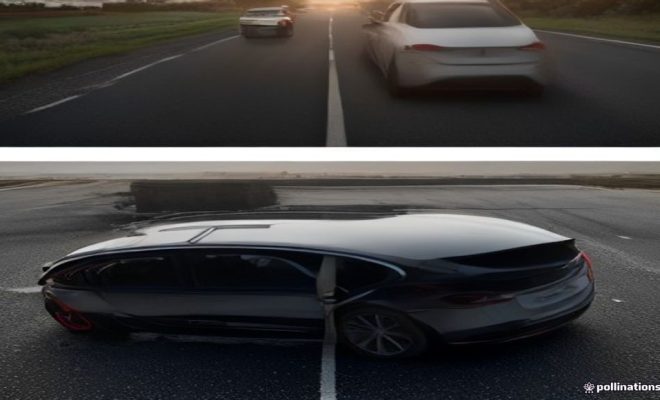
One particular incident highlighted in Electrek’s investigation stands out as a chilling example of the potential pitfalls. It involved a deadly crash in Mesa, Arizona. Imagine this: a Tesla, operating in self-driving mode, suddenly and inexplicably slams on its brakes. This isn’t just inconvenient; it’s incredibly dangerous, especially on a highway or in heavy traffic. In this specific case, that sudden stop led to a fatal collision. It’s a scenario that brings us squarely back to an issue NHTSA has been investigating since 2022: ‘phantom braking.’ (See: National Highway Traffic Safety Administration.)
Phantom braking, for those unfamiliar, is when an advanced driver-assist system detects a non-existent obstacle or misinterprets sensor data, causing the vehicle to unexpectedly slow down or brake sharply. It’s a phenomenon that’s been reported by numerous Tesla owners and has been a persistent concern. The Mesa crash serves as a grim reminder that these seemingly minor software glitches can have catastrophic real-world consequences, transforming a technical anomaly into a matter of life and death. You can’t just brush off a system that decides to brake hard for no discernible reason when you’re traveling at highway speeds.
3.1. The Technical Roots of Phantom Braking
Why does phantom braking happen? It’s a complex issue, often stemming from the interplay of various sensors and the software interpreting their data. Tesla’s system primarily relies on cameras (a “vision-only” approach) to perceive its surroundings, a decision that sets it apart from many competitors who also use radar or lidar. While cameras offer rich visual information, they can be susceptible to certain environmental conditions or visual anomalies.
For example, a sudden change in lighting, shadows from overhead bridges, reflections off wet roads, or even certain types of road signs could be misinterpreted by the system’s algorithms as an impending collision. The system then, in an attempt to prevent a perceived crash, initiates emergency braking. While the intent is safety, the misinterpretation leads to a dangerous, unexpected maneuver. This reliance on vision alone, without the complementary data from other sensor types, is often cited by critics as a potential vulnerability that contributes to phantom braking incidents.
4. Tesla’s Redactions: The Transparency Problem
A significant hurdle in understanding the full scope and causes of these incidents is Tesla’s approach to reporting. Electrek’s investigation specifically called out the heavy redactions in Tesla’s NHTSA filings. We’re talking about crucial information being blacked out: the specific software version that was active during the crash, and often, significant portions of the crash narrative itself. This isn’t just about proprietary information; it’s about public safety and accountability.
When key details are withheld, it becomes incredibly difficult for regulators, independent researchers, and the public to truly understand why these crashes occur, identify patterns, and push for necessary improvements. Transparency is paramount when dealing with technology that has such profound implications for human life. Without it, how can we have confidence that the lessons are being learned and that appropriate measures are being taken to prevent future Tesla Autopilot crashes?
4.1. The Implications of Redactions for Accident Reconstruction
Think about what happens after a conventional car crash. Accident reconstructionists meticulously examine skid marks, vehicle damage, witness statements, and black box data to piece together the sequence of events. In an Autopilot or FSD-involved crash, the “black box” equivalent is the vehicle’s internal data logs, which capture everything from sensor readings to driver inputs, system status, and braking/acceleration commands. These logs are incredibly detailed and are crucial for understanding what the car “saw” and “decided” at the moment of impact.
When Tesla redacts critical elements like the software version or large parts of the crash narrative from its NHTSA submissions, it severely hampers the ability of independent investigators and regulators to perform thorough accident reconstruction. It prevents them from identifying if a specific software bug was at fault, if the system performed as expected but the driver failed to intervene, or if external factors were misinterpreted. Without this complete picture, it’s difficult to draw definitive conclusions, learn from mistakes, and implement targeted safety improvements, leaving a cloud of uncertainty over the incidents.
5. The Broader Context: NHTSA’s Ongoing Scrutiny
It’s important to remember that these July 2026 incidents don’t exist in a vacuum. NHTSA has been actively investigating Tesla’s Autopilot and FSD systems for quite some time. The phantom braking issue, as mentioned, has been on their radar since 2022. This regulatory oversight stems from a pattern of incidents and public complaints that have raised serious questions about the safety and reliability of these systems when deployed on public roads without continuous, active human supervision.
The surge in incidents, especially the fatal ones, only intensifies this scrutiny. Regulators are tasked with ensuring that new technologies, no matter how innovative, meet fundamental safety standards. When a company’s own data, even with redactions, shows a significant increase in crashes, it naturally triggers a deeper look into the underlying causes and whether the existing regulatory framework is sufficient to manage the risks posed by these rapidly evolving systems.
5.1. The Role of Regulatory Action in Shaping Autonomous Tech
NHTSA’s investigations aren’t just about historical analysis; they play a critical role in shaping the future development and deployment of autonomous vehicle technology. When NHTSA opens an investigation, it sends a clear signal to manufacturers about areas of concern. Depending on the findings, the agency has several tools at its disposal, ranging from requesting more data and issuing safety advisories to compelling recalls or even imposing fines.
For example, if an investigation concludes that a specific software bug is consistently causing dangerous behavior, NHTSA can mandate a recall to update the software. If it finds that driver monitoring systems are insufficient to ensure human engagement, it could push for stricter requirements. These actions not only address immediate safety concerns but also set precedents for the entire industry, influencing how other companies develop and test their own advanced driver-assist systems. The regulatory landscape, while sometimes appearing slow, is a crucial safeguard in the rapid evolution of automotive AI.
6. Public Safety vs. Innovation: A Delicate Balance
This whole situation highlights a fundamental tension between the relentless drive for technological innovation and the paramount need for public safety. Tesla is undeniably a leader in pushing the boundaries of automotive technology, and the vision of fully autonomous vehicles holds tremendous promise for reducing accidents caused by human error. However, that promise must be balanced against the very real dangers of deploying technology that isn’t yet perfect.
The emotional impact of fatalities, coupled with legitimate public safety concerns, puts immense pressure on both the manufacturer and regulators. How do you foster innovation without compromising safety? Where do you draw the line between a ‘beta’ test and a fully vetted system ready for widespread public use? These are not easy questions, and the tragic incidents of July 2026 serve as a stark reminder that the stakes are incredibly high. (See: CDC Motor Vehicle Safety.)
6.1. Historical Parallels: Learning from Past Technological Revolutions
This tension between innovation and safety isn’t new; it’s a recurring theme throughout technological history. Think about the early days of aviation, where rapid advancements often came with significant risks and accidents. Or consider the introduction of automobiles themselves, which initially lacked many of the safety features we now take for granted, like seatbelts or airbags. In each case, a period of iterative development, public scrutiny, and eventual regulation helped to mature the technology and integrate safety as a core design principle.
The key takeaway from these historical parallels is that while innovation is vital, it must eventually converge with robust safety standards. The “move fast and break things” mentality, while sometimes effective in software development, has different and more severe consequences when applied to systems controlling multi-ton vehicles. The public expects, and deserves, that companies developing life-critical technologies operate with the utmost caution and prioritize safety over speed to market.
7. The Future of Autopilot: Reliability, Oversight, and Trust
The events of July 2026 undoubtedly cast a long shadow over the future of Tesla’s Autopilot and FSD systems. The core issues revolve around reliability, oversight, and perhaps most critically, trust. For these systems to gain widespread acceptance, the public needs to have unwavering confidence in their ability to operate safely and predictably. When incidents like these fatal Tesla Autopilot crashes occur, that trust is inevitably eroded.
Moving forward, there needs to be a clear pathway to address these concerns. This includes greater transparency from Tesla, more robust and perhaps even proactive oversight from regulatory bodies like NHTSA, and a demonstrable commitment to refining these systems to a point where such tragic incidents become exceedingly rare. The promise of autonomous driving is immense, but it must be built on a foundation of safety and accountability, not on redacted reports and unanswered questions.
7.1. Building Public Trust in Autonomous Technology
Rebuilding and maintaining public trust is paramount for the long-term success of autonomous driving. This isn’t just about technical performance; it’s about perception and confidence. When incidents are shrouded in secrecy or explanations are vague, it breeds suspicion. Conversely, clear communication, open data sharing (where privacy allows), and a demonstrated commitment to learning from mistakes can go a long way.
Consider the impact of independent safety ratings or transparent reporting mechanisms. If the public can easily access unbiased information about the safety record of various driver-assist systems, it empowers them to make informed decisions. Furthermore, consistent messaging from manufacturers that emphasizes the current limitations of the technology and the absolute necessity of driver supervision is crucial. Over-promising and under-delivering on safety, especially when it leads to fatalities, is a surefire way to lose the public’s confidence and slow down the adoption of what could ultimately be a very beneficial technology.
8. Understanding the ‘Full Self-Driving’ Nuance
It’s crucial to differentiate, even if Tesla sometimes blurs the lines, between ‘Autopilot’ and ‘Full Self-Driving’ (FSD). While both are advanced driver-assist systems, FSD is designed to handle more complex driving scenarios, including city streets, turns, and navigating intersections. Autopilot, generally speaking, is more focused on highway driving, lane keeping, and adaptive cruise control. The fact that incidents are now being reported for both, and that FSD is increasingly a factor in more complex situations, adds another layer to the discussion about the system’s capabilities and limitations.
The term ‘Full Self-Driving’ itself has been a source of controversy, with critics arguing it creates a false sense of security and implies a level of autonomy that the system doesn’t yet possess. Regardless of the marketing, when these systems are engaged in real-world driving and contribute to accidents, especially fatal ones, the public perception and regulatory scrutiny naturally intensify. Understanding which system was active in each of the July 2026 incidents is vital for a comprehensive analysis.
8.1. The SAE Levels of Driving Automation and Misconceptions
To really get a handle on the “Full Self-Driving” nuance, it’s helpful to understand the Society of Automotive Engineers (SAE) International’s levels of driving automation. These levels, from 0 (no automation) to 5 (full automation), provide a standardized way to classify automated driving systems. Autopilot and FSD, despite their names, are generally considered Level 2 systems. At Level 2, the vehicle provides steering and acceleration/braking support, but the human driver must constantly supervise the system and be ready to take control at any moment. The system is NOT self-driving in the true sense of the word.
The problem arises when the public, influenced by marketing terms like “Full Self-Driving,” incorrectly assumes the vehicle is operating at Level 3, 4, or even 5, where the car can handle most or all driving tasks, and the driver might not need to constantly monitor. This misconception can lead to dangerous behaviors, such as drivers disengaging from the driving task, using their phones, or even falling asleep, which is exactly what these Level 2 systems are not designed for. The gap between perceived capability and actual capability is a significant safety challenge.
9. The Path Forward: What Needs to Change?
So, what’s the takeaway from July 2026’s troubling statistics regarding Tesla Autopilot crashes? It’s clear that several areas require immediate attention and significant improvement. First, transparency is non-negotiable. Tesla needs to provide comprehensive, unredacted data to regulators and, where appropriate, to the public, detailing exactly what happened in these incidents. Knowing the software version, the environmental conditions, and the system’s inputs and outputs is critical for understanding failure modes and preventing recurrence. (See: New York Times coverage on Tesla incidents.)
Second, regulatory oversight needs to be strengthened. NHTSA has a tough job, but the rapid evolution of this technology demands equally rapid and robust regulatory responses. This might mean more stringent testing protocols, clearer guidelines for public deployment, and perhaps even a re-evaluation of how ‘beta’ software is allowed to operate on public roads. Finally, and perhaps most importantly, there needs to be a renewed focus on ensuring these systems are genuinely safe and reliable before they are widely deployed. The promise of future safety benefits cannot justify current risks, especially when those risks lead to tragic fatalities. The goal isn’t to halt innovation, but to ensure it proceeds responsibly and with the ultimate safety of human lives at its core.
9.1. Implementing Proactive Safety Measures
Beyond reacting to incidents, a proactive approach to safety is essential. This could involve several strategies. One is enhanced driver monitoring systems that go beyond simply detecting hands on the wheel, using cameras to ensure the driver’s eyes are on the road and they are attentive. Another is more rigorous, independent safety validation of new software releases before they are pushed to consumer vehicles. Currently, much of the “beta” testing is done by paying customers on public roads, which raises questions about the ethical implications of using public thoroughfares as a testing ground for potentially unstable software.
Furthermore, standardizing incident data collection and reporting across all manufacturers of advanced driver-assist systems would greatly benefit regulators and researchers. If all companies provided similar, comprehensive data, it would be easier to identify systemic issues, compare performance, and develop industry-wide best practices. The goal should be to create an ecosystem where safety is baked into the development process from the very beginning, rather than being an afterthought addressed only after tragic events occur.
10. Frequently Asked Questions about Tesla Autopilot Crashes
Q1: What exactly is Autopilot, and how is it different from Full Self-Driving (FSD)?
Autopilot is Tesla’s suite of advanced driver-assist features, typically including Traffic-Aware Cruise Control and Autosteer. Traffic-Aware Cruise Control matches your car’s speed to that of surrounding traffic, while Autosteer assists in steering within a clearly marked lane. Full Self-Driving (FSD) is a more advanced package of features that builds upon Autopilot. It’s designed to handle more complex driving scenarios, like navigating city streets, making turns, and stopping at traffic lights and stop signs. Despite its name, both Autopilot and FSD are Level 2 driver-assist systems, meaning the driver must remain fully attentive and ready to take control at all times.
Q2: How does NHTSA investigate these Tesla Autopilot crashes?
NHTSA (National Highway Traffic Safety Administration) investigates crashes involving advanced driver-assist systems like Autopilot and FSD through its Special Crash Investigations (SCI) program. When a crash occurs where these systems might be implicated, NHTSA collects data from various sources, including police reports, crash scene evidence, and vehicle data logs provided by the manufacturer. They analyze this information to determine the system’s status, driver actions, and environmental factors leading up to the incident. These investigations help identify potential defects, safety risks, and inform future regulatory actions or recalls.
Q3: What is “phantom braking” and why is it a concern?
Phantom braking refers to instances where a vehicle’s advanced driver-assist system, like Tesla’s Autopilot or FSD, unexpectedly applies the brakes sharply without a clear, physical obstacle in its path. It’s a concern because such sudden, uncommanded braking can create dangerous situations, especially on highways or in heavy traffic, potentially leading to rear-end collisions. The issue often stems from the system misinterpreting sensor data (e.g., shadows, reflections, or distant objects) as an imminent collision. NHTSA has been investigating phantom braking incidents in Teslas since 2022.
Q4: Why is transparency regarding crash data so important?
Transparency in crash data, especially concerning advanced driver-assist systems, is crucial for several reasons. Firstly, it allows regulators and independent researchers to thoroughly investigate incidents, identify patterns, and understand the root causes of system failures or limitations. This understanding is vital for developing effective safety improvements. Secondly, it builds public trust. When key details are redacted or withheld, it creates suspicion and makes it difficult for the public to have confidence in the safety claims of these technologies. Full transparency ensures accountability and helps accelerate the responsible development of autonomous vehicles.
Q5: Are Tesla’s Autopilot and FSD systems safer than human driving?
Tesla often cites data suggesting that vehicles using Autopilot have a lower crash rate than the national average for human-driven vehicles. However, directly comparing these statistics is complex and often debated by safety experts. Critics argue that Tesla’s data doesn’t account for factors like where and when Autopilot is typically used (e.g., primarily on highways, in good weather, by attentive drivers), which could naturally lead to fewer accidents regardless of the system’s involvement. There’s no consensus yet on whether Level 2 systems like Autopilot or FSD are definitively safer across all driving conditions, especially given the ongoing investigations into their limitations and incidents like those in July 2026.
Trending Now
Frequently Asked Questions
What caused the recent Tesla Autopilot crashes?
The recent surge in Tesla Autopilot crashes can be attributed to a combination of factors, including a significant increase in reported incidents, with 236 crashes in July 2026 alone. Investigations have revealed that critical details about these crashes, such as software versions and circumstances, often remain undisclosed, raising concerns about the safety of these advanced driver-assist systems.
How many fatal Tesla crashes occurred in July 2026?
In July 2026, there were four fatal Tesla Autopilot crashes, resulting in the tragic loss of seven lives. This alarming statistic highlights the serious implications of relying on advanced driver-assist features, prompting a critical examination of their safety and effectiveness.
What are the statistics on Tesla crashes involving Autopilot?
According to filings with the National Highway Traffic Safety Administration (NHTSA), July 2026 saw a record 236 crashes involving Tesla's Autopilot and Full Self-Driving systems. This marked the highest monthly total for such incidents, raising concerns about the reliability and safety of these technologies.
How does Tesla handle crash reporting and transparency?
Tesla's handling of crash reporting often lacks transparency, with many details remaining heavily redacted in NHTSA filings. Investigative efforts have revealed that crucial information, such as the specific software version in use during incidents, is frequently withheld, complicating the public's understanding of the safety of their Autopilot and FSD systems.
What implications do Tesla crashes have for consumer safety?
The recent Tesla crashes raise significant concerns about consumer safety, particularly regarding the reliability of Autopilot and Full Self-Driving technologies. With a record number of incidents reported, including fatal crashes, it underscores the need for a thorough investigation and greater transparency to ensure public trust in these advanced driver-assist features.
Have you experienced this yourself? We'd love to hear your story in the comments.