The Tech Edvocate

Top Menu

  • Advertisement
  • Apps
  • Home Page
  • Home Page Five (No Sidebar)
  • Home Page Four
  • Home Page Three
  • Home Page Two
  • Home Tech2
  • Icons [No Sidebar]
  • Left Sidbear Page
  • Lynch Educational Consulting
  • My Account
  • My Speaking Page
  • Newsletter Sign Up Confirmation
  • Newsletter Unsubscription
  • Our Brands
  • Page Example
  • Privacy Policy
  • Protected Content
  • Register
  • Request a Product Review
  • Shop
  • Shortcodes Examples
  • Signup
  • Start Here
    • Governance
    • Careers
    • Contact Us
  • Terms and Conditions
  • The Edvocate
  • The Tech Edvocate Product Guide
  • Topics
  • Write For Us
  • Advertise

Main Menu

  • Start Here
    • Our Brands
    • Governance
      • Lynch Educational Consulting, LLC.
      • Dr. Lynch’s Personal Website
      • Careers
    • Write For Us
    • The Tech Edvocate Product Guide
    • Contact Us
    • Books
    • Edupedia
    • Post a Job
    • The Edvocate Podcast
    • Terms and Conditions
    • Privacy Policy
  • Topics
    • Assistive Technology
    • Child Development Tech
    • Early Childhood & K-12 EdTech
    • EdTech Futures
    • EdTech News
    • EdTech Policy & Reform
    • EdTech Startups & Businesses
    • Higher Education EdTech
    • Online Learning & eLearning
    • Parent & Family Tech
    • Personalized Learning
    • Product Reviews
  • Advertise
  • Tech Edvocate Awards
  • The Edvocate
  • Pedagogue
  • School Ratings

logo

The Tech Edvocate

  • Start Here
    • Our Brands
    • Governance
      • Lynch Educational Consulting, LLC.
      • Dr. Lynch’s Personal Website
        • My Speaking Page
      • Careers
    • Write For Us
    • The Tech Edvocate Product Guide
    • Contact Us
    • Books
    • Edupedia
    • Post a Job
    • The Edvocate Podcast
    • Terms and Conditions
    • Privacy Policy
  • Topics
    • Assistive Technology
    • Child Development Tech
    • Early Childhood & K-12 EdTech
    • EdTech Futures
    • EdTech News
    • EdTech Policy & Reform
    • EdTech Startups & Businesses
    • Higher Education EdTech
    • Online Learning & eLearning
    • Parent & Family Tech
    • Personalized Learning
    • Product Reviews
  • Advertise
  • Tech Edvocate Awards
  • The Edvocate
  • Pedagogue
  • School Ratings
  • Urgent Warning: How AI is Fueling Rampant Skincare Scams Right Now

  • Urgent: This Skincare Trend Is Exploiting Children — And It’s Spreading Fast

  • Seattle Times sues Microsoft and OpenAI, alleging they trained their AI on its journalism

  • Astonishing: Anthropic Axed $6 Billion Deal for Decart — Why?

  • Sega cancelled its “risky” Super Game project as it “would have to grow enormously to match the scale of the service” | GamesIndustry.biz

  • Devastating: Don’t Nod’s €8M Cash Crisis Threatens Studio Future

  • OpenAI Accused of Shocking Attempt to Hijack Euler Proof — The Truth Revealed

  • Meta Child Sexual Abuse Ads: A Disturbing Investigation Unveils Shocking Truths

  • Unveiling the Quiet Crisis: Why Two Mega-Districts Just Banned AI in Education

  • Unveiling the Controversial New Texas Curriculum: A Battle Over History and Identity

Online Learning & eLearning
Home›Online Learning & eLearning›The Ultimate Guide to Apt and Apt-Get Commands

The Ultimate Guide to Apt and Apt-Get Commands
By Matthew Lynch
April 1, 2023
0
Spread the love

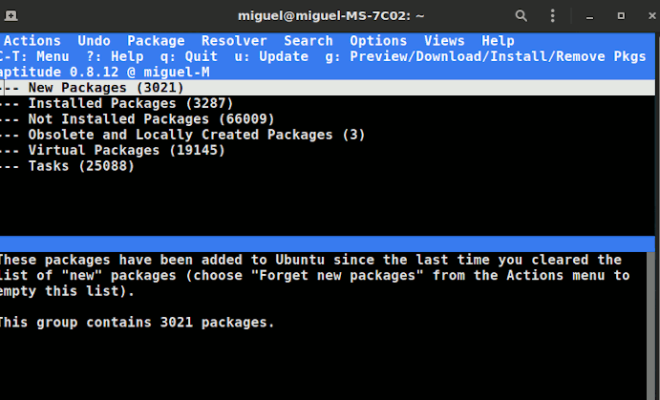
If you’re a Linux user, you’re probably already familiar with the apt and apt-get commands that are widely used in Ubuntu and other Debian-based distributions to install and manage software packages. Apt and apt-get are powerful tools that allow you to install, update, upgrade, and remove software packages from your system with ease. However, there’s much more to these commands than meets the eye. In this ultimate guide, we will explore the ins and outs of apt and apt-get commands, covering the most important options and use cases that you need to know.

Getting Started

Before diving into the apt and apt-get commands, let’s first make sure you are using the latest package information. The first command you should run is apt-get update, which updates the package lists for all repositories that are configured in your system. This is essential to ensure you can install the latest versions of software packages.

sudo apt-get update

Installing packages

One of the most common use cases for apt and apt-get is to install new software packages. To install a package, you can either use apt install or apt-get install followed by the name of the package you want to install. For example, if you want to install the GIMP image editor on your system, you can run the following command:

sudo apt install gimp

or

sudo apt-get install gimp

This will download and install the latest version of the GIMP package from the repository.

Removing packages

Uninstalling a package is just as easy. You can use the apt remove or apt-get remove command followed by the name of the package you want to remove. For example, to remove the GIMP package, you can run the following command:

sudo apt remove gimp

or

sudo apt-get remove gimp

This will remove the GIMP package from your system while keeping the configuration files intact.

Updating packages

Keeping your system up-to-date is crucial for security and stability. To update all packages installed on your system, you can use the apt upgrade or apt-get upgrade command. This will download and install the latest updates for all packages currently installed on your system.

sudo apt upgrade

or

sudo apt-get upgrade

It’s worth noting that the apt-get upgrade command is more aggressive than apt upgrade as it installs the latest available package, even if it means installing a newer version of a package’s dependencies. On the other hand, apt upgrade is more conservative and prefers to stick with stable packages unless it is necessary to update.

Searching for packages

The apt search or apt-cache search commands are helpful when you need to find a specific package. This command will search the apt package repository for software packages that match your search term. For example, let’s say you’re looking for a web browser. You can use the following command:

sudo apt search browser

or

apt-cache search browser

This will return a list of all packages containing the word “browser” in the package name or description.

Listing installed packages

If you want to see a list of all packages installed on your system, you can use the apt list or dpkg command. The following command will show you all the packages installed on your system:

dpkg -l

or

apt list –installed

Conclusion The apt and apt-get commands are an essential part of managing packages on your Debian or Ubuntu system. By using these commands, you can quickly install or remove packages, update your system, and search for new software. The commands we’ve covered in this ultimate guide should be enough to get you started with managing your software packages effectively. However, there are many more advanced features and options available with these commands, so be sure to check out the official documentation to learn more.


Previous Article

The three ways to get your hands ...

Next Article

These VPNs Can Help Improve Your Online ...

Matthew Lynch

Related articles More from author

  • Early Childhood & K-12 EdTechHigher Education EdTechOnline Learning & eLearningPersonalized Learning

    10 ways to use Skype in the classroom

    December 18, 2016
    By Matthew Lynch
  • Online Learning & eLearning

    What Is Desoldering Wick and When Should You Use It?

    June 23, 2023
    By Matthew Lynch
  • Online Learning & eLearning

    CNN+ Is Shutting Down After Just One Month: Here’s Why

    June 15, 2023
    By Matthew Lynch
  • Elementary EducationOnline Learning & eLearning

    Sync Your iOS Device with a New Computer Without Losing Data

    March 30, 2023
    By Matthew Lynch
  • Online Learning & eLearning

    How to See Who Liked You on Bumble Without Paying

    February 19, 2024
    By Matthew Lynch
  • Online Learning & eLearning

    Pros And Cons Of 5 Online Learning Authoring Tool Types

    March 20, 2023
    By Matthew Lynch

Search

Login & Registration

  • Log in
  • Entries feed
  • Comments feed
  • WordPress.org

Newsletter

Signup for The Tech Edvocate Newsletter and have the latest in EdTech news and opinion delivered to your email address!

About Us

Since technology is not going anywhere and does more good than harm, adapting is the best course of action. That is where The Tech Edvocate comes in. We plan to cover the PreK-12 and Higher Education EdTech sectors and provide our readers with the latest news and opinion on the subject. From time to time, I will invite other voices to weigh in on important issues in EdTech. We hope to provide a well-rounded, multi-faceted look at the past, present, the future of EdTech in the US and internationally.

We started this journey back in June 2016, and we plan to continue it for many more years to come. I hope that you will join us in this discussion of the past, present and future of EdTech and lend your own insight to the issues that are discussed.

Newsletter

Signup for The Tech Edvocate Newsletter and have the latest in EdTech news and opinion delivered to your email address!

Contact Us

The Tech Edvocate
910 Goddin Street
Richmond, VA 23231
(601) 630-5238
[email protected]

Copyright © 2026 Matthew Lynch. All rights reserved.