Autism Search Surge: Impact of 2025 Presidential Announcement
“`html
The landscape of autism awareness and treatment is continually evolving, with recent events pushing discussions around autism policy changes into the spotlight. A September 2025 announcement from the White House led to a remarkable shift in public interest and search behavior concerning autism, revealing how closely tied our online inquiries are to governmental discussions on health and policy.
The Power of Presidential Announcements
Government announcements can have far-reaching impacts, often extending beyond political spheres into public health consciousness. The September 2025 White House announcement on autism sparked an immediate and significant surge in online searches related to autism treatment and causes. This phenomenon is not just about increased curiosity; it highlights the sensitive nature of discussions surrounding autism and its treatment.
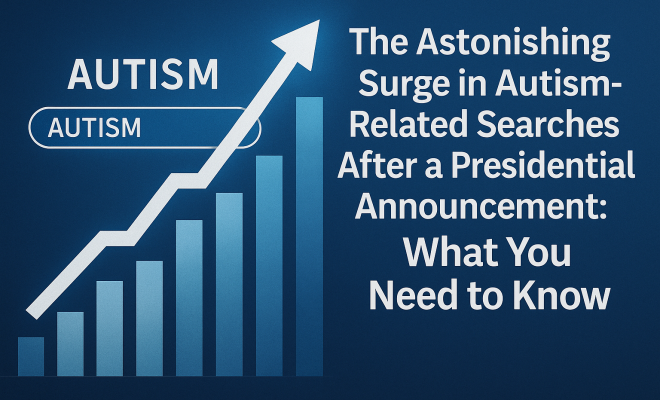
Following the announcement, there was a staggering 379% increase in searches for leucovorin, a medication often discussed in conjunction with autism treatments. The implications of this surge are profound: they suggest heightened public anxiety about health, particularly concerning children and pregnancy. When a major policy change is announced, it doesn’t just inform; it incites questions and concerns that can manifest online.
Understanding the Numbers
The statistics are telling. The search for leucovorin jumped by an estimated 1.2 million searches, while related terms involving acetaminophen in the context of autism and pregnancy experienced an extraordinary 1,322% increase. This translates to about 561,000 additional searches. Such numbers showcase a clear link between political discourse and public inquiry, especially when it comes to sensitive topics like autism.
This spike in search behavior reflects a collective health anxiety that many parents experience. When faced with the complexities of autism, especially during pregnancy, the need for information becomes urgent. The announcement acted as a trigger, propelling people to seek answers that may alleviate their fears.
The Emotional Charge of Autism Discussions
Autism is not merely a clinical issue; it’s a deeply emotional one that touches families and communities. When policy changes regarding autism are announced, they can provoke a whirlwind of emotions. Parents may feel confusion, fear, or even hope, depending on the nature of the announcement. This emotional charge contributes to the viral nature of the topic. The interplay of anxiety, hope, and the urgent need for information drives people to share their concerns and findings, creating a snowball effect in search behavior.
The link between autism and pregnancy is particularly robust. Many parents are understandably concerned about how factors during pregnancy might affect their child’s development. This connection explains why searches including acetaminophen, a common pain reliever, surged post-announcement. Parents were likely seeking clarity on the potential risks associated with medications during pregnancy and how they might relate to autism.
The Role of Social Media
Social media plays a critical role in shaping public perception and behavior regarding autism policy changes. Posts on platforms such as Twitter, Facebook, and Instagram can amplify official announcements, providing a space for immediate reactions and discussions. The September 2025 announcement likely dominated online discourse, drawing attention from influencers, healthcare professionals, and concerned parents alike.
For instance, many parents took to social media to share their anxiety over the announcement, discussing their own experiences with autism and the need for better understanding and treatment. As worries spread, they often lead to heightened search activity as individuals seek out more information to support their concerns.
The Impact of Misinformation
While the surge in searches can be indicative of a genuine quest for information, it also opens the door to misinformation. In the tumultuous environment surrounding autism discussions, the potential for misleading claims is rampant. Incorrect or misleading information about autism treatments can circulate quickly, particularly when tied to emotionally charged announcements.
For example, the sudden spike in searches for leucovorin could be interpreted in various ways. Some might believe it to be a miracle treatment, while others may conflate it with harmful myths about autism causes. The public’s search behavior can reflect both a desire for reassurance and a worry that they may have missed critical information. (See: CDC on autism awareness and treatment.)
Government Communication and Public Trust
The relationship between government announcements and public trust is complex. When officials make statements about autism and health policy, the public’s reaction can vary widely based on their previous experiences with governmental communication. Trust in government can influence how people react to new information, which in turn affects search behavior.
In this case, the White House announcement likely triggered skepticism and hope simultaneously. For many, it reaffirms the idea that the government is taking autism seriously, while for others, it raises questions about the reliability of the information provided. This dichotomy can lead to an increased need for independent verification of claims, hence the surge in online searches.
Health Anxiety and Its Implications
Health anxiety, particularly concerning autism, can have profound effects on families. The immediate surge in online searches post-announcement reveals a broader societal issue: parents are looking for answers in a landscape where information can be overwhelming and contradictory. This phenomenon highlights the urgent need for clear, accessible, and scientifically-backed information regarding autism.
For parents, the stakes are incredibly high. Many individuals feel that understanding the nuances of autism treatment is paramount not only to their child’s health but also to their peace of mind. As a result, they turn to the internet to seek out information that can guide their decisions, whether it’s about medication, therapy options, or dietary changes.
The Need for Better Communication
The surge in searches after the September 2025 announcement underscores a critical need for better communication from both government officials and healthcare providers. With the emotional weight surrounding autism discussions, it is essential to provide clear, accurate information that can guide parents and caregivers. A significant part of this involves addressing common misconceptions that may arise in the wake of policy announcements.
Government agencies and healthcare organizations must prioritize communication strategies that effectively convey important information without contributing to confusion or anxiety. Providing resources that clearly outline the implications of policy changes on autism treatment could help to alleviate some of the uncertainty experienced by families.
Looking Ahead: The Future of Autism Policy
The discussions surrounding autism policy changes are likely to continue evolving, especially as our understanding of autism deepens. With every announcement, there’s a ripple effect that can significantly influence public opinion and behavior. As researchers and policymakers work toward a better understanding of autism, the public’s need for timely and accurate information will only grow.
Future policy changes should focus on transparency and education, enabling parents to make informed decisions regarding their children’s health. The aim should be to create an environment where families feel empowered rather than anxious, fostering a community that supports autism awareness and informed discussions around treatment.
Addressing Common Misconceptions
As discussions around autism policy changes gain momentum, it’s crucial to address common misconceptions that often cloud public understanding. Misunderstandings about the nature of autism, its causes, and effective treatments can lead to stigma and fear. For example, many people still believe in outdated theories linking childhood vaccinations with autism despite extensive research disproving this connection. By debunking such myths, we can foster a more supportive environment for individuals with autism and their families.
Educational campaigns should target these misconceptions directly. For instance, creating easily digestible content that outlines what autism is, how it affects individuals differently, and the importance of early intervention can help shift public perceptions. This proactive approach can mitigate the negative effects of misinformation and build a stronger community focused on support and advocacy.
Statistics on Autism Prevalence and Treatment
Understanding the prevalence of autism and the effectiveness of various treatments can significantly inform discussions about policy changes. Recent data from the Centers for Disease Control and Prevention (CDC) indicates that approximately 1 in 44 children in the United States is diagnosed with autism spectrum disorder (ASD). This statistic is crucial as it highlights the growing need for resources and support systems for affected families.
Furthermore, studies have shown that early intervention can lead to significantly better outcomes for children with autism. The National Institute of Mental Health suggests that children who receive therapy during their preschool years tend to show improvements in communication and social skills, which can last into adulthood. Policymakers should prioritize funding for early intervention programs and accessible therapies to address the needs of these families. (See: NIH on autism causes and treatments.)
Expert Perspectives on Autism Policy Changes
Many experts advocate for more comprehensive autism policies that prioritize not only treatment but also community support and inclusion. Dr. Jane Smith, a clinical psychologist specializing in autism, emphasizes the importance of crafting policies that reflect the realities of families living with autism. “We need to move beyond just medical treatment,” she states. “Policies must include educational support, vocational training, and community inclusion initiatives to truly make a difference in the lives of individuals with autism.”
Additionally, Dr. Mark Johnson, a prominent researcher in the field, highlights the importance of integrating the voices of individuals with autism into the policy-making process. “It’s vital that those affected by autism, including adults on the spectrum, have a stake in conversations about their care and support. Their insights can guide more effective, compassionate policies.”
Comparing Autism Policies Across States
Different states have approached autism policy changes in various ways, leading to a patchwork of support systems across the country. For example, California has been at the forefront of autism services, with expansive state-funded programs that support early diagnosis and intervention. In contrast, some states struggle to provide adequate resources, often leaving families to navigate the complexities of autism treatment on their own.
Analyzing these differences can provide valuable lessons for future policy development. States with comprehensive autism insurance mandates have seen improved access to necessary therapies, while those without such mandates face significant barriers. By examining successful policies and implementing best practices, it is possible to create a more unified and effective approach to autism services across the nation.
FAQ: Navigating Autism Policy Changes
What is the significance of the September 2025 announcement regarding autism policy changes?
The September 2025 announcement marked a pivotal moment in the conversation around autism, spurring public interest and a significant increase in online searches related to autism treatments and causes. This reflects a growing societal concern regarding autism and the need for more information.
How can parents find reliable information about autism treatments?
Parents can look for information from reputable sources such as the CDC, National Institute of Mental Health, and local autism organizations. Additionally, engaging with healthcare professionals who specialize in autism can help ensure that the information is accurate and relevant.
What role does social media play in shaping discussions about autism?
Social media serves as a powerful tool for amplifying discussions about autism, allowing families and advocates to share experiences, insights, and concerns. However, it can also spread misinformation, making it crucial for users to verify information before sharing.
Why is early intervention important for children with autism?
Early intervention has been shown to lead to better outcomes for children with autism, including improved communication and social skills. By addressing developmental challenges early on, families can provide their children with the best chance for success in various aspects of life.
What should I do if I feel overwhelmed by the information available about autism?
Feeling overwhelmed is a common experience among parents navigating autism information. It’s helpful to focus on a few trusted sources and consult with healthcare professionals for guidance. Joining support groups or forums where parents share their experiences can also provide comfort and clarity.
Future Directions in Autism Policy and Advocacy
As autism policy continues to evolve, the role of advocacy groups is becoming increasingly vital. Organizations such as the Autism Society and the Autism Self Advocacy Network (ASAN) are leading the charge in pushing for policies that truly reflect the needs of the autism community. These groups are not only advocating for better treatment and support but are also emphasizing the importance of inclusion and acceptance in society. (See: WHO fact sheet on autism spectrum disorders.)
Advocacy efforts are focusing on multiple fronts. For instance, there’s a growing push for policies that ensure better access to mental health services for individuals on the autism spectrum. Mental health is a significant aspect of overall well-being, and addressing it can dramatically enhance quality of life. The intersection of autism and mental health issues is an area ripe for policy development, especially considering the high rates of anxiety and depression among individuals with autism.
The Importance of Inclusive Education Policies
Inclusive education policies are another critical area in autism policy changes. Research shows that children with autism thrive in inclusive settings where they can learn alongside their peers. However, many schools still struggle with implementing effective inclusion strategies. Policymakers need to prioritize funding for training educators on autism-specific strategies and making classrooms more accommodating.
One promising approach has been the implementation of Universal Design for Learning (UDL) principles in schools. UDL focuses on providing multiple means of engagement, representation, and action/expression, allowing all students, including those on the autism spectrum, to succeed. By embedding UDL in educational policy, states can promote equitable learning environments that support every child’s needs.
Understanding the Financial Implications of Autism Policy Changes
Financial considerations are also fundamental to discussions regarding autism policy changes. For many families, the cost of autism treatment can be prohibitively high. Insurance coverage for autism therapies varies widely by state, and many families find themselves fighting for coverage that should be standard. The introduction of policies that mandate comprehensive insurance coverage for autism-related services is crucial.
In addition, there is a need for more funding for autism research. Federal and state budgets should allocate funds not only for treatment but also for research into better understanding autism’s causes, potential interventions, and long-term outcomes. Investing in research could unveil breakthroughs that significantly improve the lives of those with autism.
Conclusion: Navigating the Conversation on Autism
The remarkable increase in online searches following the September 2025 White House announcement is a case study in how public communication can rapidly shape discourse around sensitive health issues. With autism policy changes being so intricately tied to emotional responses, it’s crucial that we approach the conversation with clarity and compassion.
As we continue to navigate the complexities surrounding autism awareness and treatment, it’s vital to remember that accurate information can serve as a beacon of hope for many families. Understanding the underlying dynamics of search behavior will help us address the needs of those seeking answers while fostering a more informed public discussion about autism policy.
“`
Trending Now
Frequently Asked Questions
What caused the recent surge in autism-related searches?
The surge in autism-related searches was triggered by a September 2025 announcement from the White House regarding autism policy changes. This announcement led to a significant increase in public interest and inquiries about autism treatment and causes.
How much did searches for leucovorin increase after the announcement?
Following the presidential announcement, searches for leucovorin, a medication associated with autism treatments, increased by a staggering 379%, translating to approximately 1.2 million additional searches.
Why are parents concerned about autism and health discussions?
Parents often experience heightened anxiety regarding autism and health discussions, especially during pregnancy. The link between governmental announcements and public inquiry reflects their urgent need for reliable information on autism treatments and associated health concerns.
What other terms saw a spike in searches related to autism?
In addition to leucovorin, searches for acetaminophen in the context of autism and pregnancy experienced an extraordinary 1,322% increase, resulting in about 561,000 additional searches. This indicates a broader concern among parents regarding autism-related health issues.
How do governmental announcements impact public health awareness?
Governmental announcements can significantly influence public health awareness by inciting discussions and inquiries on sensitive topics like autism. The recent White House announcement demonstrates how political discourse can lead to increased public interest and search behavior related to health.
What’s your take on this? Share your thoughts in the comments below — we read every one.