Aurora High School Police Cameras: Why This Expansion Has Civil Rights Groups Fuming
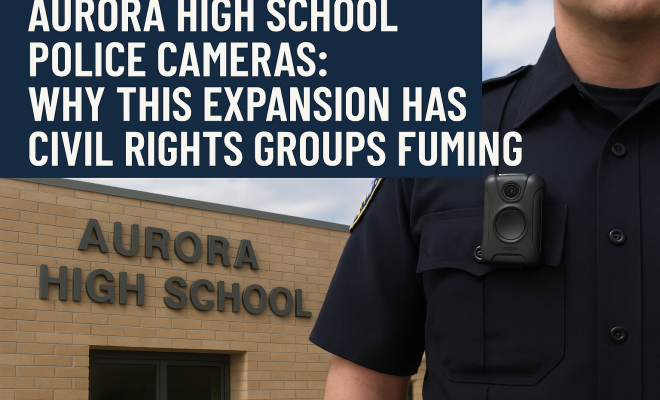
Imagine walking into your high school, knowing that every car entering and leaving the parking lot is being scanned, its license plate recorded, and that data fed into a police database in real-time. For students, parents, and faculty across nine high schools in Aurora, Colorado, this isn’t a hypothetical scenario; it’s their new reality. The installation of Flock police cameras outside these schools has sparked a fiery debate, pitting the urgent need for school safety against deeply held concerns about student privacy and the creeping expansion of surveillance in our daily lives. Published on September 28, 2026, a report from the Sentinel Colorado laid bare the intricacies of this contentious issue, revealing how Aurora police are increasingly relying on these automated license plate readers (ALPRs) in their ‘Real Time Center’ to identify suspects and, they argue, enhance overall safety.
It’s a classic clash of fundamental values, isn’t it? On one side, you have law enforcement and school administrators grappling with the often-terrifying responsibility of protecting young people in an era marked by increasing violence. They see these Aurora high school police cameras as a vital tool, a technological deterrent, and a rapid response mechanism. On the other, you have civil liberties advocates, student groups, and privacy experts who view these same cameras as an unwelcome intrusion, a form of ‘everyday surveillance’ that erodes trust and could disproportionately impact vulnerable populations. This isn’t just a local squabble; it’s a microcosm of a much larger national conversation about technology, security, and the boundaries of privacy in an increasingly interconnected world.
The Rise of Automated License Plate Readers (ALPRs) in Public Spaces
Automated License Plate Readers, or ALPRs, are hardly new technology. For years, law enforcement agencies have used them in various capacities, from tracking stolen vehicles to identifying suspects involved in serious crimes. These sophisticated cameras can capture thousands of license plates per minute, cross-referencing them against ‘hot lists’ or databases of vehicles of interest. The appeal for police departments is obvious: it’s an efficient, tireless, and largely automated way to expand their investigative reach. They can cover vast areas, monitor traffic flows, and provide critical leads in investigations that might otherwise stall.
What’s changed, however, is the sheer scale and ubiquity of their deployment, particularly in sensitive locations like schools. Flock Safety, the company behind many of these systems, markets its cameras as a force multiplier for communities, emphasizing their role in deterring crime and solving cases. And to their credit, Aurora police have pointed to specific instances where these cameras have been instrumental. They’ve cited cases where the technology aided in identifying vehicles linked to suspects, contributing to arrests and providing a sense of tangible success. For officers on the ground, struggling with limited resources and the pressure to keep communities safe, these tools can feel like a godsend.
But this efficiency comes with a trade-off, one that privacy advocates are quick to highlight. Every plate scanned, every vehicle recorded, generates a data point. These data points, aggregated over time, can paint a remarkably detailed picture of an individual’s movements, habits, and associations. It’s this persistent, non-consensual collection of data that fuels much of the controversy surrounding the Aurora high school police cameras and similar deployments nationwide.
Aurora’s Proactive Stance: Enhancing Safety with Aurora High School Police Cameras
The Aurora Police Department (APD) isn’t shy about its commitment to leveraging technology for public safety. Their ‘Real Time Center’ is a testament to this, serving as a central hub where various surveillance feeds, including those from ALPRs, are monitored and analyzed. The APD’s perspective is rooted in a pragmatic approach to crime prevention and rapid response. They argue that in a world where threats can emerge quickly, having eyes on critical areas, especially around schools, is not just beneficial but essential.
When you consider the tragic history of school violence in the United States, it’s easy to understand the impetus behind such measures. Parents and educators are desperately seeking solutions to make schools safer havens for learning. From this vantage point, the Aurora high school police cameras are seen as a proactive deterrent. The very presence of these cameras, proponents suggest, might discourage individuals with ill intent from approaching school grounds. Furthermore, in the event of an incident, the ability to quickly identify a vehicle involved could shave precious minutes off response times, potentially saving lives.
The APD’s public statements often highlight specific success stories, detailing how the ALPRs have helped locate stolen vehicles, identify getaway cars in criminal investigations, or even track down individuals who pose a direct threat. These examples serve as powerful justifications for the continued and expanded use of the technology, underscoring the tangible benefits that advocates for enhanced security point to. For many in the community, these assurances of safety and efficacy outweigh the privacy concerns, particularly when the perceived alternative is a greater risk to students. (See: youth risk behavior survey data.)
The Echoes of ‘Everyday Surveillance’ and Privacy Concerns
While the APD and many residents embrace the security benefits, a vocal chorus of critics views the Aurora high school police cameras with deep skepticism and outright alarm. Groups like the student-focused non-profit Denver Healing Generations Network and the American Civil Liberties Union (ACLU) have been at the forefront of this opposition, articulating a powerful counter-narrative centered on privacy invasion and the erosion of civil liberties. Their primary contention is that these cameras constitute ‘everyday surveillance’ without explicit consent, a constant digital watch that chills freedom and fosters an environment of suspicion.
Think about it: every time you drop off or pick up your child, attend a school event, or even just drive by a school equipped with these cameras, your vehicle’s information is being captured. It’s not just about catching criminals; it’s about collecting data on everyone, innocent or otherwise. The ACLU, in particular, has long warned about the potential for ALPR systems to create vast databases of innocent people’s movements, which could then be used for purposes far beyond what was originally intended. They argue that this kind of pervasive tracking normalizes a surveillance state, slowly chipping away at the expectation of privacy in public spaces.
The emotional charge of this debate is undeniable. For many, the idea of police cameras constantly monitoring school zones feels less like protection and more like an infringement on personal freedom, especially for young people who are still developing their sense of autonomy. It raises fundamental questions about who has access to this data, how long it’s stored, and under what circumstances it can be shared or utilized. Without clear, robust safeguards, the potential for misuse or mission creep becomes a significant worry for civil liberties advocates.
The Unique Vulnerabilities of Undocumented Students
One of the most poignant and ethically fraught aspects of this debate revolves around the unique vulnerabilities of undocumented students and their families. Critics, particularly organizations like the Denver Healing Generations Network, have voiced profound concerns that the Aurora high school police cameras could inadvertently become a tool for immigration enforcement. For families living under the constant fear of deportation, the presence of ALPRs around schools adds another layer of anxiety to an already stressful existence.
Consider a scenario where a parent, perhaps undocumented, drives their child to school. Their license plate is scanned and recorded. While Aurora police might state their primary intent is crime prevention, the existence of this data in a police database raises red flags for immigrant communities. What if that data is shared with federal immigration agencies? What if an innocent traffic stop leads to a database check that flags an undocumented status? These aren’t far-fetched hypotheticals; they represent legitimate fears rooted in real-world experiences.
The very concept of a ‘safe zone’ around schools, where children and their families can access education without fear of reprisal or monitoring, is undermined by this technology. Advocates argue that this increased surveillance could deter undocumented students from attending school, or their parents from engaging with school activities, out of fear that their vehicle or their presence will be logged and potentially used against them. This chilling effect on access to education and community engagement is a serious ethical consideration that often gets overshadowed by the broader security narrative.
Cherry Creek’s Reversal: A Precedent for Reassessment?
Perhaps one of the most telling details in this unfolding story is the experience of the neighboring Cherry Creek Public Schools. In a move that sent ripples through the Aurora community, Cherry Creek officials had similar Flock cameras removed in May 2026. Why? Because they discovered there was no formal agreement in place for their installation or continued operation. This isn’t a minor administrative oversight; it speaks to a fundamental breakdown in process and transparency.
The Cherry Creek precedent is hugely significant for a couple of reasons. First, it highlights the importance of proper governance and explicit agreements when deploying powerful surveillance technology. Such systems shouldn’t just appear without a clear, documented understanding between all stakeholders – police, school districts, and the community. Second, it provides a tangible example of a school district choosing to prioritize process and, by extension, implicitly acknowledging the concerns around unregulated surveillance. Their decision to remove the cameras, even if for procedural reasons, lends weight to the argument that these systems require careful scrutiny and formal oversight. (See: New York Times on school police cameras.)
For critics of the Aurora high school police cameras, Cherry Creek’s actions serve as a powerful talking point. If a neighboring district found sufficient reason to remove these cameras, shouldn’t Aurora Public Schools (APS) be compelled to undertake a similar, rigorous review? It raises questions about the transparency of the decision-making process within APS and whether adequate public input was sought before these systems became operational around their schools.
The Broader Implications for Student Trust and the School Environment
Beyond the legal and ethical debates, the presence of Aurora high school police cameras carries significant implications for the very fabric of the school environment. Schools are meant to be places of learning, growth, and trust. They are communities where students should feel safe to express themselves, make mistakes, and navigate the complex journey of adolescence. The introduction of pervasive surveillance, even with the best intentions, can subtly alter this dynamic.
When students feel constantly monitored, it can breed a sense of distrust, not just towards authority figures but potentially towards their peers. It can stifle open expression and create an atmosphere where every action feels scrutinized. Are we, as a society, comfortable with the idea of turning our schools into extensions of a surveillance network? What message does this send to young people about their privacy rights and their place in society?
Educators often emphasize the importance of building rapport and trust with students. When police cameras are seen as an omnipresent fixture, it can complicate these relationships. It suggests that students are not inherently trusted, or that the environment is so dangerous it requires constant external monitoring. This can be particularly damaging for students from marginalized communities who may already have complex or strained relationships with law enforcement outside of school. The goal should be to create safe schools that empower students, not ones that make them feel like suspects in their own learning spaces.
The Digital Footprint: Data Storage, Sharing, and Potential Misuse
One of the most persistent and thorny issues surrounding ALPR technology is the lifecycle of the data it collects. It’s not just about the moment a license plate is scanned; it’s about what happens to that information afterward. How long is the data stored? Who has access to it? Under what circumstances can it be shared with other agencies—local, state, or federal? These are not trivial questions; they go to the heart of privacy protection.
Typically, ALPR data can be stored for extended periods, sometimes for years, creating massive databases of vehicle movements. While police departments often assert that the data is only used for legitimate law enforcement purposes, the potential for mission creep or misuse is a constant worry. Could this data be accessed by individuals without proper authorization? Could it be used to track political activists, journalists, or simply individuals who are not suspected of any crime but happen to be in the wrong place at the wrong time?
The ACLU and other privacy advocates have consistently raised these concerns, pushing for clear policies on data retention, access, and auditing. Without robust oversight, the risk of data breaches, unauthorized access, or the repurposing of this data for non-criminal investigations becomes very real. For the Aurora high school police cameras, these questions are particularly pertinent given the sensitive nature of the location and the demographic it serves. The digital footprint left by these cameras isn’t just a fleeting record; it’s a permanent and potentially powerful tool that demands rigorous safeguards.
The Public Discourse: Social Media and Community Engagement
In our hyper-connected age, debates like the one surrounding the Aurora high school police cameras don’t just unfold in council chambers or school board meetings; they explode across social media and various online platforms. The Sentinel Colorado article explicitly mentions the significant social media engagement this controversy is generating, and it’s easy to see why.
On one side, you have parents and community members posting heartfelt pleas for safer schools, sharing statistics about local crime, and expressing gratitude for any technology that promises to protect their children. They might share news articles about successful police operations aided by ALPRs, arguing that the benefits far outweigh the risks. On the other, you have students, civil liberties advocates, and privacy-conscious citizens sharing articles and memes about surveillance creep, expressing outrage over privacy invasions, and mobilizing online petitions. Hashtags related to student privacy, civil rights, and police surveillance become rallying cries, drawing in diverse voices from across the political spectrum.
This digital arena amplifies the emotional charge of the debate, allowing for rapid dissemination of information (and sometimes misinformation), and creating a powerful feedback loop that can influence public opinion and pressure decision-makers. It’s a testament to how deeply people care about both safety and privacy, and how these complex issues resonate in the daily lives of individuals. Understanding this dynamic is crucial for anyone trying to navigate or influence the conversation around technology deployment in public spaces.
Moving Forward: Seeking Balance in a Surveillance Society
The debate over the Aurora high school police cameras isn’t going to disappear anytime soon. It’s a deeply rooted conflict between two compelling imperatives: the desire for security and the right to privacy. As technology continues to advance, and as the threats facing our communities evolve, these discussions will only become more frequent and more intense.
So, where do we go from here? The path forward likely involves seeking a delicate balance, one that acknowledges the legitimate need for safety while simultaneously safeguarding fundamental rights. This might mean implementing stringent policies on data retention and access, ensuring independent oversight of surveillance technologies, and establishing clear, transparent processes for public input before deployment. It could involve exploring less intrusive alternatives or investing in community-based solutions that address the root causes of violence rather than solely relying on technological surveillance.
Ultimately, the discussion around Aurora high school police cameras forces us to ask critical questions about the kind of society we want to build. Do we prioritize an all-seeing security apparatus, even if it means sacrificing degrees of privacy and trust? Or do we strive for a society where technology serves to empower and protect, without turning our public spaces, especially our schools, into constant monitoring zones? Finding that equilibrium will be a continuous challenge, but it’s a conversation we absolutely must have, openly and honestly, for the sake of our students and our shared future.
Trending Now
Frequently Asked Questions
What are the concerns about police cameras at Aurora High School?
The installation of police cameras at Aurora High School has raised significant concerns among civil rights groups regarding student privacy. Critics argue that these cameras contribute to a culture of surveillance, eroding trust within the school community and disproportionately affecting vulnerable populations.
How does the Aurora police use Automated License Plate Readers?
Aurora police utilize Automated License Plate Readers (ALPRs) to scan and record license plates in real-time. This data feeds into a police database, assisting in identifying suspects and enhancing overall safety, particularly in response to rising violence in schools.
What are the arguments for installing police cameras in schools?
Proponents of police cameras in schools argue that they are essential for ensuring student safety. They view these cameras as a technological deterrent against potential threats and a means for law enforcement to respond swiftly in emergencies.
Why do civil liberties advocates oppose school surveillance systems?
Civil liberties advocates oppose school surveillance systems like the police cameras in Aurora because they see them as an infringement on privacy rights. They argue that such measures create an atmosphere of distrust and normalize invasive surveillance practices among students.
What is the impact of surveillance technology on student privacy?
Surveillance technology, such as police cameras, significantly impacts student privacy by creating a constant monitoring environment. Critics argue that this not only invades personal privacy but also fosters anxiety and fear among students, potentially affecting their educational experience.
What did we miss? Let us know in the comments and join the conversation.