Low-Income Households Defy K-Shaped Economy with Spending Rebound
“`html
Understanding the K-Shaped Economy
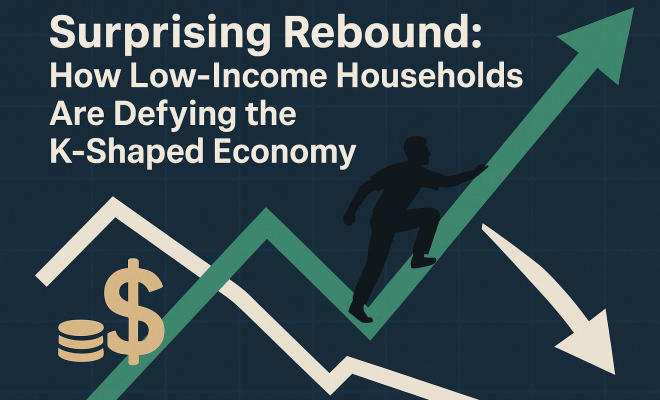
The term “K-Shaped economy” has become synonymous with growing economic inequality, describing a scenario where different segments of the population recover from financial crises at vastly different rates. While some households thrive, others struggle to make ends meet, resulting in a divergence that often leads to a more pronounced divide. This model, particularly highlighted during the COVID-19 pandemic, has largely shaped the narrative around economic recovery.
However, recent data from Bank of America suggests that this narrative may be shifting. As the market dynamics evolve, the stark division between upper- and lower-income households could be narrowing, challenging the assumptions that have informed economic discussions over the past two years.
Bank of America’s Revelatory Data
In a recent report, Bank of America unveiled some unexpected findings regarding consumer spending patterns. Contrary to the dire predictions tied to the K-Shaped economy, the data shows that lower-income households are experiencing a rebound in their consumption levels, particularly in goods and services, excluding gas. This surge is notable as it marks a significant uptick, closing the gap between spending habits of upper and lower-income families.
In just a week, the trend has shifted dramatically, with lower-income households demonstrating increased purchasing power. This important turnaround is resonating with investors and policymakers alike, as it suggests that economic recovery may not be as lopsided as previously believed.
The Impact of After-Tax Wage Growth
One of the driving forces behind this resurgence in lower-income household spending is linked to rising after-tax wage growth. Many workers in the lower and middle-income brackets have begun to see increases in their take-home pay, a factor that has naturally translated into heightened consumption. This wage growth is essential, as it increases disposable income, allowing families to spend more on essentials and discretionary items.
However, experts urge caution in interpreting these figures. While the uptick is promising, it may also be influenced by recent tax relief measures aimed at supporting low-income families. For instance, the expansion of tax credits and direct payments during the pandemic have played a significant role in bolstering the economic standing of these households.
Tax Relief and Its Role
The significance of tax relief in shaping the current economic landscape cannot be understated. Measures such as the Child Tax Credit and Economic Impact Payments have provided immediate financial assistance, allowing families to navigate the difficulties presented by the pandemic. These relief efforts have not only provided critical support but also revitalized spending among households that were previously struggling.
As these benefits expire or are phased out, there are concerns about the sustainability of the current rebound. Will lower-income families continue to thrive without this financial cushion? It’s a question that remains open, and one that economists will be monitoring closely in the coming months.
Changing Consumer Behavior
The most recent data also illustrates a shift in consumer behavior among lower-income households. With the rise in spending, these families are beginning to allocate their budgets differently. Instead of solely focusing on necessities, there is a notable increase in spending on services and non-essential goods. This shift could signify a growing confidence in their economic situation, indicating that these households are beginning to feel more financially stable.
Take, for example, the increase in expenditures on retail, dining, and entertainment. More families are venturing out, dining at restaurants, and engaging in recreational activities. This change paints a picture of a sector that has been previously sidelined, now being re-engaged by consumers eager to reclaim a sense of normalcy.
Challenges That Lie Ahead
Despite the encouraging signs, there are still numerous challenges ahead that could threaten the recovery of lower-income households. The economic environment remains volatile, and inflationary pressures are beginning to emerge as a significant concern. Rising costs for everyday goods and services could strain budgets and curtail spending.
Moreover, the potential for interest rate hikes as the Federal Reserve seeks to manage inflation could further complicate matters. Higher interest rates may lead to increased borrowing costs, impacting consumers’ ability to finance major purchases. These factors could impede the momentum that lower-income households have recently gained. (See: K-Shaped economy explained.)
Expert Opinions on the Shift
Economists and financial analysts are weighing in on the implications of this evolving narrative. Many express cautious optimism, recognizing the importance of the rebound while underscoring the need for vigilance. They argue that sustained growth for lower-income households requires systemic changes, including improved job opportunities, better wages, and continuous support from governmental programs.
Dr. Sarah Thompson, a noted economist, states, “While the data shows a resurgence, we must ensure that this is not a fleeting moment. It’s crucial to continue investing in programs that uplift lower-income households to sustain this positive trend over time.”
Comparative Analysis with Previous Recessions
A historical perspective can provide valuable insights into the current situation. Previous economic recoveries, such as those following the Great Recession, often resulted in a prolonged K-Shaped recovery, with wealthier segments bouncing back more rapidly than their lower-income counterparts. In those instances, the rebound for lower-income families was sluggish and fraught with challenges.
However, the current environment presents unique dynamics. The influx of government aid, coupled with shifting work patterns and changes in consumer behavior, may be creating an opportunity for a more balanced recovery. Analysts are paying close attention to these developments to see if they can sustain themselves over the long haul.
What Policymakers Should Consider
As the narrative around the K-Shaped economy begins to shift, it’s critical for policymakers to adapt their strategies accordingly. This includes evaluating the effectiveness of current relief measures and considering ways to build upon them to foster long-term economic stability.
Investments in education, job training, and workforce development can help equip lower-income individuals with the skills needed to thrive in a rapidly evolving job market. Additionally, addressing the structural barriers that have historically impeded economic progress for these groups will be essential in ensuring an equitable recovery.
Looking Ahead: Will the Rebound Last?
The question on everyone’s mind is whether this rebound for lower-income households will persist or become another statistic in an ever-changing economic landscape. As we continue to analyze consumer spending data, observe wage growth patterns, and monitor inflation, it will be imperative to remain proactive in responding to the needs of vulnerable populations.
One thing seems clear: the K-Shaped economy, while still in existence, may no longer be as rigid as it once appeared. The recent data from Bank of America offers a glimmer of hope, suggesting that lower-income families can rebound and close the spending gap, provided that sustained support and strategic interventions are prioritized. As we navigate this uncertain economic climate, staying informed and adaptable will be crucial for both consumers and policymakers alike.
Understanding the K-Shaped Recovery in Detail
To fully grasp the implications of a K-Shaped economy, it’s essential to dissect its components. The “K” shape represents two divergent paths: the upward trajectory of the affluent and the downward spiral of the less fortunate. During economic downturns, wealthier individuals and households often have the resources to weather financial storms better than those in lower income brackets.
For instance, the stock market typically recovers faster than the job market. Wealthy households, which tend to have investments in stocks and real estate, can regain their financial footing quickly as these assets appreciate. In contrast, lower-income families primarily depend on wages and often face job losses or reduced hours, placing them at a greater disadvantage and extending their recovery period.
Current Statistics on Income Inequality
Understanding the K-Shaped economy also requires a look at the current statistics surrounding income inequality. According to a report by the Economic Policy Institute, the top 1% of earners in the U.S. saw their income grow by 160% from 1979 to 2019, while the bottom 90% experienced a mere 26% increase in the same timeframe. Such stark differences highlight why disparities in recovery rates are so pronounced.
Additionally, a Pew Research Center analysis indicates that as of 2022, 70% of Americans believe that economic inequality is a major issue, reflecting growing concern over the ramifications of a K-Shaped recovery. This perception is increasingly influencing policy debates and electoral outcomes.
Corporate Influence in a K-Shaped Economy
Another factor worth considering is the role of corporations in shaping the dynamics of a K-Shaped economy. Certain sectors, such as technology and healthcare, have thrived during economic downturns, leading to substantial profits and stock market gains. In contrast, industries like hospitality and retail have struggled significantly. (See: Understanding K-Shaped recovery.)
This disparity can create a feedback loop where the success of certain corporate sectors leads to increased inequalities. Companies that can pivot to remote work or digital services have outperformed those that rely on physical presence. This shift may lead to job losses in traditional sectors, exacerbating the K-Shaped recovery further.
Policy Solutions to Bridge the Gap
Addressing the K-Shaped economy necessitates an array of policy solutions tailored to target the root causes of income inequality. Some potential solutions include:
- Universal Basic Income (UBI): Implementing a UBI could provide a steady cash flow for lower-income households, helping to stabilize their finances irrespective of market fluctuations.
- Progressive Taxation: Reforming the tax system to ensure that higher earners contribute a fairer share could help fund essential services and programs aimed at supporting economically vulnerable populations.
- Job Creation Programs: Investing in job training and creation in sectors that are likely to grow, such as renewable energy and technology, can provide opportunities for those disproportionately affected by economic downturns.
FAQs About the K-Shaped Economy
What is a K-Shaped Economy?
A K-Shaped economy describes a situation where different socioeconomic groups recover from economic downturns at significantly different rates. It signifies a divergence where some segments thrive while others struggle.
How does the K-Shaped recovery affect consumers?
Consumers in the upper-income bracket may see income growth and increased spending power, while those in lower-income brackets may face stagnation or decline. This divergence can lead to unequal access to goods and services, impacting overall economic health.
What role does government aid play in a K-Shaped Economy?
Government aid, such as direct payments and tax credits, can act as a lifeline for lower-income households during economic crises. However, the expiration of such measures can pose risks to sustained recovery for these families.
Can the K-Shaped recovery be reversed?
While it’s challenging to completely reverse a K-Shaped recovery, targeted policies aimed at reducing income inequality and enhancing job opportunities for lower-income households can help create a more balanced economic recovery.
Is the K-Shaped Economy a new phenomenon?
While the K-Shaped economy has gained prominence in recent years, the underlying issues of income inequality have existed for decades. The COVID-19 pandemic brought these disparities to the forefront, intensifying discussions around economic recovery.
What can individuals do to navigate the K-Shaped economy?
Individuals can focus on enhancing their skill sets through education and training, seeking financial advice to manage their resources more effectively, and staying informed about economic trends that could impact their financial wellbeing.
Long-Term Impacts of a K-Shaped Economy
The long-term effects of a K-Shaped economy can have profound implications not just for individuals, but for society as a whole. When economic recoveries are uneven, the social fabric can fray, leading to increased tension and division within communities. Wealth disparity can manifest in various detrimental ways, including higher crime rates, reduced social mobility, and diminished trust in institutions.
As wealth becomes more concentrated among the affluent, funding for essential services like education and healthcare may dwindle for lower-income areas, perpetuating a cycle of disadvantage. Over time, this can create a landscape where the American Dream becomes increasingly unattainable for large swathes of the population.
Case Study: The Gig Economy’s Role
The rise of the gig economy has introduced a new dynamic into the discussion of K-Shaped economies. Many lower-income workers have turned to gig jobs as a flexible source of income, allowing them to supplement their earnings from traditional employment. However, this flexibility comes at a cost—lack of benefits, job security, and often, inconsistent income. (See: Health equity and economic disparities.)
For example, platforms like Uber and DoorDash have provided opportunities for thousands, yet they also illustrate the precarious nature of gig work. As some workers thrive, others face financial instability, underscoring the K-Shaped recovery’s implications within this sector. Balancing the benefits of gig work with protections for workers will be key in addressing the disparities created by this economy.
Effects of Technology on Economic Disparities
Technological advancements have played a significant role in broadening the divide seen in K-Shaped economies. Automation and artificial intelligence are reshaping industries, often resulting in job losses for lower-skilled workers while benefiting those with higher skill sets. For instance, while IT and tech-related jobs see a surge in demand and pay, roles in manufacturing or administrative support may be offshored or automated away.
This technological shift not only highlights existing disparities but threatens to exacerbate them further. The gap between those who can easily adapt to new technologies and those who cannot will continue to grow unless proactive measures are taken to address these challenges through education and reskilling programs.
Global Perspectives on K-Shaped Economies
The concept of a K-Shaped economy is not confined to the United States; it’s a global phenomenon. Different countries are experiencing varying degrees of inequality and recovery post-pandemic. For example, in many developing nations, the disparity between urban and rural populations has been exacerbated by the pandemic, with urban residents enjoying better access to healthcare and economic resources.
International organizations like the World Bank are paying close attention to these dynamics, as they pose risks not only to individual countries but to global stability. Countries that invest in comprehensive recovery plans aimed at equitable growth may find themselves better positioned to foster long-term resilience against future economic shocks.
Future Trends to Watch
As we look ahead, several trends will be critical in determining the trajectory of K-Shaped economies. The shift toward remote work is likely to reshape labor markets permanently. If remote work becomes a lasting norm, it could offer opportunities for lower-income individuals to access jobs previously out of reach due to geographic limitations.
Additionally, environmental sustainability and the green economy will play a vital role. As initiatives aimed at tackling climate change gain momentum, sectors focused on renewable energy and sustainable practices may provide new job opportunities, potentially alleviating some of the imbalances that have emerged during economic downturns.
Conclusion: A Call to Action
Addressing the challenges posed by a K-Shaped economy requires collective effort from individuals, corporations, and governments. While data may show a shift toward recovery for lower-income households, the sustainability of this trend hinges on proactive measures that foster equitable growth. The disparities highlighted by the pandemic should serve as a rallying call for stakeholders at all levels to work toward a more inclusive economic future.
“`
Trending Now
Frequently Asked Questions
What is a K-Shaped economy?
A K-Shaped economy describes a scenario where different segments of the population recover from financial crises at vastly different rates, leading to increased economic inequality. Some households thrive while others struggle, creating a pronounced divide, particularly highlighted during events like the COVID-19 pandemic.
How are low-income households rebounding in the K-Shaped economy?
Recent data from Bank of America indicates that low-income households are experiencing a significant rebound in their consumption levels. This increase in purchasing power is closing the gap between spending habits of upper and lower-income families, challenging previous assumptions about economic recovery.
What factors are driving wage growth for low-income households?
The resurgence in spending among low-income households is largely attributed to rising after-tax wage growth. Many workers in lower and middle-income brackets are seeing increases in their take-home pay, which boosts their disposable income and leads to heightened consumption.
What impact does consumer spending have on economic recovery?
Consumer spending is a vital driver of economic recovery. The recent uptick in consumption among lower-income households suggests that the economic recovery may be more balanced than previously thought, potentially benefiting overall economic growth and stability.
Why is the recent data from Bank of America significant?
The recent data from Bank of America is significant because it challenges the prevailing narrative of a K-Shaped economy. It shows that lower-income households are not only recovering but are also increasing their spending, indicating a shift towards a more equitable economic recovery.
What’s your take on this? Share your thoughts in the comments below — we read every one.