The Astonishing Ascent: 9 Reusable Rockets Redefining Space by 2026
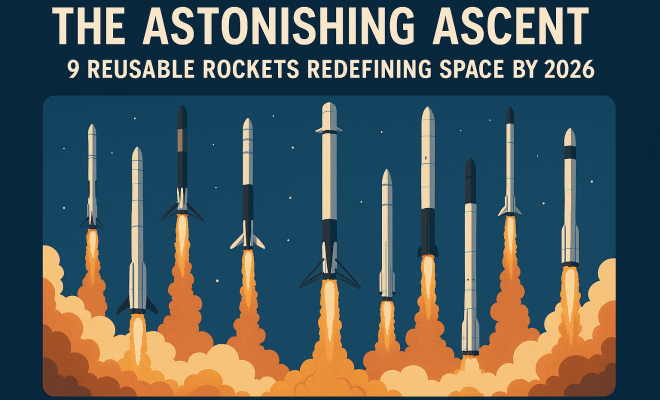
Remember when space travel felt like something out of a grainy documentary, reserved for a select few government agencies and their impossibly expensive, single-use rockets? Well, that era is rapidly fading into history. We’re on the cusp of a true ‘Rocket Revolution,’ and it’s being spearheaded by a new breed of vehicles: reusable rockets. These aren’t just minor improvements; they’re fundamentally changing the economics and accessibility of space. By 2026, the landscape of space exploration will look radically different, thanks to the ingenuity and sheer audacity of companies pushing the boundaries of what’s possible. From launching satellites to ferrying humans to the Moon and beyond, the best reusable rockets 2026 are making space not just a destination, but a viable economy. Let’s dive into the nine titans leading this charge.
1. SpaceX’s Starship: The Colossus of the Cosmos
When you talk about reusable rockets, it’s impossible not to start with SpaceX, and more specifically, their Starship system. This isn’t just a rocket; it’s an entire paradigm shift. Designed from the ground up to be fully and rapidly reusable, both its Super Heavy booster and the Starship upper stage are intended to land back on Earth, ready for their next mission with minimal refurbishment. This ambitious vision aims to bring down the cost of access to space by orders of magnitude, making missions that were once prohibitively expensive suddenly feasible.
Starship’s immense payload capacity is another game-changer. It’s designed to carry over 100 metric tons to low-Earth orbit, making it a true heavy-lift vehicle. This capability isn’t just about launching bigger satellites; it’s about enabling entirely new types of missions. Think about building permanent lunar habitats, establishing a self-sustaining city on Mars, or deploying constellations of thousands of satellites with unprecedented efficiency. The sheer scale and reusability of Starship promise to democratize access to space in a way no other vehicle has before, positioning it firmly among the best reusable rockets 2026.
2. SpaceX’s Falcon 9 & Falcon Heavy: The Workhorses That Started It All
Before Starship, there were the Falcon 9 and Falcon Heavy. These rockets didn’t just prove reusability was possible; they made it routine. The Falcon 9, in particular, has become the undisputed workhorse of the space industry, launching everything from internet satellites for SpaceX’s own Starlink constellation to critical NASA science missions and commercial payloads. Its ability to land its first stage back on a drone ship or a landing pad has drastically reduced launch costs, forcing competitors to rethink their entire business models.
The Falcon Heavy, essentially three Falcon 9 first stages strapped together, takes that reusability and amplifies it for heavier payloads. While not as frequently launched as its smaller sibling, it offers a cost-effective solution for missions requiring significant thrust. These Falcon series rockets laid the groundwork for the ‘Rocket Revolution,’ proving that vertical landing and reusability weren’t just theoretical dreams but achievable, economically viable realities. They’ve accumulated an incredible track record of successful reflights, solidifying their place as foundational reusable rockets.
3. Blue Origin’s New Glenn: Jeff Bezos’s Bet on Heavy-Lift Reusability
Blue Origin, founded by Amazon’s Jeff Bezos, has been quietly, and sometimes not so quietly, working on its own vision for space. While their suborbital New Shepard rocket has already demonstrated reusability with numerous successful flights carrying tourists to the edge of space, it’s their orbital New Glenn rocket that’s poised to make a major impact by 2026. New Glenn is a heavy-lift launch vehicle designed to compete directly with Falcon Heavy and eventually Starship, offering a reusable first stage that will land back on a ship at sea.
What sets New Glenn apart is its sheer size and payload capacity, combined with Blue Origin’s focus on robust, reliable engineering. The company’s BE-4 engines, which also power ULA’s Vulcan Centaur, are a testament to their commitment to powerful propulsion. New Glenn aims to provide a reliable, high-capacity launch service for a variety of missions, from deploying large satellite constellations to supporting future lunar missions. Its entry into service will add another powerful contender to the list of best reusable rockets 2026, further intensifying competition and driving down prices.
4. Rocket Lab’s Neutron: The Mid-Sized Reusable Challenger
Rocket Lab, known for its small-satellite workhorse, Electron, is stepping up its game with Neutron. While Electron is an expendable rocket (though they are experimenting with reusability), Neutron is being designed from the outset with reusability in mind for its first stage. This mid-sized rocket aims to fill a crucial gap in the market: launching constellations of medium-sized satellites that are too large for Electron but don’t require the immense power of a Falcon 9 or Starship.
Neutron’s innovative design includes a unique ‘hungry hippo’ fairing that opens to swallow its payload, allowing for rapid integration and streamlined operations. Its reusability strategy involves the first stage performing an upright, propulsive landing back at the launch site. This combination of mid-lift capacity and reusability makes Neutron an attractive option for a growing segment of the space economy, solidifying Rocket Lab’s position as a key player among the best reusable rockets 2026 and offering a compelling alternative to the larger players.
5. United Launch Alliance (ULA)’s Vulcan Centaur: A Step Towards Reusability
ULA, a joint venture between Lockheed Martin and Boeing, has historically focused on highly reliable, but expendable, rockets like Atlas V and Delta IV. However, they’re adapting to the new reusable paradigm with their next-generation vehicle, Vulcan Centaur. While Vulcan’s first stage won’t be fully reusable in the same way as Falcon 9 or Starship, ULA is implementing a novel approach called ‘SMART’ (Sensors for Measuring an Aerodynamic Return to Earth) reuse for its BE-4 engines. This system involves detaching the engines after use and recovering them via parachute, rather than the entire first stage. (See: NASA's Space Launch System.)
This partial reusability is a significant step for ULA, aiming to reduce costs associated with the most expensive components of the rocket. Vulcan Centaur is designed to be a versatile launch vehicle, capable of handling a wide range of national security, scientific, and commercial missions. While not as aggressively reusable as its competitors, ULA’s commitment to recovering valuable components demonstrates the irresistible pull of the ‘Rocket Revolution’ and earns Vulcan Centaur a place in the conversation about the best reusable rockets 2026, particularly for its innovative approach to engine recovery.
6. Relativity Space’s Terran R: 3D Printing’s Reusable Frontier
Relativity Space is taking an entirely different approach to rocketry, utilizing massive 3D printers to construct their rockets. Their first vehicle, Terran 1, was the largest 3D-printed object to fly, though it was expendable. Now, they’re developing Terran R, a much larger, fully reusable rocket designed to compete in the medium-to-heavy lift market. The promise here is not just reusability, but also a significantly faster and more automated manufacturing process, potentially leading to lower costs and quicker production cycles. For more context, see startup funding and innovation in space exploration.
Terran R will feature two stages, with the first stage designed for propulsive landing back at the launch site, much like Falcon 9. The use of 3D printing for the majority of the rocket’s structure and engines could revolutionize how rockets are built, allowing for rapid iteration and customization. If Relativity can scale their 3D printing capabilities and prove the reliability of Terran R, it could introduce a powerful new manufacturing paradigm to the reusable rocket space, making it a dark horse among the best reusable rockets 2026.
7. ArianeGroup’s Ariane 6 (and beyond): Europe’s Evolving Reusability Strategy
Europe’s primary launch provider, ArianeGroup, has traditionally focused on highly reliable, expendable rockets like the Ariane 5. Their next-generation vehicle, Ariane 6, is designed to be more cost-effective than its predecessor, primarily through standardized components and a more streamlined manufacturing process. While Ariane 6 itself is not fully reusable, the European space community is actively pursuing reusability for future generations of launchers.
Concepts like ‘Themis,’ a reusable first stage demonstrator, are being developed to test critical technologies for vertical landing and recovery. It’s clear that Europe recognizes the imperative of reusability to remain competitive in the global space market. While Ariane 6 represents a step towards greater affordability, the real reusable innovation from Europe will likely come in the post-2026 timeframe, built on the lessons learned from projects like Themis, ensuring Europe remains a contender in the race for the best reusable rockets of the future.
8. China’s Long March Series (Future Iterations): A Growing Reusable Ambition
China’s space program is rapidly advancing, and they are keenly aware of the benefits of reusable rocket technology. While their current Long March series are primarily expendable, China has openly stated its intention to develop fully reusable launch vehicles. We’ve already seen significant progress with test flights of reusable rocket prototypes, demonstrating vertical takeoff and vertical landing capabilities, similar to SpaceX’s Falcon 9.
The goal is to develop heavy-lift reusable rockets that can support their ambitious space station program, lunar exploration, and future deep-space missions. By 2026, it’s highly probable that China will have made substantial strides in demonstrating operational reusability, adding a formidable national player to the global landscape of reusable rockets. Their progress is a clear indicator that the ‘Rocket Revolution’ is a worldwide phenomenon, driven by the economic and strategic advantages of making space more accessible.
9. Isar Aerospace’s Spectrum: Germany’s Bid for Small-to-Mid-Lift Reusability
Isar Aerospace, a German startup, is making waves with its Spectrum rocket, designed to launch small and medium-sized satellites. While their initial version of Spectrum is expendable, the company has publicly stated its long-term vision includes developing a reusable first stage. This reflects a broader trend among new space companies: even if their first product isn’t fully reusable, the roadmap almost always includes it as a future iteration, recognizing it as a non-negotiable for long-term competitiveness.
Spectrum is designed to offer flexible and cost-effective launch services, catering to the burgeoning demand for dedicated missions for satellite constellations. As they mature and gain flight heritage, the transition to a reusable first stage will be a natural and necessary evolution. This commitment to future reusability places Isar Aerospace on the trajectory to eventually offer one of the best reusable rockets 2026 in the smaller payload category, further diversifying the market and bringing more launch options to customers.
The Economics of Reusability: Why It Matters So Much
The shift to reusable rockets isn’t just a technological marvel; it’s an economic game-changer. Historically, rockets were like incredibly expensive fireworks – one use, then gone forever. A significant portion of a rocket’s cost comes from its engines and complex avionics, components that were simply discarded after a single launch. Reusability fundamentally alters this equation by turning these high-value components into assets that can be depreciated over multiple flights, much like an airplane.
Think about it: if you could fly an airliner only once before scrapping it, air travel would be astronomically expensive, limited to only the wealthiest or most critical missions. Reusability in space is doing the same thing for orbit. SpaceX has famously quoted launch costs for Falcon 9 in the range of $50-60 million, a price point that was unheard of just a decade ago. A large part of this reduction is attributed to reusing the first stage. As Starship aims for full reusability of both stages, the target cost per launch could drop to just a few million dollars, making space access almost routine. This cost reduction isn’t just good for launch providers; it opens up entirely new industries and research opportunities in space that were previously financially out of reach.
Challenges and Innovations in Achieving Reusability
Making a rocket reusable is incredibly hard, and it involves overcoming a host of engineering challenges. It’s not just about landing the rocket back on Earth; it’s about doing so reliably, safely, and with minimal refurbishment time between flights. Here are some of the key areas of innovation: (See: New York Times on SpaceX's Starship.)
- Propulsive Landings: This is the iconic image we often see – a rocket stage descending vertically and landing on a pad. It requires incredibly precise guidance, navigation, and control systems, as well as engines capable of throttling down significantly and restarting in space.
- Thermal Protection Systems: Re-entering Earth’s atmosphere generates immense heat. Reusable rockets need robust heat shields and materials that can withstand these extreme temperatures repeatedly without extensive repair.
- Refurbishment and Inspection: A rocket isn’t truly reusable if it takes months to prepare for its next flight. Companies are investing heavily in automated inspection systems, modular designs, and robust components to minimize turnaround times and associated labor costs.
- Engine Durability: Rocket engines are subjected to extreme forces and temperatures. Designing engines that can operate reliably for multiple missions without significant overhaul is a major engineering feat.
- Fueling Infrastructure: Rapid reusability requires rapid fueling. New infrastructure and procedures are being developed to quickly load propellants, especially for next-generation systems like Starship that use methane and liquid oxygen.
Each company approaches these challenges with its own unique solutions, leading to a diverse and exciting landscape of innovation in the reusable rocket sector.
The Environmental Impact of Reusable Rockets
Beyond economics, reusable rockets also offer significant environmental advantages. While space launches aren’t a primary contributor to global emissions compared to other industries, every reduction helps. Expendable rockets generate a considerable amount of waste: rocket bodies and fairings often fall into the ocean or burn up in the atmosphere. Reusable rockets, by bringing back and reusing large portions of the vehicle, drastically reduce this space debris and manufacturing waste. For more context, see the future of transportation technology.
Furthermore, the increased launch cadence enabled by reusability means that more efficient, cleaner propulsion systems can be developed and deployed faster. For instance, methane-fueled engines (like SpaceX’s Raptor and Blue Origin’s BE-4) are considered cleaner burning than traditional kerosene engines, producing fewer soot particles. As the industry matures and reusable technology becomes standard, we can expect a continued push towards more sustainable rocket fuels and operational practices, making space exploration not just more accessible, but also more environmentally responsible.
Expert Perspectives: What Industry Leaders Are Saying
The consensus among space industry leaders is clear: reusability is the future. Elon Musk, CEO of SpaceX, has consistently emphasized that full and rapid reusability is the only way to make humanity a multi-planetary species. He frequently compares rockets to airplanes, stating that if airplanes weren’t reusable, air travel would be unthinkable.
Jeff Bezos, founder of Blue Origin, echoes this sentiment, envisioning millions of people living and working in space, a future only possible with drastically reduced launch costs brought about by reusability. Even established players like ULA, historically proponents of expendable rockets, are now incorporating elements of reusability into their designs, recognizing the market imperative.
Analysts from organizations like BryceTech and Euroconsult routinely highlight reusability as the primary driver behind the explosive growth in the satellite launch market. They project continued downward pressure on launch prices as more reusable systems come online, making space-based services even more ubiquitous in our daily lives.
Comparisons and the Competitive Landscape by 2026
By 2026, the competitive landscape for reusable rockets will be incredibly dynamic. Here’s a quick look at how the contenders stack up:
- Heavy-Lift Market (100+ tons to LEO): This is largely SpaceX’s Starship domain. New Glenn will be a direct competitor, aiming for similar capabilities, though perhaps with a different operational cadence. China’s future heavy-lift reusable rockets will also be in this category, potentially for state-sponsored missions initially.
- Medium-to-Heavy Lift Market (5-20 tons to LEO): This is where Falcon 9 currently reigns supreme, but it will face significant competition. Rocket Lab’s Neutron, Relativity Space’s Terran R, and ULA’s Vulcan Centaur (with its partial reusability) will all vie for market share. These rockets will be crucial for deploying mid-sized satellite constellations and supporting lunar gateway missions.
- Small-to-Mid Lift Market (1-5 tons to LEO): While Electron handles the smallest payloads, Spectrum from Isar Aerospace and other emerging players will look to offer reusable options in this niche, catering to smaller, dedicated satellite launches.
The key differentiator won’t just be payload capacity, but also launch frequency, reliability, and ultimately, the per-kilogram cost to orbit. Companies that can quickly iterate, minimize refurbishment, and achieve high flight rates will gain a significant competitive edge.
Frequently Asked Questions about Reusable Rockets by 2026
Q1: What exactly defines a “reusable rocket”?
A reusable rocket is a launch vehicle designed to return at least a significant portion of its components (typically the first stage, sometimes both stages) to Earth after a launch, so they can be refurbished and flown again. This contrasts with expendable rockets, where all stages are discarded after a single use.
Q2: Why is 2026 a significant year for reusable rockets?
By 2026, several key reusable rockets are expected to be fully operational or nearing full operational capability. Starship should have significantly more test flights under its belt, New Glenn and Neutron are targeting their first orbital flights, and other players like Terran R and China’s reusable prototypes will likely have demonstrated considerable progress, solidifying the market shift towards reusability. For more context, see China's advancements in technology and space.
Q3: Are reusable rockets less safe than expendable ones?
Not necessarily. While reusability adds complexity to the landing phase, the rigorous testing, refurbishment, and inspection processes are designed to ensure safety. In theory, flying a rocket multiple times allows engineers to identify and address potential failure points, potentially leading to increased reliability over time, similar to how commercial airliners become safer with more flight hours.
Q4: How many times can a reusable rocket be flown?
The theoretical limit is very high. SpaceX has flown Falcon 9 first stages over 20 times. Starship is designed for hundreds of flights. The practical limit depends on the wear and tear on components, the cost and time of refurbishment, and the specific design of the rocket. The goal is to maximize the number of flights to spread the manufacturing cost over as many missions as possible.
Q5: Will reusable rockets eventually make space travel affordable for everyone?
While reusable rockets dramatically reduce the cost of putting mass into orbit, making space more accessible for commercial and scientific ventures, direct space travel for the general public (beyond space tourism) still has many challenges, including life support, radiation shielding, and mission duration. However, lower launch costs are a crucial step towards making such ambitious goals more feasible in the long term.
Q6: Are there any downsides to reusable rockets?
One potential “downside” is that the weight and complexity added for reusability (landing legs, extra fuel for landing, heat shields) can slightly reduce the maximum payload capacity compared to an identical expendable version. However, the economic benefits of reusability usually far outweigh this minor payload reduction for most missions.
Q7: What about other countries? Is Europe catching up?
Yes, Europe is actively pursuing reusable technology. While Ariane 6 isn’t fully reusable, projects like the Themis demonstrator show a clear commitment to developing reusable first stages for future launchers. The European Space Agency (ESA) and various national agencies are investing in research and development to ensure Europe remains competitive in the reusable rocket era.
Q8: How does 3D printing fit into the reusable rocket revolution?
3D printing, as seen with Relativity Space’s Terran R, promises to accelerate manufacturing, reduce the number of parts, and enable rapid design iterations. This can lead to quicker and potentially cheaper production of reusable rocket components, further driving down costs and increasing the pace of innovation in the industry.
The ‘Rocket Revolution’ is more than just a catchy phrase; it’s a tangible transformation happening right now, fueled by the relentless pursuit of reusability. By 2026, the combined efforts of these companies and nations will have fundamentally reshaped our relationship with space, making it not just an arena for scientific discovery, but a vibrant, accessible domain for commerce, innovation, and humanity’s expansion. The future of space is reusable, and it’s arriving faster than many ever thought possible.
Trending Now
- our breakdown of urgent warning: gitlab ai gateway flaw lets hackers take control
- The Billionaire’s Bombshell: Why Startup Funding 2024 Could Be a Minefield
- A Hacker’s Betrayal? Inside the ‘Rey’…
- The Astonishing Reason Why China’s AI Education Will Leave the West Behind
Frequently Asked Questions
What are reusable rockets and why are they important?
Reusable rockets are launch vehicles designed to be used multiple times, significantly reducing the cost of access to space. They are important because they make space travel more economically viable and accessible, allowing for a wider range of missions, from satellite launches to crewed space exploration.
How is SpaceX's Starship changing space travel?
SpaceX's Starship is revolutionizing space travel by being fully reusable, which lowers costs dramatically. Its ability to carry over 100 metric tons to low-Earth orbit enables new missions, such as establishing lunar habitats and Mars colonies, making space exploration more feasible than ever.
What companies are leading the reusable rocket revolution?
Several companies are at the forefront of the reusable rocket revolution, with SpaceX being the most prominent. Other players include Blue Origin, Rocket Lab, and others that are developing innovative technologies to enhance the reusability and efficiency of space launch systems.
What are the benefits of using reusable rockets?
The benefits of using reusable rockets include significantly reduced launch costs, increased frequency of launches, and the ability to support a wider variety of missions. This leads to enhanced opportunities for scientific research, commercial ventures, and even potential human settlement on other planets.
What is the future of reusable rockets by 2026?
By 2026, the landscape of space exploration is expected to be transformed by reusable rockets. Advances in technology will lead to more efficient launches, reduced costs, and increased accessibility, paving the way for ambitious projects like lunar bases and Mars colonization.
Have you experienced this yourself? We'd love to hear your story in the comments.