OpenAI’s Billion-Dollar Power Grab: Locals Cry Foul Over Secretive Data Center Deal
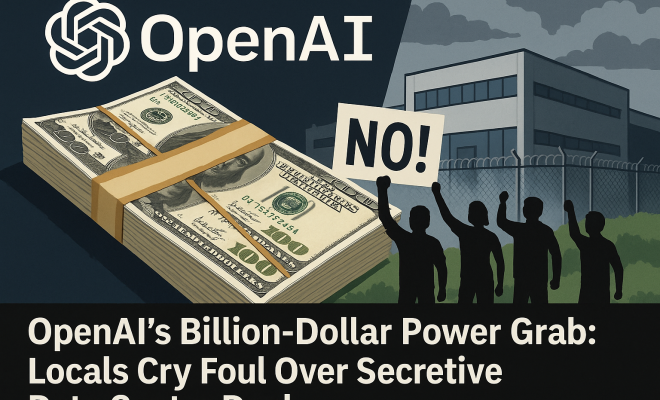
Imagine waking up one day to discover that a multi-billion-dollar tech giant plans to build an enormous industrial complex right in your backyard, promising jobs and tax revenue, but without ever really asking what you thought about it. That’s precisely the scenario playing out in Effingham County, Georgia, where nearly a thousand incensed residents recently converged to confront OpenAI and their local officials. What’s at stake? A proposed $20 billion data center project that, for many, represents a deeply troubling intersection of rapid technological expansion, environmental degradation, and a startling lack of democratic process. This isn’t just a local spat; it’s a microcosm of a much larger national debate brewing around the true cost of our AI future, and the OpenAI data center controversy is quickly becoming a flashpoint.
On July 23, 2026, the temperature wasn’t just high outside in Georgia; it was boiling over inside the community meeting where residents voiced their outrage. The core of their anger isn’t merely about change; it’s about the feeling of being steamrolled. They’re worried about the detrimental environmental impacts this colossal facility could bring, the constant hum of industrial noise polluting their peaceful rural landscape, and perhaps most acutely, the potential for their own electricity bills to skyrocket. All this, despite the tantalizing promises of significant tax abatements for OpenAI and millions of dollars flowing into local government coffers. It’s a classic clash between progress and preservation, but with a deeply unsettling undercurrent of perceived betrayal by their elected representatives.
The Unveiling of the OpenAI Data Center Controversy
The proposed OpenAI data center isn’t just any facility; it’s a monumental undertaking. We’re talking about a $20 billion investment, a figure that typically brings visions of economic prosperity and job creation. And indeed, local officials and proponents of the project have been quick to highlight these potential benefits. They speak of a revitalized tax base, improved public services, and a boost to the local economy that could lift the entire county. On paper, it sounds like a dream come true for a community, especially one that might be looking for ways to secure its future. For more on this, see AI jobs and data centers.
However, the reality on the ground in Effingham County is far more complex. For many residents, the glossy projections of economic uplift are overshadowed by more immediate, tangible concerns. They see their tranquil rural setting, characterized by open spaces and a slower pace of life, being threatened by an industrial behemoth. Data centers, by their very nature, are not quiet neighbors. They require massive cooling systems, which generate a continuous, low-frequency hum that can travel for miles. This isn’t just an annoyance; it can fundamentally alter the quality of life for those living nearby, turning a peaceful evening into a constant drone. It’s an environmental impact that’s often overlooked in the rush to embrace technological advancement, but for those who live with it daily, it becomes an undeniable intrusion.
Whispers and Walls: The Secrecy Around the Deal
Perhaps what has truly ignited the firestorm in Effingham County is the pervasive sense of secrecy surrounding the negotiations. Residents feel, with considerable justification, that they were deliberately excluded from a process that will profoundly impact their lives and their community. Negotiations for projects of this magnitude often involve non-disclosure agreements and confidential discussions, particularly in competitive economic development landscapes. However, when these discussions culminate in a decision to bring a massive industrial project into a residential area, and the public is only informed after the fact, it breeds deep mistrust.
This isn’t just about feeling left out; it’s about a perceived fundamental breach of democratic principles. In a healthy democracy, major decisions that affect communities should involve robust public input, transparent discussions, and opportunities for residents to voice their concerns and influence outcomes. When a deal of this scale is seemingly hammered out behind closed doors, only to be presented as a fait accompli, it understandably infuriates people. They feel their voices are being silenced, their concerns dismissed, and their right to participate in decisions about their own future undermined. This lack of transparency has become a central pillar of the OpenAI data center controversy, fueling the outrage and making it difficult for proponents to regain public trust.
Environmental Echoes: The Footprint of AI
Let’s be clear: data centers are energy hogs. They are the silent, massive engines powering our digital world, and their appetite for electricity is insatiable. The sheer scale of a $20 billion OpenAI data center suggests an energy demand that will be astronomical. This isn’t just about the immediate consumption; it’s about the ripple effect on the regional power grid and the environment at large. Where will all this electricity come from? Will it necessitate the construction of new power plants, potentially relying on fossil fuels, thereby increasing carbon emissions? Or will it strain existing renewable energy sources, diverting them from other uses?
Beyond energy, data centers also require vast amounts of water for cooling. While the specific details for the Effingham County project aren’t fully public, typically, these facilities use sophisticated cooling systems that evaporate millions of gallons of water annually. In a world increasingly conscious of water scarcity and sustainable resource management, this demand raises significant environmental questions. Residents worry about the impact on local water tables, the potential for increased strain on municipal water supplies, and the broader ecological consequences for their region. These aren’t minor concerns; they are fundamental questions about the sustainability of such large-scale developments and the environmental cost of our burgeoning AI ambitions.
The Looming Specter of Higher Electricity Bills
One of the most visceral concerns for Effingham County residents is the very real possibility of increased electricity costs. When a massive new consumer of power, like an OpenAI data center, plugs into the regional grid, it can create significant demand spikes. Utility companies then have a few options: they can upgrade infrastructure, build new generation capacity, or pass increased costs onto existing consumers. Historically, the latter has often been the path of least resistance for utilities, especially when dealing with large industrial clients who receive favorable rates or tax incentives.
This isn’t an abstract fear; it’s a financial burden that could directly impact every household and business in the county. For families already grappling with inflation and rising living expenses, even a modest increase in their monthly utility bill can be a significant hardship. The irony, of course, is that the project promises economic benefits, yet those benefits might come at the direct expense of the average consumer’s pocketbook. This perceived injustice – that a wealthy corporation could receive incentives while local residents pay more – is a potent ingredient in the OpenAI data center controversy, further fueling the sense of unfairness and economic inequality. (See: Environmental impacts of industrial projects.)
A National Conversation: Trump, Kemp, and Data Center Costs
The situation in Effingham County isn’t isolated. It’s playing out against a backdrop of a burgeoning national conversation about who should bear the costs of the AI revolution. Interestingly, this debate has drawn attention from high-profile political figures. Georgia’s Republican Governor Brian Kemp recently signed a symbolic federal pledge, spearheaded by former President Donald Trump, directly addressing this issue. The pledge advocates for data center and AI companies themselves to shoulder the energy costs of such developments, rather than allowing these burdens to trickle down to consumers.
This move, regardless of one’s political leanings, signals a growing recognition at the highest levels of government that the energy demands of AI are not a minor issue. It suggests an acknowledgment that the current model, where communities and individual taxpayers often subsidize the infrastructure and energy needs of tech giants, is unsustainable and inequitable. The fact that this issue has transcended typical political divides to garner attention from both sides of the aisle underscores its significance. It highlights a fundamental question: as AI reshapes our economy and society, who ultimately pays the piper?
The Allure of Abatements vs. Community Well-being
Local governments, particularly in economically developing regions, often find themselves in a difficult position. They are tasked with attracting investment, creating jobs, and growing their tax base to fund essential public services like schools, roads, and emergency services. Tax abatements and other incentives become powerful tools in this quest, allowing them to compete with other jurisdictions for large-scale projects.
In the case of the OpenAI data center, the promise of significant tax abatements and millions in direct funding for local government is undoubtedly a major draw. For officials, these funds represent an opportunity to address long-standing community needs, improve infrastructure, and potentially reduce the tax burden on existing residents (at least in theory). However, the Effingham County outcry illustrates the critical balance that must be struck. When the pursuit of economic development overshadows genuine community concerns about environmental impact, noise, and utility costs, the promised benefits can quickly sour. The question then becomes: what is the true cost of these abatements if they lead to a diminished quality of life for the very residents they are meant to serve?
Learning from Past Tech Hubs: A Cautionary Tale?
Effingham County isn’t the first community to grapple with the promises and perils of becoming a tech hub. We can look to other regions that have experienced rapid growth driven by the tech sector, and glean valuable lessons – both positive and cautionary. While the economic boom can be undeniable, it often comes with significant challenges: soaring housing costs, increased traffic, strain on public services, and changes to local character. In some cases, the benefits disproportionately flow to newcomers and corporations, leaving long-time residents feeling displaced or marginalized.
The OpenAI data center controversy therefore becomes an opportunity for Effingham County to learn from these precedents. How can a community embrace economic growth without sacrificing its soul or the well-being of its existing residents? This requires foresight, strong local leadership, and, critically, a genuine commitment to transparent, inclusive public engagement. It means asking tough questions about long-term sustainability, equitable distribution of benefits, and robust mitigation strategies for negative impacts, rather than simply accepting a deal at face value due to its sheer size.
The Path Forward: Rebuilding Trust and Redefining Progress
The current impasse in Effingham County highlights a fundamental challenge for communities navigating the age of AI: how do we balance technological progress with local autonomy, environmental stewardship, and social equity? For OpenAI and local officials, the immediate task is clear: they must find a way to rebuild trust. This means moving beyond closed-door negotiations and engaging in genuine, transparent dialogue with the residents. It requires acknowledging their concerns, providing concrete answers, and demonstrating a willingness to adapt plans based on public input.
For the residents, their collective voice has proven powerful. Their protest on July 23, 2026, was not just about stopping a project; it was about asserting their right to be heard and to have a say in the future of their home. The OpenAI data center controversy is far from over, and its resolution will likely set a precedent for how other communities approach similar developments. It’s a critical moment for defining what ‘progress’ truly means in the 21st century: is it simply about technological advancement and corporate profit, or does it encompass the well-being of people and the planet?
Beyond the Grid: The Water Footprint of AI Data Centers
While energy consumption often grabs headlines, the demand for water by AI data centers is an equally pressing, and often underestimated, environmental concern. You might not immediately connect artificial intelligence with water usage, but the reality is that the massive computing power required to train and run AI models generates an incredible amount of heat. To prevent these servers from overheating, data centers rely heavily on sophisticated cooling systems. Many of these systems use evaporative cooling, which, while efficient at dissipating heat, consumes vast quantities of water.
For a facility the size of the proposed OpenAI data center in Effingham County, the water demand could easily stretch into millions of gallons daily. Think about that: millions of gallons of water, evaporated into the atmosphere, often from local aquifers or municipal supplies. This isn’t just about a single facility; it’s about the cumulative impact if dozens, or hundreds, of these mega-data centers are built across the country. What does this mean for communities already facing water stress, particularly in the Southeast where drought conditions can occur? It means increased competition for a finite resource, potential drops in groundwater levels, and a strain on existing water infrastructure. Residents aren’t just worried about their electricity bills; they’re also asking if their wells will run dry or if their taps will have less pressure, all to cool servers that process algorithms they may never directly use. (See: Health effects of environmental degradation.)
A Deeper Dive into Noise Pollution: The Silent Intruder
When you hear “industrial noise,” you might picture loud machinery or heavy trucks. But data center noise is different. It’s often described as a low-frequency hum, a constant drone that infiltrates homes and can be incredibly difficult to escape. This isn’t just an annoyance; it has documented health impacts. Chronic exposure to low-frequency noise can disrupt sleep patterns, increase stress levels, and contribute to issues like headaches and irritability. For residents in a rural area like Effingham County, who chose their homes for peace and quiet, this constant background noise represents a fundamental erosion of their quality of life.
The sources of this noise are primarily the colossal cooling fans and the uninterruptible power supply (UPS) systems that keep the servers running 24/7. These systems are designed for continuous operation, meaning the hum doesn’t stop at night or on weekends. While companies often promise mitigation strategies, like sound barriers, the effectiveness of these measures against low-frequency noise over long distances is debatable. The impact extends beyond human comfort; it can affect wildlife, disrupting natural behaviors and ecosystems. The “silent intruder” of data center noise is a very real, tangible concern that highlights how technological progress can inadvertently diminish the very environment it operates within.
The Human Cost: Displacement and Community Identity
Beyond the environmental and economic impacts, there’s a significant human and cultural cost to consider when a massive industrial project enters a rural community. Effingham County, like many rural areas, likely has a strong sense of community identity, rooted in its history, its landscape, and its way of life. The arrival of a $20 billion data center isn’t just a physical change; it’s a social earthquake.
Will the influx of new workers and construction change the social fabric? Will property values around the data center become less desirable, potentially forcing long-time residents to sell? What happens to the small businesses and local services that cater to the existing community, if the demographic shifts dramatically? These are questions about displacement, not just physical displacement, but cultural and social displacement. Residents aren’t just fighting against a building; they’re fighting to preserve their home, their heritage, and the very essence of what makes their community unique. The OpenAI data center controversy, then, is also a struggle for community self-determination against the forces of rapid, large-scale industrialization.
Expert Perspectives: Urban Planning and Sustainable Development
Urban planning experts and sustainable development advocates often point to these exact scenarios as examples of a failure in integrated planning. They argue that decisions about such large-scale infrastructure should not be made in isolation, driven solely by economic incentives. Instead, a holistic approach is needed, one that considers the carrying capacity of the local environment, the existing social infrastructure, and the long-term well-being of residents.
Dr. Eleanor Vance, a leading researcher in sustainable urbanism, often stresses the importance of “community impact assessments” that go beyond basic environmental reviews. These assessments would actively involve residents in identifying potential impacts on everything from traffic and noise to social cohesion and access to amenities. She argues that without genuine public participation from the outset, projects like the OpenAI data center are destined to face resistance because they fail to integrate into the existing community fabric. The current approach, she suggests, often prioritizes speed and corporate interests over the principles of equitable and sustainable development.
The Global Race for AI Infrastructure: A Broader Context
The Effingham County situation isn’t happening in a vacuum. It’s part of a global race among tech giants to build out the infrastructure necessary to power the burgeoning field of artificial intelligence. Companies like OpenAI, Google, Microsoft, and Amazon are all investing billions into data centers because the demand for AI computing power is growing exponentially. This intense competition means that states and localities are constantly vying to attract these investments, often leading to fierce bidding wars involving significant tax breaks and incentives.
This global context helps explain why local officials might feel immense pressure to secure such a large project. They see it as a win for their jurisdiction in a highly competitive landscape. However, it also raises questions about whether communities are adequately empowered to negotiate terms that truly protect their interests, or if they are simply caught in the crossfire of a much larger, global technological arms race. The OpenAI data center controversy, therefore, isn’t just about Effingham County; it’s a crucial case study in the broader implications of this global push for AI dominance.
FAQ: Addressing Common Questions about the OpenAI Data Center Controversy
What exactly is a data center, and why does OpenAI need such a large one?
A data center is essentially a massive physical facility housing computer servers, networking equipment, and related infrastructure. These servers store, process, and transmit vast amounts of data. OpenAI, as a leader in artificial intelligence, needs enormous data centers to train its complex AI models (like ChatGPT) and to run its services. Training these models requires immense computational power and energy, which is why they need facilities of this scale – a $20 billion investment indicates a truly colossal operation. (See: OpenAI data center controversy.)
What are the main environmental concerns associated with this data center?
The primary environmental concerns revolve around energy consumption and water usage. Data centers are incredibly energy-intensive, requiring vast amounts of electricity to power servers and cooling systems. This can strain regional power grids and potentially lead to increased reliance on fossil fuels, boosting carbon emissions. Additionally, many cooling systems use evaporative methods, consuming millions of gallons of water annually, which can impact local water tables and municipal supplies, especially in drought-prone areas.
How could this project impact residents’ electricity bills?
When a massive new energy consumer like a data center connects to the grid, it significantly increases demand. Utility companies might need to upgrade infrastructure or even build new power generation facilities. These costs are often passed on to consumers through higher electricity rates. Even with tax abatements for the data center, local residents could see their monthly utility bills rise, creating a financial burden.
Why is there so much secrecy around the deal?
Economic development deals, especially for large projects, often involve non-disclosure agreements to maintain confidentiality during competitive negotiations. Companies like OpenAI want to keep their plans private until a deal is finalized. However, when these negotiations exclude the public and local officials present the project as a done deal, it creates a lack of transparency and fosters mistrust within the community, as seen in Effingham County.
What are “tax abatements,” and why are they controversial in this context?
Tax abatements are reductions or exemptions from property taxes offered by local governments to attract businesses. In this case, OpenAI would likely receive significant tax breaks, meaning they would pay less in property taxes than a typical large industrial facility for a set period. They are controversial because while they aim to attract investment and jobs, they can reduce the tax revenue available for public services (schools, roads, etc.) and may be perceived as unfair if local residents see their own taxes or utility bills rise.
What kind of jobs would a data center bring to Effingham County?
Data centers primarily bring highly specialized tech jobs, such as IT technicians, network engineers, and security personnel, along with some operational and maintenance roles. While these are often high-paying jobs, they may require specific skills that aren’t readily available in the local workforce, meaning many positions could be filled by people moving into the area rather than existing residents. There would also be temporary construction jobs during the building phase.
How does noise pollution from a data center affect a rural community?
Data centers generate a continuous, low-frequency hum from their extensive cooling systems and backup power units. In a quiet rural setting, this constant drone can be particularly disruptive. It can travel for miles, interfering with sleep, increasing stress, and generally eroding the peace and quiet that residents sought by living in a rural area. It’s often described as a constant background noise that’s difficult to escape.
What precedent might the OpenAI data center controversy set?
The resolution of this controversy could set a significant precedent for how other communities approach similar large-scale tech developments. It will demonstrate whether local residents can successfully advocate for transparency, environmental protection, and equitable distribution of costs, or if the drive for economic development at any cost will prevail. It’s a test case for balancing technological progress with community well-being and democratic principles.
Trending Now
Frequently Asked Questions
What is the controversy surrounding OpenAI's data center in Effingham County?
The controversy stems from OpenAI's plan to build a $20 billion data center without adequately consulting local residents. Many residents feel overlooked and are concerned about environmental impacts, noise pollution, and rising electricity costs, despite promises of job creation and tax revenue.
How are residents in Effingham County reacting to OpenAI's proposed data center?
Residents have expressed significant outrage, with nearly a thousand attending a community meeting to voice their concerns. They feel steamrolled by the decision-making process and are worried about the project's environmental effects and potential increases in their electricity bills.
What are the potential economic impacts of OpenAI's data center on the local community?
Proponents argue that the data center could bring significant tax revenue and job opportunities to Effingham County. However, residents are skeptical, fearing that the economic benefits may not outweigh the environmental and social costs associated with such a massive industrial project.
What are the environmental concerns related to the OpenAI data center?
Residents are worried about the environmental degradation that could result from the data center, including increased noise pollution and the potential impact on local ecosystems. The scale of the project raises fears about long-term harm to the rural landscape.
What promises did OpenAI make to the local community regarding the data center?
OpenAI promised substantial tax abatements and job creation as part of the data center project. However, many residents feel these promises do not address their concerns about environmental impacts and the lack of community input in the decision-making process.
What's your take on this? Share your thoughts in the comments below — we read every one.