
New research suggests that our universe has no dark matter
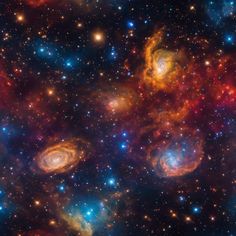
For decades, the existence of dark matter has been a cornerstone of cosmology, explaining the unexpected rotation of galaxies and the gravitational lensing of distant objects. However, a new wave of research is challenging this paradigm, suggesting that dark matter may be a myth, and that our universe operates without this mysterious substance.
The latest findings, based on analyzing the movement of galaxies, propose a new interpretation of galactic dynamics. They argue that the observed rotational speeds and gravitational lensing effects can be explained without the need for dark matter. Instead, they propose a modification of our understanding of gravity, suggesting that the force behaves differently at large scales than previously thought.
This groundbreaking theory, if confirmed, could revolutionize our understanding of the universe. It would eliminate the need for an invisible, undetected substance comprising 85% of the universe’s mass. Scientists working on this new model are confident that it can explain all the phenomena attributed to dark matter without invoking unseen particles.
The research has already sparked heated debates among cosmologists. Some remain skeptical, arguing that the proposed alternative theory is too complex and doesn’t fully account for all observed phenomena. They maintain that dark matter remains the most plausible explanation for the observed anomalies.
While the debate continues, the latest research presents a compelling challenge to the long-held belief in dark matter. If the new model proves to be accurate, it could drastically shift our understanding of the universe and its fundamental laws, opening up new avenues of exploration and sparking a paradigm shift in astrophysics.




