Morgan Stanley: Major AI Breakthroughs by 2026 Despite Energy Hurdles
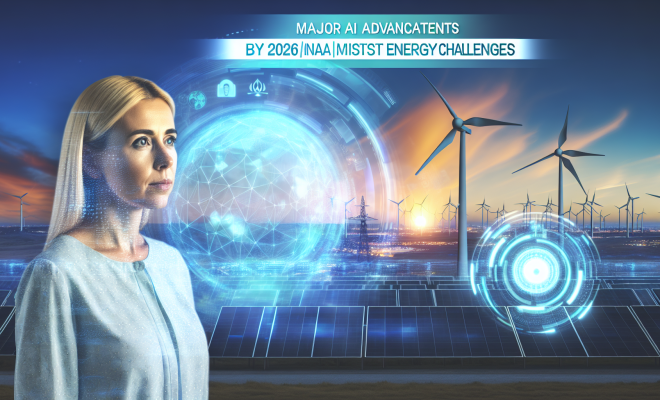
In a recent report, Morgan Stanley has made headlines by predicting a significant breakthrough in artificial intelligence (AI) set to occur in the first half of 2026. This forecast comes at a time when the accumulation of computational power in U.S. AI laboratories is reaching unprecedented levels, with implications that could redefine the landscape of AI technology.
The Impetus Behind the Prediction
The surge in computational capacity is largely attributed to the scaling laws of AI, a principle that suggests that enhancements in computational power can lead to proportional increases in model intelligence. Elon Musk has been vocal about this phenomenon, claiming that a tenfold increase in compute can effectively double the intelligence of AI models. This assertion underpins the optimism expressed by Morgan Stanley regarding imminent advancements in AI capabilities.
OpenAI’s Groundbreaking Developments
One of the key players fueling this AI revolution is OpenAI, which recently unveiled its latest model, GPT-5.4, dubbed the “Thinking” model. This iteration has achieved an impressive 83.0% score on the GDPVal benchmark, a metric designed to evaluate models on tasks that are economically valuable. The performance of GPT-5.4 not only showcases the advancements in AI technology but also raises the bar for future models, setting a new standard that aligns closely with human expertise.
Energy Constraints and Innovative Solutions
Despite the optimistic outlook for AI advancements, there are significant challenges ahead, particularly regarding energy consumption. Morgan Stanley projects a power shortfall of 9-18 gigawatts in the U.S. through 2028, a situation that could hinder the growth of data centers crucial for AI development. This impending energy crisis has prompted AI developers to seek innovative solutions.
- Repurposing Bitcoin Mining Sites: Many AI developers are looking into repurposing existing infrastructure from Bitcoin mining operations. These sites, which were once energy-intensive mining hubs, can be adapted to support the computational needs of AI models.
- Alternative Energy Sources: As the demand for energy grows, there is a surge in efforts to explore alternative energy sources. This includes solar, wind, and other renewable energies to power the data centers that will host AI technologies.
The ’15-15-15′ Economic Dynamic
Amid these challenges, Morgan Stanley discusses a concept referred to as the ’15-15-15′ economic dynamic, which is expected to influence the operational strategies of data centers. This dynamic indicates that:
- The cost of energy is projected to rise by 15%.
- The computational power required for AI systems will also increase by 15%.
- Finally, the performance and efficiency of AI models are anticipated to improve by 15%.
Understanding this interplay is vital for stakeholders in the AI sector, as it highlights the importance of balancing operational costs with technological advancements.
The Future of AI: A Paradigm Shift
As we look toward 2026, the implications of these advancements extend beyond mere computational prowess. Enhanced AI models have the potential to impact various sectors, from healthcare to finance, transforming how businesses operate and make decisions. The ability of AI to perform economically valuable tasks with human-like proficiency could lead to increased efficiencies and innovations across industries.
Conclusion
The projection by Morgan Stanley regarding a major AI breakthrough in 2026 underscores the rapid evolution of technology driven by advancements in computational power and sophisticated models. However, the anticipated energy shortages present a significant challenge that must be addressed. By repurposing existing infrastructures and exploring alternative energy solutions, the AI community can navigate these obstacles to unlock the full potential of artificial intelligence.
As we approach this pivotal year, the convergence of technological innovation and energy strategy will undoubtedly shape the future of AI and its applications in society.