The Tech Edvocate

Top Menu

  • Advertisement
  • Apps
  • Home Page
  • Home Page Five (No Sidebar)
  • Home Page Four
  • Home Page Three
  • Home Page Two
  • Home Tech2
  • Icons [No Sidebar]
  • Left Sidbear Page
  • Lynch Educational Consulting
  • My Account
  • My Speaking Page
  • Newsletter Sign Up Confirmation
  • Newsletter Unsubscription
  • Our Brands
  • Page Example
  • Privacy Policy
  • Protected Content
  • Register
  • Request a Product Review
  • Shop
  • Shortcodes Examples
  • Signup
  • Start Here
    • Governance
    • Careers
    • Contact Us
  • Terms and Conditions
  • The Edvocate
  • The Tech Edvocate Product Guide
  • Topics
  • Write For Us
  • Advertise

Main Menu

  • Start Here
    • Our Brands
    • Governance
      • Lynch Educational Consulting, LLC.
      • Dr. Lynch’s Personal Website
      • Careers
    • Write For Us
    • The Tech Edvocate Product Guide
    • Contact Us
    • Books
    • Edupedia
    • Post a Job
    • The Edvocate Podcast
    • Terms and Conditions
    • Privacy Policy
  • Topics
    • Assistive Technology
    • Child Development Tech
    • Early Childhood & K-12 EdTech
    • EdTech Futures
    • EdTech News
    • EdTech Policy & Reform
    • EdTech Startups & Businesses
    • Higher Education EdTech
    • Online Learning & eLearning
    • Parent & Family Tech
    • Personalized Learning
    • Product Reviews
  • Advertise
  • Tech Edvocate Awards
  • The Edvocate
  • Pedagogue
  • School Ratings

logo

The Tech Edvocate

  • Start Here
    • Our Brands
    • Governance
      • Lynch Educational Consulting, LLC.
      • Dr. Lynch’s Personal Website
        • My Speaking Page
      • Careers
    • Write For Us
    • The Tech Edvocate Product Guide
    • Contact Us
    • Books
    • Edupedia
    • Post a Job
    • The Edvocate Podcast
    • Terms and Conditions
    • Privacy Policy
  • Topics
    • Assistive Technology
    • Child Development Tech
    • Early Childhood & K-12 EdTech
    • EdTech Futures
    • EdTech News
    • EdTech Policy & Reform
    • EdTech Startups & Businesses
    • Higher Education EdTech
    • Online Learning & eLearning
    • Parent & Family Tech
    • Personalized Learning
    • Product Reviews
  • Advertise
  • Tech Edvocate Awards
  • The Edvocate
  • Pedagogue
  • School Ratings
  • US Battery as a Service Market Shifts Toward Fleet-Based Energy

  • The Startling Truth: Why Americans Distrust AI with Their Health

  • This Crucial Deadline for Banks Is Closer Than You Think

  • Baffling: CrowdStrike’s $500 Million AI Bet Reshapes Cybersecurity

  • This Crucial Autonomous Driving Rule Could Cost You Everything

  • Baffling: Microsoft AI CEO Demands Halt to Conscious AI Development

  • O seară în ritmul tău: atmosfera divertismentului de cazinou pe internet

  • Outrageous: AppLovin Hit With Lawsuit Over AI Claims — What Investors Need to Know

  • 9 Critical Ways AI Investment Fraud Is Quietly Draining Your Bank Account

  • Is the AI Bubble Bursting? OpenAI’s Funding Woes Revealed

Online Learning & eLearning
Home›Online Learning & eLearning›Hybrid Cloud: Benefits and Barriers

Hybrid Cloud: Benefits and Barriers
By Matthew Lynch
March 27, 2023
0
Spread the love

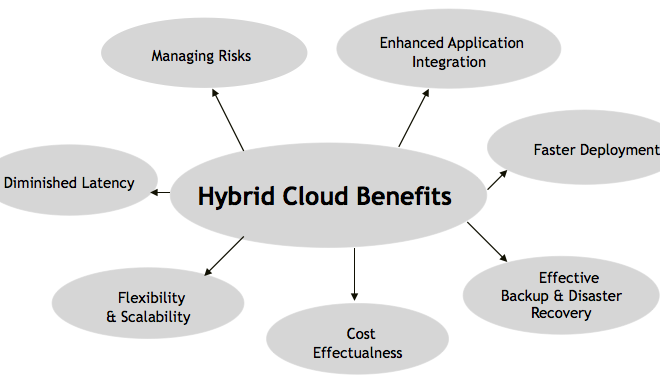
With businesses increasingly relying on the cloud for their IT infrastructure, hybrid cloud solutions are becoming more prevalent. Hybrid cloud is a combination of private and public clouds that can be used to access resources and services on-demand. Companies can strategically balance the workload between the public and private cloud, leveraging the benefits of each, while keeping sensitive data on a private cloud. Here are some of the benefits and barriers of the Hybrid Cloud.

Benefits:

1. Increased Flexibility

One of the most significant advantages of the hybrid cloud is its ability to be flexible based on the specific needs of an organization. Companies can easily scale resources up or down as needed, depending on usage patterns or business demands. This flexibility allows organizations to keep pace with changing needs without over-provisioning or wasting resources.

DirecTV High-Speed Internet, also known as AT&T Internet, provides internet service to customers through the use of satellite technology. This service is available in areas where traditional wired broadband is not feasible, making it an excellent option for rural areas.

DirecTV High-Speed Internet offers a variety of packages to meet different needs, ranging from basic plans aimed at light users to faster plans ideal for heavy users. The packages start at $40 per month, and customers can bundle their internet service with DirecTV television service for additional savings.

One of the significant advantages of DirecTV High-Speed Internet is that there are no data caps, which means customers can use as much data as they need. However, the speed of the service can be affected by a variety of factors, including weather conditions, signal strength, and the number of users on the network.

Customers can choose their equipment, either by purchasing or leasing it from DirecTV. The costs of the equipment range from $99 to $199 for the modem and, if necessary, the satellite dish. Professionals will come to install and set up the equipment, ensuring a smooth and trouble-free experience.

DirecTV High-Speed Internet uses satellite technology to send and receive data, so there are some limitations in terms of speed and latency. However, the service provides a reliable and consistent internet connection, making it an appealing option for customers looking to switch from traditional wired internet service.

In terms of customer support, DirecTV High-Speed Internet offers phone and online support for technical difficulties and billing errors. Customers can also access detailed online resources to troubleshoot any problems they may encounter. Overall, the customer support is considered to be satisfactory, with relatively quick response times and helpful support staff.

In conclusion, DirecTV High-Speed Internet is an excellent option for customers living in rural areas where traditional broadband is not feasible. The service provides a variety of packages to meet different needs, has no data caps, and offers reliable and consistent internet connectivity. With adequate customer support and professional installation, DirecTV High-Speed Internet is a dependable and worthwhile service for anyone looking for satellite internet.

Hybrid cloud solutions provide enhanced security, especially for those organizations handling sensitive data. Companies can separate the sensitive data, storing it securely on their private cloud, while still leveraging the benefits of the public cloud.

3. Cost-effective

Hybrid cloud architecture helps businesses optimize their IT infrastructure costs. The public cloud is typically less expensive than private cloud computing, so companies can use the public cloud for non-sensitive workloads such as testing, development, and scalability. Also, it eliminates the high initial investment costs of purchasing private cloud infrastructure.

Barriers:

1. Integration Complexity

Integrating multiple infrastructures can pose challenges, especially when dealing with different APIs, services, and applications. Some platforms are not cloud-enabled, making it difficult to move applications from one platform to another.

2. Data Management & Security

Before shifting from the private cloud to the public cloud, businesses must ensure that their data is secure. This requires close collaboration with third-party cloud providers to ensure that data is protected both in transit and at rest. Additionally, when sensitive data is on a private cloud, the risk of data breaches is still prevalent, requiring significant security measures to be implemented, with the assistance of IT professionals.

3. Quality of Service

The quality of service provided by the cloud might not be consistent, especially for public clouds that are subject to traffic surges. This means that businesses need to ensure they have the necessary resources to support the surge of data when it occurs.

Conclusion

Hybrid cloud solutions offer a balanced solution for organizations that need to keep sensitive data private while leveraging the benefits of the public cloud. They offer scalability, better resource utilization, and cost optimization. However, organizations must overcome the challenges of integration complexity, data management, and quality of service before successfully utilizing hybrid cloud solutions for their day to day operations.


Previous Article

HP’s Ink Subscription Has DRM That Disables ...

Next Article

Hybrid Hard Drives Explained: Why You Might ...

Matthew Lynch

Related articles More from author

  • Online Learning & eLearning

    Why Designing for Accessibility in E-learning Matters

    September 6, 2021
    By Matthew Lynch
  • Digital & Mobile TechnologyOnline Learning & eLearning

    How to Smooth Skin in Photoshop: A Step-by-Step Guide

    June 14, 2023
    By Matthew Lynch
  • Online Learning & eLearning

    Can Online Classrooms Be as Effective as Face to Face Classrooms?

    January 4, 2024
    By Matthew Lynch
  • Online Learning & eLearning

    Top 5 Ways to Disable Touchpad in Windows 11 Laptops

    April 2, 2023
    By Matthew Lynch
  • Online Learning & eLearning

    Phone Won’t Charge? Try This Easy DIY Toothpick Trick First

    March 29, 2023
    By Matthew Lynch
  • Online Learning & eLearning

    What Is Chronemics?

    June 8, 2023
    By Matthew Lynch

Search

Login & Registration

  • Log in
  • Entries feed
  • Comments feed
  • WordPress.org

Newsletter

Signup for The Tech Edvocate Newsletter and have the latest in EdTech news and opinion delivered to your email address!

About Us

Since technology is not going anywhere and does more good than harm, adapting is the best course of action. That is where The Tech Edvocate comes in. We plan to cover the PreK-12 and Higher Education EdTech sectors and provide our readers with the latest news and opinion on the subject. From time to time, I will invite other voices to weigh in on important issues in EdTech. We hope to provide a well-rounded, multi-faceted look at the past, present, the future of EdTech in the US and internationally.

We started this journey back in June 2016, and we plan to continue it for many more years to come. I hope that you will join us in this discussion of the past, present and future of EdTech and lend your own insight to the issues that are discussed.

Newsletter

Signup for The Tech Edvocate Newsletter and have the latest in EdTech news and opinion delivered to your email address!

Contact Us

The Tech Edvocate
910 Goddin Street
Richmond, VA 23231
(601) 630-5238
[email protected]

Copyright © 2026 Matthew Lynch. All rights reserved.