The Tech Edvocate

Top Menu

  • Advertisement
  • Apps
  • Home Page
  • Home Page Five (No Sidebar)
  • Home Page Four
  • Home Page Three
  • Home Page Two
  • Home Tech2
  • Icons [No Sidebar]
  • Left Sidbear Page
  • Lynch Educational Consulting
  • My Account
  • My Speaking Page
  • Newsletter Sign Up Confirmation
  • Newsletter Unsubscription
  • Our Brands
  • Page Example
  • Privacy Policy
  • Protected Content
  • Register
  • Request a Product Review
  • Shop
  • Shortcodes Examples
  • Signup
  • Start Here
    • Governance
    • Careers
    • Contact Us
  • Terms and Conditions
  • The Edvocate
  • The Tech Edvocate Product Guide
  • Topics
  • Write For Us
  • Advertise

Main Menu

  • Start Here
    • Our Brands
    • Governance
      • Lynch Educational Consulting, LLC.
      • Dr. Lynch’s Personal Website
      • Careers
    • Write For Us
    • The Tech Edvocate Product Guide
    • Contact Us
    • Books
    • Edupedia
    • Post a Job
    • The Edvocate Podcast
    • Terms and Conditions
    • Privacy Policy
  • Topics
    • Assistive Technology
    • Child Development Tech
    • Early Childhood & K-12 EdTech
    • EdTech Futures
    • EdTech News
    • EdTech Policy & Reform
    • EdTech Startups & Businesses
    • Higher Education EdTech
    • Online Learning & eLearning
    • Parent & Family Tech
    • Personalized Learning
    • Product Reviews
  • Advertise
  • Tech Edvocate Awards
  • The Edvocate
  • Pedagogue
  • School Ratings

logo

The Tech Edvocate

  • Start Here
    • Our Brands
    • Governance
      • Lynch Educational Consulting, LLC.
      • Dr. Lynch’s Personal Website
        • My Speaking Page
      • Careers
    • Write For Us
    • The Tech Edvocate Product Guide
    • Contact Us
    • Books
    • Edupedia
    • Post a Job
    • The Edvocate Podcast
    • Terms and Conditions
    • Privacy Policy
  • Topics
    • Assistive Technology
    • Child Development Tech
    • Early Childhood & K-12 EdTech
    • EdTech Futures
    • EdTech News
    • EdTech Policy & Reform
    • EdTech Startups & Businesses
    • Higher Education EdTech
    • Online Learning & eLearning
    • Parent & Family Tech
    • Personalized Learning
    • Product Reviews
  • Advertise
  • Tech Edvocate Awards
  • The Edvocate
  • Pedagogue
  • School Ratings
  • Miro vs Conceptboard for project management

  • How to use Teamwork for resource management

  • How much does Procore cost per month

  • How to organize Microsoft Planner buckets

  • Is Teamwork good for billable hours

  • Procore vs Buildertrend which is better

  • Airtable project management templates

  • Can Miro track project progress

  • How to use Basecamp for client work

  • Can Lucidchart create swimlane diagrams

Digital & Mobile Technology
Home›Digital & Mobile Technology›How to Use Android Auto Wireless

How to Use Android Auto Wireless
By Matthew Lynch
July 6, 2023
0
Spread the love

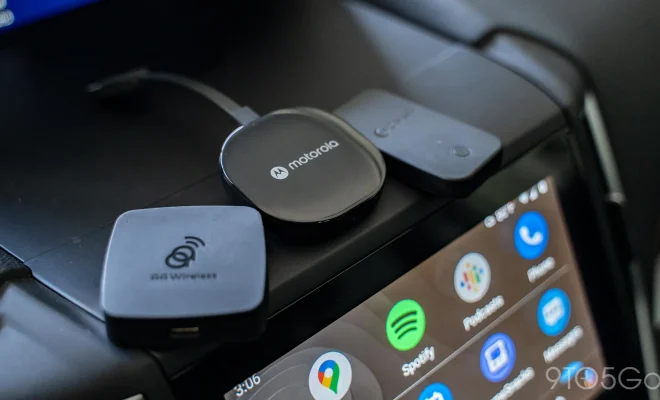
Android Auto is an application that allows you to connect your phone to your car’s infotainment system to access entertainment, navigation, and communication features safely while driving. Android Auto Wireless is a feature that allows you to use Android Auto without a USB cable. Here are the steps to use Android Auto Wireless:

1. Check if your phone and car support Android Auto Wireless

Not all Android phones and cars support Android Auto Wireless. According to Google, your phone needs to be running Android 11 and have a Wi-Fi 5 (802.11ac) or higher network adapter. Also, your car’s infotainment system must support Android Auto Wireless. You can check your car’s manual or contact the manufacturer to confirm.

2. Set up your car’s infotainment system

Before you start using Android Auto Wireless, you need to set up your car’s infotainment system. First, make sure your car is parked and the parking brake is engaged. Then, enable Wi-Fi on your car’s infotainment system and connect to a Wi-Fi network. Finally, open the Android Auto app on your phone and select the “Wireless” option.

3. Connect to your car’s infotainment system

To connect your phone to your car wirelessly, follow these steps:

a. Make sure your phone’s Wi-Fi is activated.

b. Go to your phone’s “Settings” app and select “Connected devices.”

c. Select “Android Auto.”

d. Select “Enable wireless projection.”

e. Your phone will search for available devices.

f. Select your car’s infotainment system from the list.

g. If prompted, enter the PIN code displayed on your car’s infotainment system.

4. Use Android Auto Wireless

Once connected, you can use Android Auto Wireless just like you would with a USB cable. You can access your favorite music apps like Spotify, Google Play Music, and TuneIn Radio. You can also make and receive phone calls, send and receive text messages, and use Google Maps for navigation. You can control Android Auto using voice commands, the touch screen, or knobs and buttons on your car’s infotainment system.

5. Troubleshoot common issues

If you experience connectivity issues or have trouble using Android Auto Wireless, try the following:

a. Make sure your phone and car are compatible with Android Auto Wireless.

b. Turn off your phone’s battery saver mode.

c. Make sure your phone’s Wi-Fi is turned on and connected to the same network as your car’s infotainment system.

d. Restart both your phone and car.

e. Make sure your car’s infotainment system is up to date.

f. If all else fails, try connecting your phone to your car with a USB cable.

In conclusion, Android Auto Wireless is a convenient feature that allows you to use Android Auto without a USB cable. However, it is not available on all phones and cars, so make sure your devices are compatible before trying to use it. Follow the steps above to set up and use Android Auto Wireless safely while driving.


Previous Article

How to Set up a New iPhone

Next Article

How to Email Multiple Files Using a ...

Matthew Lynch

Related articles More from author

  • Digital & Mobile Technology

    Bluetooth 5 vs. aptX Low Latency: What’s the Big Difference?

    June 9, 2023
    By Matthew Lynch
  • Digital & Mobile Technology

    Where Is the iPhone Made?

    June 2, 2023
    By Matthew Lynch
  • Digital & Mobile Technology

    Top Ways to Fix Mobile Hotspot Not Working on Samsung Galaxy Phones

    April 14, 2023
    By Matthew Lynch
  • Digital & Mobile Technology

    Lesser-Known Apple Health Features Worth Using

    July 15, 2023
    By Matthew Lynch
  • Digital & Mobile Technology

    What Is Ctfmon.Exe and Why Is It Running?

    June 3, 2023
    By Matthew Lynch
  • Digital & Mobile Technology

    How to Block Emails on Yahoo Mail

    May 19, 2023
    By Matthew Lynch

Search

Login & Registration

  • Log in
  • Entries feed
  • Comments feed
  • WordPress.org

Newsletter

Signup for The Tech Edvocate Newsletter and have the latest in EdTech news and opinion delivered to your email address!

About Us

Since technology is not going anywhere and does more good than harm, adapting is the best course of action. That is where The Tech Edvocate comes in. We plan to cover the PreK-12 and Higher Education EdTech sectors and provide our readers with the latest news and opinion on the subject. From time to time, I will invite other voices to weigh in on important issues in EdTech. We hope to provide a well-rounded, multi-faceted look at the past, present, the future of EdTech in the US and internationally.

We started this journey back in June 2016, and we plan to continue it for many more years to come. I hope that you will join us in this discussion of the past, present and future of EdTech and lend your own insight to the issues that are discussed.

Newsletter

Signup for The Tech Edvocate Newsletter and have the latest in EdTech news and opinion delivered to your email address!

Contact Us

The Tech Edvocate
910 Goddin Street
Richmond, VA 23231
(601) 630-5238
[email protected]

Copyright © 2026 Matthew Lynch. All rights reserved.