The Tech Edvocate

Top Menu

  • Advertisement
  • Apps
  • Home Page
  • Home Page Five (No Sidebar)
  • Home Page Four
  • Home Page Three
  • Home Page Two
  • Home Tech2
  • Icons [No Sidebar]
  • Left Sidbear Page
  • Lynch Educational Consulting
  • My Account
  • My Speaking Page
  • Newsletter Sign Up Confirmation
  • Newsletter Unsubscription
  • Our Brands
  • Page Example
  • Privacy Policy
  • Protected Content
  • Register
  • Request a Product Review
  • Shop
  • Shortcodes Examples
  • Signup
  • Start Here
    • Governance
    • Careers
    • Contact Us
  • Terms and Conditions
  • The Edvocate
  • The Tech Edvocate Product Guide
  • Topics
  • Write For Us
  • Advertise

Main Menu

  • Start Here
    • Our Brands
    • Governance
      • Lynch Educational Consulting, LLC.
      • Dr. Lynch’s Personal Website
      • Careers
    • Write For Us
    • The Tech Edvocate Product Guide
    • Contact Us
    • Books
    • Edupedia
    • Post a Job
    • The Edvocate Podcast
    • Terms and Conditions
    • Privacy Policy
  • Topics
    • Assistive Technology
    • Child Development Tech
    • Early Childhood & K-12 EdTech
    • EdTech Futures
    • EdTech News
    • EdTech Policy & Reform
    • EdTech Startups & Businesses
    • Higher Education EdTech
    • Online Learning & eLearning
    • Parent & Family Tech
    • Personalized Learning
    • Product Reviews
  • Advertise
  • Tech Edvocate Awards
  • The Edvocate
  • Pedagogue
  • School Ratings

logo

The Tech Edvocate

  • Start Here
    • Our Brands
    • Governance
      • Lynch Educational Consulting, LLC.
      • Dr. Lynch’s Personal Website
        • My Speaking Page
      • Careers
    • Write For Us
    • The Tech Edvocate Product Guide
    • Contact Us
    • Books
    • Edupedia
    • Post a Job
    • The Edvocate Podcast
    • Terms and Conditions
    • Privacy Policy
  • Topics
    • Assistive Technology
    • Child Development Tech
    • Early Childhood & K-12 EdTech
    • EdTech Futures
    • EdTech News
    • EdTech Policy & Reform
    • EdTech Startups & Businesses
    • Higher Education EdTech
    • Online Learning & eLearning
    • Parent & Family Tech
    • Personalized Learning
    • Product Reviews
  • Advertise
  • Tech Edvocate Awards
  • The Edvocate
  • Pedagogue
  • School Ratings
  • The Narwal Freo 20 Is the Prime Day Gift That Actually Saves Time

  • Study: Nearly all personal care and cleaning products contain undisclosed chemicals

  • This One AI Wearable Feature Is Quietly Erasing Public Privacy

  • Brutal: Over 200,000 Tech Layoffs in 2026 as AI’s Long Reset Unfolds

  • The Radical Proposal: Why Palantir’s Alex Karp Wants AI Labs Nationalized

  • Heartbreaking: Hyper Light Drifter Studio Nearly Wiped Out After Publisher Abandons Deal

  • Unbelievable: Kojima’s Physint Jumps to Xbox – The September 2026 Big Game Reveals Just Got Wild!

  • This Crucial AI Development Could Trigger Global Chaos

  • Infuriating: Viral Video Exposes Ugly Truth of Racial Slurs in Schools

  • This Court Ruling Just TORPEDOED a Major Anti-DEI Grant Policy

Assistive Technology
Home›Assistive Technology›How to Password-Protect Files and Folders on Linux

How to Password-Protect Files and Folders on Linux
By Matthew Lynch
June 12, 2023
0
Spread the love

Linux is known for its security and privacy features, but even the most secure operating system needs additional protection for valuable documents. Password-protecting files and folders is a reliable way to ensure that unauthorized people don’t access important files on your Linux computer. In this article, we will guide you on how to password-protect files and folders on Linux.

Step 1: Install EncFS

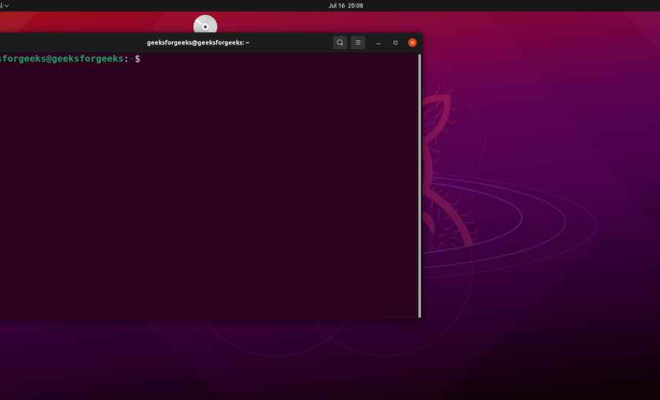
EncFS is an open-source cryptographic file system that helps in encrypting files on-demand. It allows you to create an encrypted virtual directory where your files will be stored. To install EncFS, open your Linux terminal and run the following command:

sudo apt-get install encfs

Step 2: Create a folder for EncFS

After installing EncFS, create an empty folder where the encrypted files can be kept. In this example, we will create a folder called secret_folder by running the following command:

mkdir ~/secret_folder

Step 3: Set up EncFS

Run the following command to set up EncFS:

encfs ~/secret_folder ~/encrypted_secret_folder

This command creates an encrypted directory called encrypted_secret_folder inside the secret_folder directory. EncFS will ask you for two passwords, one for mounting the encrypted folder and another one for accessing the encrypted files.

Step 4: Move files into the encrypted folder

After the encrypted folder has been set up, you can move any file you want to protect into it. For example, to protect a file called confidential.txt, move it to the encrypted_secret_folder.

mv ~/Downloads/confidential.txt ~/secret_folder/encrypted_secret_folder/

Step 5: Unmount the encrypted folder

After you are done working with the encrypted files, it’s essential to unmount the encrypted folder. This ensures that no one else can access the files unless they have both the passwords. Run the following command to unmount the encrypted folder:

fusermount -u ~/encrypted_secret_folder

Step 6: Access your files

To access your password-protected files, mount the encrypted_secret_folder using the command below:

encfs ~/secret_folder ~/encrypted_secret_folder

You will be asked to provide the two passwords you set up earlier. Once the encrypted folder is mounted successfully, you can access your protected files inside it.

Conclusion

Password-protecting your files and folders on Linux is an effective way to secure your data. EncFS provides a user-friendly method of encrypting sensitive files on-demand. The steps outlined above will help you protect and access your confidential files with ease.


Previous Article

The Best Tools for Microsoft Outlook

Next Article

Bookmark Apps to Organize Links, Save Social ...

Matthew Lynch

Related articles More from author

  • Assistive Technology

    Auto-Brightness Not Working on Your iPhone?

    June 15, 2023
    By Matthew Lynch
  • Assistive Technology

    How to Open the Command Prompt in Windows 11

    June 22, 2023
    By Matthew Lynch
  • Assistive Technology

    How to Insert a Vertical or Horizontal Line in Google Docs

    June 22, 2023
    By Matthew Lynch
  • Assistive Technology

    How to Disable Steam’s Automatic Launch on Windows and Mac

    June 23, 2023
    By Matthew Lynch
  • Assistive Technology

    How to Trace a Spoofed Phone Number

    June 6, 2023
    By Matthew Lynch
  • Assistive Technology

    How to Change the Playback Speed on Netflix

    June 11, 2023
    By Matthew Lynch

Search

Login & Registration

  • Log in
  • Entries feed
  • Comments feed
  • WordPress.org

Newsletter

Signup for The Tech Edvocate Newsletter and have the latest in EdTech news and opinion delivered to your email address!

About Us

Since technology is not going anywhere and does more good than harm, adapting is the best course of action. That is where The Tech Edvocate comes in. We plan to cover the PreK-12 and Higher Education EdTech sectors and provide our readers with the latest news and opinion on the subject. From time to time, I will invite other voices to weigh in on important issues in EdTech. We hope to provide a well-rounded, multi-faceted look at the past, present, the future of EdTech in the US and internationally.

We started this journey back in June 2016, and we plan to continue it for many more years to come. I hope that you will join us in this discussion of the past, present and future of EdTech and lend your own insight to the issues that are discussed.

Newsletter

Signup for The Tech Edvocate Newsletter and have the latest in EdTech news and opinion delivered to your email address!

Contact Us

The Tech Edvocate
910 Goddin Street
Richmond, VA 23231
(601) 630-5238
[email protected]

Copyright © 2026 Matthew Lynch. All rights reserved.