The Tech Edvocate

Top Menu

  • Advertisement
  • Apps
  • Home Page
  • Home Page Five (No Sidebar)
  • Home Page Four
  • Home Page Three
  • Home Page Two
  • Home Tech2
  • Icons [No Sidebar]
  • Left Sidbear Page
  • Lynch Educational Consulting
  • My Account
  • My Speaking Page
  • Newsletter Sign Up Confirmation
  • Newsletter Unsubscription
  • Our Brands
  • Page Example
  • Privacy Policy
  • Protected Content
  • Register
  • Request a Product Review
  • Shop
  • Shortcodes Examples
  • Signup
  • Start Here
    • Governance
    • Careers
    • Contact Us
  • Terms and Conditions
  • The Edvocate
  • The Tech Edvocate Product Guide
  • Topics
  • Write For Us
  • Advertise

Main Menu

  • Start Here
    • Our Brands
    • Governance
      • Lynch Educational Consulting, LLC.
      • Dr. Lynch’s Personal Website
      • Careers
    • Write For Us
    • The Tech Edvocate Product Guide
    • Contact Us
    • Books
    • Edupedia
    • Post a Job
    • The Edvocate Podcast
    • Terms and Conditions
    • Privacy Policy
  • Topics
    • Assistive Technology
    • Child Development Tech
    • Early Childhood & K-12 EdTech
    • EdTech Futures
    • EdTech News
    • EdTech Policy & Reform
    • EdTech Startups & Businesses
    • Higher Education EdTech
    • Online Learning & eLearning
    • Parent & Family Tech
    • Personalized Learning
    • Product Reviews
  • Advertise
  • Tech Edvocate Awards
  • The Edvocate
  • Pedagogue
  • School Ratings

logo

The Tech Edvocate

  • Start Here
    • Our Brands
    • Governance
      • Lynch Educational Consulting, LLC.
      • Dr. Lynch’s Personal Website
        • My Speaking Page
      • Careers
    • Write For Us
    • The Tech Edvocate Product Guide
    • Contact Us
    • Books
    • Edupedia
    • Post a Job
    • The Edvocate Podcast
    • Terms and Conditions
    • Privacy Policy
  • Topics
    • Assistive Technology
    • Child Development Tech
    • Early Childhood & K-12 EdTech
    • EdTech Futures
    • EdTech News
    • EdTech Policy & Reform
    • EdTech Startups & Businesses
    • Higher Education EdTech
    • Online Learning & eLearning
    • Parent & Family Tech
    • Personalized Learning
    • Product Reviews
  • Advertise
  • Tech Edvocate Awards
  • The Edvocate
  • Pedagogue
  • School Ratings
  • The Brutal Truth: Why K-12 Cybersecurity Needs More Than Just Awareness

  • The Unseen Threat: How K-12 Cybersecurity Training Is Quietly Reshaping Education

  • The Staggering Truth: K-12 Cybersecurity Education Is Failing – Here’s How to Fix It

  • Why Millions Are Ditching Degrees For This Career-Boosting Secret

  • 7 Crucial Micro-Credentials Boosting Recent Grads’ Salaries by 15%

  • The Brutal Truth: Why Your College Degree Isn’t Enough Anymore

  • The Ethical AI Auditor Boom: Why Salaries Are Skyrocketing Globally

  • This Crucial Skill Now Pays $150,000 Starting — Here’s How to Get Certified in 2024

  • This Unforeseen Tech Job Pays Six Figures — And You Can Start Today

  • One Stunning Reason Why Quantum Certifications Trump Traditional IT

Assistive Technology
Home›Assistive Technology›How to Force-Quit a Program in Windows 11

How to Force-Quit a Program in Windows 11
By Matthew Lynch
June 10, 2023
0
Spread the love

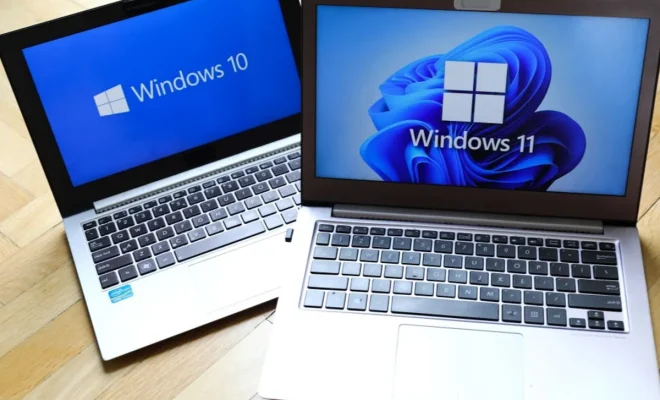
Sometimes, programs or applications on your Windows 11 computer may freeze or stop responding. This can be frustrating since it hinders you from completing the task at hand. Fortunately, you can force-quit the program to stop it from running and restart it later. In this article, we’ll go through how to force-quit a program in Windows 11.

1. Open Task Manager

The first step is to open the Task Manager. To do this, right-click on the taskbar and select “Task Manager” from the context menu.

You can also use a keyboard shortcut by pressing “Ctrl + Shift + Esc” on your keyboard.

2. Find the program

Once you have the Task Manager open, you will see a list of all the currently running programs and processes. Look for the program you want to force-quit and click on it to highlight it.

If it’s not immediately visible, you can also check the “Processes” tab to find it.

3. Force-quit the program

After selecting the program, click on the “End task” button at the bottom right corner of the Task Manager screen. This will immediately terminate the program and any associated processes.

A pop-up may appear asking if you’re sure you want to end the task. Click “End task” to confirm.

4. Restart the program

If you still need to use the program, you will need to restart it. To do this, go to the Windows Start menu and find the program in the list of installed applications. Click on it to open it.

Alternatively, you can also use the Task Manager to restart the program. After ending the task, right-click on the program and select “Restart” from the context menu.

Conclusion

Force-quitting a program in Windows 11 is a simple and effective way to deal with unresponsive applications. You can do this using the Task Manager to close the program and then restart it to get back to what you were doing.

Keep in mind that force-quitting a program is not the recommended way to close it. It’s always best to close it normally by clicking on the “X” button at the top right corner of the program window. But if the program does not respond to this, force-quitting becomes necessary.


Previous Article

Bluetooth vs. Wi-Fi: What’s the Difference?

Next Article

How to Fix a Samsung Tablet That’s ...

Matthew Lynch

Related articles More from author

  • Assistive Technology

    How to Clear the Cache on a Fire TV Stick

    June 8, 2023
    By Matthew Lynch
  • Assistive Technology

    How to Create Rules in Gmail for (Almost) Anything

    June 6, 2023
    By Matthew Lynch
  • Assistive Technology

    All the Paint 3D Keyboard Shortcuts You Must Know

    August 5, 2023
    By Matthew Lynch
  • Assistive Technology

    Ways to Reduce Your Ethereum Gas Fees

    June 9, 2023
    By Matthew Lynch
  • Assistive Technology

    How to Use Google Translate for Text, Images, and Real-time Conversations

    June 12, 2023
    By Matthew Lynch
  • Assistive Technology

    What to Do When Your Instagram Account is Disabled or Deactivated

    June 8, 2023
    By Matthew Lynch

Search

Login & Registration

  • Log in
  • Entries feed
  • Comments feed
  • WordPress.org

Newsletter

Signup for The Tech Edvocate Newsletter and have the latest in EdTech news and opinion delivered to your email address!

About Us

Since technology is not going anywhere and does more good than harm, adapting is the best course of action. That is where The Tech Edvocate comes in. We plan to cover the PreK-12 and Higher Education EdTech sectors and provide our readers with the latest news and opinion on the subject. From time to time, I will invite other voices to weigh in on important issues in EdTech. We hope to provide a well-rounded, multi-faceted look at the past, present, the future of EdTech in the US and internationally.

We started this journey back in June 2016, and we plan to continue it for many more years to come. I hope that you will join us in this discussion of the past, present and future of EdTech and lend your own insight to the issues that are discussed.

Newsletter

Signup for The Tech Edvocate Newsletter and have the latest in EdTech news and opinion delivered to your email address!

Contact Us

The Tech Edvocate
910 Goddin Street
Richmond, VA 23231
(601) 630-5238
[email protected]

Copyright © 2026 Matthew Lynch. All rights reserved.