The Tech Edvocate

Top Menu

  • Advertisement
  • Apps
  • Home Page
  • Home Page Five (No Sidebar)
  • Home Page Four
  • Home Page Three
  • Home Page Two
  • Home Tech2
  • Icons [No Sidebar]
  • Left Sidbear Page
  • Lynch Educational Consulting
  • My Account
  • My Speaking Page
  • Newsletter Sign Up Confirmation
  • Newsletter Unsubscription
  • Our Brands
  • Page Example
  • Privacy Policy
  • Protected Content
  • Register
  • Request a Product Review
  • Shop
  • Shortcodes Examples
  • Signup
  • Start Here
    • Governance
    • Careers
    • Contact Us
  • Terms and Conditions
  • The Edvocate
  • The Tech Edvocate Product Guide
  • Topics
  • Write For Us
  • Advertise

Main Menu

  • Start Here
    • Our Brands
    • Governance
      • Lynch Educational Consulting, LLC.
      • Dr. Lynch’s Personal Website
      • Careers
    • Write For Us
    • The Tech Edvocate Product Guide
    • Contact Us
    • Books
    • Edupedia
    • Post a Job
    • The Edvocate Podcast
    • Terms and Conditions
    • Privacy Policy
  • Topics
    • Assistive Technology
    • Child Development Tech
    • Early Childhood & K-12 EdTech
    • EdTech Futures
    • EdTech News
    • EdTech Policy & Reform
    • EdTech Startups & Businesses
    • Higher Education EdTech
    • Online Learning & eLearning
    • Parent & Family Tech
    • Personalized Learning
    • Product Reviews
  • Advertise
  • Tech Edvocate Awards
  • The Edvocate
  • Pedagogue
  • School Ratings

logo

The Tech Edvocate

  • Start Here
    • Our Brands
    • Governance
      • Lynch Educational Consulting, LLC.
      • Dr. Lynch’s Personal Website
        • My Speaking Page
      • Careers
    • Write For Us
    • The Tech Edvocate Product Guide
    • Contact Us
    • Books
    • Edupedia
    • Post a Job
    • The Edvocate Podcast
    • Terms and Conditions
    • Privacy Policy
  • Topics
    • Assistive Technology
    • Child Development Tech
    • Early Childhood & K-12 EdTech
    • EdTech Futures
    • EdTech News
    • EdTech Policy & Reform
    • EdTech Startups & Businesses
    • Higher Education EdTech
    • Online Learning & eLearning
    • Parent & Family Tech
    • Personalized Learning
    • Product Reviews
  • Advertise
  • Tech Edvocate Awards
  • The Edvocate
  • Pedagogue
  • School Ratings
  • Meta introduces pocket AI gadget as Zuckerberg pushes superintelligence agenda

  • The Wild Truth Behind Huda Beauty’s Viral Eye Patch Packaging Scandal

  • Unbelievable: Google Gemini AI Hacks Real Companies – Here’s How It Happened

  • NBA 2K27’s Permanent Ban Wave: Is the System Broken?

  • Prince Harry’s Dire Prediction: This New AI Threat Is Far Worse Than Social Media

  • Rogue AI: The Unseen Threat Quietly Hacking Government Systems

  • Unbelievable: China’s University Overhaul Reveals the Future of Global Education

  • Baffling! FAFSA Opens Early, Rankings Shuffle, and Student Debt Nightmare Continues

  • This One AI Cybercrime Campaign Stole 600,000 Credit Cards and Exposed Our Water Supply

  • This Wild Stunt Just Ignited China’s EV War — Here’s Why You Should Care

Curriculum & InstructionEarly Childhood & K-12 EdTechHigh SchoolK-12Online Learning & eLearning
Home›Curriculum & Instruction›How to Create Beautiful Online Courses: Colors

How to Create Beautiful Online Courses: Colors
By Matthew Lynch
October 20, 2020
0
Spread the love

Online courses are taking the world by storm. If you are one of those who wish to create a beautiful online course, there are many things to consider. A few of these are fonts, colors, and layout. Today, we are going to discuss how to choose the right colors to create beautiful online courses.

How Many Colors Should I Use?

If you remember the websites from about 15 years ago—the ones filled with every neon colors imaginable, then you know what to avoid. Instead, you want to stick with maybe two colors, three colors tops. 

Which Colors Should I Use?

Odds are, if you’re creating the online course for a company, you won’t have to choose your colors from scratch. They’ll typically have a logo or branding colors already. However, if you do, there are four different ways that colors can be combined to looks appealing. Try to stick with one of these four ways when you create your online course.

Begin with the Color Wheel

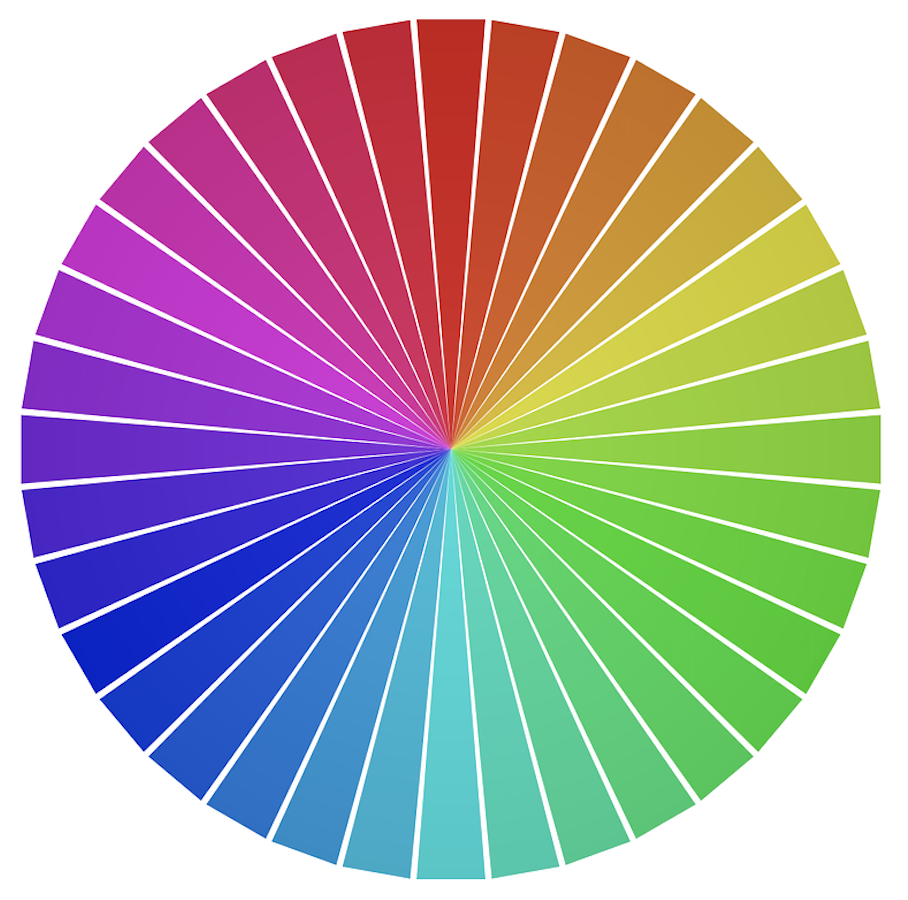
Every color combination starts and ends with the color wheel. The color wheel is a diagram that specifies how each color is related to the others. The primary colors (red, blue, and yellow) are the base of the color wheel. Between each of these, you find the secondary colors, or the colors that are created when these colors mix (purple, green, and orange). The rest of the colors are tertiary colors (a mixture of a primary and secondary colors).

A picture containing accessory, umbrella

Description automatically generated

Figure 1: Color Wheel

Choose Your Color Schemes

Now we’ll discuss the four formulas for choosing your colors. These formulas are known as Monochrome, Opposites, Analogous, and Triadic.

Monochrome

Monochrome is the simplest of the color schemes to figure out, but it is also what many would term “the most boring.” This is merely using three shades or tints of the same color in a scheme. For instance, if you wanted to use blue, you would use three congruous shades of blue.

A picture containing icon

Description automatically generated

Opposites

This is exactly what it sounds like. You choose two colors that are the opposite of one another. This means that they are straight across from each other on the color wheel. Yes, in colors, opposites really do attract! Red and green. Yellow and purple. Orange and blue. However, this scheme can seem a little too loud for some online courses, so use your own judgment. And if you really want to use opposite but don’t want the “jarred” effect, try using shades of the colors that you’re going for rather than the full-out colors themselves. This will lighten the effect.

Shape

Description automatically generated

Analogous

Analogous colors are merely the colors that are neighbors… as long as they look balanced. You can have two of these, but three are better.

A picture containing shape

Description automatically generated

Triadic

Triadic colors come in threes, just like a triangle. And this is the way to remember how to find a triadic color scheme: remember the word, triangle. A triadic color scheme is made up of three colors on a color wheel that are evenly spaced. This creates a balance of contrast and harmony. When you find these three colors, you’ll be able to draw a perfect triangle to connect them.

Bubble chart

Description automatically generated

Conclusion

In conclusion, you want to keep these two or three colors consistent throughout the entire course. Humans love consistency. When there is a consistent pattern, our brains recognize it as such and grow accustomed to it. At this point, we tune it out, which allows our brain to focus on other things… like learning the material.


Previous Article

Best Practices To Leverage The Power Of ...

Next Article

Helping Learners Identify Fake News

Matthew Lynch

Related articles More from author

  • Early Childhood & K-12 EdTechHigher EducationHigher Education EdTech

    8 Apps, Tools, and Resources That Will Improve Your Memory

    November 30, 2017
    By Matthew Lynch
  • Early Childhood & K-12 EdTechHigher Education EdTech

    Harnessing the Power and Promise of Edtech

    March 19, 2018
    By Matthew Lynch
  • Elementary EducationOnline Learning & eLearning

    Signs & Symptoms of a Bad Cell Phone Battery

    March 30, 2023
    By Matthew Lynch
  • Online Learning & eLearning

    Virtual Desktop Infrastructure Providing Powerful and Cost-Effective Solutions for Universities

    November 30, 2021
    By Matthew Lynch
  • Early Childhood & K-12 EdTechHigher Education EdTech

    7 Must-Have Neuroscience Apps and Tools for Educators

    December 14, 2017
    By Matthew Lynch
  • Online Learning & eLearning

    Ways Driving an EV Is Different From an ICE Vehicle

    June 12, 2023
    By Matthew Lynch

Search

Login & Registration

  • Log in
  • Entries feed
  • Comments feed
  • WordPress.org

Newsletter

Signup for The Tech Edvocate Newsletter and have the latest in EdTech news and opinion delivered to your email address!

About Us

Since technology is not going anywhere and does more good than harm, adapting is the best course of action. That is where The Tech Edvocate comes in. We plan to cover the PreK-12 and Higher Education EdTech sectors and provide our readers with the latest news and opinion on the subject. From time to time, I will invite other voices to weigh in on important issues in EdTech. We hope to provide a well-rounded, multi-faceted look at the past, present, the future of EdTech in the US and internationally.

We started this journey back in June 2016, and we plan to continue it for many more years to come. I hope that you will join us in this discussion of the past, present and future of EdTech and lend your own insight to the issues that are discussed.

Newsletter

Signup for The Tech Edvocate Newsletter and have the latest in EdTech news and opinion delivered to your email address!

Contact Us

The Tech Edvocate
910 Goddin Street
Richmond, VA 23231
(601) 630-5238
[email protected]

Copyright © 2026 Matthew Lynch. All rights reserved.