The Tech Edvocate

Top Menu

  • Advertisement
  • Apps
  • Home Page
  • Home Page Five (No Sidebar)
  • Home Page Four
  • Home Page Three
  • Home Page Two
  • Home Tech2
  • Icons [No Sidebar]
  • Left Sidbear Page
  • Lynch Educational Consulting
  • My Account
  • My Speaking Page
  • Newsletter Sign Up Confirmation
  • Newsletter Unsubscription
  • Our Brands
  • Page Example
  • Privacy Policy
  • Protected Content
  • Register
  • Request a Product Review
  • Shop
  • Shortcodes Examples
  • Signup
  • Start Here
    • Governance
    • Careers
    • Contact Us
  • Terms and Conditions
  • The Edvocate
  • The Tech Edvocate Product Guide
  • Topics
  • Write For Us
  • Advertise

Main Menu

  • Start Here
    • Our Brands
    • Governance
      • Lynch Educational Consulting, LLC.
      • Dr. Lynch’s Personal Website
      • Careers
    • Write For Us
    • The Tech Edvocate Product Guide
    • Contact Us
    • Books
    • Edupedia
    • Post a Job
    • The Edvocate Podcast
    • Terms and Conditions
    • Privacy Policy
  • Topics
    • Assistive Technology
    • Child Development Tech
    • Early Childhood & K-12 EdTech
    • EdTech Futures
    • EdTech News
    • EdTech Policy & Reform
    • EdTech Startups & Businesses
    • Higher Education EdTech
    • Online Learning & eLearning
    • Parent & Family Tech
    • Personalized Learning
    • Product Reviews
  • Advertise
  • Tech Edvocate Awards
  • The Edvocate
  • Pedagogue
  • School Ratings

logo

The Tech Edvocate

  • Start Here
    • Our Brands
    • Governance
      • Lynch Educational Consulting, LLC.
      • Dr. Lynch’s Personal Website
        • My Speaking Page
      • Careers
    • Write For Us
    • The Tech Edvocate Product Guide
    • Contact Us
    • Books
    • Edupedia
    • Post a Job
    • The Edvocate Podcast
    • Terms and Conditions
    • Privacy Policy
  • Topics
    • Assistive Technology
    • Child Development Tech
    • Early Childhood & K-12 EdTech
    • EdTech Futures
    • EdTech News
    • EdTech Policy & Reform
    • EdTech Startups & Businesses
    • Higher Education EdTech
    • Online Learning & eLearning
    • Parent & Family Tech
    • Personalized Learning
    • Product Reviews
  • Advertise
  • Tech Edvocate Awards
  • The Edvocate
  • Pedagogue
  • School Ratings
  • Viaim Opennote Review: The AI Note-Taker That Disappears Into Your Daily Routine

  • A Visitors Guide to Long Beach (CA), United States

  • A Visitor’s Guide to Fresno (CA), United States

  • A Visitors Guide to New Orleans (LA), United States

  • A Visitors Guide to Sacramento (CA), United States

  • A Visitors Guide to Lyon, France

  • JisuLife Ultra2 Portable Fan: A Powerful Multi-Function Cooling Solution

  • A Visitors Guide to Viña del Mar, Chile

  • A Visitors Guide to Århus, Denmark

  • A Visitors Guide to Bakersfield (CA), United States

Digital & Mobile Technology
Home›Digital & Mobile Technology›How to Batch Rename & Mass Delete Files in Windows

How to Batch Rename & Mass Delete Files in Windows
By Matthew Lynch
June 15, 2023
0
Spread the love

Batch renaming or mass deleting files can be a daunting task, especially if you have a large number of files or folders that need to be renamed or deleted. However, with the right tools and techniques, you can quickly and easily rename or delete multiple files or folders in Windows.

In this article, we’ll show you how to batch rename and mass delete files in Windows without using any third-party software.

Batch Renaming Files in Windows

The method we’ll be using involves using the Windows Explorer and the command prompt. Here’s the step-by-step process to batch rename files in Windows.

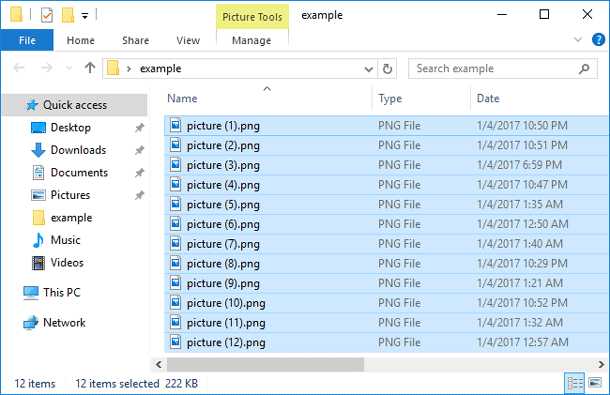
Step 1: Open Windows Explorer and navigate to the folder where the files you want to rename are located.

Step 2: Click on the first file you want to rename, then press the ‘F2’ key on your keyboard to enter rename mode.

Step 3: Rename the file to the new name you want to use, then press ‘Enter’ on your keyboard to save the new name.

Step 4: Windows will automatically select the next file in the folder. Rename it to the new name you want to use, then press ‘Enter’ to save the new name.

Step 5: Repeat step 4 for all the other files you want to rename.

This method works well for small numbers of files that you want to batch rename. However, for larger numbers of files, this method can be tedious and time-consuming. In such cases, you can use the command prompt to batch rename files.

Step 1: Open the command prompt by pressing the ‘Windows’ key + ‘R’ on your keyboard.

Step 2: Type ‘cmd’ in the Run dialog box and click ‘OK’ to open the command prompt.

Step 3: Navigate to the folder where the files you want to rename are located using the cd command. For example, if your files are located in the ‘Documents’ folder, type ‘cd Documents’ in the command prompt and press ‘Enter’.

Step 4: Type the following command to batch rename the files:

ren ‘old file name’ ‘new file name’

For example, to rename all files with the .doc extension in the ‘Documents’ folder to be called ‘MyDocument 1’, ‘MyDocument 2’, ‘MyDocument 3’, and so on, use the following command:

ren *.doc “MyDocument ”

The above command will rename all files with the .doc extension to ‘MyDocument’ followed by a sequential number.

Mass Deleting Files in Windows

Mass deleting files in Windows is quite simple. All you need to do is select the files you want to delete and press the ‘Delete’ key on your keyboard. However, this method is only suitable for deleting a small number of files.

When it comes to deleting a large number of files, the command prompt is the best tool to use. Follow these steps to mass delete files using the command prompt.

Step 1: Open the command prompt as described earlier.

Step 2: Navigate to the folder where the files you want to delete are located using the cd command.

Step 3: Enter the following command to delete all files with a particular file extension:

del *.file-extension

For example, to delete all files with the .txt extension, use the following command:

del *.txt

To delete all files in a folder, use the following command:

del *.*

The above command will delete all files in the current folder.

Conclusion

Batch renaming and mass deleting files in Windows can save you a lot of time and effort, especially when working with large numbers of files. Whether you use the Windows Explorer or the command prompt method, just make sure you double-check the files or folders you have selected for renaming or deleting to avoid accidentally deleting important files.


Previous Article

How to Add Fonts to Google Docs

Next Article

What Is DNA Data Storage? Is It ...

Matthew Lynch

Related articles More from author

  • Digital & Mobile Technology

    How To Backup and Move VirtualBox Machines

    May 18, 2023
    By Matthew Lynch
  • Digital & Mobile Technology

    How to Browse Content on the iTunes Store

    June 4, 2023
    By Matthew Lynch
  • Digital & Mobile Technology

    What Is Starlink’s Data Cap & How Does It Work?

    August 5, 2023
    By Matthew Lynch
  • Digital & Mobile Technology

    How to Access the Desktop Version of Facebook on iPhone

    May 17, 2023
    By Matthew Lynch
  • Digital & Mobile Technology

    Best Wallets for Staking Solana

    June 15, 2023
    By Matthew Lynch
  • Digital & Mobile Technology

    How RFID Can Be Hacked and What You Can Do to Stay Safe

    June 12, 2023
    By Matthew Lynch

Search

Login & Registration

  • Register
  • Log in
  • Entries feed
  • Comments feed
  • WordPress.org

Newsletter

Signup for The Tech Edvocate Newsletter and have the latest in EdTech news and opinion delivered to your email address!

About Us

Since technology is not going anywhere and does more good than harm, adapting is the best course of action. That is where The Tech Edvocate comes in. We plan to cover the PreK-12 and Higher Education EdTech sectors and provide our readers with the latest news and opinion on the subject. From time to time, I will invite other voices to weigh in on important issues in EdTech. We hope to provide a well-rounded, multi-faceted look at the past, present, the future of EdTech in the US and internationally.

We started this journey back in June 2016, and we plan to continue it for many more years to come. I hope that you will join us in this discussion of the past, present and future of EdTech and lend your own insight to the issues that are discussed.

Newsletter

Signup for The Tech Edvocate Newsletter and have the latest in EdTech news and opinion delivered to your email address!

Contact Us

The Tech Edvocate
910 Goddin Street
Richmond, VA 23231
(601) 630-5238
[email protected]

Copyright © 2025 Matthew Lynch. All rights reserved.