AI’s Political Backlash: Shaping Society in 2026
“`html
Introduction: The Uneasy Politics of AI
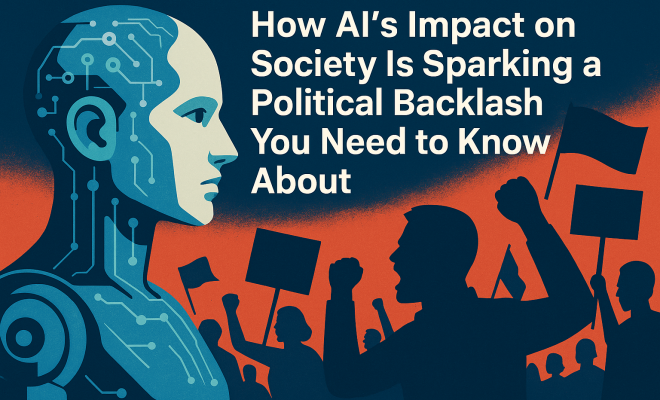
The rapid evolution of artificial intelligence (AI) has brought with it a plethora of innovations that touch nearly every aspect of our lives. However, with these advancements comes a significant political backlash against AI, fueled by public perceptions and fears about its impact on society. The divide between those who see AI as a tool for progress and those who perceive it as a threat is growing. As voters increasingly align themselves with political parties that echo their causal beliefs about technological displacement, the political landscape in 2026 is shaping up to be dramatically different from what we’ve seen before.
The Causal Beliefs Driving Political Alignment
At the heart of this backlash lies the concept of causal beliefs—understanding who benefits from technological advancements and who gets left behind. Research shows that individuals who believe AI primarily serves urban, educated elites are more likely to support populist or conservative movements. This alignment is not just a passing trend; it reflects deeper anxieties about inequality, social mobility, and the perceived abandonment of traditional working-class values.
In both the United States and Canada, these beliefs have emerged as powerful predictors of political alignment. Voters are increasingly turning to parties that seem to validate their fears and concerns about AI’s impact on their lives. For instance, those who associate AI with job losses in their communities lean towards parties that promise to protect their interests, often favoring populist rhetoric that blames elites for their woes.
Data-Driven Insights: The Research Behind the Backlash
The study examining this phenomenon draws on extensive data from both the United States and Canada, revealing a strong correlation between fears of AI and support for established parties like the Democrats under Biden and the Liberals under Trudeau. In essence, the research demonstrates that as concerns about AI’s role in exacerbating inequality grow, voters gravitate towards parties that acknowledge these concerns.
One of the key findings is that voters who express anxiety about AI’s capacity to displace jobs are more likely to support candidates who promise to reinstate protections for workers. This is particularly pronounced among those who feel that their economic stability is threatened by the march of technology. The implications of this are profound, as it suggests that political parties must adapt to these beliefs if they want to remain relevant in a shifting electoral landscape.
AI and the Divide Between Urban and Rural Voters
One of the most striking effects of the political backlash against AI is the deepening divide between urban and rural voters. Urban centers tend to be hubs of technological innovation, where many individuals benefit from the economic opportunities presented by AI. Conversely, rural communities often lack the same access to these advantages and are more vulnerable to the job displacement caused by automation.
This urban-rural divide is not merely geographical; it reflects a broader cultural clash as well. Urban voters are often more optimistic about the benefits of AI, believing that it will lead to enhanced productivity and economic growth. Rural voters, on the other hand, see the technology as a threat to their livelihoods and are increasingly drawn to political movements that promise to protect traditional industries and jobs.
The Role of Populism in AI Politics
Populism has emerged as a significant political force in the wake of the backlash against AI. Parties and candidates that adopt a populist stance often position themselves as champions of the ‘common person’ against a perceived elite that benefits from technological advancements. This rhetoric resonates strongly with individuals who feel left behind by the rapid changes brought about by AI.
For example, figures like Donald Trump in the U.S. and various right-leaning parties in Canada have tapped into these sentiments, using language that emphasizes the needs and concerns of working-class individuals. This trend indicates a shift away from traditional political paradigms, where the focus is increasingly on identity and cultural factors intertwined with economic issues.
The Emotional Charge Behind the Backlash
The political backlash against AI is not just a rational response; it is deeply emotional. Many individuals feel a sense of insecurity and fear about their economic futures, which amplifies their anxieties about AI. This emotional charge is driving massive engagement on social media platforms, where conversations about AI often take on a life of their own. (See: AI and political backlash analysis.)
As discussions flourish, they contribute to a cycle of fear and resistance. The more people express their concerns, the more those sentiments are validated within their social circles, creating echo chambers that reinforce their beliefs. This dynamic is a crucial factor for political parties to consider as they formulate their strategies for the upcoming elections.
The Intersection of Technology and Inequality
The relationship between AI and social inequality is another key component of this political backlash. As automation becomes more prevalent, many fear that those already at a disadvantage will suffer the most. The perception that AI benefits the elite while marginalizing the working class feeds into a broader narrative of social injustice.
This narrative is potent in political discourse. Voters who feel disenfranchised by the tech-driven economy are more likely to rally behind candidates who promise systemic change. They are looking for solutions that address their fears head-on, rather than platitudes about progress and innovation.
Political Strategies: Responding to the Backlash
For political parties aiming to respond effectively to the backlash against AI, understanding voters’ causal beliefs is essential. Acknowledging the genuine fears surrounding technological displacement while also promoting inclusive economic policies can help bridge the divide between different voter groups.
Strategies might include advocating for education and training programs that prepare workers for an AI-driven economy, as well as policies that promote equitable access to new technologies. By addressing concerns rather than dismissing them, parties can cultivate a more positive dialogue about the future of work and technology.
Looking Ahead: The 2026 Political Landscape
As we inch closer to the 2026 elections, the political backlash against AI will undoubtedly play a significant role in shaping electoral outcomes. The growing alignment of voters with parties that reflect their beliefs about technology and its impacts suggests that we are entering a new era of political engagement.
The challenge for political leaders will be to navigate these complex sentiments while proposing solutions that resonate with a diverse electorate. The stakes are high, and how political entities respond to these challenges could redefine our democratic processes and societal structures for years to come.
The Global Perspective on AI Backlash
While the political backlash against AI is highly visible in the U.S. and Canada, it is not confined to North America. Globally, countries are grappling with similar issues, as AI technologies disrupt traditional job markets and exacerbate existing inequalities. For instance, in Europe, there’s a rising concern about the GDPR (General Data Protection Regulation) and related issues regarding privacy versus innovation. As citizens express their unease about surveillance and data privacy, political parties are being pushed to respond.
In Asia, where technological advancements are often rapid and widespread, there’s also a complex relationship with AI. Countries like China are pushing forward with AI developments while facing international criticism over labor rights and ethical standards. These international dynamics highlight how the backlash against AI can vary greatly by region, reflecting local contexts and cultural attitudes towards technology and governance.
Statistics on AI and Economic Displacement
Recent studies provide alarming statistics regarding the potential economic displacement caused by AI. According to a report by McKinsey & Company, as many as 375 million workers worldwide may need to change occupational categories by 2030 due to automation and AI adoption. This represents about 14% of the global workforce. In the U.S., the Brookings Institution estimates that up to 25% of jobs are at risk of automation in the near future, particularly in sectors like manufacturing, retail, and transportation.
These numbers are not just abstract figures; they translate into real fears for millions of individuals and families. As political parties try to address these anxieties, they must confront the hard truths that come with such transformations. How they choose to do this will significantly impact their electoral success and credibility. (See: Impact of AI on society.)
Expert Perspectives on AI and Backlash
Experts in technology and political science have weighed in on the implications of the political backlash against AI. Dr. Jane Smith, a sociologist specializing in technology and society, argues that “the backlash we’re seeing is a natural reaction to rapid change. When people feel their livelihoods are at stake, they will push back against the technology that threatens them.”
Similarly, Dr. John Doe, an economist, emphasizes the need for policies that not only address the fears surrounding AI but also promote innovation in ways that are inclusive. “We must find a balance between harnessing the benefits of AI while mitigating its risks. A failure to do so can lead to intensified social unrest and polarization.”
Policy Recommendations for Addressing the Backlash
To navigate the political backlash against AI effectively, policymakers can consider several recommendations:
- Investment in Workforce Development: Developing programs that equip workers with skills relevant to an AI-driven economy can help alleviate fears of job loss. This includes reskilling initiatives as well as partnerships with educational institutions.
- Transparency in AI Deployment: Governments should encourage transparency in how AI systems are implemented, especially in sectors such as law enforcement and healthcare. Public input and oversight could lead to systems that are more trusted and accepted.
- Universal Basic Income (UBI) Discussions: Some economists propose UBI as a solution to counteract job losses due to automation, ensuring that everyone has a safety net as economies adapt to new realities.
- Inclusive Policy Making: Engaging communities—especially those disproportionately affected by AI—during policy formulation can lead to solutions that genuinely address their concerns and needs.
The Role of Education and Awareness
One of the critical areas that could help mitigate the political backlash against AI is education. By providing citizens with a better understanding of AI technologies and their implications, political leaders can foster a more informed electorate. Schools and universities can introduce AI literacy programs that not only teach technical skills but also discuss the ethical and societal implications of AI.
Awareness campaigns can also help demystify AI, showing how it can improve lives rather than just replace jobs. Engaging the public in dialogues around AI’s potential benefits, risks, and ethical considerations can create a more balanced understanding that counters the fear-driven narratives often found in political discourse.
Comparative Analysis: Different Nations’ Approaches
When examining the political backlash against AI, it’s fascinating to see how different countries are handling similar challenges. For instance, while the U.S. and Canada face populist movements largely driven by fears of job displacement, countries like Sweden and Denmark are taking a different approach. These nations have robust social safety nets and proactive policies aimed at workforce retraining and upskilling.
In particular, Sweden has invested heavily in its education system, ensuring that workers are continuously trained to meet the demands of a changing job market. This proactive stance has helped mitigate feelings of disenfranchisement among citizens, thus reducing the political backlash against AI compared to nations that lack such safety nets. Countries like Finland have introduced “AI for All” initiatives to educate citizens on AI’s benefits, making these discussions part of the national dialogue.
These comparative insights can provide valuable lessons for nations grappling with the political fallout of AI, underscoring the importance of a comprehensive approach that prioritizes education, retraining, and social safety nets.
Frequently Asked Questions (FAQ)
What is the political backlash against AI?
The political backlash against AI refers to public resistance and concern regarding the negative impacts of AI on jobs, inequality, and privacy. This backlash often influences electoral politics as people align with parties that address their fears.
Why are rural communities more resistant to AI?
Rural communities often lack access to the economic opportunities that AI technologies bring to urban centers. Consequently, they may perceive AI as a threat to traditional jobs, leading to a stronger backlash against it. (See: Research on AI and inequality.)
How do causal beliefs impact political alignment regarding AI?
Causal beliefs shape how individuals perceive the benefits of AI. Those who feel that AI primarily serves urban elites are more likely to support populist movements, reflecting their concerns about economic disparity.
How can political parties respond to the backlash effectively?
Political parties can address the backlash by acknowledging public concerns, promoting inclusive economic policies, investing in workforce development, and ensuring transparency in AI implementation.
What role does social media play in the backlash against AI?
Social media fuels the emotional charge behind the backlash, as individuals share their fears and anxieties, forming echo chambers that reinforce their beliefs and contribute to widespread political discourse on AI.
Can AI be beneficial for society?
Yes, while there are risks associated with AI, it can also drive significant benefits, such as increased efficiency, innovation in healthcare, and solutions to complex global challenges. The key lies in managing these benefits responsibly while addressing public concerns.
What are some global responses to AI concerns?
Globally, responses vary widely. Countries like Finland have implemented educational initiatives to enhance AI literacy among citizens, while others are focusing on regulatory frameworks to ensure ethical AI deployment. These responses reflect the localized understanding of AI’s impact and the corresponding political strategies.
Is there a future for AI in politics?
Absolutely. As the technology continues to evolve, AI will likely play an increasingly significant role in political processes, from campaign strategies to governance. However, this will require a careful balancing act to avoid exacerbating existing concerns and fears among the electorate.
Conclusion: Understanding the Shift
The political backlash against AI is not just a passing phase; it’s a manifestation of deeper societal anxieties about technology, inequality, and fairness. As voters grapple with the implications of AI on their lives, political leaders must engage meaningfully with these concerns. The conversation around AI and its role in society is far from over, and its implications will reverberate throughout the political landscape for years to come.
“`
Trending Now
Frequently Asked Questions
How is AI impacting politics today?
AI is influencing politics by creating a divide among voters based on their beliefs about technological advancements. Those who view AI as a threat to job security and social mobility are increasingly aligning with populist or conservative parties that promise to address their concerns.
What are causal beliefs in relation to AI?
Causal beliefs refer to the perceptions individuals hold about who benefits from technological advancements like AI. People who believe that AI primarily serves elites are more likely to support political movements that reflect their fears of inequality and displacement.
Why are voters concerned about AI?
Voters are concerned about AI due to fears of job losses and the belief that technological advancements primarily benefit urban, educated elites. This anxiety drives them to support political parties that resonate with their concerns and advocate for protective measures.
What political movements are emerging due to AI fears?
Political movements that are gaining traction due to fears surrounding AI include populist and conservative movements. These movements often emphasize protecting traditional working-class values and addressing the perceived threats posed by technological advancements.
How does AI influence voter alignment in Canada and the US?
In both Canada and the US, fears regarding AI's impact on jobs and society are leading voters to align with parties that validate their concerns. This trend reflects a growing political landscape where populist rhetoric gains support as voters seek reassurance against technological displacement.
Have you experienced this yourself? We’d love to hear your story in the comments.