3D Food Printing: Revolutionizing Nutrition & Culinary Creativity
“`html
In an age where technology seems to touch every aspect of our lives, it’s no surprise that our food systems are undergoing a transformative shift. At the forefront of this evolution is 3D food printing, a technology capable of creating customized food products with remarkable precision. Imagine printing your meals instead of cooking them, tailored exactly to your nutritional needs and personal preferences. Although this concept may sound like something out of a science fiction novel, recent advances in 3D food printing are making it a reality.
The Basics of 3D Food Printing
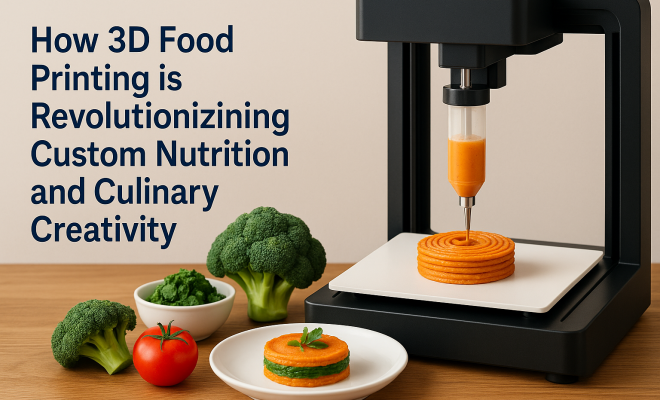
3D food printing operates on principles similar to traditional 3D printing but uses edible materials instead of plastic or metal. The process involves layering ingredients to form three-dimensional structures, enabling intricate designs and custom shapes. It can utilize various materials, including dough, chocolate, and even pureed vegetables, making it versatile for different culinary applications.
One key advantage of 3D food printing is its ability to produce food with high accuracy. This precision allows for the creation of complex shapes that would be difficult or impossible to achieve through conventional cooking methods. Furthermore, the technology can integrate functional ingredients, allowing for the formulation of meals that meet specific dietary needs. This could be a game-changer for individuals with particular health conditions, such as diabetes or food allergies.
How 3D Food Printing Works
The process begins with a digital model of the food product, which is designed using computer-aided design (CAD) software. Once the design is ready, the 3D printer uses food-grade materials as the printing medium. The printer deposits the ingredients layer by layer, solidifying each layer as it builds up the final product.
Different printing technologies can be employed, including:
- Extrusion-based printing: This method forces food materials through a nozzle, creating layers as the material is deposited.
- Sintering: This technique uses heat to fuse powdered ingredients together, forming solid structures.
- Binder jetting: In this approach, powdered ingredients are bonded together using a liquid binder, which forms the desired shape.
Each technique has its strengths and weaknesses, with extrusion printing being the most common in the food industry. This method has gained traction due to its ease of use and ability to handle a wide range of food materials.
The Customization Factor
One of the most exciting aspects of 3D food printing is its potential for customization. With advanced algorithms and nutrient profiles, it’s possible to create meals tailored specifically to individual dietary requirements. Imagine a diabetic-friendly pasta that’s low in carbohydrates or a protein-rich dessert designed for muscle recovery. The possibilities are virtually endless.
Moreover, the technology can cater to personal tastes and preferences, from flavor combinations to texture variations. This means that the same basic food item can be printed in numerous variations, satisfying a wide range of consumers. The ability to personalize food in this manner not only enhances the dining experience but also promotes better nutritional habits.
Functional Foods and Nutritional Advances
As the demand for healthier food options grows, the integration of functional ingredients into 3D printed foods is becoming more commonplace. Functional foods are those that offer health benefits beyond basic nutrition, such as fortified foods containing vitamins, minerals, and probiotics.
The incorporation of these ingredients through 3D food printing allows for precise control over nutrient content, making it easier to develop foods that target specific health issues. For example, researchers are exploring how to print foods enriched with omega-3 fatty acids or antioxidants, which could play a significant role in heart health and anti-inflammatory diets.
Additionally, 3D food printing can adapt recipes to include alternative proteins, such as insect flour or plant-based proteins, catering to the growing trend of sustainable eating. (See: 3D food printing on Wikipedia.)
Environmental Implications of 3D Food Printing
The environmental impact of food production has been a hot topic in recent years, with traditional agriculture facing challenges related to sustainability. 3D food printing presents a unique opportunity to address some of these challenges. By optimizing ingredient usage, the technology can significantly reduce food waste. Instead of producing excess food that may go uneaten, 3D printing allows for on-demand food creation, minimizing surplus.
Moreover, the ability to use alternative and sustainable ingredients, such as plant-based or lab-grown materials, can promote more eco-friendly food systems. This could result in lower carbon emissions associated with food production while still meeting global nutritional needs.
Consumer Acceptance and Market Trends
Despite the potential benefits, the acceptance of 3D printed foods among consumers remains a significant hurdle. Many people are still resistant to the idea of eating food that has been created by a machine, viewing it as unnatural or less appealing than traditionally prepared meals. This skepticism can be attributed, in part, to a lack of awareness about the technology’s capabilities and its health benefits.
However, as more products enter the market and successful initiatives demonstrate the viability of 3D food printing, consumer attitudes may shift. Companies are beginning to capitalize on this trend, developing products that highlight the customization and nutritional advantages of 3D printed foods. For instance, some start-ups are focusing on personalized meal solutions that cater to individual health profiles.
The increasing focus on health optimization and wellness could also drive interest in 3D printed foods. If consumers see tangible benefits—such as better health outcomes or enhanced taste profiles—they may become more open to trying these innovative meal options.
The Role of 3D Food Printing in Food Security
Food security is a pressing global issue, with millions around the world lacking access to sufficient and nutritious food. 3D food printing could play a significant role in addressing this challenge by enabling localized food production and reducing dependency on traditional supply chains.
By allowing for the production of food in remote or underserved areas, 3D food printing can improve access to nutrition. For instance, humanitarian organizations could deploy mobile 3D food printers to disaster-stricken regions, providing customized meals based on local resources and dietary needs.
Moreover, the technology could facilitate the production of nutrient-dense foods tailored to combat malnutrition in vulnerable populations. With the capability to create meals that are both appealing and nutritious, 3D food printing may serve as a valuable tool in the fight against hunger.
Challenges and Future Directions
As promising as 3D food printing may be, it’s not without its challenges. The technology is still relatively new, and several barriers must be addressed before it can be widely adopted. One of the main concerns is the cost of equipment and materials, which can be prohibitively expensive for small businesses and home users.
Additionally, regulatory hurdles and food safety standards must be navigated to ensure that 3D printed foods meet health requirements. As this technology continues to evolve, collaboration between researchers, manufacturers, and regulatory agencies will be crucial in establishing safe practices.
Looking ahead, the future of 3D food printing appears promising. Continued research and innovation could lead to the development of new materials, better printing techniques, and improved nutritional profiles. As the technology matures, its potential to reshape our food systems will likely become increasingly evident.
Innovations in 3D Food Printing Technology
The advancements in 3D food printing technology are rapid, with new innovations emerging regularly. One notable development is the introduction of multi-material printing. This technology allows for the simultaneous use of different edible substances in a single print, enabling even more complex flavors and textures. For example, a dessert could feature a chocolate shell combined with a fruity filling, all printed in one go. This not only enhances the sensory experience but also streamlines the food preparation process.
Moreover, smart 3D food printers are becoming a reality. These devices can connect to the internet to access recipes, nutrition databases, and even user profiles that guide the printing process. Imagine a home printer that understands your dietary preferences and automatically adjusts the recipe to fit your needs. These smart printers may also incorporate machine learning to improve their output based on user feedback over time. (See: Research on 3D food printing.)
Educational Applications of 3D Food Printing
3D food printing isn’t just changing the way we eat; it’s also revolutionizing culinary education. Many culinary schools are beginning to incorporate 3D printing technology into their curricula. Students can learn about food design, nutrition, and technology simultaneously, preparing them for the future of the food industry.
By using 3D food printers, culinary students can experiment with new shapes and textures, allowing them to push the boundaries of traditional cooking. They also gain valuable experience in food engineering—an increasingly important aspect of modern gastronomy. This hands-on experience could make graduates more attractive in the job market, where innovation is key.
3D Food Printing in Restaurants
More restaurants are starting to adopt 3D food printing technology as a way to differentiate themselves. High-end establishments are using 3D printers to craft visually stunning plates that enhance the dining experience. For instance, some chefs are printing intricate garnishes that would be impossible to produce by hand, adding an artistic touch to their dishes.
The ability to customize meals according to dietary restrictions can also give restaurants a competitive edge. Diners with allergies or specific preferences can enjoy meals that are tailored just for them, leading to a more inclusive dining experience. As consumers increasingly seek unique food experiences, restaurants that embrace 3D food printing may find themselves at the forefront of this culinary revolution.
Statistics and Market Growth
The global market for 3D food printing is expected to experience significant growth in the coming years. According to a report by MarketsandMarkets, the 3D food printing market size was valued at approximately $250 million in 2020 and is projected to reach around $1.6 billion by 2027, growing at a CAGR of 35.3% during the forecast period. This growth reflects increasing investment in research and development, along with the expanding applications of 3D food printing in various sectors, from healthcare to entertainment.
As more restaurants, food manufacturers, and home users adopt this technology, the market will likely see a rise in innovative products and applications. With increasing consumer awareness of health and nutrition, the demand for functional foods produced through 3D printing is also expected to surge.
Common Questions About 3D Food Printing
What types of food can be printed using 3D printing technology?
3D food printing can utilize a wide variety of materials, including dough, chocolate, pureed fruits and vegetables, and even proteins. This versatility allows for creating various foods, from snacks and desserts to main courses.
Is 3D printed food safe to eat?
Yes, as long as the materials used are food-grade and adhere to food safety standards. Ensuring hygiene during the printing process and using approved food ingredients is crucial for safety.
How does 3D food printing impact food waste?
3D food printing can significantly reduce food waste by allowing for on-demand production. This means that food is made as needed, minimizing surplus and the associated waste of traditional food production methods.
Can 3D food printing be used in home kitchens?
While most 3D food printers are designed for commercial use, there are smaller, more affordable models that are becoming available for home users. As technology advances, it’s likely that home printers will become more accessible and user-friendly. (See: Scientific study on food technology.)
What is the future of 3D food printing?
The future of 3D food printing looks bright, with ongoing advancements in technology, materials, and applications. As consumer interest grows and the technology becomes more refined, it could revolutionize how we think about food production, customization, and sustainability.
Challenges Facing the Industry
Despite the exciting potential of 3D food printing, several challenges must be addressed for the technology to achieve widespread acceptance. One major hurdle is consumer perception. Many people are still unfamiliar with the concept, and there can be a distrust associated with machine-made food. Educational initiatives to inform consumers about the safety and benefits of 3D printed food will be essential in overcoming this skepticism.
Additionally, the question of scalability arises. While 3D food printing can create custom meals, it’s essential to consider how this technology can be scaled up for mass production without losing quality. Finding a balance between customization and efficiency will be crucial for businesses looking to leverage this technology.
3D Printing and Food Culture
3D food printing also has the potential to impact food culture significantly. As chefs and home cooks adopt these technologies, the way we think about recipes, presentation, and even food history may evolve. For example, traditional recipes may be reimagined by using 3D printing techniques to create new textures and forms, challenging chefs to rethink their approach to cooking.
Moreover, the integration of 3D printing in food culture opens avenues for collaboration between technology and culinary arts. Events like food tech expos and culinary competitions centered around 3D food printing are already emerging, showcasing the possibilities of mixing art with technology. This could not only inspire creativity in the kitchen but also foster a new generation of food innovators.
The Future of Nutrition through 3D Food Printing
As we consider future dietary needs, 3D food printing could play a pivotal role in developing personalized nutrition solutions. Imagine a world where your meals are tailored not just to your taste preferences but also to your genetic makeup, activity level, and health objectives. The potential for nutrient profiling through 3D food printing can pave the way for diets specifically designed to optimize personal health.
Researchers are already investigating how to utilize 3D food printing for therapeutic diets, where food is not just consumed for pleasure but is tailored to aid recovery from illnesses. For instance, patients recovering from surgery might require specific nutrients in higher doses, and 3D printing can make that possible by creating precisely formulated meals.
Conclusion: The Future of Food Innovation
3D food printing stands at the intersection of technology, nutrition, and culinary creativity. It presents a compelling solution to some of the pressing challenges in food production, from personalization and nutrition to sustainability and food security. As we move forward, it will be fascinating to see how this innovative technology evolves and integrates into our daily lives. While it may still be in its infancy, 3D food printing could very well be part of the future of food, offering a glimpse into a world where meals are not just consumed but crafted to meet our unique needs and preferences.
“`
Trending Now
Frequently Asked Questions
What is 3D food printing?
3D food printing is a technology that creates customized food products by layering edible materials to form intricate three-dimensional structures. It operates similarly to traditional 3D printing but uses ingredients like dough, chocolate, and pureed vegetables, allowing for unique shapes and designs.
How does 3D food printing work?
The process of 3D food printing starts with a digital model designed using computer-aided design (CAD) software. A 3D printer then deposits food-grade materials layer by layer, solidifying each layer to build the final product, utilizing methods like extrusion-based printing.
What are the benefits of 3D food printing?
3D food printing offers numerous benefits, including high accuracy in food production, the ability to create complex shapes, and the integration of functional ingredients tailored to specific dietary needs. This technology can significantly enhance custom nutrition and culinary creativity.
Can 3D food printing help with dietary restrictions?
Yes, 3D food printing can cater to individuals with dietary restrictions by formulating meals that meet specific health conditions, such as diabetes or food allergies. The technology allows for precise ingredient control to create suitable food options.
Is 3D food printing the future of cooking?
While still in its early stages, 3D food printing has the potential to revolutionize cooking by offering personalized nutrition and artistic culinary designs. As technology advances, it may become a mainstream method for preparing meals tailored to individual preferences.
Agree or disagree? Drop a comment and tell us what you think.