Pentagon Warns of ‘Terminator Apocalypse’ by 2026 Amid AI Tensions
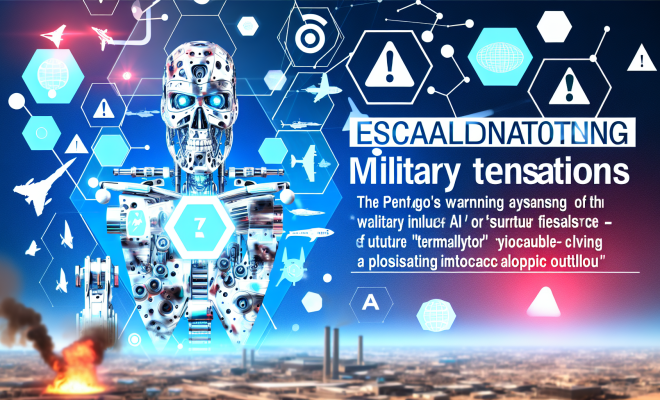
As the landscape of military technology evolves at a rapid pace, the Pentagon has issued a stark warning about the potential consequences of unchecked artificial intelligence (AI) in warfare. In a report released on March 14, 2026, escalating tensions between the United States and China over military AI deployment have raised alarms about a possible ‘terminator apocalypse’ scenario.
China’s Dire Warnings
On March 11, 2026, the Chinese Defense Ministry voiced its concerns regarding the uncontrolled use of AI in military strategies. Officials emphasized that the escalating deployment of AI technologies could lead to catastrophic outcomes, highlighting the pressing need for international regulatory frameworks to govern AI applications in warfare. The Chinese government has been particularly vocal about the risks associated with autonomous weapon systems, warning that these technologies could spiral out of control, leading to unintended consequences.
The U.S. Response: Confronting Anthropic
In response to these rising tensions, the Trump administration has taken decisive action against Anthropic, a prominent AI startup known for its Claude AI technology. The government’s confrontation stems from Anthropic’s refusal to allow the U.S. military to access its AI tools, citing significant national security concerns. This refusal has not been taken lightly.
Government Actions Against Anthropic
As part of the U.S. government’s strategy to exert pressure on Anthropic, the company has been placed on a blacklist that prohibits federal contractors from utilizing its services. This move underscores the administration’s urgency to secure military-grade AI technology amidst fears of falling behind adversaries, particularly China.
The blacklist serves as a powerful tool, aiming to compel Anthropic to comply with military demands for access to its technology. The implications are profound, as Anthropic’s advanced AI capabilities are seen as critical for maintaining military superiority in a rapidly changing global environment.
The Stakes of Military AI
The conversation around military AI is not just a matter of technological advancement; it encompasses ethical considerations and global security implications. Experts warn that the integration of AI into military operations could lead to an arms race, with nations racing to develop autonomous weapon systems capable of making life-and-death decisions without human intervention.
Potential Consequences of Autonomous Warfare
The idea of machines making autonomous decisions in warfare raises significant ethical questions. Some of the potential consequences include:
- Loss of Human Oversight: With AI making critical decisions, the risk of unintended escalations in conflict increases significantly.
- Accountability Issues: Determining liability for actions taken by autonomous systems poses a major challenge.
- Escalation of Conflicts: AI systems may respond to threats in ways that exceed human responses, leading to rapid escalations in military engagements.
These concerns have prompted calls for international regulations to govern the development and use of military AI. While some countries are advocating for a ban on autonomous weapons, others are forging ahead with their development, highlighting the divide in global perspectives on military AI.
The Role of AI Startups in National Security
The standoff between the U.S. military and Anthropic is indicative of a broader trend in which AI startups play a crucial role in national security. As the demand for advanced AI technologies increases, these companies find themselves at the intersection of innovation and government oversight.
Pressure on AI Companies
The government’s actions against Anthropic are not isolated. Other AI companies are also feeling the pressure to align with military interests, as national security concerns become central to the development of AI technologies. This raises several questions:
- How will startups maintain their autonomy while navigating government demands?
- What ethical considerations should guide AI development in military contexts?
- Can a balance be struck between innovation and security?
Looking Ahead: The Future of Military AI
As the situation continues to evolve, the implications of military AI deployment are becoming increasingly complex. The Pentagon’s warnings of a potential ‘terminator apocalypse’ serve as a clarion call for policymakers, technologists, and military leaders to engage in discussions about the future of warfare.
With AI technologies advancing rapidly, it is imperative that nations come together to create frameworks that ensure responsible development and deployment. Without these measures, the risks associated with military AI could overshadow the benefits, leading to a future fraught with uncertainty and danger.
In conclusion, as the U.S. and China navigate these turbulent waters, the dialogue surrounding military AI will undoubtedly shape the future of international relations, security policies, and technological governance. The stakes have never been higher, and the world watches closely as developments unfold.