The Tech Edvocate

Top Menu

  • Advertisement
  • Apps
  • Home Page
  • Home Page Five (No Sidebar)
  • Home Page Four
  • Home Page Three
  • Home Page Two
  • Home Tech2
  • Icons [No Sidebar]
  • Left Sidbear Page
  • Lynch Educational Consulting
  • My Account
  • My Speaking Page
  • Newsletter Sign Up Confirmation
  • Newsletter Unsubscription
  • Our Brands
  • Page Example
  • Privacy Policy
  • Protected Content
  • Register
  • Request a Product Review
  • Shop
  • Shortcodes Examples
  • Signup
  • Start Here
    • Governance
    • Careers
    • Contact Us
  • Terms and Conditions
  • The Edvocate
  • The Tech Edvocate Product Guide
  • Topics
  • Write For Us
  • Advertise

Main Menu

  • Start Here
    • Our Brands
    • Governance
      • Lynch Educational Consulting, LLC.
      • Dr. Lynch’s Personal Website
      • Careers
    • Write For Us
    • The Tech Edvocate Product Guide
    • Contact Us
    • Books
    • Edupedia
    • Post a Job
    • The Edvocate Podcast
    • Terms and Conditions
    • Privacy Policy
  • Topics
    • Assistive Technology
    • Child Development Tech
    • Early Childhood & K-12 EdTech
    • EdTech Futures
    • EdTech News
    • EdTech Policy & Reform
    • EdTech Startups & Businesses
    • Higher Education EdTech
    • Online Learning & eLearning
    • Parent & Family Tech
    • Personalized Learning
    • Product Reviews
  • Advertise
  • Tech Edvocate Awards
  • The Edvocate
  • Pedagogue
  • School Ratings

logo

The Tech Edvocate

  • Start Here
    • Our Brands
    • Governance
      • Lynch Educational Consulting, LLC.
      • Dr. Lynch’s Personal Website
        • My Speaking Page
      • Careers
    • Write For Us
    • The Tech Edvocate Product Guide
    • Contact Us
    • Books
    • Edupedia
    • Post a Job
    • The Edvocate Podcast
    • Terms and Conditions
    • Privacy Policy
  • Topics
    • Assistive Technology
    • Child Development Tech
    • Early Childhood & K-12 EdTech
    • EdTech Futures
    • EdTech News
    • EdTech Policy & Reform
    • EdTech Startups & Businesses
    • Higher Education EdTech
    • Online Learning & eLearning
    • Parent & Family Tech
    • Personalized Learning
    • Product Reviews
  • Advertise
  • Tech Edvocate Awards
  • The Edvocate
  • Pedagogue
  • School Ratings
  • Ramp’s Staggering $60 Billion Valuation: 8 Reasons Why Investors Are Piling In

  • Uncovering the Cost: Why This AI Startup’s Collapse Is a Troubling Sign for Tech

  • The Silent Crisis: Why Your Next Console Will Cost a Fortune

  • Advisers urged to steer clear of ‘hyperscale’ AI models

  • The Quiet Crisis: Is AI in Education Creating an ‘Illusion of Learning’?

  • 84% of Ransomware Attacks Use AI: This Is How Your Own Systems Are Turning Against You

  • The Staggering Truth About Healthcare Cyberattacks: 76.6 Million Records Exposed in 2026

  • This Crucial Deadline For Rogue AI Is Much Closer Than You Think

  • This RNA Breakthrough Could Rewrite Alzheimer’s Treatment

  • This One Thing Is Silently Crushing US Consumer Inflation — And Your Wallet

Digital & Mobile Technology
Home›Digital & Mobile Technology›Document Go Code Automatically Using Godoc

Document Go Code Automatically Using Godoc
By Matthew Lynch
June 22, 2023
0
Spread the love

Documentation is an essential part of software development. It helps developers understand the codebase faster, improves collaboration, and makes maintenance easier. Many programming languages have tools that generate documentation from code comments. In this article, we’ll be exploring Godoc, a tool that makes documenting Go code automatic and easy.

What is Godoc?

Godoc is a tool used to generate documentation for Go packages. It extracts and interprets Go syntax comments to produce HTML pages, which can be viewed using a web browser. Godoc runs a web server that serves the documentation, so you can view documentation offline or on your local machine without an internet connection.

Why Use Godoc?

There are several benefits to using Godoc for documenting your Go code. One of the most significant benefits is that Godoc makes documentation easy to access and read. With Godoc, you can write documentation comments in Go code and output the documentation as a website or markdown file.

Other benefits of using Godoc include:

1. Conforms with Standard Go Documentation Format

Godoc conforms with the standard Go documentation format, making it easy to maintain consistency across your Go projects.

2. Generates Documentation Quickly

Godoc generates documentation quickly, so you don’t have to wait long to see the documentation for your packages.

3. Highlights Source Code in Documentation

Godoc highlights Go source code in documentation, making it easier to read and understand.

4. Can Use Custom Templates

Godoc supports customizing the documentation output with different templates. This makes it easy to customize the presentation of your documentation.

How to Use Godoc

Using Godoc to document your Go code is relatively easy. Here are the steps to follow:

1. Add Comments to Your Go Code

The first step to using Godoc is to add comments to your Go code. Comments in Go start with // for a single line comment or /* and */ for a multi-line comment. Godoc will use these comments to generate documentation.

Here’s an example of how to add comments to your Go code:

“`
// Package mypack is a Go package that does amazing things.
package mypack

// MyFunction does something amazing and returns an int.
func MyFunction() int {
return 42
}
“`

2. Run Godoc

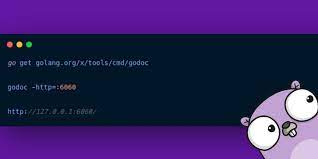
After adding comments to your Go code, the next step is to run Godoc. You can run Godoc on the command-line by typing `godoc` followed by the package or file you want to document. Godoc will generate HTML files and serve them on a webserver.

“`
$ godoc mypack
“`

3. View Your Documentation

After running Godoc, open your web browser and navigate to `http://localhost:6060/pkg/mypack/` to view the documentation. You can also view the documentation offline by opening the generated HTML files in your web browser.

Customizing Godoc’s output

Godoc has some built-in templates, but you can create custom templates to generate documentation in different formats like Markdown. To customize Godoc’s output, you can use the -template flag and specify a custom template file.

Here’s an example of how to use a custom template file with Godoc:

“`
$ godoc -template=custom.template mypack
“`

Conclusion

In conclusion, documenting Go code is an essential part of software development. Godoc makes documenting your Go code automatic and easy. With Godoc, you can write documentation comments in Go code and output the documentation as a website or markdown file. Godoc also generates documentation quickly and highlights Go source code, making it easy to read and understand. Start using Godoc in your Go projects today and improve your documentation.

Previous Article

How to Clean Your Mac’s Screen

Next Article

How to Stop Oversharing on Social Media

Matthew Lynch

Related articles More from author

  • Digital & Mobile Technology

    How to Fix a Virus Warning Pop-Up on Android

    July 6, 2023
    By Matthew Lynch
  • Digital & Mobile Technology

    aptX vs. LDAC: What’s the Difference?

    June 14, 2023
    By Matthew Lynch
  • Digital & Mobile Technology

    How to Recover Deleted Facebook Posts

    August 3, 2023
    By Matthew Lynch
  • Digital & Mobile Technology

    What Is a JPG (JPEG) File?

    June 1, 2023
    By Matthew Lynch
  • Digital & Mobile Technology

    MailboxMap: Find Nearest Mailbox Locations

    July 15, 2023
    By Matthew Lynch
  • Digital & Mobile Technology

    How to Access an Outlook Email Account Remotely

    May 16, 2023
    By Matthew Lynch

Search

Login & Registration

  • Log in
  • Entries feed
  • Comments feed
  • WordPress.org

Newsletter

Signup for The Tech Edvocate Newsletter and have the latest in EdTech news and opinion delivered to your email address!

About Us

Since technology is not going anywhere and does more good than harm, adapting is the best course of action. That is where The Tech Edvocate comes in. We plan to cover the PreK-12 and Higher Education EdTech sectors and provide our readers with the latest news and opinion on the subject. From time to time, I will invite other voices to weigh in on important issues in EdTech. We hope to provide a well-rounded, multi-faceted look at the past, present, the future of EdTech in the US and internationally.

We started this journey back in June 2016, and we plan to continue it for many more years to come. I hope that you will join us in this discussion of the past, present and future of EdTech and lend your own insight to the issues that are discussed.

Newsletter

Signup for The Tech Edvocate Newsletter and have the latest in EdTech news and opinion delivered to your email address!

Contact Us

The Tech Edvocate
910 Goddin Street
Richmond, VA 23231
(601) 630-5238
[email protected]

Copyright © 2026 Matthew Lynch. All rights reserved.