CRISPR Gene Editing Delivers First Personalized Therapy for Infant with Rare Disease, FDA Shifts Regulatory Framework
“`html
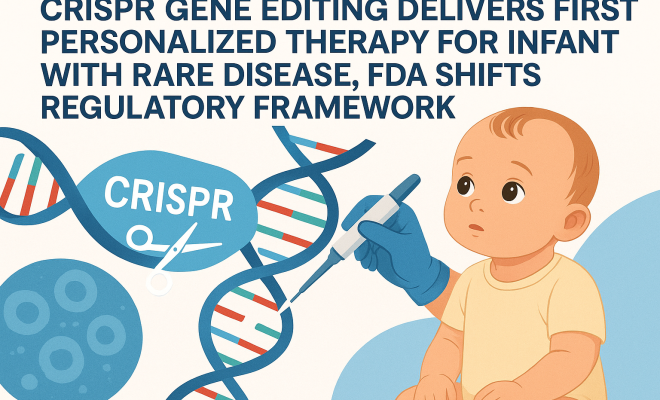
Imagine a scenario where a child, diagnosed at birth with a condition previously considered fatal, not only survives but thrives, showing only mild symptoms thanks to a therapy custom-made just for them. It sounds like something out of a science fiction novel, doesn’t it? Yet, in early 2026, this became a remarkable reality. The story of KJ Muldoon, an infant who received the first personalized CRISPR-based gene therapy, isn’t just a heartwarming tale of medical triumph; it’s a pivotal moment that’s fundamentally reshaping how we view genetic diseases and the future of medicine itself. This isn’t merely a technology to watch anymore; it’s a technology delivering tangible, life-altering results, propelling CRISPR gene editing into an entirely new era.
For years, CRISPR has been on the horizon, a whisper of potential, a dazzling scientific promise. Now, that promise has solidified into concrete action, demonstrating a profound shift from theoretical possibility to clinical actuality. This singular success story has reverberated through the scientific community, sparking intense public discussion, and, perhaps most notably, prompting a significant regulatory pivot from the U.S. Food and Drug Administration (FDA). We’re talking about a paradigm shift, folks, one that could redefine what’s possible for millions facing genetic challenges.
The Dawn of Personalized CRISPR Gene Editing: KJ Muldoon’s Story
The journey of KJ Muldoon began with a devastating diagnosis: a fatal metabolic disorder. For parents facing such news, the options have historically been grim, often centered on palliative care or managing symptoms with limited success. But KJ’s case was different. Researchers at the Children’s Hospital of Philadelphia (CHOP) and Penn Medicine embarked on an ambitious, unprecedented path. In February 2025, they administered a bespoke, base-editing therapy – a therapy designed specifically for KJ’s unique genetic mutation. Think about that for a moment: not a drug from a pharmacy shelf, but a precisely engineered genetic intervention tailored to a single individual.
By early 2026, the results were nothing short of astonishing. KJ, who would have faced a rapidly deteriorating condition, was showing only mild symptoms. This wasn’t just a delay in progression; it was a fundamental alteration of the disease’s trajectory. It’s a testament to the incredible precision and power of CRISPR gene editing, demonstrating its ability to literally rewrite the code of life to correct errors. This isn’t just treatment; it’s a potential cure, or at the very least, a profound redefinition of what a ‘fatal’ diagnosis can mean. It opens up a vista of hope previously unimaginable for families grappling with rare and devastating genetic illnesses.
Understanding Base Editing: A More Precise Approach to Gene Repair
To truly grasp the significance of KJ’s therapy, it’s helpful to understand what ‘base editing’ entails. When most people hear ‘CRISPR,’ they often think of ‘molecular scissors’ that cut DNA. While that’s fundamentally true for the original CRISPR-Cas9 system, base editing represents a sophisticated refinement. Instead of cutting both strands of the DNA helix, which can sometimes lead to unintended insertions or deletions (indels), base editors work like molecular pencils with erasers.
These elegant tools can directly convert one DNA base into another (for example, changing an ‘A’ to a ‘G’ or a ‘C’ to a ‘T’) without breaking the DNA backbone. This minimizes the risk of collateral damage and offers an even higher level of precision. For a disease caused by a single ‘typo’ in the genetic code, base editing is akin to finding that typo and correcting it directly, rather than trying to snip out the entire erroneous sentence and hoping the cell stitches it back together perfectly. This precision was absolutely critical for KJ Muldoon’s personalized therapy, targeting the specific mutation responsible for their metabolic disorder with exquisite accuracy, making the therapeutic intervention both safer and more effective.
The FDA’s Pivotal Regulatory Shift: A ‘Plausible Mechanism Framework’
The success of KJ Muldoon’s personalized therapy didn’t just impress the medical community; it spurred a significant response from regulators. In February 2026, the FDA published draft guidance introducing a groundbreaking ‘plausible mechanism framework’ for individualized genomic therapies. This isn’t just bureaucratic jargon; it’s a revolutionary change in how such therapies will be evaluated and approved.
Historically, drug approval has centered around large, multi-patient clinical trials designed to prove efficacy and safety for a standardized product. But how do you run a multi-patient trial for a therapy that’s literally unique to a single patient? The FDA’s new framework acknowledges this inherent challenge. It allows for a single clinical trial to test platform technologies that can be customized for each patient. This means that once the underlying ‘platform’ – the delivery mechanism, the base editing machinery – is proven safe and effective in principle, the customization for individual patients can proceed with a streamlined regulatory path, rather than requiring an entirely new, lengthy trial for every single variation. This shift is enormous, potentially accelerating the development and accessibility of highly personalized genetic treatments.
Ethical Implications and Public Discourse Surrounding CRISPR Gene Editing
With great power comes great responsibility, and CRISPR gene editing certainly represents immense power. The success stories, while inspiring, inevitably open a Pandora’s box of ethical considerations. Public discussion is already vibrant and widespread, fueled by viral sharing of articles and discussions across social media platforms. Questions abound: Who gets access to these potentially life-saving, but undoubtedly expensive, personalized therapies? What are the long-term, unforeseen consequences of altering the human genome, even for therapeutic purposes? And where do we draw the line between treating disease and ‘enhancing’ human traits?
These aren’t simple questions with easy answers. The prospect of ‘designer babies,’ while currently far-fetched in a clinical sense for enhancement, looms large in the public imagination. The ethical debates around germline editing – making changes that would be heritable by future generations – are particularly intense. While KJ Muldoon’s therapy involved somatic cell editing (changes not passed on), the technological advancements bring us closer to these deeper ethical dilemmas. We, as a society, need to actively engage with these questions, ensuring that scientific progress is guided by thoughtful ethical frameworks and public consensus, not just technological capability. It’s a dialogue that will shape not only medicine but also our very understanding of what it means to be human. (See: NIH researchers develop personalized CRISPR therapy.)
The Monetization Potential: Healthcare, Insurance, and Beyond
Beyond the scientific and ethical considerations, the advent of personalized CRISPR gene editing carries significant economic implications. This isn’t just about healthcare; it’s about a whole new industry taking shape. The potential for monetization is substantial, particularly in the medical/healthcare and life insurance sectors. Think about the ‘cost of gene therapy’ – these personalized treatments aren’t cheap, at least not yet. This creates a massive market for content exploring financing options, insurance coverage, and government subsidies.
Moreover, the concept of ‘CRISPR treatment options’ will become a vital search term for patients and families. What diseases can be treated? What’s on the horizon? This demand for information will drive content creation. And let’s not forget the broader implications: anti-aging gene therapy reviews, preventative genetic interventions, and health insurance coverage for genetic treatments are all burgeoning areas. The companies that can effectively develop, deliver, and ensure equitable access to these therapies stand to revolutionize markets and generate significant revenue. This isn’t just about treating illness; it’s about a fundamental shift in how we approach human health and longevity, with ripple effects across countless industries. For more context, see the implications of gene editing on health and disease.
From Rare Diseases to Widespread Applications: The Future of CRISPR
While the initial successes of CRISPR gene editing are focused on rare, often fatal, genetic disorders – precisely because the impact is so immediate and profound – the long-term vision extends far beyond. The lessons learned from treating conditions like KJ Muldoon’s metabolic disorder will undoubtedly pave the way for tackling more common, complex diseases. Imagine a future where debilitating conditions like cystic fibrosis, sickle cell anemia, Huntington’s disease, or even certain types of cancer could be addressed at their genetic root, rather than merely managing symptoms.
The specificity and adaptability of CRISPR technology suggest its potential could be nearly boundless. We’re talking about a future where genetic predispositions to heart disease, Alzheimer’s, or even certain infectious diseases might be mitigated or eliminated. Of course, this future isn’t without its challenges – delivery mechanisms need to improve, off-target effects need to be minimized, and the cost barrier needs to be addressed. But the trajectory is clear: what begins with personalized cures for the rarest diseases will almost certainly evolve into broader applications, fundamentally altering the landscape of human health and pushing the boundaries of what medicine can achieve.
Challenges and Hurdles: The Road Ahead for Gene Therapy
Despite the incredible promise, it would be disingenuous to ignore the significant challenges that lie ahead for CRISPR gene editing and personalized genetic therapies. First and foremost is the cost. Developing a bespoke therapy for a single individual is incredibly resource-intensive, involving highly specialized scientific expertise, cutting-edge laboratory facilities, and rigorous safety protocols. How do we make these life-saving treatments accessible to everyone who needs them, regardless of their socioeconomic status or geographic location? This is a monumental question that will require innovative funding models, international cooperation, and potentially, government intervention.
Then there are the technical hurdles. While base editing is remarkably precise, ensuring 100% accuracy and preventing any ‘off-target’ edits remains a critical area of research. Delivering the CRISPR machinery to the correct cells and tissues within the body, efficiently and safely, is another complex engineering feat that continuously needs refinement. Furthermore, the long-term effects of altering the human genome are still largely unknown. We need decades of follow-up studies to fully understand the implications. The scientific community is acutely aware of these challenges and is working tirelessly to overcome them, but it’s a marathon, not a sprint.
The Global Impact: A New Era in Healthcare
The success of KJ Muldoon’s personalized therapy and the subsequent FDA regulatory shift are not just isolated events; they signal a global awakening to the transformative potential of genomic medicine. This isn’t just an American story; it’s a blueprint for healthcare systems worldwide. Other nations will undoubtedly look to the FDA’s ‘plausible mechanism framework’ as a model for their own regulatory bodies, aiming to balance innovation with safety and ethical considerations. The implications for global public health are enormous.
Consider the potential for addressing health disparities. Genetic diseases affect populations across the globe, and the ability to offer personalized, curative therapies could dramatically improve health outcomes in regions that have historically lacked access to advanced medical interventions. Of course, this also brings the challenge of equitable distribution and preventing a widening gap between those who can afford such treatments and those who cannot. International collaboration, knowledge sharing, and ethical leadership will be crucial in ensuring that this new era of genomic healthcare benefits all of humanity, not just a privileged few. The story of KJ Muldoon is a powerful reminder that the future of medicine is here, and it’s personalized, precise, and profoundly hopeful.
How CRISPR Differs from Traditional Gene Therapy
It’s easy to lump all gene-related treatments into one big category, but it’s important to understand how CRISPR gene editing stands apart from older forms of gene therapy. Traditional gene therapy, which has been around for decades, usually involves introducing a new, healthy copy of a gene into a patient’s cells to compensate for a faulty one. Think of it like adding a new, functional part to a machine that has a broken one. This new gene typically doesn’t replace the defective one but rather exists alongside it, often delivered via a modified virus that carries the genetic material into the target cells.
CRISPR, on the other hand, is a much more precise and active editing tool. Instead of just adding a gene, CRISPR systems can directly modify, delete, or correct specific DNA sequences within the existing genome. It’s like being able to meticulously repair the broken part of the machine, or even swap it out for a corrected version, rather than just adding a redundant, working part. This fundamental difference means CRISPR can fix the underlying genetic error, potentially offering a more permanent and targeted solution. The ability to directly edit the genome, rather than just supplementing it, unlocks a whole new level of therapeutic potential and complexity.
The Role of AI and Machine Learning in Advancing CRISPR
The sheer complexity of the human genome and the intricate dance of molecular biology make the development of advanced gene therapies a massive data challenge. This is where artificial intelligence (AI) and machine learning (ML) are becoming indispensable partners in the evolution of CRISPR gene editing. Researchers are leveraging AI to predict potential off-target edits with greater accuracy, essentially training algorithms to identify sequences that might be inadvertently targeted by the CRISPR machinery. This helps in designing safer and more specific guide RNAs, which are the molecular ‘directions’ that tell CRISPR where to cut or edit. (See: FDA approves first gene therapy for rare disease.)
Beyond safety, AI is also accelerating the discovery of new CRISPR systems and enzymes. There’s a vast microbial world out there, full of diverse CRISPR systems, each with unique properties. ML algorithms can analyze massive genomic databases to identify novel enzymes that might be more efficient, smaller, or have different editing capabilities than the commonly used Cas9 or Cas12a. This computational approach drastically speeds up the experimental process, allowing scientists to explore a much wider range of possibilities for therapeutic applications. It’s a powerful synergy: human ingenuity combined with AI’s data processing muscle, pushing the boundaries of what’s possible in genetic engineering.
The Impact on Drug Discovery and Pharmaceutical Research
The ripple effects of advanced CRISPR gene editing extend far beyond direct patient therapy; they’re profoundly reshaping the entire landscape of drug discovery and pharmaceutical research. Historically, developing new drugs involved years, sometimes decades, of trial and error, often hampered by a limited understanding of disease mechanisms at the molecular level. CRISPR changes that. Researchers can now precisely manipulate genes in cell lines and animal models to create incredibly accurate disease models. Want to study a specific genetic mutation that causes a rare cancer? CRISPR can introduce that mutation into cells, allowing scientists to observe its effects and test potential drug compounds in a controlled environment. For more context, see the role of AI in advancing medical technologies.
This capability dramatically accelerates target identification and validation, which are crucial early steps in drug development. Pharmaceutical companies can use CRISPR to screen thousands of potential drug candidates, quickly identifying which ones interact with specific genes or pathways implicated in disease. It also enables the development of entirely new classes of therapeutics, moving beyond traditional small molecules or biologics to therapies that directly fix the genetic code. This shift promises a more efficient, targeted, and ultimately successful drug development pipeline, leading to faster access to innovative treatments for a wider range of conditions.
The Role of Patient Advocacy and Support Groups
While scientific breakthroughs and regulatory changes are crucial, the human element in this revolution can’t be overstated. Patient advocacy groups and support networks play an absolutely vital role in driving the progress and ethical implementation of CRISPR gene editing. For families facing rare genetic diseases, these groups provide not just emotional support and shared experiences, but also crucial information, resources, and a collective voice to lobby for research funding, policy changes, and equitable access to emerging therapies. They are often at the forefront of pushing for accelerated clinical trials and compassionate use programs when no other options exist.
Beyond individual support, these organizations act as a bridge between the scientific community, regulators, and the public. They help translate complex scientific concepts into understandable language for families, and they ensure that the patient perspective is heard in ethical discussions and policy-making forums. Their lived experiences provide invaluable insights into the true impact of genetic conditions, helping researchers prioritize which diseases to tackle and how to design therapies that truly improve quality of life. The story of KJ Muldoon, and countless others, is a testament to the relentless hope and determination fostered within these communities.
Expert Perspectives: What Leading Geneticists Are Saying
The scientific community is buzzing with excitement, tempered by a healthy dose of realism, about the future of CRISPR gene editing. Dr. Jennifer Doudna, Nobel laureate and co-inventor of CRISPR-Cas9, often speaks about the “humbling responsibility” that comes with this powerful technology. She emphasizes the need for continued rigorous research into safety and efficacy, particularly for in vivo (within the body) applications, and calls for broad societal engagement on ethical questions.
Another prominent voice, Dr. George Church from Harvard Medical School, known for his pioneering work in genomics, frequently highlights the potential for “multiplex editing” – simultaneously making several genetic changes to address complex, polygenic diseases or even to engineer disease resistance. He points to a future where we might not just fix single errors, but proactively enhance human health and resilience. However, experts across the board agree that while the potential is immense, the journey from lab to widespread clinical practice for many conditions will still require overcoming significant biological and logistical hurdles. The consensus is overwhelmingly positive, but with a clear understanding that careful, incremental steps are essential.
FAQ: Your Questions About CRISPR Gene Editing Answered
What exactly is CRISPR gene editing?
CRISPR (Clustered Regularly Interspaced Short Palindromic Repeats) is a revolutionary technology that allows scientists to precisely edit genes. Think of it as a molecular word processor for DNA. It uses a guide RNA molecule to find a specific sequence in the DNA and a Cas protein (like Cas9) to then cut or modify that sequence. This allows for the correction of genetic mutations, the insertion of new genes, or the deletion of problematic ones.
Is CRISPR a cure for all genetic diseases?
While CRISPR holds incredible promise, it’s not a magic bullet for all genetic diseases, at least not yet. It’s particularly effective for diseases caused by single gene mutations, like the one KJ Muldoon had, or conditions like sickle cell anemia. For more complex diseases involving multiple genes or environmental factors, the application becomes significantly more challenging. However, research is rapidly expanding its capabilities.
What are ‘off-target edits’ and why are they a concern?
Off-target edits happen when the CRISPR machinery cuts or modifies DNA at a location other than the intended one. Even though CRISPR is incredibly precise, there’s always a small chance it might bind to a sequence that’s very similar to the target, leading to unintended changes. These off-target edits could potentially disrupt healthy genes or cause other unforeseen problems, which is why minimizing them is a major focus of ongoing research. For more context, see the impact of innovative technologies on climate and health. (See: Nature article on CRISPR advancements.)
Is CRISPR safe?
Safety is the paramount concern in all clinical trials involving CRISPR. Researchers are continually working to improve the precision and delivery methods to minimize risks like off-target edits or unwanted immune responses. The FDA’s new framework for personalized therapies reflects a rigorous approach to ensuring safety. While the technology is powerful, it’s being introduced into human trials with extreme caution and oversight.
What’s the difference between somatic and germline editing?
Somatic cell editing, like KJ Muldoon’s therapy, involves making genetic changes in non-reproductive cells. These changes affect only the treated individual and are not passed down to their children. Germline editing, on the other hand, involves making changes in reproductive cells (sperm, eggs) or early embryos. These changes would be heritable, meaning they would be passed down to future generations. Germline editing raises significant ethical concerns and is currently not approved for clinical use in most parts of the world.
Will CRISPR gene editing be affordable?
The cost of personalized gene therapies is currently very high due to the intensive research, development, and manufacturing processes involved. This is a major hurdle for equitable access. Researchers and policymakers are exploring various models, including subscription-based payments, outcome-based reimbursement, and government subsidies, to make these life-saving treatments more affordable and accessible to a broader population.
How long do CRISPR’s effects last?
For some applications, like correcting a genetic mutation in a rapidly dividing cell population, the effects could be permanent as the corrected cells continue to divide and express the healthy gene. For other applications, or if the edited cells have a limited lifespan, repeat treatments might be necessary. The long-term durability of CRISPR edits is still an active area of research, with ongoing follow-up studies on treated patients.
What diseases are currently being targeted by CRISPR?
Currently, CRISPR is in clinical trials or advanced research stages for a range of conditions, including sickle cell disease, beta-thalassemia, certain types of cancer, inherited forms of blindness (like Leber congenital amaurosis), and metabolic disorders. The list is constantly expanding as the technology matures and new applications are discovered.
Will CRISPR lead to ‘designer babies’?
The concept of ‘designer babies’ typically refers to using gene editing for non-medical enhancements, like choosing traits such as intelligence or physical appearance. This falls under germline editing, which is widely considered ethically problematic and is not permitted for clinical use. Current clinical applications of CRISPR are strictly focused on treating or preventing serious diseases, not for enhancement purposes.
What’s the future outlook for CRISPR gene editing?
The future for CRISPR is incredibly bright. We’re likely to see continued advancements in precision, delivery methods, and the development of new editing tools beyond Cas9. The expansion from rare diseases to more common conditions, and potentially preventative applications, is a strong possibility. Expect an ongoing dialogue around ethics, accessibility, and the role of AI in accelerating its development. It’s a rapidly evolving field with the potential to fundamentally transform medicine.
“`
Trending Now
Frequently Asked Questions
What is CRISPR gene editing?
CRISPR gene editing is a revolutionary technology that allows scientists to modify an organism's DNA with precision. It enables the alteration of genetic sequences, which can lead to treatments for genetic disorders by correcting mutations or altering gene expression.
How does personalized gene therapy work?
Personalized gene therapy involves creating treatments tailored to an individual's specific genetic makeup. In the case of KJ Muldoon, researchers developed a unique CRISPR-based therapy that directly addressed his specific genetic mutation, leading to significant health improvements.
What was KJ Muldoon's diagnosis?
KJ Muldoon was diagnosed with a fatal metabolic disorder at birth. This condition was previously considered untreatable, highlighting the significance of the personalized CRISPR gene therapy he received, which transformed his prognosis.
What impact has KJ Muldoon's case had on CRISPR research?
KJ Muldoon's successful treatment has sparked renewed interest in CRISPR research, showcasing its potential for real-world applications. This breakthrough is prompting discussions on regulatory changes and the future of genetic therapies in medicine.
How is the FDA changing its regulatory framework for gene therapies?
The FDA is shifting its regulatory framework in response to advancements in gene editing technologies like CRISPR. This change aims to facilitate the approval process for innovative therapies, ensuring that life-saving treatments can reach patients more efficiently.
Agree or disagree? Drop a comment and tell us what you think.