The Astonishing Gene Therapy That’s Curing ‘Untreatable’ Diseases — And How It Works
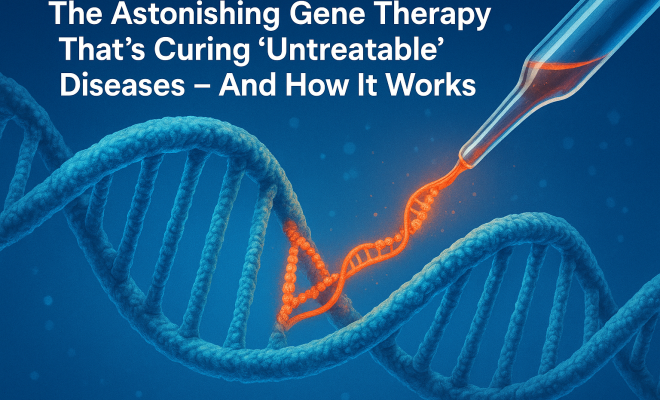
Imagine a world where a diagnosis of a rare, fatal genetic disorder isn’t a death sentence, but a challenge that science is ready to meet head-on. For decades, this was largely a dream. But now, in what feels like a blink of an eye, gene therapy has moved from the realm of science fiction into tangible, life-saving reality. We’re not just talking about incremental improvements; we’re witnessing outright cures for conditions that once offered no hope. This isn’t just exciting; it’s genuinely revolutionary, especially as we look at the best gene therapy options for rare diseases review.
At the forefront of this medical revolution is CRISPR gene editing. What began as a fascinating biological discovery has rapidly transitioned into a powerful therapeutic tool, offering precision and potential that were once unimaginable. The sheer pace of its development, particularly in the last couple of years, has been nothing short of breathtaking. We’re seeing personalized treatments, once a distant fantasy, now being administered to infants with fatal conditions, rewriting their genetic destinies. The implications are enormous, not just for the patients and their families, but for the entire landscape of medicine and healthcare.
1. The CRISPR Revolution: From Lab Bench to Bedside
CRISPR, an acronym for Clustered Regularly Interspaced Short Palindromic Repeats, might sound like something out of a textbook, but its impact is anything but academic. It’s fundamentally a gene-editing tool that allows scientists to precisely target and modify specific sequences of DNA. Think of it like a molecular pair of scissors and a word processor combined: it can cut out faulty genes and insert correct ones, or even just make tiny, precise edits to fix errors. This level of control over our genetic code is what makes CRISPR so uniquely powerful.
For years, CRISPR was considered a ‘technology to watch,’ full of promise but still largely confined to research labs. That perception has dramatically shifted, particularly as we approach 2026. We’re now seeing concrete, life-altering results. This isn’t theoretical anymore; it’s happening. The transition from a promising concept to a practical, life-saving intervention is a monumental leap, one that’s reshaping our understanding of what’s possible in medicine. It’s no longer a question of if it will work, but how widely and how quickly it can be deployed.
2. KJ Muldoon’s Breakthrough: A Personalized Gene Therapy Success Story
Perhaps the most compelling evidence of CRISPR’s real-world impact comes from the story of KJ Muldoon. Born with a fatal metabolic disorder, KJ’s prognosis was grim. Historically, such a diagnosis offered little to no hope. However, in February 2025, a groundbreaking personalized CRISPR-based gene therapy was administered to the infant by researchers at Children’s Hospital of Philadelphia and Penn Medicine. This wasn’t a standard treatment; it was a bespoke, base-editing therapy designed specifically for KJ’s unique genetic mutation.
By early 2026, the results were astonishing. KJ Muldoon, who was expected to succumb to the condition, showed only mild symptoms of what was previously a fatal illness. This isn’t just a clinical success; it’s a profound human story that underscores the transformative potential of personalized genomic medicine. It highlights the capability of CRISPR to not just manage symptoms, but to fundamentally correct the underlying genetic defect, offering a chance at a normal life where none existed before. This case study is a beacon of hope for countless families facing similar heartbreaking diagnoses, and it offers crucial insights for any comprehensive best gene therapy options for rare diseases review.
3. The FDA’s ‘Plausible Mechanism Framework’: Paving the Way for Individualized Therapies
The success of cases like KJ Muldoon’s didn’t go unnoticed by regulatory bodies. In February 2026, the U.S. Food and Drug Administration (FDA) responded to this rapid advancement by publishing draft guidance that introduced a ‘plausible mechanism framework’ for individualized genomic therapies. This is a game-changer for the development and approval of highly personalized treatments. Historically, each new drug or therapy required extensive, separate clinical trials, a process that is incredibly time-consuming and expensive, especially for ultra-rare conditions affecting only a handful of patients globally.
Under this new framework, a single clinical trial can now be designed to test platform technologies that are customized for each patient. What does this mean in practical terms? It means that instead of needing a completely new trial for every minor genetic variation in a rare disease, researchers can establish that the underlying gene-editing platform itself is safe and effective, then adapt it to individual patient needs with less regulatory red tape. This streamlined approach promises to accelerate the delivery of life-saving treatments to patients who simply cannot wait for conventional trial timelines. It’s a pragmatic and forward-thinking shift that recognizes the unique challenges and opportunities presented by personalized medicine.
4. Beyond CRISPR: A Look at Other Gene Therapy Modalities
While CRISPR is currently grabbing headlines for its precision and personalized applications, it’s important to remember that it’s part of a broader family of gene therapy methods. The field itself has been evolving for decades, with different approaches tackling genetic disorders in various ways. Understanding these other modalities provides crucial context when evaluating the best gene therapy options for rare diseases review. (See: NIH researchers use CRISPR gene editing.)
One of the earliest and still widely used methods involves delivering a functional copy of a gene into cells to compensate for a missing or defective one. This often uses modified viruses, like adeno-associated viruses (AAVs), as ‘delivery vehicles’ to carry the new gene into target cells. Examples include therapies for spinal muscular atrophy (SMA) and certain forms of inherited blindness, which have seen remarkable success. Another approach, RNA interference (RNAi), works by silencing specific genes that are causing disease, rather than replacing or editing them. These methods have their own strengths and limitations, including their delivery mechanisms, the types of cells they can target, and the permanence of the genetic change. While CRISPR offers unparalleled precision in editing existing DNA, these other methods remain vital tools in the gene therapy arsenal, especially for conditions where simply adding a functional gene is sufficient.
5. The Unrivaled Precision of Base Editing and Prime Editing
Within the broader CRISPR umbrella, innovations like base editing and prime editing represent even more refined levels of genetic manipulation. These aren’t just minor tweaks; they’re significant advancements that enhance CRISPR’s capabilities and safety profile. Base editing, for instance, allows for the direct conversion of one DNA base pair into another (e.g., A-T to G-C) without creating a double-strand break in the DNA helix. Why is this important? Double-strand breaks can sometimes lead to unintended, off-target edits or chromosomal rearrangements, which are potential safety concerns.
Prime editing takes this a step further, combining CRISPR-Cas9 with a reverse transcriptase enzyme to enable even more versatile and precise edits, including insertions, deletions, and all 12 possible base-to-base conversions, again, ideally without those potentially problematic double-strand breaks. These sophisticated techniques allow for ‘search and replace’ functionality for DNA, offering unprecedented control over the genetic code. The ability to make such precise, ‘find and replace’ edits minimizes the risk of collateral damage to the genome, making these methods particularly attractive for therapeutic applications where accuracy is paramount. For critical genetic corrections, especially in infants, this level of precision is invaluable.
6. Ethical Quandaries and Public Discourse: Navigating the Future of Gene Editing
As gene editing technologies like CRISPR become more powerful and accessible, the ethical implications naturally rise to the forefront of public discussion. The ability to fundamentally alter human DNA, particularly in germline cells (which can pass changes to future generations), raises profound questions. Where do we draw the line between treating disease and ‘enhancing’ human traits? Who decides which conditions are severe enough to warrant gene editing? And what about equitable access to these potentially life-saving, but likely expensive, therapies?
The case of KJ Muldoon, while a triumph, also fuels this debate. When a technology can cure a fatal condition in an infant, the moral imperative to use it seems clear. But what if the condition isn’t fatal, but severely debilitating? What if it’s a predisposition to a disease later in life? These are not easy questions, and there are no simple answers. Expert opinions from bioethicists, medical professionals, and patient advocacy groups are crucial in navigating this complex landscape. Open and informed public discourse is essential to establish societal norms and regulatory frameworks that ensure these powerful tools are used responsibly and ethically for the benefit of all.
7. The Cost of Cures: Economic Realities of Gene Therapy
While the scientific breakthroughs in gene therapy are undeniably thrilling, the economic realities cannot be ignored. These are highly complex, bespoke treatments, and as such, they come with substantial price tags. When considering the best gene therapy options for rare diseases review, the ‘cost of gene therapy’ is a critical factor. Some of the approved gene therapies currently on the market, such as those for SMA or certain retinal dystrophies, have price tags ranging from hundreds of thousands to several million dollars for a single dose. This is an eye-watering sum for most individuals and healthcare systems.
The high costs are driven by several factors: the immense research and development investment, the complexity of manufacturing personalized biological products, the small patient populations for rare diseases (which means costs must be recouped from fewer individuals), and the ‘value’ of a potential cure for a fatal illness. This raises significant questions about health insurance coverage for genetic treatments. Will insurance companies fully cover these therapies, or will patients face insurmountable financial barriers? Innovative payment models, such as outcomes-based agreements or installment plans, are being explored, but ensuring equitable access remains a massive challenge that society is just beginning to grapple with. Without robust solutions, these miraculous cures could remain out of reach for many who desperately need them.
8. Anti-Aging and Beyond: The Future Frontier of Gene Editing
The applications of gene editing extend far beyond treating rare genetic disorders. One area generating immense interest and considerable speculation is ‘anti-aging gene therapy reviews.’ While still largely in preclinical or early-stage research, the idea of using gene editing to combat the cellular and molecular hallmarks of aging is captivating. Imagine therapies that could repair age-related cellular damage, enhance cellular regeneration, or even modify genes associated with longevity. This isn’t just about extending lifespan, but potentially extending ‘healthspan’ – the period of life spent in good health.
Beyond anti-aging, researchers are exploring CRISPR’s potential in treating common diseases like cancer, HIV, and cardiovascular conditions. We’re seeing trials for using gene editing to make immune cells more effective at fighting tumors, or to disable viral genes in HIV patients. The potential for CRISPR to revolutionize medicine is vast and multifaceted, touching almost every area of human health. The challenges remain significant – ensuring safety, efficacy, and avoiding unintended consequences – but the sheer breadth of ongoing research suggests that gene editing will continue to redefine the boundaries of what’s medically possible for decades to come. (See: Nature article on CRISPR advancements.)
9. The Unstoppable March of Personalized Medicine: A Paradigm Shift
What the stories of KJ Muldoon and the FDA’s new framework truly highlight is the unstoppable march towards personalized medicine. We’re moving away from a ‘one-size-fits-all’ approach to healthcare and towards treatments tailored to an individual’s unique genetic makeup. This isn’t just about gene therapy; it’s a broader paradigm shift that encompasses diagnostics, drug development, and preventative care. Genomic sequencing is becoming more accessible, allowing for precise identification of genetic mutations and predispositions. This information, combined with advanced gene-editing tools, creates a powerful synergy.
For rare diseases, where each patient’s genetic mutation might be unique or only shared by a handful of others, personalized approaches are not just beneficial, they are essential. The ability to design a therapy specifically for an individual, as was done for KJ, represents the pinnacle of this shift. It means that diagnoses that once led to despair can now lead to hope, and eventually, to cures. While challenges in cost, access, and ethics will persist, the fundamental capability to correct genetic errors at their source is here to stay. This will profoundly change how we think about disease, treatment, and even what it means to be human.
10. Navigating the Regulatory Landscape: Global Perspectives
While the FDA’s “plausible mechanism framework” is a crucial step for the U.S., gene therapy development and approval are global endeavors. Different countries and regions have their own regulatory bodies and guidelines, which can create a complex web for researchers and pharmaceutical companies. For example, the European Medicines Agency (EMA) also has specific pathways for advanced therapy medicinal products (ATMPs), including gene therapies. Japan’s Pharmaceuticals and Medical Devices Agency (PMDA) and China’s National Medical Products Administration (NMPA) are also actively developing and refining their regulatory approaches to keep pace with these rapid advancements.
The challenge lies in balancing the need for rigorous safety and efficacy testing with the urgency of delivering treatments for life-threatening rare diseases. Harmonization across international regulatory bodies is a significant goal, as it could streamline the development process and accelerate global access to these therapies. However, differences in cultural perspectives on ethics, patient populations, and healthcare systems mean that a perfectly uniform approach is unlikely. Understanding these global nuances is vital for any company operating in this space and for patients seeking treatments abroad. The success stories often depend on how effectively a therapy can navigate these diverse regulatory pathways, ensuring it meets the highest standards while still reaching those in need efficiently.
11. Delivery Systems: The Unsung Heroes of Gene Therapy
The best gene therapy in the world is useless if it can’t get to the right cells in the body. This is where delivery systems, often overlooked in the hype, become the unsung heroes. We mentioned adeno-associated viruses (AAVs) earlier, and they are currently the most common viral vectors for gene delivery due to their relatively good safety profile and ability to infect various cell types without integrating into the host genome (which minimizes the risk of insertional mutagenesis, a potential side effect of some older viral vectors). However, AAVs have limitations, such as their small packaging capacity, which means they can only carry relatively short genes.
Beyond AAVs, researchers are actively exploring other viral vectors like lentiviruses, which can integrate into the host genome and are useful for long-term expression, especially in dividing cells. Non-viral delivery methods are also gaining traction. These include lipid nanoparticles (LNPs), which gained prominence during the COVID-19 pandemic as the delivery vehicle for mRNA vaccines. LNPs can encapsulate genetic material (like mRNA or DNA) and deliver it into cells. They offer advantages like lower immunogenicity (less likely to trigger an immune response) and easier manufacturing compared to viral vectors. The continuous innovation in delivery systems is critical, as more efficient and safer ways to transport genetic cargo to target cells will unlock even more therapeutic possibilities for a wider range of rare diseases.
12. Patient Advocacy and the Role of Rare Disease Foundations
Behind many gene therapy breakthroughs, particularly for rare diseases, are powerful patient advocacy groups and dedicated rare disease foundations. These organizations play an indispensable role, often initiating and funding early-stage research, advocating for policy changes (like the FDA’s new framework), and connecting patients with clinical trials. They understand the unique challenges of living with a rare disease and the desperate need for effective treatments.
For diseases affecting only a few thousand, or even a few hundred, people worldwide, large pharmaceutical companies might not see a clear financial incentive for extensive research. This is where foundations step in, pooling resources, raising awareness, and creating a critical mass of support. They often facilitate natural history studies, which track the progression of a disease without intervention, providing crucial data that helps researchers understand the condition and design better therapies. Their collective voice is also instrumental in influencing regulatory bodies and ensuring that patient perspectives are at the table when decisions about access, ethics, and research priorities are made. Their tireless work is a testament to the power of community in driving medical innovation for conditions that might otherwise be forgotten. (See: CDC overview of genomics and gene therapy.)
Frequently Asked Questions About Gene Therapy for Rare Diseases
Q1: What exactly is a “rare disease” in the context of gene therapy?
In the United States, a rare disease is defined as a condition affecting fewer than 200,000 people. In Europe, it’s defined as affecting fewer than 1 in 2,000 people. Gene therapy is particularly promising for these conditions because many rare diseases are caused by a single gene defect, making them ideal targets for gene-editing technologies like CRISPR or gene replacement therapies. The small patient population also means traditional drug development is often less viable.
Q2: How long do the effects of gene therapy last? Is it a permanent cure?
The permanence of gene therapy effects varies greatly depending on the specific therapy, the disease, and the cells targeted. For therapies that integrate a corrected gene into the patient’s DNA (like some lentiviral vector therapies), the effects can be long-lasting, potentially lifelong, as the corrected cells will continue to produce the functional protein. For non-integrating therapies, or those targeting non-dividing cells, the effects can still be durable for many years. The goal is often a functional cure, where symptoms are significantly alleviated or eliminated, allowing for a normal quality of life. Ongoing monitoring is crucial to assess long-term efficacy and safety.
Q3: What are the main risks associated with gene therapy?
Like any medical intervention, gene therapy carries risks. These can include off-target edits (where the gene-editing tool makes unintended changes to the DNA), immune responses to the viral vector or the new gene product, and potential insertional mutagenesis (if the new gene integrates into a critical part of the genome, disrupting other genes). There’s also the challenge of manufacturing consistency and ensuring the therapy reaches all the necessary cells. However, continuous research and advancements in precision tools like base and prime editing are working to minimize these risks, making therapies safer and more predictable.
Q4: How does gene therapy differ from traditional drug treatments for rare diseases?
Traditional drug treatments for rare diseases typically manage symptoms or slow disease progression by targeting the disease’s downstream effects. They often require lifelong administration. Gene therapy, on the other hand, aims to address the root cause of the disease by correcting or replacing the faulty gene itself. This offers the potential for a one-time treatment that can provide a lasting or even permanent cure, fundamentally altering the disease’s course rather than just mitigating its symptoms.
Q5: Is gene therapy covered by insurance?
Insurance coverage for gene therapies is a complex and evolving issue. Given the high upfront costs, many insurance companies are grappling with how to cover these treatments. Some approved therapies are covered, especially for life-threatening conditions where no other effective treatments exist. However, coverage can vary widely by plan, region, and the specific therapy. Innovative payment models, such as installment payments or outcomes-based agreements (where payments are tied to the therapy’s success), are being explored to make these treatments more accessible and manageable for healthcare systems.
The landscape of medicine is undergoing a profound transformation, driven by the incredible advancements in gene therapy, particularly CRISPR. We’ve seen it move from a scientific curiosity to a tool capable of delivering personalized, life-saving cures for previously untreatable conditions. The journey ahead will undoubtedly present new challenges, from navigating complex ethical questions to ensuring equitable access to these groundbreaking treatments. But one thing is clear: the future of medicine, where genetic destiny can be rewritten, is no longer a distant dream, but a present reality that continues to unfold before our eyes.
Frequently Asked Questions
What is gene therapy and how does it work?
Gene therapy involves altering the genes inside a patient's cells to treat or prevent disease. It works by using techniques like CRISPR to edit faulty genes, allowing for the correction of genetic disorders that were previously considered untreatable.
How is CRISPR used in gene therapy?
CRISPR, a gene-editing tool, allows scientists to precisely cut and modify DNA sequences. By targeting faulty genes, CRISPR can insert correct ones or make specific edits, facilitating the treatment of genetic disorders with unprecedented precision.
What diseases can gene therapy potentially cure?
Gene therapy has shown promise in curing various rare and fatal genetic disorders, including conditions like cystic fibrosis and certain types of muscular dystrophy. Ongoing research continues to expand its potential applications.
What are the benefits of personalized gene therapy?
Personalized gene therapy tailors treatments to individual patients, enhancing efficacy and minimizing side effects. This approach allows for targeted interventions that directly address the unique genetic makeup of each patient.
What are the implications of gene therapy for healthcare?
The rise of gene therapy, especially with techniques like CRISPR, could revolutionize healthcare by offering cures for previously untreatable conditions, reducing long-term healthcare costs, and improving the quality of life for patients and their families.
Agree or disagree? Drop a comment and tell us what you think.