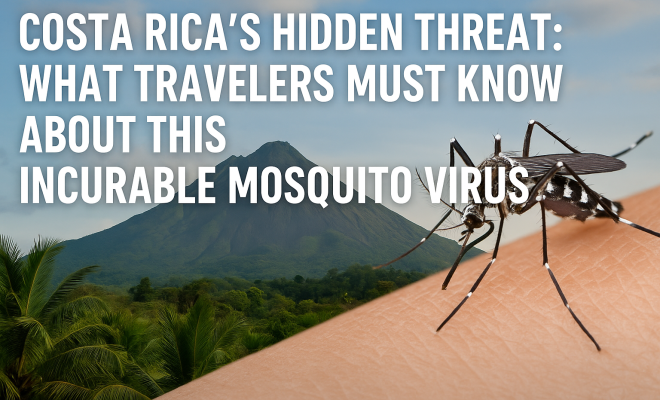
Costa Rica’s Hidden Threat: What Travelers MUST Know About This Incurable Mosquito Virus
“`html
Imagine planning that dream escape to Costa Rica, picturing yourself on pristine beaches, enveloped by lush rainforests, the scent of fresh ocean air filling your lungs. Now, imagine a tiny, almost invisible adversary that could turn that dream into a prolonged nightmare. That’s the unsettling reality facing many potential travelers right now, thanks to a recent Level 2 travel advisory issued by the Centers for Disease Control and Prevention (CDC). On July 21, 2026, the CDC sounded the alarm, urging anyone headed to the popular Central American nation to exercise enhanced precautions. The culprit? An outbreak of the chikungunya virus, a mosquito-borne illness that, while rarely fatal, can inflict severe, long-lasting pain and currently has no cure. This isn’t just a routine health bulletin; it’s a critical mosquito virus travel warning that demands attention.
The immediate focus of this concern is Costa Rica’s Guanacaste Province, specifically the beautiful, often bustling area of Playa Langosta. The Costa Rican Ministry of Health has officially declared an active outbreak there, following a concerning spike in cases. We’re talking about officials investigating 45 suspected cases, with 4 already confirmed and 17 categorized as probable. These numbers aren’t just statistics; they represent individuals grappling with debilitating symptoms and, crucially, they confirm local transmission of the virus. What does that mean for you, the traveler? It means the mosquitoes carrying chikungunya are actively biting and spreading the virus within that region, not just arriving from elsewhere. This situation underscores why any mosquito virus travel warning should be taken seriously, particularly when it involves a destination as beloved as Costa Rica.
What Exactly is Chikungunya, and Why is it a Concern?
Chikungunya isn’t a new virus, but its spread into new territories and the severity of its symptoms make it a formidable foe. The name itself, derived from a Makonde word, means ‘to become contorted,’ a vivid description of the stooped posture many sufferers adopt due to intense joint pain. It’s transmitted primarily by two species of mosquitoes: Aedes aegypti and Aedes albopictus, both aggressive daytime biters, which makes prevention particularly challenging. Unlike some other mosquito-borne illnesses that might peak at dusk or dawn, these little bloodsuckers are active when you’re likely enjoying the beach or exploring the jungle.
The symptoms typically appear 3 to 7 days after a mosquito bite. What begins as a sudden high fever, often spiking to 102-104°F (39-40°C), quickly escalates to the hallmark symptom: severe joint pain. This isn’t just a minor ache; it can be excruciating, affecting multiple joints, often symmetrically, in the hands, wrists, ankles, and knees. Imagine trying to walk, hold a cup, or even turn a doorknob when every joint screams in protest. Beyond the fever and joint pain, individuals often experience muscle pain, headaches, significant swelling in the affected joints, and a distinctive rash that can cover the body. While most people recover within a week, a significant percentage, particularly older adults or those with underlying health conditions, can experience chronic joint pain that lingers for months, or even years. This persistent pain is what truly defines chikungunya as an ‘incurable’ challenge – while the virus clears, its after-effects can be long-lasting and profoundly impact quality of life.
The Costa Rican Context: Why Guanacaste and Playa Langosta?
Costa Rica, with its tropical climate and abundant rainfall, provides an ideal breeding ground for Aedes mosquitoes. Guanacaste Province, known for its stunning Pacific coastline, dry tropical forest, and popular tourist towns like Tamarindo and Nosara, is particularly susceptible. Playa Langosta, a beautiful beach community just south of Tamarindo, fits this profile perfectly. Its combination of natural beauty, tourist infrastructure, and local communities creates a nexus where mosquitoes can thrive and interact with both residents and visitors.
The declaration of an active outbreak by the Costa Rican Ministry of Health isn’t a decision taken lightly. It signifies that the local health authorities have observed a substantial increase in cases beyond what’s typically expected, and, crucially, that these cases are occurring among people who haven’t recently traveled abroad, confirming local transmission cycles. The investigation into 45 suspected cases, with 4 confirmed and 17 probable, points to a clear, active transmission chain. For travelers, this means the risk isn’t theoretical; it’s a tangible threat present in the environment. Understanding this local context is paramount when assessing the implications of any mosquito virus travel warning. It’s not just about what could happen, but what is happening on the ground.
Decoding the CDC Level 2 Travel Advisory
When the CDC issues a travel advisory, it’s not just a casual suggestion; it’s a carefully calibrated message designed to inform and protect. A Level 2 advisory, specifically, falls under the category of ‘Exercise Enhanced Precautions.’ This isn’t the highest level – Level 3 is ‘Avoid Nonessential Travel’ – but it’s a clear step up from Level 1, which simply advises ‘Practice Usual Precautions.’ So, what does ‘enhanced precautions’ actually mean in practical terms for your trip? There’s a fuller look at top beaches to explore.
It means you should be extra vigilant about personal protection measures. It means understanding that the risk is elevated and taking proactive steps to mitigate it. For chikungunya, with its daytime biting mosquitoes, this implies more than just sleeping under a mosquito net. It means wearing appropriate clothing, using effective repellents consistently, and being aware of your surroundings even during daylight hours. The CDC’s advisory is a direct signal to travelers that while a trip might still be feasible, it requires a heightened sense of awareness and a commitment to preventive actions that go beyond your typical vacation routine. It’s a formal acknowledgment that this particular mosquito virus travel warning isn’t to be ignored. (See: CDC Chikungunya Virus Information.)
The Long Shadow of Post-Chikungunya Syndrome
Perhaps the most concerning aspect of chikungunya, and what truly elevates this mosquito virus travel warning beyond a simple inconvenience, is the potential for chronic symptoms. While the acute phase of high fever and intense joint pain usually subsides within a week or two, for a significant percentage of patients, the joint pain can persist. This condition is often referred to as ‘post-chikungunya chronic inflammatory rheumatism’ or simply ‘post-chikungunya syndrome.’
Imagine returning from your tropical getaway only to find yourself struggling with debilitating joint pain months, or even years, later. This isn’t just discomfort; it can severely impact daily life, making simple tasks like walking, working, or even sleeping incredibly difficult. The pain can be migratory, moving from joint to joint, and is often exacerbated by activity or changes in weather. There’s no specific antiviral treatment for chikungunya; doctors can only manage the symptoms with pain relievers, anti-inflammatory drugs, and rest. For those who develop the chronic form, treatment often involves long-term pain management, physical therapy, and sometimes even immunosuppressants, much like managing rheumatoid arthritis. This potential for long-term suffering is a crucial factor in understanding why this particular mosquito virus travel warning carries such weight and why prevention is so critical.
Practical Steps for Travelers: How to Protect Yourself
Given the CDC’s mosquito virus travel warning and the nature of chikungunya, protection isn’t just recommended; it’s essential. Here’s a comprehensive guide to safeguarding yourself:
- Use EPA-Registered Insect Repellents: This is your first line of defense. Look for repellents containing DEET (at least 20-30% for adults), picaridin, oil of lemon eucalyptus (OLE), para-menthane-diol (PMD), or IR3535. Apply it generously and frequently, following product instructions. Remember, Aedes mosquitoes bite during the day, so don’t save the repellent just for evenings.
- Wear Protective Clothing: Opt for long-sleeved shirts, long pants, and socks, especially if you’re venturing into areas with dense vegetation or during peak mosquito activity. Light-colored clothing is often recommended as dark colors can attract mosquitoes. Consider permethrin-treated clothing for an extra layer of protection, particularly if you’ll be spending extended time outdoors.
- Stay in Screened or Air-Conditioned Accommodations: When booking your lodging, prioritize places with well-maintained window and door screens or, even better, air conditioning. This creates a barrier against mosquitoes entering your room. If screening is poor or absent, consider sleeping under a mosquito net, even if it’s not typically recommended for daytime biters; it helps for any nocturnal mosquitoes that might also be present.
- Eliminate Standing Water: While you might not be able to control every puddle, be mindful of your immediate surroundings at your accommodation. If you see standing water in planters, buckets, or discarded tires, report it to staff. Mosquitoes only need a tiny bit of water to lay their eggs.
- Be Aware of Peak Biting Times: While Aedes mosquitoes bite all day, their activity can sometimes increase during certain periods, like early morning and late afternoon. Plan indoor activities during these times if possible, or redouble your repellent efforts.
- Travel Insurance: Consider purchasing comprehensive travel insurance that covers medical emergencies, including evacuation, in case you do fall ill. While it won’t prevent the illness, it can provide crucial financial protection.
The key here is consistency and diligence. One lapse in protection could be all it takes. Think of it as a small inconvenience for a huge peace of mind, especially when faced with an incurable mosquito virus.
Comparing Chikungunya to Other Mosquito-Borne Threats
When we hear ‘mosquito virus travel warning,’ our minds might immediately jump to more widely known diseases like dengue fever or Zika virus. It’s helpful to understand how chikungunya fits into this rogues’ gallery, as they share similarities but also critical differences.
All three – chikungunya, dengue, and Zika – are transmitted by the same Aedes aegypti and Aedes albopictus mosquitoes, meaning the prevention strategies are largely the same. However, their clinical presentations and long-term implications differ. Dengue, for instance, can sometimes lead to severe dengue (formerly hemorrhagic fever), a potentially life-threatening condition involving internal bleeding and organ damage. Zika is infamous for its link to microcephaly and other birth defects in infants born to infected mothers, making it a particular concern for pregnant women and those planning pregnancy. Chikungunya, while rarely fatal, distinguishes itself with its severe and often chronic joint pain, which can be far more debilitating than the typical joint aches associated with dengue or Zika. While all these viruses can cause fever, rash, and muscle pain, the specific intensity and duration of joint pain are the defining characteristics of chikungunya. Understanding these nuances helps travelers make informed decisions based on their individual risk factors and travel plans, reinforcing the seriousness of any mosquito virus travel warning.
The Economic and Social Ripple Effects of an Outbreak
Beyond the individual suffering, an outbreak of a disease like chikungunya, especially one prompting a mosquito virus travel warning, has significant broader impacts. For a country like Costa Rica, heavily reliant on tourism, such advisories can deal a substantial blow to the economy. Travelers, understandably, may reconsider their plans, leading to cancellations in hotels, tours, and flights. Local businesses, from beachfront restaurants to souvenir shops, feel the pinch directly.
But the impact isn’t just economic. There’s a social cost too. Local healthcare systems can become strained, as they grapple with an influx of patients requiring symptom management and potentially long-term care for chronic pain. Public health resources are diverted to surveillance, mosquito control programs, and public awareness campaigns. There can also be a psychological toll on residents, living with the constant threat of infection and the fear of a debilitating illness. Furthermore, the reputation of a popular tourist destination can suffer, requiring significant effort and time to rebuild trust and attract visitors back. This complex web of consequences highlights why health ministries and international bodies take these outbreaks so seriously and why a mosquito virus travel warning isn’t just about individual risk, but also about broader societal health and economic stability.
What if You Get Sick? Recognizing Symptoms and Seeking Care
Despite all precautions, sometimes infections happen. If you’ve been to an area with active chikungunya transmission, like Guanacaste Province, and you start feeling unwell, it’s crucial to recognize the symptoms and seek medical attention promptly. Remember, symptoms typically appear 3 to 7 days after a mosquito bite. Look out for a sudden onset of high fever, severe joint pain (especially in your hands, wrists, ankles, or knees), muscle pain, headache, swelling around your joints, and a rash.
If you experience these symptoms while traveling, consult a local doctor immediately. Inform them of your recent travel history to an affected area. If you develop symptoms after returning home, see your doctor and make sure to mention where you’ve traveled. While there’s no specific antiviral treatment for chikungunya, early diagnosis allows for proper symptom management, which can include pain relievers like acetaminophen (Tylenol) or naproxen/ibuprofen (Aleve/Advil) to alleviate fever and joint pain. Aspirin should be avoided until dengue can be ruled out, as it can increase the risk of bleeding in dengue patients. Rest and hydration are also critical. Early medical attention can help manage the acute phase and potentially mitigate the severity of long-term complications, underscoring the importance of heeding every aspect of a mosquito virus travel warning. (See: WHO Chikungunya Fact Sheet.)
The Role of Climate Change and Globalization
It’s impossible to discuss the increasing prevalence of mosquito-borne diseases without acknowledging the intertwined roles of climate change and globalization. Rising global temperatures create broader geographical ranges where Aedes aegypti and Aedes albopictus mosquitoes can survive and thrive. Warmer climates also often shorten the extrinsic incubation period of viruses within mosquitoes, meaning the time it takes for a mosquito to become infectious after biting an infected person is reduced, allowing for faster and more widespread transmission. Essentially, more mosquitoes are living longer and becoming infectious faster, leading to more opportunities for outbreaks.
Globalization, with its unprecedented ease and frequency of international travel, acts as a superhighway for these viruses. An infected traveler can return home, get bitten by a local mosquito, and suddenly a new transmission cycle begins in a previously unaffected area. This is how chikungunya, once confined to parts of Africa and Asia, has now become endemic in the Americas. The rapid movement of people, coupled with favorable environmental conditions, paints a clear picture: these mosquito virus travel warnings are likely to become a more frequent feature of our travel landscape. Staying informed about global health trends is no longer just for medical professionals; it’s a vital part of planning any international trip.
Expert Perspectives on Outbreak Management
Public health experts and epidemiologists are at the forefront of managing these outbreaks. When a mosquito virus travel warning is issued, it’s often based on intricate data analysis and risk assessments by these professionals. Dr. Anya Sharma, a leading epidemiologist specializing in vector-borne diseases, points out, “Early detection and robust surveillance systems are absolutely critical. The faster we identify an uptick in cases and pinpoint areas of local transmission, the quicker we can implement targeted control measures like increased mosquito spraying, public education campaigns, and rapid diagnostic testing.”
She also emphasizes the importance of community engagement. “Travel advisories are effective, but local populations also need to be empowered with information and resources to protect themselves. Simple actions, like regularly checking and emptying water containers around homes, can drastically reduce mosquito breeding sites.” This holistic approach, combining international alerts with local action, is the gold standard for mitigating the impact of diseases like chikungunya. It highlights that while travelers have a role in personal protection, governments and health organizations bear the responsibility of broader public health infrastructure and response.
The Future of Mosquito-Borne Diseases and Travel
The chikungunya outbreak in Costa Rica, and the subsequent mosquito virus travel warning, is a stark reminder that the landscape of global health and travel is constantly evolving. Climate change, urbanization, and increased global travel all contribute to the spread of mosquito-borne diseases into new regions. As temperatures rise, the geographical range suitable for Aedes mosquitoes expands, bringing viruses like chikungunya to areas where they previously weren’t a threat. This means travelers need to be increasingly vigilant and informed, not just about exotic destinations, but even about seemingly benign local environments.
Researchers are working tirelessly on vaccines and better treatments for these viruses, but development takes time. In the interim, public health agencies worldwide will continue to monitor outbreaks, issue advisories, and implement control measures. For us, as travelers, it means integrating health awareness into our travel planning as thoroughly as we consider our itineraries and budgets. Staying informed, understanding the risks, and diligently applying preventive measures are no longer optional extras; they are fundamental components of responsible and enjoyable international travel in an increasingly interconnected world. The next time you’re planning an adventure, remember this Costa Rica mosquito virus travel warning as a prime example of why being prepared is always the best policy.
Frequently Asked Questions About Chikungunya and Travel
We know you’ve got questions when a mosquito virus travel warning pops up. Here are some common ones to help you plan your trips safely. (See: NIH Chikungunya Research Article.)
Q: Can I get chikungunya more than once?
A: Generally, no. After you’ve had chikungunya, you’re considered immune to future infections with the same virus. Your body develops antibodies that protect you. However, it’s important to note that you could still get other mosquito-borne illnesses like dengue or Zika, even if you’ve had chikungunya before, because they are different viruses.
Q: Is there a vaccine for chikungunya?
A: As of late 2023, the FDA approved the first chikungunya vaccine, IXCHIQ, for individuals 18 years and older who are at increased risk of exposure. This is a significant breakthrough! However, it’s still relatively new, and availability might vary. Always check the latest CDC recommendations and consult your doctor about vaccination options before traveling to affected areas.
Q: What should I do if I’m pregnant and planning to travel to a chikungunya-affected area?
A: If you’re pregnant or trying to conceive, it’s extra important to talk to your doctor before traveling to areas with active chikungunya transmission. While chikungunya is generally not associated with severe birth defects like Zika, there’s a risk of the virus being passed from mother to newborn around the time of birth, potentially causing severe illness in the baby. Your doctor can help you assess the risks and make an informed decision, possibly recommending deferring travel or taking extreme precautions.
Q: How long do mosquitoes that carry chikungunya live?
A: The lifespan of Aedes aegypti and Aedes albopictus mosquitoes can vary depending on environmental factors like temperature and humidity, but they typically live for about 2-4 weeks. During this time, an infected mosquito can transmit the virus multiple times, which is why effective mosquito control and personal protection are so vital.
Q: Can chikungunya be transmitted directly from person to person?
A: No, chikungunya cannot be spread directly from person to person through casual contact. It requires a mosquito vector. The transmission cycle always involves a mosquito biting an infected person and then biting an uninfected person, passing the virus along. The only exception is the potential for mother-to-child transmission around the time of birth, as mentioned earlier.
Q: If I’ve recovered from chikungunya, can I still donate blood?
A: Blood donation guidelines can vary by country and specific blood banks. In many places, individuals who have recovered from chikungunya may have a temporary deferral period before they can donate blood again. This is a precautionary measure to ensure the safety of the blood supply. If you’ve had chikungunya and wish to donate blood, it’s best to check with your local blood donation center for their specific requirements.
“`
Trending Now
Frequently Asked Questions
What is chikungunya virus and how does it affect travelers?
Chikungunya is a mosquito-borne virus that causes severe joint pain, fever, and fatigue. While it is rarely fatal, the symptoms can be debilitating and long-lasting, making it a significant health concern for travelers, especially in regions experiencing outbreaks like Costa Rica.
Is there a cure for chikungunya virus?
Currently, there is no cure for chikungunya virus. Treatment focuses on relieving symptoms, such as pain and fever, often using over-the-counter medications. Travelers are advised to take preventive measures against mosquito bites.
What areas in Costa Rica are affected by chikungunya?
The current outbreak of chikungunya in Costa Rica is primarily concentrated in the Guanacaste Province, particularly around Playa Langosta. Travelers should exercise caution when visiting this area due to the active transmission of the virus.
How can travelers protect themselves from chikungunya in Costa Rica?
Travelers can protect themselves by using insect repellent, wearing long sleeves and pants, and staying in accommodations with air conditioning or screens. Avoiding outdoor activities during peak mosquito activity times, especially early morning and late afternoon, is also recommended.
What precautions should travelers take regarding health advisories in Costa Rica?
Travelers should stay informed about health advisories issued by the CDC or local health authorities. Following recommended precautions, such as vaccination updates and mosquito bite prevention strategies, is crucial for a safe trip.
Have you experienced this yourself? We'd love to hear your story in the comments.