The Tech Edvocate

Top Menu

  • Advertisement
  • Apps
  • Home Page
  • Home Page Five (No Sidebar)
  • Home Page Four
  • Home Page Three
  • Home Page Two
  • Home Tech2
  • Icons [No Sidebar]
  • Left Sidbear Page
  • Lynch Educational Consulting
  • My Account
  • My Speaking Page
  • Newsletter Sign Up Confirmation
  • Newsletter Unsubscription
  • Our Brands
  • Page Example
  • Privacy Policy
  • Protected Content
  • Register
  • Request a Product Review
  • Shop
  • Shortcodes Examples
  • Signup
  • Start Here
    • Governance
    • Careers
    • Contact Us
  • Terms and Conditions
  • The Edvocate
  • The Tech Edvocate Product Guide
  • Topics
  • Write For Us
  • Advertise

Main Menu

  • Start Here
    • Our Brands
    • Governance
      • Lynch Educational Consulting, LLC.
      • Dr. Lynch’s Personal Website
      • Careers
    • Write For Us
    • The Tech Edvocate Product Guide
    • Contact Us
    • Books
    • Edupedia
    • Post a Job
    • The Edvocate Podcast
    • Terms and Conditions
    • Privacy Policy
  • Topics
    • Assistive Technology
    • Child Development Tech
    • Early Childhood & K-12 EdTech
    • EdTech Futures
    • EdTech News
    • EdTech Policy & Reform
    • EdTech Startups & Businesses
    • Higher Education EdTech
    • Online Learning & eLearning
    • Parent & Family Tech
    • Personalized Learning
    • Product Reviews
  • Advertise
  • Tech Edvocate Awards
  • The Edvocate
  • Pedagogue
  • School Ratings

logo

The Tech Edvocate

  • Start Here
    • Our Brands
    • Governance
      • Lynch Educational Consulting, LLC.
      • Dr. Lynch’s Personal Website
        • My Speaking Page
      • Careers
    • Write For Us
    • The Tech Edvocate Product Guide
    • Contact Us
    • Books
    • Edupedia
    • Post a Job
    • The Edvocate Podcast
    • Terms and Conditions
    • Privacy Policy
  • Topics
    • Assistive Technology
    • Child Development Tech
    • Early Childhood & K-12 EdTech
    • EdTech Futures
    • EdTech News
    • EdTech Policy & Reform
    • EdTech Startups & Businesses
    • Higher Education EdTech
    • Online Learning & eLearning
    • Parent & Family Tech
    • Personalized Learning
    • Product Reviews
  • Advertise
  • Tech Edvocate Awards
  • The Edvocate
  • Pedagogue
  • School Ratings
  • Can Kayak book directly

  • How to list hotel on Booking.com

  • How to optimize Airbnb listing

  • How to get more bookings on Booking.com

  • How accurate is Kayak price forecast

  • How does Hopper app work

  • Travelocity vs Hotels.com comparison

  • Is Kayak a booking site or search engine

  • Can Google Flights find error fares

  • How to bundle flights and hotels Travelocity

Assistive TechnologyEarly Childhood & K-12 EdTechEdTech Futures
Home›Assistive Technology›Up and Coming Technologies For the K-12 Classroom

Up and Coming Technologies For the K-12 Classroom

By Matthew Lynch
November 21, 2016
0
Spread the love

Rapidly changing technology continues to make its mark on K-12 learning. In this post, I will profile six up-and-coming technologies for K-12 classrooms. Let’s take a closer look:

Horizon #1: In the next year, or less.

Mobile learning. Tablets and smartphones in the classroom are no longer a matter of “if,” but “when, and how quickly?” Administrators and educators can tap into the convenience of mobile technology in the classroom and the potential for student learning adaptation. Over half of school administrators say there is some form of mobile technology in their classrooms and that they plan to implement more when it is financially feasible. School districts should keep in mind that the purchase of mobile devices for K-12 use is only one piece in the learning puzzle. There must be funding for teacher training and maintenance of the devices too.

Cloud computing. When it comes to greater educational collaboration, cloud computing has unlimited potential. This is true for teacher-to-teacher, teacher-to-parent and teacher-to-student applications. By using a common location, academic expectations can be better accessed, along with actual student work. Instructors can also share learning materials and experiences through the remote opportunities that cloud computing provides.

Horizon #2: Within two to three years.

Learning analytics: This evolving concept in K-12 classrooms is different from educational data mining in that it focuses on individual students, teachers and schools without direct implications to the government. Learning analytics is the education industry’s response to “big data” that is used in the business world for improvements and redirection of focus. Learning analytics essentially show students what they have achieved and how those goals match up with their peers. If implemented correctly, this technology has the potential to warn teachers early of academic issues while keeping students more accountable. Using the mobile and online technology already in place, students can better track and tailor their academic experiences.

Open content: The rise of MOOCs, or massive open online courses, in terms of college learning is having a trickle-down effect on K-12 education. The idea that all the information that exists on any given topic already exists, and does not need to be re-created or purchased, is gaining steam among K-12 educators. Within the next three years, expect more shared content available to teachers and to students. Open textbooks, resources and curricula are not the only benefit of an open content push; shared experiences and insights are also valuable teaching tools.

Horizon #3: Within four to five years.

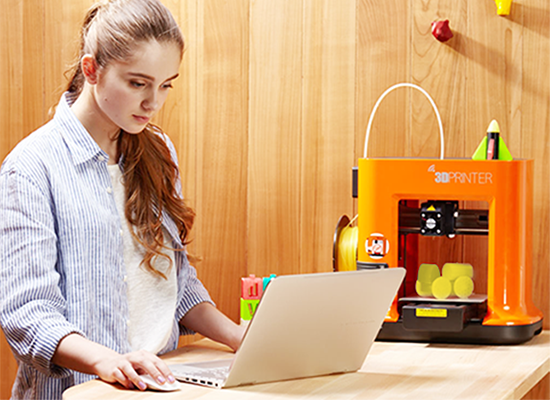
3D printing: Also known as prototyping, this technology will allow K-12 students to create tangible models for their ideas. Many fields, like manufacturing, already make use of this technology to determine the effectiveness of ideas on a smaller, printable scale. In education, this technology will bolster creativity and innovation, along with science and math applications. The STEM Academy has already partnered with Stratasys, a leading 3D printing company, to start integration of the technology in programming classes.

Virtual laboratories: These Web applications give students the chance to perform physical science experiments over and over, from anywhere with Internet access. As in a physical lab, the performance of the student will determine the results of the experiment. While not a replacement for all in-lab exercises, the virtual version can provide extra practice and guidance. There is no pressure to “get it right” on the first run, and mistakes are allowable because the technology lends itself to no-cost repetition. It also may prove a smart solution to rekindling the American public’s interest in the scientific.

In coming posts, I will take a closer look at each of these technologies and their implications on K-12 learners. Which do you think will have the greatest impact?




TagsEdtechedtechchatelearningSTEAMSTEM
Previous Article

Cyberlearning vs. Elearning – Is there a ...

Next Article

Assistive Technology for Students with Disabilities

Matthew Lynch

Related articles More from author

  • Early Childhood & K-12 EdTechEdTech Policy & ReformHigher Education EdTech

    Why Teachers Should Embrace Technology in Their Classrooms

    December 9, 2016
    By Matthew Lynch
  • Early Childhood & K-12 EdTechHigher Education EdTech

    Without teacher guidance, all the tech in the world will be quite useless

    April 10, 2017
    By Matthew Lynch
  • EdTech & Innovation

    Creating a Makerspace on a Budget

    June 5, 2017
    By Matthew Lynch
  • EdTech & Innovation

    9 Steps to Keep Student Data Safe

    September 22, 2017
    By Matthew Lynch
  • EdTech FuturesEdTech News

    Beyond the shine : Finding the technology in the standard

    June 25, 2016
    By Matthew Lynch
  • Uncategorized

    Trailblazers in EdTech: Lucy Gray

    June 27, 2017
    By Matthew Lynch

Search

Login & Registration

  • Log in
  • Entries feed
  • Comments feed
  • WordPress.org

Newsletter

Signup for The Tech Edvocate Newsletter and have the latest in EdTech news and opinion delivered to your email address!

About Us

Since technology is not going anywhere and does more good than harm, adapting is the best course of action. That is where The Tech Edvocate comes in. We plan to cover the PreK-12 and Higher Education EdTech sectors and provide our readers with the latest news and opinion on the subject. From time to time, I will invite other voices to weigh in on important issues in EdTech. We hope to provide a well-rounded, multi-faceted look at the past, present, the future of EdTech in the US and internationally.

We started this journey back in June 2016, and we plan to continue it for many more years to come. I hope that you will join us in this discussion of the past, present and future of EdTech and lend your own insight to the issues that are discussed.

Newsletter

Signup for The Tech Edvocate Newsletter and have the latest in EdTech news and opinion delivered to your email address!

Contact Us

The Tech Edvocate
910 Goddin Street
Richmond, VA 23231
(601) 630-5238
[email protected]

Copyright © 2026 Matthew Lynch. All rights reserved.