The Tech Edvocate

Top Menu

  • Advertisement
  • Apps
  • Home Page
  • Home Page Five (No Sidebar)
  • Home Page Four
  • Home Page Three
  • Home Page Two
  • Home Tech2
  • Icons [No Sidebar]
  • Left Sidbear Page
  • Lynch Educational Consulting
  • My Account
  • My Speaking Page
  • Newsletter Sign Up Confirmation
  • Newsletter Unsubscription
  • Our Brands
  • Page Example
  • Privacy Policy
  • Protected Content
  • Register
  • Request a Product Review
  • Shop
  • Shortcodes Examples
  • Signup
  • Start Here
    • Governance
    • Careers
    • Contact Us
  • Terms and Conditions
  • The Edvocate
  • The Tech Edvocate Product Guide
  • Topics
  • Write For Us
  • Advertise

Main Menu

  • Start Here
    • Our Brands
    • Governance
      • Lynch Educational Consulting, LLC.
      • Dr. Lynch’s Personal Website
      • Careers
    • Write For Us
    • The Tech Edvocate Product Guide
    • Contact Us
    • Books
    • Edupedia
    • Post a Job
    • The Edvocate Podcast
    • Terms and Conditions
    • Privacy Policy
  • Topics
    • Assistive Technology
    • Child Development Tech
    • Early Childhood & K-12 EdTech
    • EdTech Futures
    • EdTech News
    • EdTech Policy & Reform
    • EdTech Startups & Businesses
    • Higher Education EdTech
    • Online Learning & eLearning
    • Parent & Family Tech
    • Personalized Learning
    • Product Reviews
  • Advertise
  • Tech Edvocate Awards
  • The Edvocate
  • Pedagogue
  • School Ratings

logo

The Tech Edvocate

  • Start Here
    • Our Brands
    • Governance
      • Lynch Educational Consulting, LLC.
      • Dr. Lynch’s Personal Website
        • My Speaking Page
      • Careers
    • Write For Us
    • The Tech Edvocate Product Guide
    • Contact Us
    • Books
    • Edupedia
    • Post a Job
    • The Edvocate Podcast
    • Terms and Conditions
    • Privacy Policy
  • Topics
    • Assistive Technology
    • Child Development Tech
    • Early Childhood & K-12 EdTech
    • EdTech Futures
    • EdTech News
    • EdTech Policy & Reform
    • EdTech Startups & Businesses
    • Higher Education EdTech
    • Online Learning & eLearning
    • Parent & Family Tech
    • Personalized Learning
    • Product Reviews
  • Advertise
  • Tech Edvocate Awards
  • The Edvocate
  • Pedagogue
  • School Ratings
  • The Game-Changing September Beauty Products You Need to Try

  • Revelado: El Secreto Detrás de los Productos Más Vendidos de Septiembre que Querrás Tener

  • This Crucial FDA Hearing Could Transform Mental Healthcare Forever

  • WoW’s New Paid Race Sparked Outrage: Here’s Why Gamers Are Furious

  • You Won’t Believe How AI Chatbots Are Quietly Wrecking Mental Health

  • This Is Why Gen Z’s AI Career Concerns Are About to Explode

  • You Won’t Believe This Game-Changing Student Loan Interest Rate Reduction Loophole

  • This Critical Citrix Zero-Day Flaw Could Collapse Your Business

  • Gold Star Mortgage Ransomware: The Shocking Truth About Your ‘Secure’ Data

  • The Brutal Truth About Car Loan Rates: Why Your ‘Cheap’ Deal Won’t Last

Online Learning & eLearning
Home›Online Learning & eLearning›How to Use the Optical Out (S/PDIF) Port on Your PC

How to Use the Optical Out (S/PDIF) Port on Your PC
By Matthew Lynch
March 26, 2023
0
Spread the love

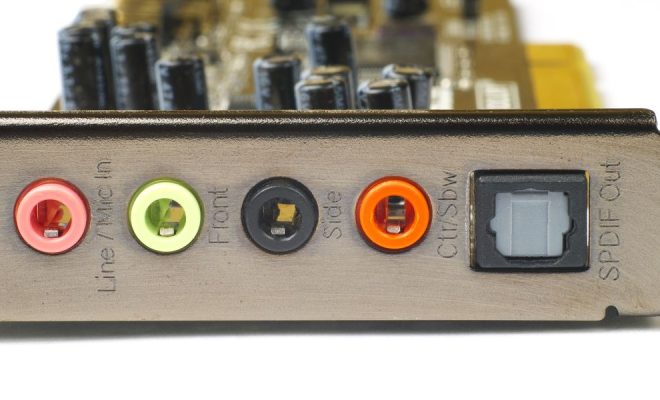
The Optical Out port, also known as the S/PDIF (Sony/Philips Digital Interconnect Format), is a type of audio output port that allows you to connect your PC to an external audio device. It uses an optical cable to transmit a digital audio signal, which provides better sound quality than traditional analog cables.

If your PC has an Optical Out port but you’re not sure how to use it, this guide will walk you through the process.

Step 1: Check Your PC’s Optical Out Port

The first step is to make sure your PC has an Optical Out port. The Optical Out port looks like a square-shaped jack with a red light inside. You can find this port on the back of your desktop computer or on the side of your laptop.

Step 2: Check Your External Audio Device

Before you connect your PC to an external audio device, make sure the device has an Optical In port. This port looks the same as the Optical Out port, but it is labeled as “Optical In” or “Digital In.”

Step 3: Get an Optical Cable

An Optical cable, also called a Toslink cable, is required to connect your PC to an external audio device. These cables are available at most electronics stores and online retailers. Make sure you get a cable that is long enough for your needs – it’s better to have a cable that’s too long than one that’s too short.

Step 4: Connect the Optical Cable

Connect one end of the Optical cable to the Optical Out port on your PC and the other end to the Optical In port on your external audio device.

Step 5: Adjust Your Audio Settings

Once you have connected the Optical cable, you need to adjust your audio settings on your PC. To do this, right-click on the speaker icon in the taskbar and select “Playback Devices.” In the window that opens, select the device that you just connected (it should be labeled as “Digital Audio (S/PDIF)” or something similar). Click on the “Set Default” button to make this device the default audio output device for your PC.

Step 6: Test Your Audio

Once you have set up your audio settings, test your audio to make sure it’s working properly. You can do this by playing a song or video and listening for sound through your external audio device.

Conclusion

Using the Optical Out port on your PC is an easy way to get high-quality audio from your PC to an external audio device. With just a few simple steps, you can enjoy better sound quality when watching movies, listening to music, or playing games.

Previous Article

How to Use the Nest Thermostat to ...

Next Article

How to Use the Print Screen Button ...

Matthew Lynch

Related articles More from author

  • Online Learning & eLearning

    There’s No Ubuntu 32-bit ISO. What Now?

    April 1, 2023
    By Matthew Lynch
  • Online Learning & eLearning

    The 3 Types of Interaction During Online Learning

    September 17, 2020
    By Matthew Lynch
  • Early Childhood & K-12 EdTechHigher Education EdTechOnline Learning & eLearning

    Five Ways to Personalize Edtech Professional Development

    April 20, 2018
    By Matthew Lynch
  • Online Learning & eLearning

    Implementing direct backup technology for better data protection

    March 27, 2023
    By Matthew Lynch
  • Online Learning & eLearning

    How to Use Windows Narrator to Convert Your Text to Speech

    March 26, 2023
    By Matthew Lynch
  • Online Learning & eLearning

    A Guide to Virtual Instructor-Led Training

    September 14, 2023
    By Matthew Lynch

Search

Login & Registration

  • Log in
  • Entries feed
  • Comments feed
  • WordPress.org

Newsletter

Signup for The Tech Edvocate Newsletter and have the latest in EdTech news and opinion delivered to your email address!

About Us

Since technology is not going anywhere and does more good than harm, adapting is the best course of action. That is where The Tech Edvocate comes in. We plan to cover the PreK-12 and Higher Education EdTech sectors and provide our readers with the latest news and opinion on the subject. From time to time, I will invite other voices to weigh in on important issues in EdTech. We hope to provide a well-rounded, multi-faceted look at the past, present, the future of EdTech in the US and internationally.

We started this journey back in June 2016, and we plan to continue it for many more years to come. I hope that you will join us in this discussion of the past, present and future of EdTech and lend your own insight to the issues that are discussed.

Newsletter

Signup for The Tech Edvocate Newsletter and have the latest in EdTech news and opinion delivered to your email address!

Contact Us

The Tech Edvocate
910 Goddin Street
Richmond, VA 23231
(601) 630-5238
[email protected]

Copyright © 2026 Matthew Lynch. All rights reserved.