How to create neural network
“`html
Understanding how to create a neural network can be a game-changer in the fields of artificial intelligence and machine learning. As industries increasingly rely on data-driven solutions, the ability to build and deploy neural networks is becoming essential. This guide will walk you through the intricacies of neural networks, from the foundational concepts to practical applications, ensuring you have a comprehensive understanding.
1. What Is a Neural Network?
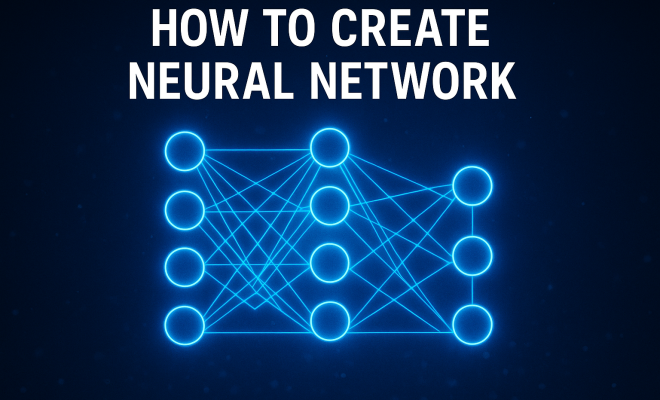
A neural network is a computational model inspired by the way biological neural networks in the human brain operate. Comprised of interconnected nodes or neurons, these networks are designed to recognize patterns in data, enabling them to perform complex tasks like classification, regression, and clustering. The architecture of a neural network includes an input layer, one or more hidden layers, and an output layer, where each layer consists of numerous neurons communicating through weighted connections.
Neural networks operate through a series of mathematical functions, adjusting the weights of connections based on the data they process. This adjustment process, known as training, is fundamental to improving the network’s accuracy. Essentially, when you understand how to create a neural network, you’re learning to replicate this biological process computationally, allowing machines to learn from data.
2. The Importance of Neural Networks Today
The relevance of neural networks in today’s tech landscape cannot be overstated. With the rise of big data and the Internet of Things (IoT), organizations are inundated with vast amounts of information. Neural networks sift through this data to provide actionable insights, drive decision-making, and enhance user experiences.
Applications are vast and varied, including image recognition (like facial recognition systems), natural language processing (used by virtual assistants), and even autonomous vehicles. The continued advancement in computing power and algorithms has propelled neural networks from academic theory into practical, real-world applications, making it crucial for developers and businesses to understand how to create a neural network.
3. Prerequisites for Creating a Neural Network
Before diving into the technical steps of constructing a neural network, it’s essential to have a solid grasp of certain foundational concepts. Understanding the following areas will significantly ease the learning curve:
- Mathematics: Familiarity with linear algebra, calculus, and statistics is vital. These mathematical foundations underpin how neural networks function, particularly in terms of optimization and the backpropagation algorithm.
- Programming Skills: Proficiency in programming languages such as Python is crucial, as Python offers extensive libraries—like TensorFlow and PyTorch—that simplify the process of creating neural networks. Knowledge of data manipulation and visualization tools will also be beneficial.
- Machine Learning Basics: Understanding key concepts such as supervised and unsupervised learning, overfitting, and model evaluation will lay the groundwork for more advanced neural network concepts.
4. Choosing the Right Framework
When you decide to create a neural network, selecting the appropriate framework is a critical first step. Several popular machine learning libraries can help streamline the process:
- TensorFlow: Developed by Google, TensorFlow is widely used for creating deep learning models. It offers flexibility and scalability, making it suitable for both beginners and experienced developers.
- PyTorch: Known for its ease of use and dynamic computation graph, PyTorch is favored in academia for research purposes and has been gaining traction in industry applications.
- Keras: A high-level API running on top of TensorFlow, Keras simplifies the building and training of neural networks. It’s user-friendly, making it an excellent choice for beginners.
Each framework has its strengths and weaknesses, so consider your project requirements, your experience level, and the community support available for each before making a choice.
5. Data Preparation: The Key to Success
Once you’ve selected a framework, the next step in learning how to create a neural network involves data preparation. Clean, well-structured data is crucial for training effective models. Here are several steps to prepare your dataset:
- Data Collection: Gather relevant data from various sources, ensuring it represents the problem you’re trying to solve.
- Data Cleaning: Remove duplicates, handle missing values, and correct inconsistencies in your dataset. This step is vital as dirty data can skew the training process.
- Feature Selection: Determine which features (variables) are most relevant to your model. This can involve statistical techniques, domain knowledge, or automated processes like recursive feature elimination.
- Normalization: Scale your data to ensure each feature contributes equally to the training process. Common techniques include min-max scaling and standardization.
By taking the time to prepare your data properly, you’ll significantly increase the chances of your neural network performing well during training and evaluation.
6. Building Your Neural Network Architecture
With your framework chosen and your data prepared, it’s time to build the neural network architecture. This involves deciding how many layers and neurons to include in each layer, which will greatly influence your model’s performance. (See: Wikipedia article on neural networks.)
Start by defining the input layer, which corresponds to the number of features in your dataset. Next, consider adding one or more hidden layers. The number of neurons in these layers can vary; however, a common approach is to start with a number of neurons equal to the average of the input and output layer neurons.
It’s crucial to select the right activation function for each layer. Popular choices include:
- ReLU (Rectified Linear Unit): Often used in hidden layers for its simplicity and effectiveness in avoiding vanishing gradients.
- Sigmoid: Commonly used in binary classification tasks, providing outputs between 0 and 1.
- Softmax: Used in multi-class classification, allowing the model to output probabilities for each class.
Ultimately, the architecture you choose should balance complexity with performance, allowing for effective learning while avoiding overfitting.
7. Training Your Neural Network
Now that your architecture is in place, the next step in understanding how to create a neural network is to train it. Training involves feeding your prepared data into the model and adjusting weights based on the output accuracy.
You’ll need to define a loss function to evaluate how well your model performs during training. Common loss functions include:
- Mean Squared Error: Used in regression tasks to measure the average squared difference between predicted and actual values.
- Binary Cross-Entropy: Commonly applied in binary classification problems to measure the difference between predicted probabilities and actual binary labels.
- Categorical Cross-Entropy: Used for multi-class classification problems, assessing the performance of a model whose output is a probability value between 0 and 1 for each class.
Next, you’ll choose an optimizer, which adjusts the weights of your network based on the gradients calculated from the loss function. Adam and SGD (Stochastic Gradient Descent) are popular choices. Finally, you can begin the training process, which involves iterating over your dataset multiple times (epochs) and validating performance on a separate validation set.
8. Evaluating Your Model’s Performance
After your neural network is trained, evaluating its performance is a crucial step in understanding its effectiveness. You’ll want to analyze how well it performs on unseen data, which helps prevent overfitting.
Common metrics for evaluation include:
- Accuracy: The ratio of correctly predicted classes to the total number of predictions made.
- Precision and Recall: Precision measures the accuracy of positive predictions, while recall assesses how many of the actual positives were captured by the model.
- F1 Score: The harmonic mean of precision and recall, useful for balancing both metrics in imbalanced datasets.
Using visualizations, such as confusion matrices or ROC curves, can also provide deeper insights into your model’s performance. If the results aren’t satisfactory, you may need to revisit your architecture, features, or data preprocessing steps.
9. Optimizing and Fine-Tuning Your Neural Network
Even after training, there’s often still room for improvement. Fine-tuning your neural network involves several strategies to enhance performance:
- Hyperparameter Tuning: Adjust parameters such as learning rate, batch size, and the number of neurons in each layer to find the optimal configuration.
- Regularization Techniques: Implement methods like dropout or L2 regularization to reduce overfitting and improve generalization to new data.
- Data Augmentation: If working with image data, consider augmenting your dataset by applying random transformations, such as rotations or flips, to increase variability and improve the robustness of your model.
By dedicating time to optimize your neural network, you can significantly enhance its predictive power and reliability.
10. Real-World Applications of Neural Networks
The applications of neural networks are seemingly endless. They have permeated various sectors, demonstrating their versatility and effectiveness in solving real-world problems: (See: Nature article on neural networks.)
- Healthcare: Neural networks assist in diagnosing diseases, analyzing medical images (like MRIs and X-rays), and predicting patient outcomes based on data.
- Finance: From fraud detection to algorithmic trading, neural networks analyze historical data to drive investment decisions and mitigate risks.
- Entertainment: Streaming platforms use neural networks for content recommendations, personalizing user experiences based on viewing habits and preferences.
- Autonomous Systems: Self-driving cars rely on neural networks to process sensor data and make real-time driving decisions.
Understanding how to create a neural network opens up a plethora of opportunities across various fields, allowing you to harness the power of artificial intelligence to innovate and solve complex challenges.
11. Common Challenges When Creating Neural Networks
As you embark on your journey to create a neural network, it’s vital to be aware of some common challenges that may arise.
- Overfitting: This occurs when the model learns the training data too well, capturing noise and outliers rather than the underlying pattern. To mitigate overfitting, techniques like dropout, early stopping, and using more training data can be effective.
- Underfitting: This happens when the model is too simple to capture the underlying trend of the data. Increasing the complexity of the model, by adding more layers or neurons, can help address underfitting.
- Data Quality: The quality of your input data greatly impacts model performance. Collecting high-quality, diverse datasets is paramount. If your data is biased or incomplete, the model’s predictions will be affected.
- Computational Resources: Training larger neural networks often requires significant computational power. Familiarize yourself with cloud-based solutions or consider using GPU acceleration to speed up the training process.
12. Future Trends in Neural Networks
As technology evolves, so do the methodologies and applications of neural networks. Here are some emerging trends to keep an eye on:
- Explainable AI: As neural networks become more integrated into critical decision-making processes, there’s a growing demand for models that offer transparency about how decisions are made. Research into explainable AI aims to make neural networks more interpretable.
- Transfer Learning: This approach involves taking a pre-trained neural network and fine-tuning it for a specific task. It’s particularly useful when there’s limited data available for the target task, allowing for faster training and better performance.
- Neural Architecture Search: Automated methods to design neural network architectures are gaining traction, potentially leading to more efficient models that outperform manually-designed networks.
- Federated Learning: This decentralized approach allows models to be trained across multiple devices or servers without sharing sensitive data. It’s a promising direction for privacy-conscious applications.
13. Frequently Asked Questions (FAQ)
Here are some common questions people have about how to create a neural network:
What programming languages can I use to create neural networks?
While Python is the most popular choice due to its extensive libraries, you can also use R, Java, C++, and Julia, depending on your preferences and project requirements.
How long does it take to train a neural network?
The training duration varies widely based on factors such as the size of the dataset, the complexity of the model, and the computational resources available. Simple models can take minutes, while more complex models might require hours or even days.
Can I use neural networks for small datasets?
Yes, but they may not perform well if the dataset is too small, leading to overfitting. Techniques like data augmentation or transfer learning can help improve models with limited data.
Are neural networks better than traditional machine learning models?
Neural networks excel in tasks involving large datasets and complex patterns, such as image and speech recognition. However, for simpler tasks or smaller datasets, traditional models like decision trees or linear regression may perform just as well or better.
What are the computational requirements for training a neural network?
Training a neural network typically requires a powerful CPU and, in many cases, a GPU to accelerate computations. The specific requirements depend on the model’s architecture and the size of the dataset.
Where can I learn more about building neural networks?
There are numerous online courses, tutorials, and books available. Platforms like Coursera, edX, and Udacity offer specialized courses, while websites like TensorFlow and PyTorch provide excellent documentation and example projects. (See: CDC on data-driven solutions.)
14. Practical Examples of Neural Networks in Use
To truly grasp how to create a neural network, it’s helpful to look at practical examples of neural networks in various applications:
Image Classification with Convolutional Neural Networks (CNNs)
Image classification is one of the most common applications of neural networks. Convolutional Neural Networks (CNNs) have been explicitly designed for processing structured grid data, such as images. A CNN uses convolutional layers that apply filters to the input image, helping the model learn spatial hierarchies.
For instance, in a project where the goal is to identify cats and dogs in images, a CNN can be trained on a dataset containing thousands of labeled images. By feeding these images into the CNN, it learns to distinguish features like ears, fur patterns, and shapes of the animals, resulting in high accuracy during testing with unseen images.
Natural Language Processing with Recurrent Neural Networks (RNNs)
Recurrent Neural Networks (RNNs) excel in tasks where sequential data is involved, such as text and speech. For example, RNNs are often used in language translation applications. By inputting a sequence of words, the RNN can learn context and dependencies between words, enabling it to generate a coherent translation in another language.
Consider a customer service chatbot. An RNN can be trained on historical conversation logs to learn how to respond to various queries. Over time, the bot becomes adept at understanding context and providing accurate responses, enhancing user satisfaction.
15. Resources for Further Learning
If you’re eager to deepen your knowledge on how to create a neural network, consider exploring these resources:
- Online Courses: Platforms like Coursera and Udacity offer specialized courses in deep learning taught by renowned experts.
- Books: Titles such as “Deep Learning” by Ian Goodfellow and “Neural Networks and Deep Learning” by Michael Nielsen provide in-depth insights.
- Community Forums: Websites like Stack Overflow and Reddit’s Machine Learning community can be great places to ask questions and share experiences.
- Documentation: The official TensorFlow and PyTorch documentation offers extensive guides and examples that can be invaluable for beginners.
With the right resources and dedication, you’ll be well on your way to mastering how to create a neural network and leveraging its potential in various applications.
“`
Trending Now
Frequently Asked Questions
What is a neural network?
A neural network is a computational model that mimics the way biological neural networks in the brain operate. It consists of interconnected nodes or neurons that recognize patterns in data, allowing for complex tasks like classification and regression.
How do neural networks learn?
Neural networks learn through a process called training, where they adjust the weights of connections based on the data they process. This adjustment helps improve the network's accuracy in recognizing patterns and making predictions.
What are the applications of neural networks?
Neural networks have a wide range of applications, including image recognition, natural language processing, and autonomous vehicles. They help organizations analyze big data, drive decision-making, and enhance user experiences.
Why are neural networks important?
Neural networks are crucial in today's technology landscape as they enable organizations to process vast amounts of data efficiently. They provide actionable insights that are essential for decision-making and improving services.
What is the structure of a neural network?
A neural network typically consists of an input layer, one or more hidden layers, and an output layer. Each layer contains multiple neurons that communicate through weighted connections, allowing the network to process and analyze data.
What’s your take on this? Share your thoughts in the comments below — we read every one.