Cambridge University Unveils Free Immersive Planetarium for Schools
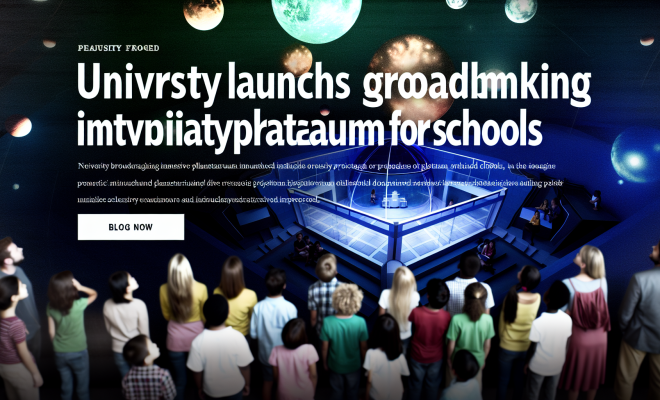
The University of Cambridge has taken a significant step in enhancing science education with the unveiling of a new immersive planetarium, dubbed the “universe in a box.” This innovative facility is the first of its kind to be offered free of charge in eastern England and is one of the few similar establishments in the UK. Aimed at fostering interest in astronomy among young students, the planetarium can accommodate up to 30 pupils, providing an engaging and educational experience.
A Step Forward in Astronomy Outreach
The launch of the planetarium is part of the University of Cambridge’s commitment to outreach through its Institute of Astronomy’s AstroEast initiative. This program is designed to bring the wonders of the universe closer to schoolchildren, especially those from underrepresented backgrounds. Dr. Matt Bothwell, a prominent figure within the Institute, emphasized that the new planetarium transforms how students engage with the cosmos, making complex astronomical concepts accessible and exciting.
Immersive Learning Experience
The immersive experience offered by the planetarium is designed to captivate young minds. Utilizing state-of-the-art 3D technology, the planetarium allows students to explore celestial bodies and phenomena in a way that traditional classroom settings often cannot replicate. This hands-on approach to learning not only enhances understanding but also sparks curiosity about space and science.
Features of the Planetarium
- 3D Visualization: The planetarium utilizes advanced projection technology to create stunning 3D visuals of the universe, including planets, stars, and galaxies.
- Interactive Sessions: Students will have the opportunity to engage in interactive sessions, where they can ask questions and participate in discussions about space and astronomy.
- Accessibility: Being free to schools makes this resource particularly valuable, as it removes financial barriers that often limit access to educational tools in the sciences.
Supporting Educational Initiatives
The introduction of the planetarium is a strategic move to support educational initiatives within the region. AstroEast aims to inspire the next generation of scientists, engineers, and astronomers by providing resources that ignite interest in these fields. The immersive planetarium experience is poised to play a crucial role in achieving these objectives.
Impact on Students
Dr. Bothwell articulated the broader implications of the planetarium, stating that beyond merely providing information about the universe, it encourages critical thinking and inquiry. By immersing students in a rich educational environment, the planetarium is expected to build a foundation for future scientific exploration among young learners.
Community Engagement and Collaboration
The initiative is not just an isolated project; it encourages collaboration among various stakeholders, including local schools, educators, and community organizations. This collaborative approach ensures that the planetarium reaches a diverse audience, particularly those who might not typically engage with science and astronomy.
Future Prospects
The university plans to expand the reach of this planetarium beyond just school visits. Future initiatives may include public shows, community events, and partnerships with other educational institutions. As interest in space exploration continues to grow, the University of Cambridge’s planetarium could serve as a pivotal point for community engagement with astronomy.
Conclusion
The launch of the University of Cambridge’s immersive planetarium represents a significant advancement in science education and outreach. By offering an innovative platform for students to explore the universe, the university is not only enhancing students’ understanding of astronomy but also fostering a lifelong interest in the sciences. With its free access to schools in eastern England, this planetarium is set to inspire a new generation of astronomers and scientists.
As educational institutions continue to seek innovative ways to engage students in science, the success of the planetarium could pave the way for similar initiatives across the country, emphasizing the importance of accessibility and engagement in science education.