The Tech Edvocate

Top Menu

  • Advertisement
  • Apps
  • Home Page
  • Home Page Five (No Sidebar)
  • Home Page Four
  • Home Page Three
  • Home Page Two
  • Home Tech2
  • Icons [No Sidebar]
  • Left Sidbear Page
  • Lynch Educational Consulting
  • My Account
  • My Speaking Page
  • Newsletter Sign Up Confirmation
  • Newsletter Unsubscription
  • Our Brands
  • Page Example
  • Privacy Policy
  • Protected Content
  • Register
  • Request a Product Review
  • Shop
  • Shortcodes Examples
  • Signup
  • Start Here
    • Governance
    • Careers
    • Contact Us
  • Terms and Conditions
  • The Edvocate
  • The Tech Edvocate Product Guide
  • Topics
  • Write For Us
  • Advertise

Main Menu

  • Start Here
    • Our Brands
    • Governance
      • Lynch Educational Consulting, LLC.
      • Dr. Lynch’s Personal Website
      • Careers
    • Write For Us
    • The Tech Edvocate Product Guide
    • Contact Us
    • Books
    • Edupedia
    • Post a Job
    • The Edvocate Podcast
    • Terms and Conditions
    • Privacy Policy
  • Topics
    • Assistive Technology
    • Child Development Tech
    • Early Childhood & K-12 EdTech
    • EdTech Futures
    • EdTech News
    • EdTech Policy & Reform
    • EdTech Startups & Businesses
    • Higher Education EdTech
    • Online Learning & eLearning
    • Parent & Family Tech
    • Personalized Learning
    • Product Reviews
  • Advertise
  • Tech Edvocate Awards
  • The Edvocate
  • Pedagogue
  • School Ratings

logo

The Tech Edvocate

  • Start Here
    • Our Brands
    • Governance
      • Lynch Educational Consulting, LLC.
      • Dr. Lynch’s Personal Website
        • My Speaking Page
      • Careers
    • Write For Us
    • The Tech Edvocate Product Guide
    • Contact Us
    • Books
    • Edupedia
    • Post a Job
    • The Edvocate Podcast
    • Terms and Conditions
    • Privacy Policy
  • Topics
    • Assistive Technology
    • Child Development Tech
    • Early Childhood & K-12 EdTech
    • EdTech Futures
    • EdTech News
    • EdTech Policy & Reform
    • EdTech Startups & Businesses
    • Higher Education EdTech
    • Online Learning & eLearning
    • Parent & Family Tech
    • Personalized Learning
    • Product Reviews
  • Advertise
  • Tech Edvocate Awards
  • The Edvocate
  • Pedagogue
  • School Ratings
  • US Battery as a Service Market Shifts Toward Fleet-Based Energy

  • The Startling Truth: Why Americans Distrust AI with Their Health

  • This Crucial Deadline for Banks Is Closer Than You Think

  • Baffling: CrowdStrike’s $500 Million AI Bet Reshapes Cybersecurity

  • This Crucial Autonomous Driving Rule Could Cost You Everything

  • Baffling: Microsoft AI CEO Demands Halt to Conscious AI Development

  • O seară în ritmul tău: atmosfera divertismentului de cazinou pe internet

  • Outrageous: AppLovin Hit With Lawsuit Over AI Claims — What Investors Need to Know

  • 9 Critical Ways AI Investment Fraud Is Quietly Draining Your Bank Account

  • Is the AI Bubble Bursting? OpenAI’s Funding Woes Revealed

Augmented Reality, Mixed Reality, and Virtual Reality
Home›Augmented Reality, Mixed Reality, and Virtual Reality›7 Questions To Determine If Virtual Reality Training Is Right For You

7 Questions To Determine If Virtual Reality Training Is Right For You
By Matthew Lynch
June 29, 2023
0
Spread the love

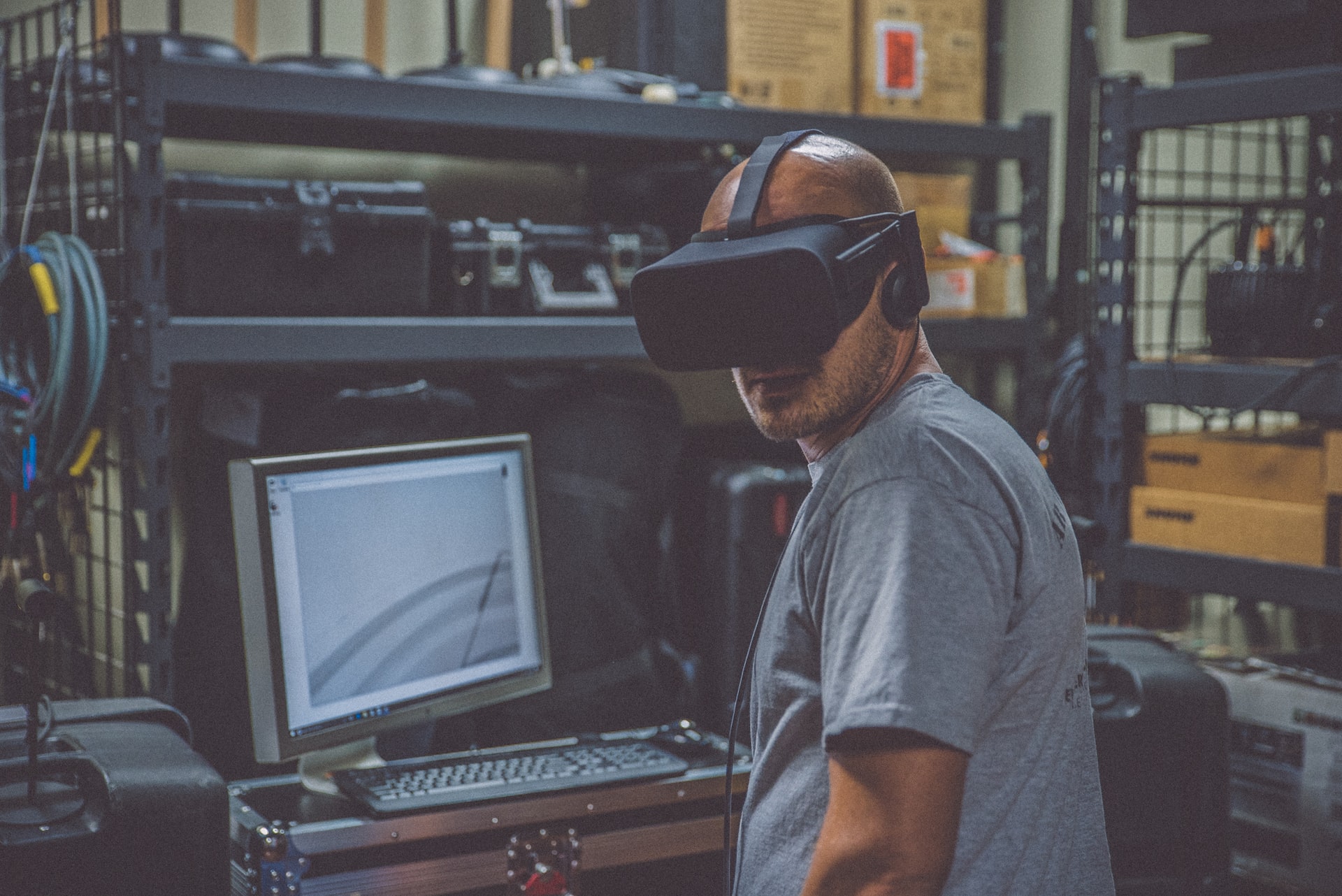
This article discusses seven critical questions your business should ask when deciding whether Virtual Reality (VR) is the best fit for your training requirements.

Is VR Training Appropriate For Your Company?

VR (Virtual Reality) education takes an average of 8–10 weeks to develop. VR training can be built in as little as four weeks or as long as six months or more.

  1. How Much Time Do You Have For Training Development?

The time it takes to produce VR training is determined by several factors, including the intricacy of the modeling and the amount of competence of the developers. If your firm just has a few weeks to construct a training plan, VR may not be the ideal option. It may work for your organization if you don’t have a hard deadline and can spare numerous months to produce training.

  1. What is the amount of your training budget?

When firms design their training programs, the budget is top of mind. VR training can cost anywhere between $20,000 to $150,000 or more, based on the technology used, hardware and software prices, and a variety of other cost factors. Whereas this price range may be intimidating to some, there are ways to cut expenditures, such as:

  • Begin with a small cohort of learners in a pilot program;
  • Use alternate access choices (e.g., desktop, smartphone, cardboard headsets);
  • Make use of existing training resources at your firm. 
  1. Does your workforce have previous experience with 3d visualization?

Although virtual reality is common technology, not all have used it. Organizations must identify solutions to assist their first-time VR training users. Employees may benefit from a walkthrough presentation with a VR specialist before completing their program, or they may benefit from obtaining a printed guide that explains what to anticipate with the headset and VR activities. ee

  1. Is Interactive Virtual Popular in Your Industry?

VR is a powerful training tool in a variety of industries, from industry and manufacturing to healthcare or transportation. Because of VR’s potential to reduce risk and give learners hands-on instruction that builds muscle memory, these industries have adopted technology for training reasons. For example, as part of their onboarding procedure, a retail business may implement a VR training session for newly employed sales staff. This retail firm can use VR to replicate various client situations, such as responding to frequently asked queries and dealing with upset customers.

  1. Does your training topic align with the possibilities of virtual reality? 

Among the first steps in developing a new training course is determining the training topic(s). Topics for training may include:

  • Onboarding
  • Diversity, equality, and inclusion (DE&I) 
  • Technical training 
  • Leadership training

 VR can cover any education topic, but it is best suited for technical jobs that demand hands-on engagement. Learners can conduct an interactive VR exercise in a safe setting while feeling as though they are performing such tasks in real life. For fundamental topics (such as software navigation and cybersecurity), we recommend training modes such as eLearning or Instructor-Led Training, which often cost less and need less development time (ILT).

  1. Do You Care About Conventional Or In-Depth Metrics?

One significant advantage of VR training is that firms can measure detailed KPIs based on their specific training requirements. A manufacturing company, for example, may want to limit the number of workers’ compensation claims. This organization can now track a range of metrics after adopting its new VR safety activity, including:

  • Body and eye tracking
  • Learner progress, attempts, and replays
  • Voice transcription and recognition

This manufacturing business can use these VR training metrics to identify gaps in their learners’ understandings as well as areas that students have mastered. These metrics not only provide information on each learner’s experience with the activity, but they may also assist organizations in demonstrating the good ROI of their training.

  1. Do you already have training that can be used with virtual reality?

Perhaps your company already has training materials that you’d like to use in your new training program. Organizations can employ VR to supplement current content (for example, eLearning modules, facilitator manuals, and ILT slides). Instead of developing training from scratch, businesses can combine their existing resources with their new VR activity. These items could be used to inform VR content or as learning reinforcement tools to accompany the VR experience.

Is Virtual Reality Training the Right Training Mode for You?

We hope that after reading this post, your company has a clearer sense of whether VR is the right training modality for you. So, it’s time to ask oneself, “Is virtual reality a suitable fit for my organization?”


Previous Article

Helping Young Children to Embrace the Concept ...

Next Article

What You Should Know Before Buying a ...

Matthew Lynch

Related articles More from author

  • Augmented Reality, Mixed Reality, and Virtual Reality

    A Guide to Education and Augmented Reality

    June 10, 2021
    By Matthew Lynch
  • Augmented Reality, Mixed Reality, and Virtual Reality

    Virtual Reality Matures in the K-12 Classroom

    January 5, 2021
    By Matthew Lynch
  • Augmented Reality, Mixed Reality, and Virtual Reality

    Step Into the Love Is Blind Pods in This Netflix Game

    February 1, 2024
    By Matthew Lynch
  • Augmented Reality, Mixed Reality, and Virtual Reality

    Use Your iPhone’s LiDAR Feature in These 6 Awesome Ways

    February 19, 2024
    By Matthew Lynch
  • Augmented Reality, Mixed Reality, and Virtual Reality

    The Metaverse Will Benefit eLearning

    July 6, 2023
    By Matthew Lynch
  • Augmented Reality, Mixed Reality, and Virtual RealityFeaturedFresh

    How Students Can Use VR to Explore Career Pathways

    February 18, 2019
    By Matthew Lynch

Search

Login & Registration

  • Log in
  • Entries feed
  • Comments feed
  • WordPress.org

Newsletter

Signup for The Tech Edvocate Newsletter and have the latest in EdTech news and opinion delivered to your email address!

About Us

Since technology is not going anywhere and does more good than harm, adapting is the best course of action. That is where The Tech Edvocate comes in. We plan to cover the PreK-12 and Higher Education EdTech sectors and provide our readers with the latest news and opinion on the subject. From time to time, I will invite other voices to weigh in on important issues in EdTech. We hope to provide a well-rounded, multi-faceted look at the past, present, the future of EdTech in the US and internationally.

We started this journey back in June 2016, and we plan to continue it for many more years to come. I hope that you will join us in this discussion of the past, present and future of EdTech and lend your own insight to the issues that are discussed.

Newsletter

Signup for The Tech Edvocate Newsletter and have the latest in EdTech news and opinion delivered to your email address!

Contact Us

The Tech Edvocate
910 Goddin Street
Richmond, VA 23231
(601) 630-5238
[email protected]

Copyright © 2026 Matthew Lynch. All rights reserved.