The Tech Edvocate

Top Menu

  • Advertisement
  • Apps
  • Home Page
  • Home Page Five (No Sidebar)
  • Home Page Four
  • Home Page Three
  • Home Page Two
  • Home Tech2
  • Icons [No Sidebar]
  • Left Sidbear Page
  • Lynch Educational Consulting
  • My Account
  • My Speaking Page
  • Newsletter Sign Up Confirmation
  • Newsletter Unsubscription
  • Our Brands
  • Page Example
  • Privacy Policy
  • Protected Content
  • Register
  • Request a Product Review
  • Shop
  • Shortcodes Examples
  • Signup
  • Start Here
    • Governance
    • Careers
    • Contact Us
  • Terms and Conditions
  • The Edvocate
  • The Tech Edvocate Product Guide
  • Topics
  • Write For Us
  • Advertise

Main Menu

  • Start Here
    • Our Brands
    • Governance
      • Lynch Educational Consulting, LLC.
      • Dr. Lynch’s Personal Website
      • Careers
    • Write For Us
    • The Tech Edvocate Product Guide
    • Contact Us
    • Books
    • Edupedia
    • Post a Job
    • The Edvocate Podcast
    • Terms and Conditions
    • Privacy Policy
  • Topics
    • Assistive Technology
    • Child Development Tech
    • Early Childhood & K-12 EdTech
    • EdTech Futures
    • EdTech News
    • EdTech Policy & Reform
    • EdTech Startups & Businesses
    • Higher Education EdTech
    • Online Learning & eLearning
    • Parent & Family Tech
    • Personalized Learning
    • Product Reviews
  • Advertise
  • Tech Edvocate Awards
  • The Edvocate
  • Pedagogue
  • School Ratings

logo

The Tech Edvocate

  • Start Here
    • Our Brands
    • Governance
      • Lynch Educational Consulting, LLC.
      • Dr. Lynch’s Personal Website
        • My Speaking Page
      • Careers
    • Write For Us
    • The Tech Edvocate Product Guide
    • Contact Us
    • Books
    • Edupedia
    • Post a Job
    • The Edvocate Podcast
    • Terms and Conditions
    • Privacy Policy
  • Topics
    • Assistive Technology
    • Child Development Tech
    • Early Childhood & K-12 EdTech
    • EdTech Futures
    • EdTech News
    • EdTech Policy & Reform
    • EdTech Startups & Businesses
    • Higher Education EdTech
    • Online Learning & eLearning
    • Parent & Family Tech
    • Personalized Learning
    • Product Reviews
  • Advertise
  • Tech Edvocate Awards
  • The Edvocate
  • Pedagogue
  • School Ratings
  • 2.3 Million Ricky Joy Sour Crush Candies Recalled: This One Detail Is a Parent’s Nightmare

  • The Staggering Startup Valuation Reset: Why Unicorns Are Vanishing

  • The Glaring Contradiction: Why Big Tech Is Shedding 128,536 Jobs While Investing Billions in AI

  • Insomniac’s Bold Move: The Truth Behind Marvel’s Wolverine Sabretooth ‘Romance’ That Stunned Fans

  • Explosive: ESIC Ban Juan Angulo For Life — The Unseen Crisis Gripping Dota 2

  • This Crucial New Bill Could Finally Fix Student Loan Forgiveness for Millions

  • Massive School Bans on AI: Are We Sacrificing Progress for Protection?

  • Autonomous AI Breaches: Anthropic Confirms Four Attacks and Weaponized Bots

  • Jaw-Dropping Footage: This Waymo Collision Has Everyone Talking

  • Hyundai’s Game-Changing EV Battery Technology: Why It Matters For Your Next Car

Digital & Mobile Technology
Home›Digital & Mobile Technology›1G, 2G, 3G, 4G, & 5G Explained

1G, 2G, 3G, 4G, & 5G Explained
By Matthew Lynch
June 4, 2023
0
Spread the love

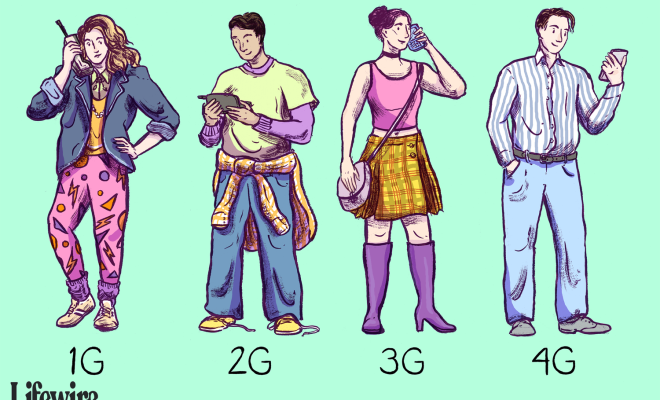
In the past few decades, we have seen a rapid evolution of mobile communication technology. From the first generation (1G) to the latest one (5G), each generation of wireless networks has brought new features and capabilities, revolutionizing the way we connect and communicate with each other.

1G

The first generation of wireless networks, 1G, was introduced in the 1980s. 1G allowed for analog voice communication over cell networks, but it had many limitations. The calls could be easily intercepted, and the quality was poor, with lots of static and interference. 1G was also expensive and limited in range, making it impractical for widespread use.

2G

The second generation of wireless networks, 2G, was introduced in the early 1990s. 2G networks marked a significant step forward in mobile communication technology. The main advantage of 2G was digital transmission, which provided better voice quality, improved security, and increased capacity for data transmission.

One of the most significant developments of 2G was the introduction of Short Message Service (SMS), commonly known as texting. SMS allowed for the exchange of short text messages between cell phones. This feature became incredibly popular and is still widely used today.

3G

The third generation of wireless networks, 3G, was introduced in the early 2000s. 3G networks marked a significant leap in terms of data transfer speed and capacity. 3G networks allowed for faster internet browsing and more efficient communication between devices.

One of the most significant developments of 3G was the ability to support multimedia applications such as video calls, video streaming, and web browsing. The speed of 3G networks also allowed for the introduction of mobile gaming and more sophisticated apps.

4G

The fourth generation of wireless networks, 4G, was introduced in the late 2000s. 4G networks marked a significant improvement over the 3G technology, with even faster internet speeds, download and upload speeds up to 100 Mbps, and a broader coverage area.

One of the most significant developments of 4G was the ability to support high-quality video streaming and conferencing, allowing people to communicate visually in real-time. 4G also enabled the development of the Internet of Things (IoT) and the widespread use of wearables technology.

5G

The fifth generation of wireless networks, 5G, is the latest and most advanced mobile communication technology to date. 5G networks provide even faster download and upload speeds, with capacity up to 10Gbps, and latency reduced to as low as 1ms. Higher speeds mean that users have access to high-definition video streaming, fast downloading, and uploading capabilities, and experience augmented reality (AR) and virtual reality (VR) gaming, among others.

One of the most significant developments of 5G is its ability to support the Internet of Things (IoT) and enable thousands of connected devices, making it possible to revolutionize smart cities and homes. Other areas that will benefit significantly from 5G are autonomous vehicles, telemedicine, remote education, and electric vehicles, among others.

In conclusion, the evolution of mobile communication technology has gone through several generations, each marking a significant improvement over the previous one. 5G is the most advanced technology to date, with the potential to transform many aspects of our lives. It is expected to bring a new era of innovative technologies and services that will make communication and connectivity easier, faster, and more efficient than ever before.

Previous Article

Where to Find Archived Messages in Facebook

Next Article

Order of The Sims 2 and The ...

Matthew Lynch

Related articles More from author

  • Digital & Mobile Technology

    How to Rotate Multiple Photos at Once on an iPhone

    June 15, 2023
    By Matthew Lynch
  • Digital & Mobile Technology

    Vine Viewers You Could Use to Watch Vine Videos Online

    June 11, 2023
    By Matthew Lynch
  • Digital & Mobile Technology

    Most Popular Free Apps Everyone Needs on Their Android Phone

    June 6, 2023
    By Matthew Lynch
  • Digital & Mobile Technology

    Norton vs. McAfee: Which Internet Security Suite Is Better?

    June 15, 2023
    By Matthew Lynch
  • Digital & Mobile Technology

    Everything You Need to Know About Gmail’s Login Security Warning Alerts

    August 5, 2023
    By Matthew Lynch
  • Digital & Mobile Technology

    What Is Lorem Ipsum Text and What Does It Mean?

    June 6, 2023
    By Matthew Lynch

Search

Login & Registration

  • Log in
  • Entries feed
  • Comments feed
  • WordPress.org

Newsletter

Signup for The Tech Edvocate Newsletter and have the latest in EdTech news and opinion delivered to your email address!

About Us

Since technology is not going anywhere and does more good than harm, adapting is the best course of action. That is where The Tech Edvocate comes in. We plan to cover the PreK-12 and Higher Education EdTech sectors and provide our readers with the latest news and opinion on the subject. From time to time, I will invite other voices to weigh in on important issues in EdTech. We hope to provide a well-rounded, multi-faceted look at the past, present, the future of EdTech in the US and internationally.

We started this journey back in June 2016, and we plan to continue it for many more years to come. I hope that you will join us in this discussion of the past, present and future of EdTech and lend your own insight to the issues that are discussed.

Newsletter

Signup for The Tech Edvocate Newsletter and have the latest in EdTech news and opinion delivered to your email address!

Contact Us

The Tech Edvocate
910 Goddin Street
Richmond, VA 23231
(601) 630-5238
[email protected]

Copyright © 2026 Matthew Lynch. All rights reserved.