The Tech Edvocate

Top Menu

  • Advertisement
  • Apps
  • Home Page
  • Home Page Five (No Sidebar)
  • Home Page Four
  • Home Page Three
  • Home Page Two
  • Home Tech2
  • Icons [No Sidebar]
  • Left Sidbear Page
  • Lynch Educational Consulting
  • My Account
  • My Speaking Page
  • Newsletter Sign Up Confirmation
  • Newsletter Unsubscription
  • Our Brands
  • Page Example
  • Privacy Policy
  • Protected Content
  • Register
  • Request a Product Review
  • Shop
  • Shortcodes Examples
  • Signup
  • Start Here
    • Governance
    • Careers
    • Contact Us
  • Terms and Conditions
  • The Edvocate
  • The Tech Edvocate Product Guide
  • Topics
  • Write For Us
  • Advertise

Main Menu

  • Start Here
    • Our Brands
    • Governance
      • Lynch Educational Consulting, LLC.
      • Dr. Lynch’s Personal Website
      • Careers
    • Write For Us
    • The Tech Edvocate Product Guide
    • Contact Us
    • Books
    • Edupedia
    • Post a Job
    • The Edvocate Podcast
    • Terms and Conditions
    • Privacy Policy
  • Topics
    • Assistive Technology
    • Child Development Tech
    • Early Childhood & K-12 EdTech
    • EdTech Futures
    • EdTech News
    • EdTech Policy & Reform
    • EdTech Startups & Businesses
    • Higher Education EdTech
    • Online Learning & eLearning
    • Parent & Family Tech
    • Personalized Learning
    • Product Reviews
  • Advertise
  • Tech Edvocate Awards
  • The Edvocate
  • Pedagogue
  • School Ratings

logo

The Tech Edvocate

  • Start Here
    • Our Brands
    • Governance
      • Lynch Educational Consulting, LLC.
      • Dr. Lynch’s Personal Website
        • My Speaking Page
      • Careers
    • Write For Us
    • The Tech Edvocate Product Guide
    • Contact Us
    • Books
    • Edupedia
    • Post a Job
    • The Edvocate Podcast
    • Terms and Conditions
    • Privacy Policy
  • Topics
    • Assistive Technology
    • Child Development Tech
    • Early Childhood & K-12 EdTech
    • EdTech Futures
    • EdTech News
    • EdTech Policy & Reform
    • EdTech Startups & Businesses
    • Higher Education EdTech
    • Online Learning & eLearning
    • Parent & Family Tech
    • Personalized Learning
    • Product Reviews
  • Advertise
  • Tech Edvocate Awards
  • The Edvocate
  • Pedagogue
  • School Ratings
  • Viaim Opennote Review: The AI Note-Taker That Disappears Into Your Daily Routine

  • A Visitors Guide to Long Beach (CA), United States

  • A Visitor’s Guide to Fresno (CA), United States

  • A Visitors Guide to New Orleans (LA), United States

  • A Visitors Guide to Sacramento (CA), United States

  • A Visitors Guide to Lyon, France

  • JisuLife Ultra2 Portable Fan: A Powerful Multi-Function Cooling Solution

  • A Visitors Guide to Viña del Mar, Chile

  • A Visitors Guide to Århus, Denmark

  • A Visitors Guide to Bakersfield (CA), United States

Digital & Mobile Technology
Home›Digital & Mobile Technology›Wireless Local Area Networking Explained

Wireless Local Area Networking Explained
By Matthew Lynch
June 23, 2023
0
Spread the love

Wireless Local Area Networking, also known as WLAN or Wi-Fi, is a modern technology that provides wireless access to the internet or other network resources within a specific area. In a traditional Local Area Network (LAN), a wired connection is used to establish connectivity among devices within a geographical location. However, with the rise of modern communication technologies, WLAN has emerged as a viable alternative to traditional LAN setups.

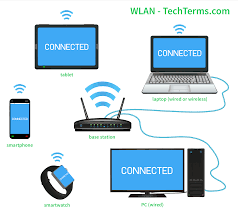
Wireless Local Area Networking uses radio waves to transmit data over short distances. These radio waves are typically in the range of 2.4GHz or 5GHz and can carry data at high speeds over the air. WLAN uses a wireless access point (WAP) to route traffic between devices and to connect the WLAN to the wider internet.

A WLAN setup typically consists of a few essential components. These are the wireless access point (WAP), network interface controllers, and devices that connect to the network. The WAP is the central hub that routes traffic between devices and connects the WLAN to the wider internet. Network interface controllers, such as wireless network cards or routers with built-in wireless capabilities, are used to connect devices to the WLAN. Finally, devices such as laptops, smartphones, and tablets connect to the WLAN using network interface controllers.

One of the primary advantages of WLAN is its flexibility. Unlike traditional LAN setups, WLAN does not require extensive wiring or physical connections between devices. This makes it ideal for situations where running cables is impractical or impossible. Moreover, WLANs can be set up quickly and easily, making it a popular choice for home users and small businesses.

WLAN offers several benefits over traditional LAN setups. One of the primary advantages is increased mobility. Since WLANs do not rely on physical connections between devices, users can move around freely within the network area without worrying about cables. This makes WLAN ideal for users who need to move around a lot, such as students, business travelers, and employees who work from home.

Another key advantage of WLAN is its scalability. Since WLAN is a wireless technology, it can be easily expanded or contracted as needed. This makes it ideal for businesses that require flexible networking solutions, such as companies with fluctuating staffing levels or those that need to accommodate multiple devices.

In conclusion, Wireless Local Area Networking is a modern technology that provides wireless access to the internet or other network resources within a specific area. It uses radio waves to transmit data over short distances, and it is highly flexible and scalable. WLAN offers several advantages over traditional LAN setups, including increased mobility and scalability, making it an ideal choice for home users, small businesses, and enterprises alike.

Previous Article

How to Delete Notifications on Facebook

Next Article

Star Wars: The Force Unleashed II Xbox ...

Matthew Lynch

Related articles More from author

  • Digital & Mobile Technology

    What is Convergence?

    May 6, 2023
    By Matthew Lynch
  • Digital & Mobile Technology

    What Is a POST Test Card?

    June 12, 2023
    By Matthew Lynch
  • Assistive TechnologyDigital & Mobile Technology

    How to Fix No Sound in Spotify on a Windows PC

    June 10, 2023
    By Matthew Lynch
  • Digital & Mobile Technology

    No Permission to Enable Voice Typing on Android? Here’s How to Fix It

    August 5, 2023
    By Matthew Lynch
  • Digital & Mobile Technology

    Best Add-Ins and Apps That Expand Microsoft OneNote

    June 10, 2023
    By Matthew Lynch
  • Digital & Mobile Technology

    BIOS Settings That Could Stop Your PC Games From Stuttering

    August 5, 2023
    By Matthew Lynch

Search

Login & Registration

  • Register
  • Log in
  • Entries feed
  • Comments feed
  • WordPress.org

Newsletter

Signup for The Tech Edvocate Newsletter and have the latest in EdTech news and opinion delivered to your email address!

About Us

Since technology is not going anywhere and does more good than harm, adapting is the best course of action. That is where The Tech Edvocate comes in. We plan to cover the PreK-12 and Higher Education EdTech sectors and provide our readers with the latest news and opinion on the subject. From time to time, I will invite other voices to weigh in on important issues in EdTech. We hope to provide a well-rounded, multi-faceted look at the past, present, the future of EdTech in the US and internationally.

We started this journey back in June 2016, and we plan to continue it for many more years to come. I hope that you will join us in this discussion of the past, present and future of EdTech and lend your own insight to the issues that are discussed.

Newsletter

Signup for The Tech Edvocate Newsletter and have the latest in EdTech news and opinion delivered to your email address!

Contact Us

The Tech Edvocate
910 Goddin Street
Richmond, VA 23231
(601) 630-5238
[email protected]

Copyright © 2025 Matthew Lynch. All rights reserved.