The Tech Edvocate

Top Menu

  • Advertisement
  • Apps
  • Home Page
  • Home Page Five (No Sidebar)
  • Home Page Four
  • Home Page Three
  • Home Page Two
  • Home Tech2
  • Icons [No Sidebar]
  • Left Sidbear Page
  • Lynch Educational Consulting
  • My Account
  • My Speaking Page
  • Newsletter Sign Up Confirmation
  • Newsletter Unsubscription
  • Our Brands
  • Page Example
  • Privacy Policy
  • Protected Content
  • Register
  • Request a Product Review
  • Shop
  • Shortcodes Examples
  • Signup
  • Start Here
    • Governance
    • Careers
    • Contact Us
  • Terms and Conditions
  • The Edvocate
  • The Tech Edvocate Product Guide
  • Topics
  • Write For Us
  • Advertise

Main Menu

  • Start Here
    • Our Brands
    • Governance
      • Lynch Educational Consulting, LLC.
      • Dr. Lynch’s Personal Website
      • Careers
    • Write For Us
    • The Tech Edvocate Product Guide
    • Contact Us
    • Books
    • Edupedia
    • Post a Job
    • The Edvocate Podcast
    • Terms and Conditions
    • Privacy Policy
  • Topics
    • Assistive Technology
    • Child Development Tech
    • Early Childhood & K-12 EdTech
    • EdTech Futures
    • EdTech News
    • EdTech Policy & Reform
    • EdTech Startups & Businesses
    • Higher Education EdTech
    • Online Learning & eLearning
    • Parent & Family Tech
    • Personalized Learning
    • Product Reviews
  • Advertise
  • Tech Edvocate Awards
  • The Edvocate
  • Pedagogue
  • School Ratings

logo

The Tech Edvocate

  • Start Here
    • Our Brands
    • Governance
      • Lynch Educational Consulting, LLC.
      • Dr. Lynch’s Personal Website
        • My Speaking Page
      • Careers
    • Write For Us
    • The Tech Edvocate Product Guide
    • Contact Us
    • Books
    • Edupedia
    • Post a Job
    • The Edvocate Podcast
    • Terms and Conditions
    • Privacy Policy
  • Topics
    • Assistive Technology
    • Child Development Tech
    • Early Childhood & K-12 EdTech
    • EdTech Futures
    • EdTech News
    • EdTech Policy & Reform
    • EdTech Startups & Businesses
    • Higher Education EdTech
    • Online Learning & eLearning
    • Parent & Family Tech
    • Personalized Learning
    • Product Reviews
  • Advertise
  • Tech Edvocate Awards
  • The Edvocate
  • Pedagogue
  • School Ratings
  • iClever Q950 Kids Headphones Review: Premium Sound and Safety for Young Listeners

  • The Reckless Ben Controversy: An Outrageous Fight for Justice

  • Outrageous: The Sydney Sweeney Ad Controversy You Didn’t See Coming — And Why It’s Working

  • The AI CRM War: Why Salesforce Just Made a $2 Billion Bid for a Startup

  • OpenAI’s Navier-Stokes ‘Solution’ Ignites Firestorm: Did They Steal It?

  • Blizzard’s Boldest Bet: Why a StarCraft Shooter in 2030 Could Redefine Gaming

  • Volatile: Why Top AI Bosses Just Triggered a Massive AI Stocks Decline

  • ‘Godfather of AI’ backs Anthropic chief’s call to slow down development

  • Why Millions Are Flocking to Trade Schools as AI Reshapes the Job Market

  • Unmasking the Bizarre ‘Cat in the Hat’ Trend: Why Schools Are Sounding the Alarm

Digital & Mobile Technology
Home›Digital & Mobile Technology›Windows Task Manager Processes You Should Never Kill

Windows Task Manager Processes You Should Never Kill
By Matthew Lynch
June 13, 2023
0
Spread the love

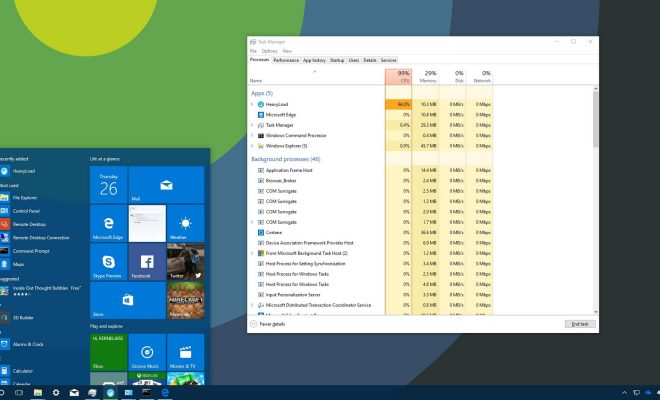
As an ordinary computer user or tech-savvy person, you might have encountered issues with your system’s performance or functionality. In response to this, you might have opened the Windows Task Manager to identify processes and applications that are running. While the Task Manager offers a considerable suite of utilities, it also presents users with the option to terminate processes manually.

Although the option to terminate processes may seem helpful in managing system resources or fixing issues, it is important to exercise caution when using this feature. As a general rule, Windows Task Manager Processes You Should Never Kill include system processes, security processes, and essential applications.

System Processes

System processes are critical to the proper functioning of your Windows operating system. Hence, it is essential to avoid terminating these processes as they can cause your system to malfunction. Examples of system processes that you should never kill include System Interrupts, System Idle Process, and Local Session Manager.

System Interrupts and System Idle Processes are responsible for resource allocation in the system. They manage the distribution of CPU time for all running applications and system processes, thereby ensuring optimum performance. Local Session Manager, on the other hand, controls the terminal services and Remote Desktop Services in Windows.

Security Processes

Security processes provide essential protection for your system by detecting and removing malware and other malicious threats. Killing these processes can leave your system vulnerable to attacks and viruses. Examples of security processes that you should never kill include Windows Defender Antivirus Service, Security Center, and Windows Management Instrumentation.

Windows Defender Antivirus is responsible for detecting and removing malware on your system, while Security Center provides a centralized interface for managing security settings on your system. Windows Management Instrumentation, on the other hand, is responsible for monitoring system performance and hardware resources.

Essential Applications

Essential applications are those that are critical to the functioning of your Windows operating system. Killing these processes can result in system instability and crashes. Examples of essential applications that you should never kill include explorer.exe, dwm.exe, and taskhost.exe.

explorer.exe is the file manager for Windows that enables users to access files and folders on their system. dwm.exe is responsible for rendering visual elements such as the taskbar, desktop, and window management. Lastly, taskhost.exe manages background tasks and services for Windows applications.

Conclusion

In conclusion, the Windows Task Manager Processes You Should Never Kill include system processes, security processes, and essential applications. Killing these processes can result in system instability, crashes, and leave your system vulnerable to attacks and viruses. As such, it is essential to exercise caution when using Task Manager to terminate processes and only end those that you are sure are not critical to the proper functioning of your system.

Previous Article

Ways to Customize Your Mac’s Pointer

Next Article

How to Get Started With Windows 10 ...

Matthew Lynch

Related articles More from author

  • Digital & Mobile Technology

    HTTPS Everywhere Has Turned 10: Here’s What’s Changed and Why That Matters

    July 31, 2023
    By Matthew Lynch
  • Digital & Mobile Technology

    Things to Check Before You Buy Used Camera Lenses

    June 11, 2023
    By Matthew Lynch
  • Digital & Mobile Technology

    What Is a POST Test Card?

    June 12, 2023
    By Matthew Lynch
  • Digital & Mobile Technology

    How to Delete a File in Use by Another Program in Windows 10

    August 5, 2023
    By Matthew Lynch
  • Digital & Mobile Technology

    The 3 Best Dual-SIM Phones of 2023

    June 4, 2023
    By Matthew Lynch
  • Digital & Mobile Technology

    Everything You Need to Know About Gmail’s Login Security Warning Alerts

    August 5, 2023
    By Matthew Lynch

Search

Login & Registration

  • Log in
  • Entries feed
  • Comments feed
  • WordPress.org

Newsletter

Signup for The Tech Edvocate Newsletter and have the latest in EdTech news and opinion delivered to your email address!

About Us

Since technology is not going anywhere and does more good than harm, adapting is the best course of action. That is where The Tech Edvocate comes in. We plan to cover the PreK-12 and Higher Education EdTech sectors and provide our readers with the latest news and opinion on the subject. From time to time, I will invite other voices to weigh in on important issues in EdTech. We hope to provide a well-rounded, multi-faceted look at the past, present, the future of EdTech in the US and internationally.

We started this journey back in June 2016, and we plan to continue it for many more years to come. I hope that you will join us in this discussion of the past, present and future of EdTech and lend your own insight to the issues that are discussed.

Newsletter

Signup for The Tech Edvocate Newsletter and have the latest in EdTech news and opinion delivered to your email address!

Contact Us

The Tech Edvocate
910 Goddin Street
Richmond, VA 23231
(601) 630-5238
[email protected]

Copyright © 2026 Matthew Lynch. All rights reserved.