World Cup 2026: Own Goals Surge, Reshaping Football Narratives
“`html
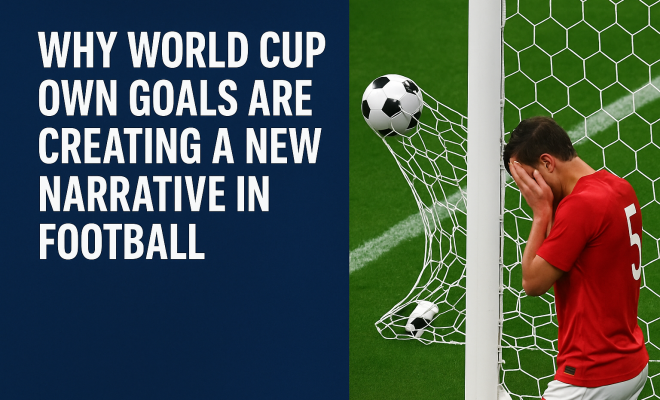
As the 2026 World Cup unfolds, the unexpected rise of World Cup own goals has become one of the most captivating stories of the tournament. With seven own goals already recorded, five more than the total registered during the entire 2022 competition, fans and analysts alike are buzzing about what this phenomenon means for the sport. This surge isn’t just a statistical anomaly; it reflects the evolution of modern football tactics and the psychological dynamics at play in high-stakes matches.
1. The Numbers Behind the Surge:
The current World Cup has seen an astonishing rise in own goals, with seven incidents occurring in the early stages of the tournament. To put this in perspective, the entire 2022 World Cup recorded just two own goals. This striking contrast raises questions about the factors contributing to this uptick. Are players becoming more prone to mistakes, or are tactical shifts making such errors more likely? It seems that a combination of both is at play.
Modern football has evolved with a greater emphasis on attacking play, often leading to chaotic defensive situations. Teams are implementing aggressive pressing strategies and high defensive lines, which can create panic in defenders, particularly when under pressure from fast-moving attackers. Such circumstances not only increase the likelihood of defensive blunders but also the potential for own goals.
2. Tactical Shifts: The Rise of Cut-Backs:
One of the key tactical developments contributing to the rise in World Cup own goals is the prevalence of cut-back crosses. As attacking teams increasingly aim to create goal-scoring opportunities from wide positions, defenders are often caught in awkward situations. Cut-backs, which involve passing the ball back towards the center of the penalty area, frequently result in defenders attempting to clear the ball but inadvertently directing it into their own net.
Moreover, as teams adapt to these attacking patterns, defenders must react quickly and instinctively, amplifying the chance for mistakes. The high-speed nature of modern football leaves little room for error, and with players often facing their own goal when attempting to clear the ball, the risk of scoring an own goal increases significantly.
3. Psychological Factors at Play:
The psychological dynamics of a World Cup match can further exacerbate the chances of own goals. The pressure to perform on such a grand stage is immense, and this stress can lead to lapses in concentration. Defenders may second-guess themselves, leading to hurried decisions that can end up costing their teams dearly.
Moreover, the fear of conceding can create a defensive mindset that results in players being overly cautious, which can backfire spectacularly. Rather than taking the initiative to clear the ball confidently, defenders might hesitate or misjudge their actions, thus increasing the likelihood of an own goal.
4. Historical Context: Own Goals in World Cup History:
While the current World Cup may be setting records for own goals, this phenomenon is not new in the tournament’s history. The World Cup has witnessed its fair share of own goals over the decades, with notable instances standing out in the annals of football lore. From the tragicomic to the impactful, these moments have shaped the narratives of the tournaments in which they occurred.
For instance, Diego Maradona’s infamous “Hand of God” goal in 1986 was paired with an own goal by England’s Gary Lineker, showing how tightly woven these events can be. The unpredictable nature of a World Cup match means that own goals could shift the balance of power in an instant, making them a critical aspect to watch as the tournament progresses.
5. The U.S. Men’s National Team’s Unique Situation:
The U.S. Men’s National Team has found itself in the spotlight regarding this own goal trend, becoming the first men’s World Cup team to benefit from own goals in back-to-back matches. This unique situation has not only helped the team secure crucial points but has also fueled discussions among fans and pundits alike about the role of luck versus skill in football.
The media frenzy surrounding these incidents has added an intriguing layer to the World Cup narrative for American fans. With the team riding a wave of unexpected fortune, questions arise: Are they simply lucky, or is there a method to their success? The notion of “expected own goals” could provide a framework for analyzing how teams might strategize to capitalize on defensive mistakes.
6. Analyzing Expected Own Goals:
The concept of “expected own goals” is gaining traction among analysts and coaches. Similar to the way expected goals (xG) metrics help evaluate attacking efficiency, expected own goals aim to quantify the likelihood of a defender accidentally scoring against their own side. By analyzing patterns and situations that historically lead to own goals, teams can re-evaluate their defensive tactics and perhaps reduce the incidence of such mishaps. (See: BBC Sports coverage of football.)
Moreover, this could compel teams to train specifically for scenarios that involve defensive mistakes, preparing players to react more effectively under pressure. As this data-driven approach takes center stage, we may witness a shift in how teams prepare for high-stakes matches.
7. Media Coverage and Public Perception:
The rise of World Cup own goals has also prompted significant media coverage, creating a buzz that transcends the sport. The emotional weight tied to such blunders often generates intense reactions, from frustration to humor, leading to viral moments that capture the attention of fans worldwide.
Memes, highlights, and expert analyses flood social media platforms, turning these chaotic moments into shareable content. This phenomenon can influence public perception of players and teams; a defender’s legacy may be forever tinged by a single own goal in a crucial match, while a team’s fortunes can be bolstered by the serendipity of such errors.
8. Coaching Perspectives: Strategies to Mitigate Risks:
Coaches are now tasked with addressing the uptick in own goals, prompting them to reassess training methods and defensive strategies. By fostering a culture that emphasizes awareness and decision-making, teams can work towards minimizing the chances of these unfortunate occurrences.
Additionally, instilling confidence in defenders becomes paramount. Training sessions that simulate high-pressure scenarios can help players become accustomed to the chaos of a match, allowing them to react more calmly and effectively when faced with potentially hazardous situations. The mental aspect of football is as crucial as the physical, and addressing it may be key to reducing the number of own goals.
9. Looking Ahead: The Future of World Cup Own Goals:
As the tournament progresses, the rise of World Cup own goals is a trend worth monitoring. With the current tournament already rewriting records, there’s a strong possibility that the total number of own goals could continue to climb. This evolution in football tactics, combined with psychological pressures and the unique circumstances of high-stakes matches, suggests that own goals will remain a significant talking point in the coming years.
With analysts focusing on expected own goals and teams adapting their strategies accordingly, fans should prepare for a future where these unexpected moments could play an even larger role in deciding the outcomes of matches. In the world of football, where unpredictability reigns supreme, the landscape could shift dramatically in the upcoming tournaments, adding layers of complexity to this beautiful game.
10. Final Thoughts: The Chaotic Charm of Football:
The surge of own goals in the 2026 World Cup emphasizes not just the unpredictability of the game, but the intricate blend of skill, strategy, and emotion that defines football. Each own goal tells a story—a moment of chaos that can shift momentum and change the narrative of a match. As fans, we may decry the errors, but these moments are also what make the sport thrilling. The beautiful game thrives on such unpredictability, and as we watch the World Cup unfold, we can savor every twist and turn, even if it includes an occasional own goal.
11. Famous Own Goals That Changed the Course of World Cup Matches:
Throughout World Cup history, there have been own goals that not only shocked fans but also changed the trajectory of entire matches. One of the most infamous was the own goal scored by Colombian defender Andrés Escobar during the 1994 World Cup. His unfortunate mishap against the United States resulted in a 2-1 defeat for Colombia, a loss that ultimately led to the team’s early exit from the tournament. Tragically, Escobar was murdered shortly after returning home, making it a poignant reminder of how deeply the sport can affect players’ lives.
Another example is the own goal scored by France’s Lilian Thuram in the 1998 World Cup semifinal against the Netherlands. While the French team eventually won the match 3-2 and went on to lift the trophy, Thuram’s own goal was a critical moment that highlighted how individual mistakes can ripple through the team dynamic.
These instances not only add to the drama of the tournament but also serve as case studies on how individual errors can shape legacies, both personal and professional. As the 2026 World Cup progresses, it’ll be interesting to see if any new stories of own goals emerge that create a lasting impact.
12. Statistics and Trends: What the Numbers Say:
Statistics play a vital role in understanding the trends surrounding own goals in World Cups. In the 2018 World Cup, only two own goals were scored, while the 2014 tournament saw five. The current World Cup is on track to shatter previous records, suggesting that this trend may not merely be a coincidence but rather indicative of a larger shift in the game. According to a study by Opta, about 1.5% of all goals scored in professional football come from own goals, but that percentage seems to be rising, particularly in high-pressure scenarios like the World Cup.
Research indicates that the average number of own goals in previous World Cups has fluctuated between two to five. As teams evolve tactically, understanding the correlation between playing styles and own goals could become crucial for coaches and analysts. The increased pace of play and the proliferation of data analytics in football could yield deeper insights into how to avoid these unfortunate occurrences in the future. (See: New York Times Sports section.)
13. Expert Perspectives: What Coaches and Analysts Say:
Football experts have weighed in on the rise of World Cup own goals. Renowned analyst Gary Neville points out that the pressures of international tournaments can lead players to make split-second decisions that may result in errors. He emphasized that the emotional gravity of the World Cup amplifies the stakes, contributing to the likelihood of such mistakes.
Similarly, former coach Arsène Wenger noted that the modern game demands a level of versatility from defenders that can sometimes lead to errors. “Defenders are asked to play out from the back, which often places them in high-pressure situations. When faced with swift attackers, even the most experienced can falter,” he stated during a recent interview.
These expert insights highlight the complexity of the issue and underline the need for teams to adapt and refine their strategies to minimize the risk of own goals. As football continues to evolve, the dialogue around these critical moments will likely shape training regimens and tactical approaches for years to come.
14. Frequently Asked Questions About World Cup Own Goals:
What is an own goal?
An own goal occurs when a player inadvertently scores a goal against their own team, typically while trying to clear the ball or defend against an opponent’s attack.
Are own goals counted in player statistics?
Yes, own goals are counted in player statistics, and they can impact a player’s legacy, influencing how fans and analysts view their performance over time.
How common are own goals in World Cup history?
Historically, own goals have occurred in every World Cup, but their frequency varies from tournament to tournament. Recent trends suggest a rise in occurrences during high-stakes matches.
Can teams train to reduce the number of own goals?
Absolutely. Teams can implement training that focuses on defensive positioning, decision-making under pressure, and crisis management to reduce the chances of scoring own goals.
What are the psychological effects of scoring an own goal?
Scoring an own goal can have significant psychological effects on players, including loss of confidence and increased pressure, which can affect their future performances on the pitch.
Do own goals affect the outcome of a match significantly?
Yes, own goals can have a substantial impact on match outcomes. They can shift momentum, affect team morale, and change the dynamics of a game, often leading to unexpected results.
Which World Cup had the most own goals?
The 1998 World Cup holds the record for the most own goals in a single tournament, with a total of 6 own goals scored, making it a notable year in World Cup history.
Are there any famous players known for scoring own goals?
Yes, players like Andrés Escobar and Lilian Thuram are often remembered not just for their contributions but also for their infamous own goals in World Cup history. (See: Scientific research on football.)
How do own goals affect team strategies in future matches?
Teams often analyze instances of own goals to adjust tactics and train players to handle defensive situations better, focusing on reducing the likelihood of such errors in the future.
15. The Impact of Own Goals on Team Morale:
Own goals can drastically influence team morale, sometimes in unexpected ways. When a player accidentally scores an own goal, it might create a sense of collective guilt among teammates, leading to a heavier atmosphere on the pitch. Conversely, some teams might rally together after an own goal, using it as a catalyst to fight back and prove their resilience. For instance, after an own goal, a team might become more determined to dominate the remainder of the match, often resulting in an impressive comeback.
The psychological aftermath can linger beyond the immediate match. Players may second-guess their decisions in future games, which can lead to further mistakes. On the flip side, teams that handle the situation well often come out stronger, having learned to communicate better and support each other during tough moments. Creating an environment that embraces mistakes and focuses on learning can ultimately lead to improved performance in subsequent matches.
16. Comparative Analysis: Own Goals Across Different Leagues:
When comparing own goal statistics across various leagues, it becomes evident that the frequency and impact of own goals can differ significantly. For instance, leagues with a higher emphasis on attacking football—like the English Premier League—often see a greater number of own goals due to the high-speed, high-pressure nature of their matches. On the other hand, leagues that focus more on defensive tactics may have fewer own goals, as defenders in these contexts are trained to manage pressure more effectively.
Furthermore, teams with a strong defensive framework may also experience fewer own goals. Clubs like Atlético Madrid, known for their solid defensive strategies, have historically recorded fewer own goals compared to more free-flowing teams. By analyzing these trends, teams can adapt their defensive training to minimize the likelihood of own goals while maximizing their overall effectiveness.
17. Future Trends: The Role of Technology in Analyzing Own Goals:
With the rise of technology in sports analytics, the future of understanding and mitigating World Cup own goals looks promising. Video analysis tools allow teams to scrutinize each match for patterns that lead to own goals. Coaches and analysts can use this data to develop better training programs that focus on defensive tactics under pressure. By employing advanced metrics and player tracking technologies, teams can identify specific situations that lead to mistakes, creating tailored strategies to combat them.
Additionally, the incorporation of virtual reality (VR) in training sessions offers players the chance to experience high-pressure scenarios without the risk of real match consequences. This simulated environment can help players build confidence in their decision-making abilities, decreasing the chances of an own goal during actual matches. As technology continues to evolve, its potential to reshape the understanding and handling of own goals will be significant.
18. Conclusion: Embracing the Unpredictable Nature of the Game:
As we look ahead in the 2026 World Cup, the narrative surrounding own goals will continue to captivate audiences. These moments of unexpected drama not only influence the statistics but also the emotional landscape of the tournament. Whether it’s through the lens of tactical evolution or psychological pressures, the conversations around own goals will undoubtedly enrich our understanding of the game. As fans, we embrace this unpredictability, cherishing the stories that unfold with each match.
“`
Trending Now
Frequently Asked Questions
Why are there so many own goals in the World Cup?
The rise in own goals during the World Cup can be attributed to modern football tactics emphasizing aggressive attacking play and chaotic defensive situations. As teams implement high pressing and defensive lines, they create panic among defenders, leading to increased mistakes and own goals.
What factors contribute to the increase in own goals?
Several factors contribute to the increase in own goals, including the evolution of attacking strategies like cut-back crosses, which often leave defenders in difficult positions. Additionally, the high-pressure environment of the World Cup can amplify mistakes made by players.
How many own goals were scored in the 2026 World Cup?
As of the early stages of the 2026 World Cup, there have been seven recorded own goals, which is significantly higher than the two own goals recorded during the entire 2022 World Cup.
What tactical changes are leading to more own goals?
Tactical changes such as the rise of cut-back crosses are leading to more own goals. These tactics often put defenders in awkward situations where they attempt to clear the ball but inadvertently score on their own net.
What does the rise in own goals mean for football?
The increase in own goals reflects the evolving nature of football, highlighting how modern tactics and psychological factors can influence player performance. It signifies a shift in the game's dynamics, where defensive errors are becoming more common in high-stakes matches.
Have you experienced this yourself? We’d love to hear your story in the comments.