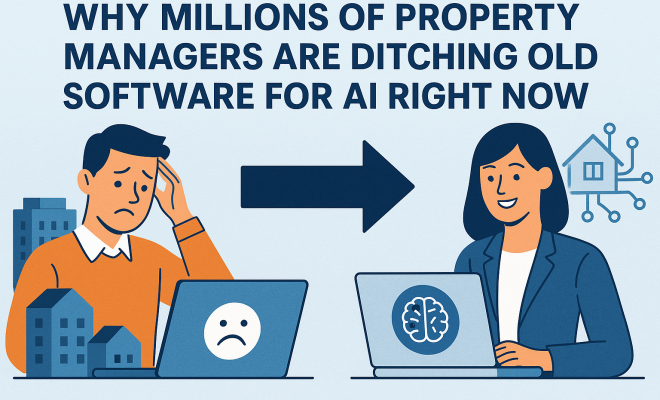
Why Millions of Property Managers Are Ditching Old Software for AI Right Now
“`html
The real estate world, for all its talk of innovation, has often lagged behind other industries when it comes to adopting truly cutting-edge technology. For years, property managers have grappled with a patchwork of systems, often clunky and disconnected, to handle everything from leasing to maintenance. But a seismic shift is underway, largely driven by the power of artificial intelligence. We’re talking about a fundamental rethinking of how properties are managed, and at the heart of this transformation lies the increasingly popular debate: Zuma vs traditional property management software. This isn’t just about a new feature; it’s about a complete paradigm shift in efficiency, tenant experience, and ultimately, profitability.
Recently, Israeli-founded real estate technology firm Venn made a significant move, acquiring U.S.-based Zuma for a cool $50 million. This acquisition isn’t just another corporate handshake; it’s a strategic play to fuse Zuma’s AI-driven capabilities, particularly in the multifamily housing sector, with Venn’s broader, unified platform. The goal? To create an AI powerhouse that can cut through the frustrating fragmentation that has long plagued property owners and managers. As Venn continues to expand, now serving over 270 owners and operators, including industry giants like Bozzuto and Related, and expecting to manage over one million residential units by year’s end, the integration of Zuma’s tech is a clear signal: the future of property management is intelligent, integrated, and incredibly efficient. But what does this mean for you, the property professional, contemplating the leap from legacy systems?
1. The AI Advantage in Leasing and Renewals: Beyond Basic Tracking
Traditional property management software has, for decades, offered a foundational level of support for leasing and renewals. Think of it as a digital Rolodex and calendar: you could track inquiries, manage application forms, and set reminders for lease expirations. It was certainly better than paper files, but it was largely reactive and manual. The software would tell you *what* was happening, but rarely *why* or *what to do next* with any real insight.
Enter Zuma’s AI-driven approach. This isn’t just about tracking; it’s about predicting and optimizing. Zuma’s technology, now integrated with Venn, leverages AI to analyze vast amounts of data – market trends, tenant behavior patterns, even local economic indicators – to provide predictive analytics for leasing. Imagine your system not just reminding you a lease is up for renewal, but suggesting the optimal renewal rate to maximize occupancy and revenue, based on real-time demand and competitor pricing. It can identify high-risk tenants likely to churn and prompt proactive engagement strategies. For new leases, AI can qualify leads more effectively, prioritize follow-ups based on conversion probability, and even personalize communication at scale, drastically reducing the time from inquiry to signed lease.
2. Automating Rent Collections: Cutting Through the Chasing Game
Rent collection, for many property managers, is a perennial headache. Traditional software systems typically facilitate online payments and can generate late notices. That’s a good start, but it often leaves the heavy lifting of chasing down overdue payments, managing payment plans, and dealing with disputes to human staff. It’s a time-consuming, often uncomfortable, and frankly, inefficient process that can strain tenant relationships.
Zuma’s AI, on the other hand, aims to largely automate and streamline this entire process. Think intelligent reminders that adapt based on past payment behavior, personalized communication that offers flexible payment options before a default even occurs, and automated reconciliation that drastically reduces accounting errors. The system can identify patterns that indicate potential payment issues early on, allowing managers to intervene proactively with solutions rather than reactively with penalties. This not only improves cash flow consistency but also frees up staff to focus on more complex, value-added tasks, transforming what was once a laborious chore into a smooth, largely self-sufficient operation. It’s a stark contrast in the Zuma vs traditional property management software debate here.
3. Data-Driven Decision Making: Beyond Spreadsheets and Gut Feelings
One of the biggest limitations of traditional property management software is its tendency to compartmentalize data. You might have one module for accounting, another for maintenance requests, and yet another for tenant communications. Getting a holistic view of your property’s performance often means exporting data into spreadsheets, manually combining it, and then trying to draw conclusions. It’s a slow, often frustrating process that can lead to decisions based on incomplete or outdated information.
The core promise of platforms like Venn, supercharged by Zuma’s AI, is a unified data ecosystem. This system connects all those fragmented data points – from rent rolls and maintenance logs to tenant feedback and marketing analytics – into a single, intelligent platform. AI can then analyze these interconnected datasets to uncover insights that would be impossible for a human to spot. For instance, it can correlate resident satisfaction scores with maintenance response times, or identify which marketing channels yield the highest-value tenants. This allows property managers to make truly data-driven decisions, optimizing everything from capital expenditures to tenant retention strategies, moving beyond mere reporting to predictive and prescriptive analytics.
4. Seamless Integration Across Fragmented Systems: The Holy Grail of Efficiency
The real estate industry is notorious for its fragmentation. Property owners and managers often use a disparate collection of software solutions for different aspects of their operations: separate systems for accounting, leasing, maintenance, communications, and sometimes even different platforms for different properties within the same portfolio. This creates silos, data inconsistencies, and requires endless manual data entry or complex, often unreliable, integrations.
Venn’s acquisition of Zuma is explicitly aimed at solving this integration nightmare. The vision is to create a unified AI platform that can effectively operate *across* these fragmented systems. Instead of ripping out and replacing every piece of existing software, the Venn-Zuma platform acts as an intelligent overlay, connecting data and workflows regardless of the underlying legacy system. This means property managers can leverage AI’s power without undergoing a costly and disruptive overhaul of their entire tech stack. It’s a pragmatic approach that acknowledges the reality of existing infrastructure while still delivering the benefits of advanced AI, making the Zuma vs traditional property management software comparison particularly compelling for those with entrenched systems. (See: real estate technology advancements.)
5. Enhanced Tenant Experience: The Human Touch, AI-Powered
In a competitive rental market, tenant experience is paramount for retention and reputation. Traditional property management software provides basic tenant portals for payments and maintenance requests, but the interaction often feels transactional and impersonal. There’s little in the way of proactive engagement or personalized service, unless a human staff member manually intervenes.
AI, as implemented by Zuma, has the potential to revolutionize the tenant experience by making it more proactive, personalized, and efficient. Imagine an AI-powered chatbot that can answer common tenant questions 24/7, schedule maintenance, or even help with community events, freeing up your staff. The system can anticipate tenant needs based on historical data – perhaps suggesting a renewal offer tailored to their preferences, or proactively offering solutions to issues before they become complaints. This level of responsiveness and personalization fosters a stronger sense of community and satisfaction, leading to higher retention rates and positive word-of-mouth, which is invaluable in today’s digital landscape. For more context, see The Hidden Truth About AI Mortgage Tools.
6. Scalability and Growth: Managing More Units, More Effectively
For growing property management companies, scalability is a constant challenge. Adding more units or properties traditionally means adding more staff, more manual processes, and more complexity. Traditional software, while providing some structure, often becomes a bottleneck as operations expand, requiring significant human oversight to maintain consistency and efficiency across a larger portfolio.
The AI-driven approach offered by Zuma and Venn fundamentally changes this equation. By automating routine tasks, providing predictive insights, and streamlining workflows, the platform allows companies to manage significantly more units with the same or even fewer resources. As Venn itself demonstrates, quadrupling contracted revenue and aiming to manage over one million residential units, AI is the engine driving rapid, sustainable growth. It provides the infrastructure to scale operations without proportional increases in overhead, making it a critical differentiator in the Zuma vs traditional property management software debate for ambitious firms looking to expand their footprint.
7. The Cost Factor and ROI: Investing in the Future
When considering new technology, the immediate cost is often a primary concern. Traditional property management software typically involves licensing fees, setup costs, and ongoing maintenance. While these costs can be substantial, they are often seen as a necessary expense for basic operations.
AI-driven solutions, like Zuma’s, may come with a higher initial price tag or a different pricing model, reflecting the advanced capabilities they offer. However, the return on investment (ROI) can be significantly more compelling. By dramatically improving efficiency in leasing and renewals, reducing vacancy rates, optimizing rent collection, and enhancing tenant retention, AI can directly impact the bottom line in measurable ways. The ability to make smarter, data-backed decisions can lead to better property performance, increased asset value, and substantial operational cost savings in the long run. It’s an investment not just in software, but in a fundamentally more intelligent and profitable way of doing business. The $50 million acquisition of Zuma by Venn underscores the industry’s belief in this long-term value proposition.
Beyond the Hype: Practical Considerations for Adopting AI
While the benefits of AI in property management are clear and compelling, moving from traditional systems to advanced platforms like Zuma isn’t a flip of a switch. There are practical considerations that real estate professionals need to weigh carefully. First, data migration can be a significant undertaking. Existing data, often stored in various formats across different systems, needs to be cleanly transferred and integrated into the new AI platform. This requires meticulous planning and execution to avoid data loss or corruption, and it often means cleaning up historical data that might be inconsistent or incomplete.
Second, user adoption is crucial. Even the most sophisticated AI system is only as good as the people using it. Staff training, change management strategies, and clear communication about the benefits of the new system are essential. Employees might feel resistant to change or apprehensive about AI taking over their roles. It’s important to frame AI not as a replacement for human judgment, but as a powerful tool that enhances human capabilities, freeing up time for more strategic and interpersonal tasks. A successful transition means investing in your team and ensuring they feel empowered, not threatened, by the new technology.
8. The Impact of AI on Property Valuation and Asset Optimization
Beyond day-to-day operations, the strategic implications of AI in property management extend to how properties are valued and optimized as assets. Traditional property valuation often relies on historical data, comparable sales, and market averages. While these methods are valid, they can be slow to react to subtle shifts and might miss opportunities for maximizing asset value.
Zuma’s AI, working within a unified platform, can offer a far more dynamic and granular approach to asset optimization. Imagine the system analyzing real-time local economic data, demographic changes, and even hyper-local amenity trends to suggest optimal rent adjustments, not just annually, but perhaps quarterly or even monthly. It can identify underperforming units or amenities by cross-referencing maintenance costs, tenant satisfaction, and occupancy rates. This kind of deep analysis can inform capital expenditure decisions – pinpointing exactly where renovations or upgrades will yield the highest ROI. For property owners and investors, this translates into a clearer, more accurate picture of their portfolio’s health and potential, allowing for proactive adjustments that directly enhance property valuation and long-term profitability. It’s about moving from a reactive, static view of assets to a proactive, intelligent optimization strategy.
9. Risk Mitigation and Compliance: AI as Your Guardian
Property management is a minefield of regulations, compliance requirements, and potential legal risks. Traditional software can help by storing documents and setting reminders for inspections or certifications, but it largely places the burden of staying compliant on human oversight. Mistakes can be costly, leading to fines, legal battles, and reputational damage. (See: impact of AI on property management.)
AI platforms like Zuma can significantly bolster risk mitigation and compliance efforts. Picture an AI that constantly monitors regulatory changes at local, state, and federal levels, flagging potential non-compliance issues before they become problems. It can analyze lease agreements for adherence to fair housing laws, ensure privacy policies are up-to-date, and even predict areas of potential tenant disputes based on historical data patterns. For instance, if certain lease clauses consistently lead to tenant complaints, the AI could flag them for review. This proactive “guardian” role reduces human error, protects the property owner from legal liabilities, and ensures a smoother, more ethical operation. It’s a fundamental shift from merely tracking compliance to actively enforcing and adapting to regulatory landscapes, a key differentiator in the Zuma vs traditional property management software discussion when considering long-term security.
10. Predictive Maintenance: From Reactive Fixes to Proactive Care
Maintenance management in traditional property software is typically reactive: something breaks, a tenant reports it, and then you schedule a repair. While necessary, this approach can lead to costly emergency repairs, tenant dissatisfaction, and unexpected operational disruptions. For more context, see The Mortgage AI Scandal.
The integration of AI with IoT devices in properties, a natural extension for platforms like Zuma, ushers in an era of predictive maintenance. Imagine sensors in HVAC systems, water heaters, or even common area lighting reporting their performance data in real-time. AI can analyze this data, identifying subtle anomalies or degradation patterns that indicate a potential failure *before* it happens. This allows property managers to schedule preventative maintenance during off-peak hours, order parts in advance, and address issues proactively. This not only significantly reduces emergency repair costs but also extends the lifespan of assets, minimizes tenant inconvenience, and maintains a higher standard of property condition. It transforms maintenance from a headache into a strategic advantage, contributing directly to tenant retention and asset value.
The Future of Property Management: An Intelligent Ecosystem
What Venn’s acquisition of Zuma truly signals is a move towards a fully integrated, intelligent ecosystem for property management. The days of siloed systems and manual data crunching are rapidly fading. The vision is a platform that not only automates routine tasks but also provides predictive insights, optimizes decision-making, and creates a seamless experience for both managers and residents. This isn’t just about incremental improvements; it’s about a fundamental transformation of the operational model itself.
As AI continues to evolve, we can expect even more sophisticated applications. Imagine AI-powered virtual property tours that adapt to prospective tenants’ preferences in real-time, or predictive maintenance systems that can anticipate equipment failures before they occur, scheduling repairs automatically. The convergence of AI, IoT (Internet of Things) in smart buildings, and advanced analytics will create properties that are not just managed, but truly intelligent, responsive, and ultimately, more valuable. For real estate professionals, the question is no longer *if* to adopt AI, but *when* and *how* to best integrate it into their strategies.
Expert Perspectives: What Industry Leaders Are Saying
The sentiment within the real estate tech community echoes the shift towards AI-powered solutions. Industry analysts consistently point to the need for greater efficiency and tenant-centric approaches. Sarah Chen, a leading real estate technology consultant, notes, “The acquisition of Zuma by Venn isn’t just about market consolidation; it’s a validation of the AI-first strategy. Property managers who embrace predictive analytics and automation aren’t just gaining an edge; they’re future-proofing their operations against rising costs and increasing tenant expectations.”
A recent report by Deloitte highlighted that “AI-powered automation in real estate could reduce operational costs by up to 30% over the next five years, primarily through optimized resource allocation and reduced administrative overhead.” This isn’t just about saving money on salaries; it’s about redirecting human talent to tasks that require empathy, complex problem-solving, and strategic thinking – areas where humans still excel. The consensus is clear: AI isn’t replacing the property manager, it’s elevating their role.
Comparative Market Landscape: Zuma vs. Other AI Contenders
While Zuma (now part of Venn) is making significant waves, it’s important to acknowledge that other players are also entering the AI property management space. Companies like AppFolio and Yardi, traditional giants, are investing heavily in integrating AI features into their existing platforms, often focusing on intelligent chatbots for tenant support or basic predictive analytics for rent pricing. However, their approach tends to be additive, building AI onto established, often complex, architectures.
Zuma’s differentiator, and Venn’s strategic bet, lies in its foundational AI-first design. It wasn’t an afterthought; it was built from the ground up to leverage machine learning for deeper insights and more seamless automation. This often results in a more cohesive and truly intelligent experience rather than just a collection of AI-powered features. For property managers, this means evaluating not just the presence of AI, but the *depth* and *integration* of its capabilities. The “Zuma vs traditional property management software” debate really highlights this architectural difference: a core AI engine versus bolt-on AI modules. (See: AI transforming industries.)
Frequently Asked Questions About AI in Property Management
Q1: Is AI going to replace property managers?
No, not entirely. AI is designed to automate routine, repetitive, and data-intensive tasks, freeing up property managers to focus on more strategic decisions, complex problem-solving, and crucial interpersonal relationships with tenants and owners. Think of AI as a powerful assistant that enhances human capabilities, rather than a replacement.
Q2: How secure is my data with an AI-driven platform?
Leading AI property management platforms, like Zuma with Venn, prioritize robust data security. They typically employ advanced encryption, multi-factor authentication, and adhere to strict data privacy regulations. Because AI relies on large datasets, security and privacy are paramount, often exceeding the security measures of older, traditional systems.
Q3: What’s the typical implementation timeline for a system like Zuma?
Implementation timelines can vary greatly depending on the size of your portfolio, the complexity of your existing systems, and the quality of your current data. A full migration and integration might take anywhere from a few weeks for smaller portfolios to several months for large enterprises. Effective planning, data clean-up, and dedicated training are key to a smooth rollout.
Q4: Can AI platforms integrate with my existing accounting software?
Yes, integration capabilities are a significant advantage of modern AI platforms, especially those designed to be an “overlay” like Venn-Zuma. The goal is to connect and unify data across your existing fragmented systems, including accounting software, without requiring a complete rip-and-replace. This minimizes disruption while maximizing data flow.
Q5: How do I measure the ROI of investing in AI property management software?
Measuring ROI involves tracking several key metrics: reduced vacancy rates, optimized rent pricing, lower operational costs (e.g., fewer staff hours on administrative tasks, reduced emergency maintenance), improved tenant retention rates, and faster lease-up times. Many platforms also offer analytics dashboards to help you visualize these improvements directly.
Q6: Is AI suitable for all types of properties (residential, commercial, mixed-use)?
While Zuma’s initial focus was multifamily residential, the underlying AI principles are highly adaptable. Predictive analytics, automation, and enhanced tenant experiences are valuable across various property types. The specific features and configurations would be tailored, but the core benefits of AI apply broadly to residential, commercial, and mixed-use portfolios.
The debate between Zuma vs traditional property management software isn’t just about features; it’s about embracing a future where technology isn’t just a tool, but a strategic partner in managing and optimizing real estate assets. The $50 million investment by Venn in Zuma is a strong indicator of where the industry is heading, and for those ready to make the leap, the rewards in efficiency, tenant satisfaction, and profitability could be substantial.
“`
Trending Now
Frequently Asked Questions
Why are property managers switching to AI software?
Property managers are migrating to AI software due to its ability to streamline operations, enhance tenant experiences, and improve overall efficiency. AI-driven platforms like Zuma offer integrated solutions that replace outdated systems, making property management more effective and profitable.
What are the benefits of using AI in property management?
AI in property management offers numerous benefits, including automated leasing processes, better tenant communication, predictive maintenance, and data-driven decision-making. These advantages lead to increased efficiency, reduced costs, and improved tenant satisfaction.
How does Zuma differ from traditional property management software?
Zuma stands out from traditional property management software by providing AI-driven capabilities that enhance integration, automate tasks, and improve user experience. Unlike legacy systems, Zuma offers a comprehensive platform that addresses the fragmentation commonly found in property management.
What impact does AI have on tenant experience?
AI significantly enhances tenant experience by enabling faster responses to inquiries, personalized communication, and streamlined processes for leasing and maintenance requests. This leads to higher tenant satisfaction and retention rates.
Is it worth investing in AI property management software?
Investing in AI property management software is worthwhile as it can lead to increased operational efficiency, cost savings, and improved tenant relations. The shift to AI represents a strategic move for property managers looking to stay competitive in a rapidly evolving market.
What's your take on this? Share your thoughts in the comments below — we read every one.