Why Millions of Homeowners Are Rethinking Solar Panels vs Battery Storage
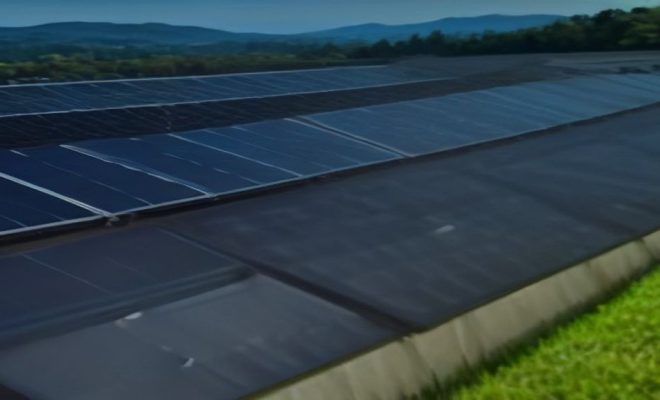
For years, the conversation around home energy independence largely revolved around solar panels. And for good reason! Harnessing the sun’s power directly from your rooftop has been a game-changer for countless households. But something significant is happening right now, something that’s making homeowners – and even entire states – take a fresh look at their energy strategy. We’re seeing an unprecedented surge in both solar and energy storage technologies, particularly battery storage, reshaping how we think about powering our homes and lives. In fact, the first half of 2026 saw these technologies absolutely shatter records in the U.S., accounting for a staggering 91% of all new grid capacity added in just the first quarter of 2026 alone. This isn’t just a trend; it’s a fundamental shift, and it’s forcing a critical re-evaluation of the long-standing debate: solar panels vs battery storage. Which one truly makes the most sense for you?
It used to be that solar panels were the undisputed champion for homeowners looking to cut their utility bills and reduce their carbon footprint. You’d install them, generate electricity during the day, and any excess would get sent back to the grid for credits. Simple, right? But what happens when the sun sets, or a storm knocks out power? That’s where battery storage comes into play, offering a level of energy independence and resilience that solar panels alone just can’t match. We’re talking about a world where your home can run on its own generated power, even when the grid goes dark or electricity prices skyrocket. This isn’t some futuristic fantasy; it’s happening now, driven by rising electricity demand, the urgent need for reliable, low-cost energy, and technologies that are fast to deploy. Let’s dig into the nuances of these two powerful technologies and help you figure out what’s truly right for your home.
1. Understanding the Core Purpose: Generation vs. Storage
When you’re trying to decide between solar panels vs battery storage, the most fundamental distinction lies in their primary function. Solar panels are all about generation. Think of them as your personal power plant, diligently converting sunlight into usable electricity. They are the engine that drives your clean energy system. During daylight hours, especially when the sun is high and strong, your solar panels will be working overtime, producing electricity for your home’s immediate needs and often generating an excess.
Battery storage, on the other hand, is exactly what it sounds like: a reservoir for that generated electricity. It doesn’t create power; it holds onto it. Imagine a large, sophisticated bank account for energy. When your solar panels are producing more electricity than your home is consuming, instead of automatically sending that surplus back to the grid for a modest credit (which often fluctuates in value), you can direct it into your battery. This stored energy then becomes available when your solar panels aren’t producing – say, at night, on a cloudy day, or during a power outage. This synergy is key, and it’s why many are now seeing them not as alternatives, but as complementary components of a truly robust home energy system.
2. Upfront Costs: A Major Consideration for Solar Panels vs Battery Storage
Let’s be honest, the initial investment is often the first thing people look at, and it can be a significant hurdle. Installing a solar panel system involves costs for the panels themselves, inverters, racking, wiring, and, of course, labor. The price varies widely depending on the size of your system, your location, and the specific equipment you choose. While prices have come down dramatically over the past decade, it’s still a substantial outlay, often in the tens of thousands of dollars for a typical residential installation.
Adding battery storage introduces another layer of cost. A home battery system, like a Tesla Powerwall or an Enphase Encharge, can add anywhere from $10,000 to $20,000 or more to the total project cost, depending on its capacity and the number of units you install. This is on top of your solar panel investment. So, if your budget is tight, starting with solar panels alone might feel more accessible. However, it’s crucial to look beyond just the sticker price and consider the long-term value and benefits that battery storage can provide, especially when factoring in incentives and potential savings.
3. Long-Term Savings and Return on Investment
This is where the debate of solar panels vs battery storage really gets interesting. Solar panels offer clear and consistent savings by reducing or even eliminating your monthly electricity bill. Over the lifespan of the system, which can be 25-30 years or more, those savings really add up, often leading to a full return on your investment and then some. The payback period for solar panels typically ranges from 7 to 12 years, depending on electricity rates, system cost, and available incentives.
Battery storage, while adding to the upfront cost, enhances those long-term savings in several powerful ways. Firstly, it allows for ‘time-of-use’ optimization. Many utility companies charge more for electricity during peak demand hours (e.g., late afternoon and evening). With a battery, you can store cheap solar power generated during the day and use it to power your home when rates are highest, effectively sidestepping those peak charges. Secondly, in areas with less favorable net metering policies, a battery ensures you’re maximizing the use of your self-generated power rather than selling it back to the grid for pennies on the dollar. This economic argument is becoming more compelling as grid policies evolve and electricity prices continue their upward trend.
4. Energy Independence and Grid Resilience
Perhaps the most compelling argument for integrating battery storage with your solar panels is the unparalleled energy independence and grid resilience it offers. With solar panels alone, you’re still largely tied to the grid. When the grid goes down, your solar panels typically shut off for safety reasons (to prevent backfeeding into the grid while utility workers are trying to fix lines). So, no power during an outage, even if the sun is shining. (See: solar panels vs battery storage analysis.)
This is where battery storage shines, literally. A battery system provides backup power for your home during blackouts. It allows your solar panels to continue operating and recharging the battery, creating a truly self-sufficient microgrid for your property. This capability is becoming increasingly valuable as extreme weather events become more common and grid reliability faces new challenges. Think about California’s experience: on July 9th, 2026, the state’s battery fleet discharged a record 12.99 gigawatts, covering a remarkable 36% of its energy demand during peak evening hours. That’s a huge demonstration of resilience and the ability to meet demand when traditional sources might struggle. For many, the peace of mind that comes with knowing your lights will stay on is worth the extra investment.
5. Environmental Impact Beyond Carbon Emissions
Both solar panels and battery storage contribute significantly to reducing your carbon footprint by displacing electricity generated from fossil fuels. This is the primary environmental benefit we often talk about. For instance, in May 2026, for the first time in U.S. history, solar generated more electricity than coal, now supplying nearly 13% of America’s electricity needs. That’s a massive win for the environment. For more context, see using IFTTT with smart home technologies.
However, battery storage adds another layer of environmental benefit related to grid stability. By storing excess renewable energy, batteries help integrate more intermittent sources like solar and wind into the grid without requiring dirty ‘peaker plants’ (typically natural gas plants) to fire up during demand spikes. This smooths out the peaks and valleys of renewable generation, making the overall grid greener and more efficient. It’s not just about what comes out of your chimney; it’s about the entire energy ecosystem. Plus, by reducing strain on the grid, you’re contributing to a more robust infrastructure that is less prone to failures and more capable of handling future renewable integration.
6. Incentives and Rebates: Sweetening the Deal
Understanding the available incentives is absolutely crucial when weighing solar panels vs battery storage. Both technologies often qualify for substantial financial support, which can dramatically alter the economics of your investment. The federal Investment Tax Credit (ITC) is a major player, offering a percentage of the cost of your solar panel system (and often the associated battery storage) as a tax credit. This isn’t a deduction; it’s a dollar-for-dollar reduction in your tax liability, making it incredibly powerful.
Beyond federal incentives, many states, cities, and even local utility companies offer their own rebates, grants, or performance-based incentives for both solar and battery installations. For example, some states have specific programs designed to encourage battery storage adoption, recognizing its role in grid stability and resilience. Researching these localized incentives is vital, as they can significantly reduce your upfront costs and shorten your payback period. Don’t leave money on the table; a little research can make a huge difference in your final decision.
7. Grid Services and Virtual Power Plants (VPPs)
This is where battery storage starts to offer benefits that extend beyond just your individual home. Some forward-thinking utility companies and third-party aggregators are starting to offer programs where homeowners with battery storage can participate in ‘grid services’ or ‘virtual power plants’ (VPPs). Essentially, your battery can be remotely dispatched by the utility (with your permission, of course) to either absorb excess power from the grid or discharge power back into it during times of high demand or grid instability.
In return for providing these services, you can receive financial compensation. This turns your home battery into an active participant in the wider energy market, helping to stabilize the grid and support the integration of more renewables. It’s a win-win: you get paid for letting your battery help out, and the grid becomes more resilient and efficient. As battery adoption grows, these VPP programs are expected to become more widespread and lucrative, adding another compelling economic argument for battery storage alongside solar panels.
8. Maintenance and Lifespan Considerations
Both solar panels and battery storage are designed for long-term operation, but they have different maintenance profiles and lifespans. Solar panels are remarkably durable, often coming with performance warranties of 25 years or more. Maintenance is generally minimal, usually involving occasional cleaning and checking the inverter. They have no moving parts, so mechanical failures are rare.
Battery storage systems, while also robust, have a finite number of charge and discharge cycles. Most modern home batteries are warranted for 10 years or a certain number of cycles, whichever comes first. Over time, like your phone battery, their capacity will slowly degrade. However, manufacturers are continually improving battery chemistry and management systems to extend lifespan and maintain performance. The good news is that battery technology is advancing rapidly, and future replacements may offer even better performance and longevity. It’s a factor to consider, but not one that should necessarily deter you, given the pace of innovation in this sector.
9. The Future is Integrated: Solar Panels and Battery Storage Together
Looking ahead, the discussion isn’t really about choosing one over the other. The future of home energy is increasingly integrated, with solar panels and battery storage working in tandem to create highly efficient, resilient, and independent systems. The data clearly shows this convergence: the record-breaking growth in both technologies, the ability of states like California to rely on battery fleets for significant portions of peak demand, and the overall shift towards reliable, low-cost, and fast-to-deploy energy resources. (See: energy storage systems overview.)
For homeowners, this means thinking holistically about your energy needs. Do you want to simply reduce your bill, or do you also want true energy independence, protection from outages, and the ability to optimize your energy consumption? As electricity demand continues to rise and the push for decarbonization accelerates, a combined solar-plus-storage system offers the most comprehensive solution. It’s not just about powering your home; it’s about future-proofing it against rising costs, grid instability, and environmental concerns. The choice between solar panels vs battery storage often boils down to a single, powerful conclusion: for maximum benefit, you’ll likely want both.
10. Considering Your Specific Energy Needs and Lifestyle
When you’re trying to figure out if solar panels, battery storage, or both are right for you, it’s really important to think about your personal energy habits and what matters most to your household. Are you someone who works from home and uses a lot of electricity during the day? Or do you mostly consume power in the evenings when everyone is home and the sun has set? If you’re a heavy daytime user, solar panels alone might cover a significant chunk of your needs. But if your peak usage is after dark, or if you have electric vehicles you charge overnight, battery storage becomes incredibly valuable. It shifts that daytime solar production to when you actually need it. For more context, see productivity tips for managing energy solutions.
Also, consider your comfort level with power outages. If you live in an area prone to frequent blackouts, or if you have critical medical equipment that needs constant power, then the backup capability of a battery isn’t just a nice-to-have; it’s essential. For others, who might experience only rare, short outages, the primary benefit of a battery might be more about saving money through time-of-use optimization. Your lifestyle, your daily routine, and your tolerance for grid disruptions should heavily influence your decision.
11. Technological Advancements and Future Proofing
The pace of innovation in both solar and battery technology is breathtaking. Solar panels are constantly becoming more efficient, able to convert more sunlight into electricity even on cloudy days, and their aesthetics are improving, with options like solar tiles that blend seamlessly into your roof. This means newer panels can generate more power from the same footprint, or even a smaller one.
Battery technology is seeing even faster evolution. We’re talking about improvements in energy density (more power in a smaller space), faster charging and discharging rates, and longer lifespans. New battery chemistries are emerging, like solid-state batteries, that promise even greater safety and performance. When you invest in a system today, you’re buying into a technology that will likely see significant upgrades in the coming years. While this might make some hesitant, it also means that initial investments are likely to hold their value well and that future expansions or replacements will be even more powerful and cost-effective. Choosing a modular system that allows for easy expansion down the line can be a smart way to future-proof your home energy setup.
12. Expert Perspectives: The Shifting Landscape
Industry experts are increasingly emphasizing the synergistic relationship between solar and storage. Organizations like the Solar Energy Industries Association (SEIA) regularly highlight how battery storage is no longer just an add-on but a critical component for maximizing solar’s benefits and ensuring grid stability. They point to the growing number of states and utilities that are actively incentivizing storage, recognizing its role in managing peak demand and integrating higher levels of renewable energy. For instance, according to SEIA, the U.S. installed 5.9 GW of battery storage in 2023, a nearly threefold increase from 2022, with projections showing continued exponential growth. This isn’t just individual homeowners making choices; it’s a systemic shift.
Energy economists also chime in, noting how battery storage changes the financial calculus of solar. They argue that as net metering policies become less generous in some regions – moving from full retail rate compensation to wholesale rates or less – the economic value of self-consumption, enabled by batteries, dramatically increases. This means that instead of selling excess power back for a pittance, you’re using it yourself at night, avoiding purchasing expensive grid power. This expert consensus points towards a future where solar and storage are inseparable for optimal home energy management.
13. Comparison: Standalone Solar vs. Solar-Plus-Storage
Let’s break down the practical differences you’d experience:
- Standalone Solar:
- Pros: Lower upfront cost, reduces electricity bills during daylight hours, environmental benefits, generally good ROI with favorable net metering.
- Cons: No power during grid outages (unless specifically designed with a critical load panel and an expensive rapid shutdown system), limited ability to capitalize on time-of-use rates, excess energy often sold back to grid at lower rates.
- Best For: Homeowners with consistent daytime energy usage, in areas with excellent net metering, and low concern for power outages.
- Solar-Plus-Storage:
- Pros: True energy independence and backup power during outages, maximizes self-consumption of solar energy, significant savings through time-of-use optimization, potential for grid service revenue (VPPs), enhanced environmental impact.
- Cons: Higher upfront cost, battery lifespan considerations (though improving), requires more space for equipment.
- Best For: Homeowners in areas with high electricity rates, less favorable net metering, frequent power outages, or those prioritizing energy resilience and environmental impact.
The contrast highlights that while standalone solar is a fantastic step, adding storage transforms it from a bill-reducer into a comprehensive home energy solution, offering benefits that extend far beyond simple cost savings. (See: impact of solar energy systems.)
Frequently Asked Questions about Solar Panels vs Battery Storage
Q1: Can I install solar panels now and add a battery later?
Absolutely! This is a very common approach. Many homeowners start with solar panels to immediately begin generating clean energy and reducing their bills. Then, as their budget allows, or as utility policies change, they integrate battery storage. It’s important to ensure your initial solar inverter is “battery-ready” or compatible with future battery additions to make the upgrade as smooth and cost-effective as possible. Your solar installer can advise you on the best components for this flexible approach.
Q2: How much battery storage do I really need for my home?
The right amount of battery storage depends on several factors: your daily energy consumption, the critical appliances you want to power during an outage, and how long you want that backup power to last. A typical home might use 15-30 kWh per day. A single home battery unit usually offers 10-13 kWh of usable capacity. If you just want to power essential lights and a refrigerator for a day, one battery might be enough. If you want to run your whole house for multiple days, you’ll likely need multiple units. A professional energy audit can help you determine your specific needs.
Q3: Are there any safety concerns with home battery storage?
Modern home battery systems are designed with multiple safety features and undergo rigorous testing. They typically include advanced battery management systems (BMS) that monitor temperature, voltage, and current to prevent overheating or overcharging. While any electrical system carries some inherent risk, reputable manufacturers adhere to strict safety standards. Installation by certified professionals is crucial to ensure all local codes and safety guidelines are met, minimizing any potential hazards.
Q4: What happens to my solar power if my battery is full and the grid is down?
If your battery is full and the grid is down, your solar panels will continue to power your home’s loads. Any excess solar production that isn’t being used by your home and can’t be stored in the already-full battery will typically be curtailed. This means your solar inverter will temporarily reduce the output of your panels to match your home’s consumption, preventing overproduction. Once your home uses some stored energy or the grid comes back online, your panels will resume full production.
Q5: How do I know if my utility company offers time-of-use rates or VPP programs?
The best way to find out is to directly contact your local utility company. Ask them about their residential electricity rate structures – specifically if they have “time-of-use” (TOU) rates where electricity costs vary by time of day. You can also inquire about any programs for distributed energy resources, battery storage incentives, or “virtual power plant” (VPP) initiatives where homeowners can participate. Many utilities now have dedicated sections on their websites for these types of programs.
Q6: Is battery storage worth it if I already have net metering?
The value of battery storage with net metering depends on the specifics of your net metering agreement. If you have “1-to-1” net metering, meaning you get the full retail rate for excess energy you send back to the grid, the financial incentive for a battery might be lower, as you’re already getting good value for your surplus. However, a battery still provides backup power during outages, allows for greater energy independence, and can future-proof you against potential changes to net metering policies, which are becoming less generous in many areas. If your net metering pays less than the retail rate, a battery becomes much more financially appealing for self-consumption.
Trending Now
Frequently Asked Questions
What are the benefits of solar panels for homeowners?
Solar panels allow homeowners to generate their own electricity, significantly reducing utility bills and carbon footprints. They harness sunlight during the day, and any excess energy can be sent back to the grid for credits, providing a sustainable energy solution.
How does battery storage work with solar panels?
Battery storage complements solar panels by storing excess energy generated during the day for use at night or during outages. This technology provides homeowners with energy independence and resilience, ensuring access to power even when the grid is down.
Why are homeowners rethinking solar panels versus battery storage?
Homeowners are re-evaluating their energy strategies due to unprecedented advancements in both solar and battery storage technologies. Rising electricity demand and the need for reliable energy solutions are pushing many to consider the benefits of integrating both systems. innovations in renewable tech offers useful background here.
What is the role of battery storage in energy independence?
Battery storage enhances energy independence by allowing homeowners to store and use their generated power, reducing reliance on the grid. This capability is crucial during outages or peak pricing periods, ensuring a continuous power supply.
Are solar panels still the best option for reducing energy costs?
While solar panels remain a strong option for cutting energy costs, the integration of battery storage is changing the landscape. Homeowners must consider their specific needs, including energy reliability and independence, when deciding the best fit for their homes.
What's your take on this? Share your thoughts in the comments below — we read every one.