Why Is Earth Hottest at Aphelion in 2026? Unpacking the Science
“`html
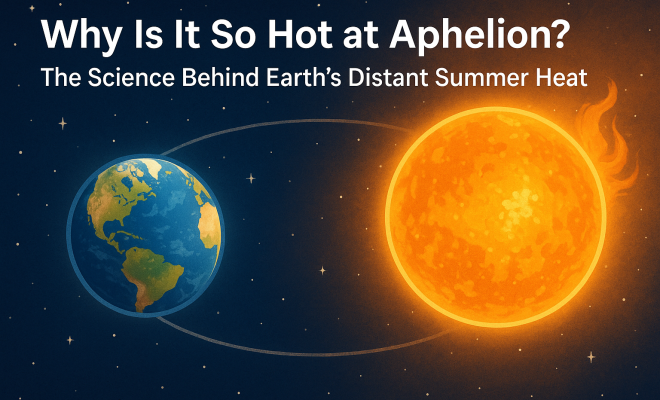
On July 6, 2026, an intriguing astronomical event took place: Earth reached its aphelion, the furthest point in its orbit from the Sun at a staggering distance of approximately 152 million kilometers (about 94.5 million miles). But if you’ve ever wondered why it feels so uncomfortably hot during this time, you’re not alone. The phenomenon of aphelion temperature has sparked widespread curiosity and confusion. Surprisingly, global temperatures are generally higher at this point in Earth’s orbit, leading to the question: How can it be so hot when we are farthest from the Sun?
1. Understanding Aphelion and Perihelion
To grasp why we experience higher temperatures at aphelion, it’s essential to define two key terms: aphelion and perihelion. Aphelion refers to the point in Earth’s orbit where it is the farthest from the Sun, while perihelion is when it is closest to the Sun, occurring around January 3 each year. During perihelion, Earth is about 147 million kilometers (about 91.4 million miles) from the Sun. You’d think that being closer to our primary heat source would mean warmer temperatures, but that’s not the case.
Interestingly, the difference in distance at these two points is only about 5 million kilometers (3 million miles) — a relatively small distance in the grand scheme of the solar system. However, this small difference has a significant impact on how we perceive temperatures on Earth, especially when seasonal changes are taken into account.
2. The Temperature Paradox
When Earth reaches aphelion, sunlight strikes the planet with about 7% less intensity compared to perihelion. This fact suggests that, logically, temperatures should be cooler. Yet, research indicates that on average, global temperatures can be about 4°F (2.3°C) higher at aphelion than at perihelion. This paradox has baffled scientists and anyone trying to make sense of seasonal weather patterns.
To put it simply, there’s a dissonance between what we expect based on distance and what we observe in terms of temperature. The aphelion temperature phenomenon challenges our everyday understanding of summer heat and raises further questions about how seasonal shifts affect our climate.
3. The Role of Seasonal Changes
One crucial aspect of understanding why it’s so hot during aphelion lies in the timing of the seasons. Earth’s orbit is tilted at about 23.5 degrees, which means that different hemispheres experience summer and winter at opposite times of the year. In the Northern Hemisphere, for instance, aphelion occurs in July, right in the middle of summer.
This timing is significant because summer is typically marked by longer days and increased solar energy. The land heats up faster than the oceans, which means that during aphelion, the Northern Hemisphere is basking in the solar rays while being at its furthest point from the Sun. This creates a unique scenario where the heat generated by the sun has more influence due to the season than the slight increase in distance.
4. The Land vs. Ocean Temperature Dynamics
It’s no secret that land heats up more quickly than water. During summer months, land surfaces absorb heat more readily than oceans, which tend to moderate temperature changes due to their vast bodies of water. This difference means that when Earth is at aphelion and the Northern Hemisphere is experiencing summer, temperatures tend to rise significantly because of the expansive landmasses absorbing and retaining heat.
Additionally, the Southern Hemisphere, which is experiencing winter during this time, has a much larger ocean surface area compared to land. Consequently, while the Southern Hemisphere cools, the Northern Hemisphere swelters in heat. This imbalance in seasonal temperature distribution further complicates the relationship between distance from the Sun and the temperatures we experience.
5. Global Warming and Climate Change
The phenomenon of aphelion temperature gains additional context when considering the ongoing effects of climate change. Global temperatures have been on the rise due to human activities like burning fossil fuels, deforestation, and industrial processes. This overall warming trend can amplify seasonal temperature spikes, making the heat experienced during aphelion even more intense than it was in previous years. (See: Understanding aphelion and perihelion.)
With climate change, we are witnessing shifts in weather patterns, increased frequency of heatwaves, and changes in precipitation patterns. These factors can exacerbate the already paradoxical temperatures at aphelion, leading to unusual weather phenomena that can leave us scratching our heads.
6. Public Curiosity and Engagement
The curious nature of aphelion temperatures has not only captured the attention of scientists but has also gone viral on social media platforms. Millions of people are engaging in discussions about the seeming contradiction between distance and heat, sharing their confusion and fascination. The viral nature of this topic highlights how intertwined science is with everyday life, as people use platforms like Twitter and Facebook to express their reactions.
This engagement is an excellent opportunity for educating the public on complex scientific concepts. Such discussions can inspire a greater understanding of astronomy and climate science, and may encourage individuals to pay closer attention to how these phenomena impact our lives.
7. What This Means for Future Research
The ongoing discussions about aphelion temperature are paving the way for future research in climate science and astronomy. Understanding the opposing effects of distance from the Sun and seasonal temperature changes can yield insights into climate models and planetary behavior. As scientists continue to study these phenomena, they may uncover more about how Earth’s orbit and climate are interconnected.
Ultimately, understanding aphelion temperature could help us better predict climate patterns and refine our models for future climate scenarios. This research is crucial as we work to combat climate change and navigate the challenges it presents.
8. Examining Historical Temperature Data
To further understand the implications of aphelion temperature, examining historical temperature data is essential. Over the past few decades, scientists have noted fluctuations in average global temperatures that correlate with Earth’s position in its orbit. Data from NASA’s Goddard Institute for Space Studies show that average global temperatures have risen consistently since the late 19th century, with spikes during certain aphelion periods. We covered hands-on activities for kids in more detail.
For instance, during the summer of 2020, when Earth was at aphelion, the Northern Hemisphere recorded some of the highest temperatures on record. This correlation raises questions about how much of an impact climate change has on the typical patterns we observe during aphelion. For example, researchers have indicated that extreme heat days have increased by approximately 40% over the last 50 years, suggesting a strong link between anthropogenic climate change and seasonal temperature variations.
9. Expert Perspectives on Aphelion Temperature
Experts from various fields weigh in on the complexities surrounding aphelion temperature. Dr. Jane Foster, an astrophysicist at the University of California, emphasizes that while the distance from the Sun does play a role in solar energy received by Earth, local climatic conditions often overshadow this factor. “Climate systems are influenced by many variables—ocean currents, atmospheric patterns, and land use changes. The interaction of these elements creates a more nuanced understanding of temperature fluctuations,” she notes.
Climate scientist Dr. Mark Peters adds another layer, asserting that the effects of urbanization contribute significantly during aphelion. “Urban heat islands exacerbate temperatures in cities, making areas far removed from direct sunlight feel considerably hotter. When we look at temperature anomalies during aphelion, we must also consider these local influences,” he explains.
10. The Influence of Ocean Currents
Ocean currents also play a critical role in regulating global temperatures, especially during aphelion. Major currents like the Gulf Stream and the California Current help distribute heat across the planet, influencing weather patterns and seasonal temperatures. When aphelion aligns with certain oceanic conditions, it can amplify or mitigate temperature extremes.
For example, during La Niña years, cooler ocean temperatures in the Pacific can lead to increased land temperatures in the Northern Hemisphere, particularly during summer months. This can heighten the apparent paradox of aphelion temperature as these currents interact with atmospheric conditions. In contrast, El Niño events can lead to warmer sea surface temperatures, which may alleviate some heat extremes during subsequent aphelion periods. (See: NASA's explanation of Earth's orbit.)
11. Comparing Aphelion and Perihelion Effects Globally
When assessing the impacts of aphelion and perihelion on global temperatures, it’s essential to evaluate these effects regionally. For example, areas such as the Arctic may experience stark differences in seasonal temperature shifts. During perihelion, the Arctic is enveloped in darkness, leading to colder temperatures, while during aphelion, the region enjoys continuous daylight, causing temperatures to rise significantly.
On the other hand, equatorial regions experience less variation throughout the year because they receive consistent solar energy. Consequently, the impacts of aphelion are not felt as intensely in these areas, which can lead to a more stable temperature profile regardless of Earth’s distance from the Sun. This comparison highlights how geography plays an essential role in interpreting seasonal temperature dynamics.
12. Frequently Asked Questions (FAQ)
What is the difference between aphelion and perihelion?
Aphelion is the point in Earth’s orbit where it is farthest from the Sun, while perihelion is the point where it is closest. These positions affect the intensity of solar energy received but do not solely determine temperature variations.
Why are temperatures higher during aphelion?
Temperatures can be higher during aphelion due to the timing of the seasons, with the Northern Hemisphere experiencing summer at this time. Seasonal factors, such as land heating faster than water and atmospheric conditions, play a more significant role than the distance from the Sun.
How does climate change impact aphelion temperatures?
Climate change can exacerbate temperature spikes during aphelion by altering weather patterns and increasing the frequency and intensity of heatwaves. This can lead to more extreme temperatures that challenge the traditional understanding of seasonal dynamics.
How do ocean currents affect seasonal temperatures?
Ocean currents regulate heat distribution across the globe and can influence regional temperature extremes during aphelion or perihelion. Variations like La Niña and El Niño can alter how ocean temperatures relate to atmospheric conditions, affecting land temperatures.
Why is public interest in aphelion temperatures significant?
Public interest can enhance understanding of scientific concepts and encourage dialogue about climate issues. The combination of curiosity and social media engagement can foster greater awareness of how celestial mechanics influence everyday life.
Can aphelion temperatures affect agriculture?
Yes, aphelion temperatures can impact agricultural practices. In regions experiencing extreme heat during aphelion, crop yields can be affected, especially for heat-sensitive crops. Farmers may need to adjust planting schedules and irrigation practices to accommodate these temperature fluctuations.
How can understanding aphelion temperature help in climate modeling?
By studying aphelion temperatures, scientists can refine climate models that predict future weather patterns and temperature extremes. Understanding the interactions between Earth’s orbit and climate can lead to better predictions and preparations for agricultural and disaster management. (See: Scientific insights on Earth's temperature variations.)
What role does urbanization play in the aphelion temperature phenomenon?
Urbanization can intensify the effects of heat during aphelion due to the urban heat island effect, where city areas become significantly warmer than their rural surroundings. This phenomenon can lead to greater temperature rises in urban settings during aphelion, affecting public health and energy consumption patterns.
The complexity of Earth’s climate system is a reminder of how interconnected our world is, and how factors like distance from the Sun can have unexpected consequences. Whether it’s grappling with an unusually hot day or pondering the mysteries of our solar system, the science of aphelion offers a fascinating glimpse into the intricate dance of celestial mechanics and climate dynamics.
13. Case Studies of Extreme Heat Events
To illustrate the impacts of aphelion temperatures, we can look at specific case studies of extreme heat events that coincided with this phenomenon. For example, in July 2019, several parts of Europe experienced unprecedented heat waves. Countries like France, Germany, and the Netherlands reported temperatures exceeding 40°C (104°F), which led to significant health warnings and infrastructure strain. Analyzing the data from this period shows a direct correlation between the aphelion event and the recorded maximum temperatures, highlighting how seasonal factors and climate change can combine to create extreme weather conditions.
14. Future Climate Predictions Related to Aphelion
As climate change continues to evolve, scientists are keenly focused on how aphelion temperatures may further shift in the coming decades. Predictions indicate that if current warming trends continue, extreme heat during aphelion may become more common. For instance, climate models suggest that by the year 2050, areas in the Northern Hemisphere could see an increase in summer temperature averages by up to 2-3°C. This escalation would not only affect human activities but also have repercussions for ecosystems, agriculture, and water resources.
15. The Importance of Public Policy
Understanding aphelion temperatures has significant implications for public policy. Policymakers must consider the nuances of seasonal temperature fluctuations when devising strategies for urban planning, disaster preparedness, and climate change mitigation. For instance, cities facing increased temperatures during aphelion may need to invest in green spaces and reflective surfaces to counteract urban heat islands. Additionally, agricultural policies may need to be revisited to ensure food security as heatwaves become more frequent.
16. Conclusion: The Bigger Picture
When we think about aphelion temperature, it’s easy to become entangled in the immediate paradox of distance versus heat. However, this phenomenon opens the door to broader discussions about how intertwined our planetary systems are. Understanding the complexities of Earth’s orbit, seasonal variations, and climate change is crucial for adapting and thriving in an ever-changing world. Engaging with these scientific concepts not only enriches our knowledge but also empowers us to advocate for sustainable practices that can mitigate the adverse effects of climate change.
By grasping the significance of aphelion temperature and its multifaceted influences, we can better prepare for the future, fostering a world that is resilient to the challenges posed by our evolving climate. This builds on eco resilience in children.
“`
Trending Now
Frequently Asked Questions
Why is it hotter at aphelion than at perihelion?
Despite being farther from the Sun during aphelion, global temperatures can be about 4°F (2.3°C) higher compared to perihelion. This paradox arises because seasonal changes and atmospheric factors influence temperature perception, making it feel hotter even when sunlight intensity is lower.
What is the difference between aphelion and perihelion?
Aphelion is the point in Earth's orbit when it is farthest from the Sun, occurring around July 6, while perihelion is when Earth is closest, around January 3. The distance difference is about 5 million kilometers (3 million miles), but this small change significantly affects seasonal weather patterns.
How does Earth's orbit affect temperature?
Earth's elliptical orbit means that temperature is influenced not only by distance from the Sun but also by seasonal factors. During aphelion, while sunlight intensity is lower, other factors like atmospheric conditions can lead to higher temperatures than expected.
When does Earth reach aphelion?
Earth reaches aphelion around July 6 each year, marking the point in its orbit where it is approximately 152 million kilometers (94.5 million miles) from the Sun, which coincides with summer in the Northern Hemisphere.
Why do temperatures rise during summer despite distance from the Sun?
During summer, even at aphelion, Earth experiences higher temperatures due to factors like longer daylight hours, increased solar energy absorption, and atmospheric conditions that can trap heat, overshadowing the effects of greater distance from the Sun.
Have you experienced this yourself? We'd love to hear your story in the comments.