The Tech Edvocate

Top Menu

  • Advertisement
  • Apps
  • Home Page
  • Home Page Five (No Sidebar)
  • Home Page Four
  • Home Page Three
  • Home Page Two
  • Home Tech2
  • Icons [No Sidebar]
  • Left Sidbear Page
  • Lynch Educational Consulting
  • My Account
  • My Speaking Page
  • Newsletter Sign Up Confirmation
  • Newsletter Unsubscription
  • Our Brands
  • Page Example
  • Privacy Policy
  • Protected Content
  • Register
  • Request a Product Review
  • Shop
  • Shortcodes Examples
  • Signup
  • Start Here
    • Governance
    • Careers
    • Contact Us
  • Terms and Conditions
  • The Edvocate
  • The Tech Edvocate Product Guide
  • Topics
  • Write For Us
  • Advertise

Main Menu

  • Start Here
    • Our Brands
    • Governance
      • Lynch Educational Consulting, LLC.
      • Dr. Lynch’s Personal Website
      • Careers
    • Write For Us
    • The Tech Edvocate Product Guide
    • Contact Us
    • Books
    • Edupedia
    • Post a Job
    • The Edvocate Podcast
    • Terms and Conditions
    • Privacy Policy
  • Topics
    • Assistive Technology
    • Child Development Tech
    • Early Childhood & K-12 EdTech
    • EdTech Futures
    • EdTech News
    • EdTech Policy & Reform
    • EdTech Startups & Businesses
    • Higher Education EdTech
    • Online Learning & eLearning
    • Parent & Family Tech
    • Personalized Learning
    • Product Reviews
  • Advertise
  • Tech Edvocate Awards
  • The Edvocate
  • Pedagogue
  • School Ratings

logo

The Tech Edvocate

  • Start Here
    • Our Brands
    • Governance
      • Lynch Educational Consulting, LLC.
      • Dr. Lynch’s Personal Website
        • My Speaking Page
      • Careers
    • Write For Us
    • The Tech Edvocate Product Guide
    • Contact Us
    • Books
    • Edupedia
    • Post a Job
    • The Edvocate Podcast
    • Terms and Conditions
    • Privacy Policy
  • Topics
    • Assistive Technology
    • Child Development Tech
    • Early Childhood & K-12 EdTech
    • EdTech Futures
    • EdTech News
    • EdTech Policy & Reform
    • EdTech Startups & Businesses
    • Higher Education EdTech
    • Online Learning & eLearning
    • Parent & Family Tech
    • Personalized Learning
    • Product Reviews
  • Advertise
  • Tech Edvocate Awards
  • The Edvocate
  • Pedagogue
  • School Ratings
  • This Critical Chrome Update Security Fix Is Why Millions Are Updating NOW

  • This One Thing About Cybersecurity AI Models Will Leave You Speechless

  • Feds open probe into Musk’s steering-wheel-free taxis a day after he began offering rides in them

  • ProLogium Begins Mass Production of High-Energy-Density All-Solid-State Battery, Reaching 381 Wh/kg and 903 Wh/L

  • A Mysterious Dark Matter Signal Around Earth Could Rewrite Physics

  • This One Thing About AI Could Devastate Our Future – And No One’s Talking About It Enough

  • Share Talk Weekly Stock Market News Review, Sunday 6th September 2026

  • Brutal Reality: 19 Cents of Every Tax Dollar Now Just for Interest — What It Means For Your Money

  • This One Tense Strait Could Send Your Sensex Live Updates Spiraling

  • Google’s $200 Billion AI Bet: Is the Nvidia Partnership Doomed?

Digital & Mobile Technology
Home›Digital & Mobile Technology›What Is the big.LITTLE Architecture?

What Is the big.LITTLE Architecture?
By Matthew Lynch
July 31, 2023
0
Spread the love

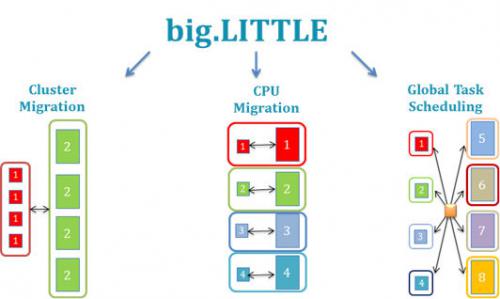
The big.LITTLE architecture is a design philosophy for computer processors that utilizes a combination of high-performance and low-power cores to achieve optimal performance and energy efficiency.

Developed by ARM Holdings, a British semiconductor company, the big.LITTLE architecture leverages both types of cores to address the varying needs of different tasks on a device. High-performance cores are used for tasks that require a lot of computing power, such as running intensive applications like video editing or running high-quality games. The low-power cores are used for simpler tasks like browsing the web or checking email, where performance isn’t as essential as battery life.

The big.LITTLE architecture is designed to balance performance and power consumption. When using low power cores, the processor enters a power-saving mode, thereby improving battery life. When high-performance cores are required, the low-power cores are shut down, and the high-performance cores take over to provide the necessary power.

The architecture works by managing workloads across a mix of high-performance cores and low-power cores. A task manager tracks the load on each core and, based on the demand for hardware resources in real-time, decides which core to use.

Big.LITTLE architecture is popular among manufacturers of mobile devices like smartphones, tablets, and laptops. This is because these devices demand a delicate balance between performance and power consumption, and big.LITTLE architecture can deliver both.

One of the key advantages of the big.LITTLE architecture is the potential energy savings, which can be significant, thus extending the battery life of devices significantly. Additionally, it can reduce heat production, providing a benefit for overall device longevity.

With the increased adoption of IoT devices, the big.LITTLE architecture is also gaining popularity. IoT devices often have low computing requirements; however, they still require power efficiency. Using big.LITTLE architecture, manufacturers can build devices that have both low power consumption and optimal performance.

In conclusion, the big.LITTLE architecture is a design philosophy that optimizes device performance and power usage through a combination of high-performance and low-power cores. It’s an innovative approach that balances power and performance demands in mobile devices and IoT. The architecture will continue to be popular in mobile devices as well as emerging IoT devices due to its power-saving qualities, which translate to better longevity and less impact on the environment.


Previous Article

How to Use Augmented Reality to Improve ...

Next Article

The 4 Best Google Play Alternatives for ...

Matthew Lynch

Related articles More from author

  • Digital & Mobile Technology

    Best Mice for Drag Clicking

    June 8, 2023
    By Matthew Lynch
  • Digital & Mobile Technology

    How to Change Your Reddit App Icon

    June 15, 2023
    By Matthew Lynch
  • Digital & Mobile Technology

    Stress-Busting Apps to Rant to Strangers Online or Vent Into the Void

    June 23, 2023
    By Matthew Lynch
  • Digital & Mobile Technology

    Freemake Video Converter Review

    June 23, 2023
    By Matthew Lynch
  • Digital & Mobile Technology

    How to Add or Remove Your Phone Number in Messages or FaceTime

    May 18, 2023
    By Matthew Lynch
  • Digital & Mobile Technology

    How to Center Text Across Multiple Cells in Excel

    May 20, 2023
    By Matthew Lynch

Search

Login & Registration

  • Log in
  • Entries feed
  • Comments feed
  • WordPress.org

Newsletter

Signup for The Tech Edvocate Newsletter and have the latest in EdTech news and opinion delivered to your email address!

About Us

Since technology is not going anywhere and does more good than harm, adapting is the best course of action. That is where The Tech Edvocate comes in. We plan to cover the PreK-12 and Higher Education EdTech sectors and provide our readers with the latest news and opinion on the subject. From time to time, I will invite other voices to weigh in on important issues in EdTech. We hope to provide a well-rounded, multi-faceted look at the past, present, the future of EdTech in the US and internationally.

We started this journey back in June 2016, and we plan to continue it for many more years to come. I hope that you will join us in this discussion of the past, present and future of EdTech and lend your own insight to the issues that are discussed.

Newsletter

Signup for The Tech Edvocate Newsletter and have the latest in EdTech news and opinion delivered to your email address!

Contact Us

The Tech Edvocate
910 Goddin Street
Richmond, VA 23231
(601) 630-5238
[email protected]

Copyright © 2026 Matthew Lynch. All rights reserved.