The Tech Edvocate

Top Menu

  • Advertisement
  • Apps
  • Home Page
  • Home Page Five (No Sidebar)
  • Home Page Four
  • Home Page Three
  • Home Page Two
  • Home Tech2
  • Icons [No Sidebar]
  • Left Sidbear Page
  • Lynch Educational Consulting
  • My Account
  • My Speaking Page
  • Newsletter Sign Up Confirmation
  • Newsletter Unsubscription
  • Our Brands
  • Page Example
  • Privacy Policy
  • Protected Content
  • Register
  • Request a Product Review
  • Shop
  • Shortcodes Examples
  • Signup
  • Start Here
    • Governance
    • Careers
    • Contact Us
  • Terms and Conditions
  • The Edvocate
  • The Tech Edvocate Product Guide
  • Topics
  • Write For Us
  • Advertise

Main Menu

  • Start Here
    • Our Brands
    • Governance
      • Lynch Educational Consulting, LLC.
      • Dr. Lynch’s Personal Website
      • Careers
    • Write For Us
    • The Tech Edvocate Product Guide
    • Contact Us
    • Books
    • Edupedia
    • Post a Job
    • The Edvocate Podcast
    • Terms and Conditions
    • Privacy Policy
  • Topics
    • Assistive Technology
    • Child Development Tech
    • Early Childhood & K-12 EdTech
    • EdTech Futures
    • EdTech News
    • EdTech Policy & Reform
    • EdTech Startups & Businesses
    • Higher Education EdTech
    • Online Learning & eLearning
    • Parent & Family Tech
    • Personalized Learning
    • Product Reviews
  • Advertise
  • Tech Edvocate Awards
  • The Edvocate
  • Pedagogue
  • School Ratings

logo

The Tech Edvocate

  • Start Here
    • Our Brands
    • Governance
      • Lynch Educational Consulting, LLC.
      • Dr. Lynch’s Personal Website
        • My Speaking Page
      • Careers
    • Write For Us
    • The Tech Edvocate Product Guide
    • Contact Us
    • Books
    • Edupedia
    • Post a Job
    • The Edvocate Podcast
    • Terms and Conditions
    • Privacy Policy
  • Topics
    • Assistive Technology
    • Child Development Tech
    • Early Childhood & K-12 EdTech
    • EdTech Futures
    • EdTech News
    • EdTech Policy & Reform
    • EdTech Startups & Businesses
    • Higher Education EdTech
    • Online Learning & eLearning
    • Parent & Family Tech
    • Personalized Learning
    • Product Reviews
  • Advertise
  • Tech Edvocate Awards
  • The Edvocate
  • Pedagogue
  • School Ratings
  • Big Walk developer House House Confirms ‘Sparing’ Use of Gen AI – Press Start

  • Baffling: How a Cyber Breach at South Korea’s Top Security Watchdog Exposed Millions

  • Wenn Ordnung den Bildschirm beruhigt: Warum klare Abläufe Casino-Unterhaltung einladender machen

  • Reddit AI Reviews: The Quiet Reshaping of Online Opinion

  • The Chilling Truth: Iran Cyberattacks Europe’s Food and Blood Supplies

  • Anthropic’s $3.4 Billion Bet on Gas: The Unseen Cost of AI’s Future

  • Tribit FlyBuds C3 Earbuds: Premium Features at a Budget-Friendly Price

  • Is AuraCam Pro’s Emotional AI a Privacy Nightmare or Security Breakthrough?

  • Unprecedented: N-able’s Global Shutdown After 30+ Zero-Days Revealed

  • The Urgent Truth: Your AI Tools for Financial Advisors Could Be a Compliance Nightmare

Digital & Mobile Technology
Home›Digital & Mobile Technology›What is RAID Data Recovery?

What is RAID Data Recovery?
By Matthew Lynch
May 10, 2023
0
Spread the love

When it comes to protecting your valuable digital data, RAID (Redundant Array of Independent Disks) systems have become a popular choice for many organizations. They are designed to provide optimal data storage availability, performance and scalability, while minimizing the risk of data loss. Despite the significant reliability and fault tolerance of RAID systems, they still remain vulnerable to various forms of data loss or corruption. This is where RAID data recovery comes in – an essential service that helps to retrieve lost or damaged data from RAID setups.

RAID data recovery involves using specialized tools and techniques to recover data from failed or damaged RAID arrays. The process typically involves identifying the cause of the failure, repairing the damaged hardware or replacing failed components, and extracting the lost data from the affected disks. It can be a complex and time-consuming process that requires expert knowledge and experience of RAID technologies and data recovery procedures.

There are several types of RAID systems, each with its unique data recovery challenges. The most common RAID configurations include:

– RAID 0: This is a non-redundant configuration that stripes data across multiple disks for improved performance. In the event of a single disk failure, data loss is unavoidable, and data recovery becomes more challenging due to the absence of data redundancy.

– RAID 1: This is a mirroring configuration that duplicates data across multiple disks. In the event of a single disk failure, the other disk(s) continue to operate, ensuring data availability. Data recovery is typically straightforward in this configuration, as long as the failed disk can be replaced or repaired.

– RAID 5: This configuration stripes data across multiple disks with parity information distributed across the disks. In the event of a single disk failure, the missing data can be reconstructed from the parity information. However, multiple disk failures can render data recovery impossible.

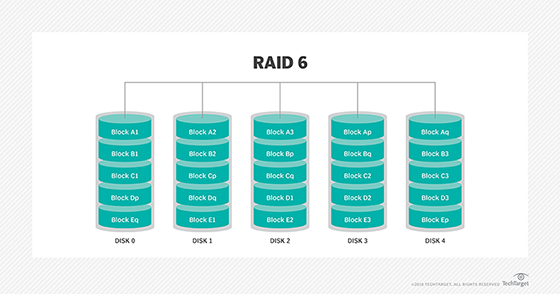
– RAID 6: This is similar to RAID 5, but with two parity disks, providing an additional layer of redundancy. This configuration allows for recovery of data even with the failure of up to two disks.

RAID systems can fail for several reasons, including hardware failure, human errors, software corruption, natural disasters, and cyberattacks. The most common causes of failure include disk failure or corruption, improper RAID controller configuration, power surges, and accidental data deletion. When data loss occurs, it is crucial to take immediate action to prevent further damage and loss.

Professional RAID data recovery services provide the expertise and resources needed to recover lost data from RAID systems. They have the necessary equipment and tools to diagnose and repair faulty hardware or software, and employ advanced data recovery methods to extract lost data from damaged disks. They use specialized software and hardware to reconstruct corrupted data, and ensure data integrity and confidentiality throughout the recovery process.

RAID data recovery is not a guaranteed solution, and sometimes not all data can be recovered. The key is to act fast and seek professional help from experts in RAID data recovery to increase the chances of recovering lost data. Regular backups, data redundancy, and consistent system maintenance are important steps that can help mitigate the risks of data loss and ensure business continuity in the event of a disaster.


Previous Article

What is QuickBooks?

Next Article

What is Random Access Memory (RAM)?

Matthew Lynch

Related articles More from author

  • Digital & Mobile Technology

    How Much Does YouTube Pay Per View?

    June 7, 2023
    By Matthew Lynch
  • Digital & Mobile Technology

    How to Make a Saddle in Minecraft

    June 4, 2023
    By Matthew Lynch
  • Digital & Mobile Technology

    What Is a KML File?

    June 23, 2023
    By Matthew Lynch
  • Digital & Mobile Technology

    What Is MirrorLink? A Guide to the Car Smartphone Communication Standard

    June 23, 2023
    By Matthew Lynch
  • Digital & Mobile Technology

    Your iPhone and iOS 17 Now Let You Type What You Ducking Mean

    February 1, 2024
    By Matthew Lynch
  • Digital & Mobile Technology

    How to Choose the Best VPN Server Location

    June 21, 2023
    By Matthew Lynch

Search

Login & Registration

  • Log in
  • Entries feed
  • Comments feed
  • WordPress.org

Newsletter

Signup for The Tech Edvocate Newsletter and have the latest in EdTech news and opinion delivered to your email address!

About Us

Since technology is not going anywhere and does more good than harm, adapting is the best course of action. That is where The Tech Edvocate comes in. We plan to cover the PreK-12 and Higher Education EdTech sectors and provide our readers with the latest news and opinion on the subject. From time to time, I will invite other voices to weigh in on important issues in EdTech. We hope to provide a well-rounded, multi-faceted look at the past, present, the future of EdTech in the US and internationally.

We started this journey back in June 2016, and we plan to continue it for many more years to come. I hope that you will join us in this discussion of the past, present and future of EdTech and lend your own insight to the issues that are discussed.

Newsletter

Signup for The Tech Edvocate Newsletter and have the latest in EdTech news and opinion delivered to your email address!

Contact Us

The Tech Edvocate
910 Goddin Street
Richmond, VA 23231
(601) 630-5238
[email protected]

Copyright © 2026 Matthew Lynch. All rights reserved.