The Tech Edvocate

Top Menu

  • Advertisement
  • Apps
  • Home Page
  • Home Page Five (No Sidebar)
  • Home Page Four
  • Home Page Three
  • Home Page Two
  • Home Tech2
  • Icons [No Sidebar]
  • Left Sidbear Page
  • Lynch Educational Consulting
  • My Account
  • My Speaking Page
  • Newsletter Sign Up Confirmation
  • Newsletter Unsubscription
  • Our Brands
  • Page Example
  • Privacy Policy
  • Protected Content
  • Register
  • Request a Product Review
  • Shop
  • Shortcodes Examples
  • Signup
  • Start Here
    • Governance
    • Careers
    • Contact Us
  • Terms and Conditions
  • The Edvocate
  • The Tech Edvocate Product Guide
  • Topics
  • Write For Us
  • Advertise

Main Menu

  • Start Here
    • Our Brands
    • Governance
      • Lynch Educational Consulting, LLC.
      • Dr. Lynch’s Personal Website
      • Careers
    • Write For Us
    • The Tech Edvocate Product Guide
    • Contact Us
    • Books
    • Edupedia
    • Post a Job
    • The Edvocate Podcast
    • Terms and Conditions
    • Privacy Policy
  • Topics
    • Assistive Technology
    • Child Development Tech
    • Early Childhood & K-12 EdTech
    • EdTech Futures
    • EdTech News
    • EdTech Policy & Reform
    • EdTech Startups & Businesses
    • Higher Education EdTech
    • Online Learning & eLearning
    • Parent & Family Tech
    • Personalized Learning
    • Product Reviews
  • Advertise
  • Tech Edvocate Awards
  • The Edvocate
  • Pedagogue
  • School Ratings

logo

The Tech Edvocate

  • Start Here
    • Our Brands
    • Governance
      • Lynch Educational Consulting, LLC.
      • Dr. Lynch’s Personal Website
        • My Speaking Page
      • Careers
    • Write For Us
    • The Tech Edvocate Product Guide
    • Contact Us
    • Books
    • Edupedia
    • Post a Job
    • The Edvocate Podcast
    • Terms and Conditions
    • Privacy Policy
  • Topics
    • Assistive Technology
    • Child Development Tech
    • Early Childhood & K-12 EdTech
    • EdTech Futures
    • EdTech News
    • EdTech Policy & Reform
    • EdTech Startups & Businesses
    • Higher Education EdTech
    • Online Learning & eLearning
    • Parent & Family Tech
    • Personalized Learning
    • Product Reviews
  • Advertise
  • Tech Edvocate Awards
  • The Edvocate
  • Pedagogue
  • School Ratings
  • A Visitors Guide to Long Beach (CA), United States

  • A Visitor’s Guide to Fresno (CA), United States

  • A Visitors Guide to New Orleans (LA), United States

  • A Visitors Guide to Sacramento (CA), United States

  • A Visitors Guide to Lyon, France

  • JisuLife Ultra2 Portable Fan: A Powerful Multi-Function Cooling Solution

  • A Visitors Guide to Viña del Mar, Chile

  • A Visitors Guide to Århus, Denmark

  • A Visitors Guide to Bakersfield (CA), United States

  • A Visitors Guide to Aurora (CO), United States

Digital & Mobile Technology
Home›Digital & Mobile Technology›What is Message Passing?

What is Message Passing?
By Matthew Lynch
May 24, 2023
0
Spread the love

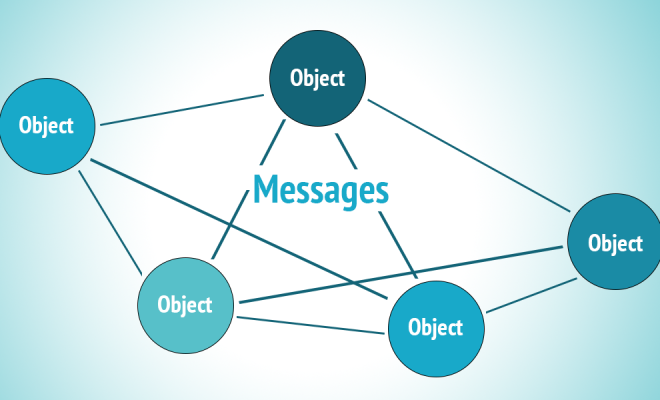
Message Passing is a programming paradigm used in concurrent and distributed systems, where processes or threads communicate by exchanging messages. The basic idea behind message passing is that processes can synchronize with each other by exchanging data through messages, rather than by accessing shared variables or memory.

In message passing systems, each process has its own private memory, and communication between processes is only possible through explicitly sending messages. A message is a unit of information that is sent from one process to another. The sending process constructs a message, specifying the destination process, and sends it over a communication channel. The receiving process then receives the message and uses its contents to carry out some action.

There are two types of message passing systems: synchronous and asynchronous. In synchronous message passing, the sender blocks until the receiver has accepted the message, allowing for precise coordination between processes. In asynchronous message passing, the sender does not wait for the receiver to accept the message, allowing for greater concurrency and responsiveness.

Message passing can be implemented in different ways, such as through sockets or pipes in Unix-based systems, or through Remote Procedure Calls (RPC) in distributed systems. Message passing is used in a wide variety of applications, such as distributed computing, parallel processing, and networking. It is also used in operating systems for interprocess communication and for realizing communication between processes in microservices architecture.

Message passing offers several benefits over other programming paradigms. It simplifies concurrency by removing the need for synchronization primitives such as mutexes, semaphores, and locks, which can be difficult to use correctly. It also provides a natural way to design distributed systems, where processes may not share memory, and communication must be explicitly defined.

In conclusion, Message Passing is a powerful and flexible programming paradigm for designing distributed and concurrent systems. It allows processes or threads to communicate and synchronize by exchanging messages, which simplifies concurrency and provides a natural way to design distributed systems. Its importance will continue to grow as more applications move towards distributed computing and microservices architecture.

Previous Article

What is Meditech (Medical Information Technology Inc.)

Next Article

What is Microelectronics?

Matthew Lynch

Related articles More from author

  • Digital & Mobile Technology

    Best Chegg Alternatives You Can Try

    June 21, 2023
    By Matthew Lynch
  • Digital & Mobile Technology

    How to Gameshare on the Nintendo Switch

    June 10, 2023
    By Matthew Lynch
  • Digital & Mobile Technology

    Making Free Calls on Your iPad

    June 21, 2023
    By Matthew Lynch
  • Digital & Mobile Technology

    Online Shopping Sites With Free International Shipping

    June 15, 2023
    By Matthew Lynch
  • Digital & Mobile Technology

    Ways to Get a Live Wallpaper for Your Mac: It’s Easier Than You Think

    June 6, 2023
    By Matthew Lynch
  • Digital & Mobile Technology

    What Is an ICS File?

    June 2, 2023
    By Matthew Lynch

Search

Login & Registration

  • Register
  • Log in
  • Entries feed
  • Comments feed
  • WordPress.org

Newsletter

Signup for The Tech Edvocate Newsletter and have the latest in EdTech news and opinion delivered to your email address!

About Us

Since technology is not going anywhere and does more good than harm, adapting is the best course of action. That is where The Tech Edvocate comes in. We plan to cover the PreK-12 and Higher Education EdTech sectors and provide our readers with the latest news and opinion on the subject. From time to time, I will invite other voices to weigh in on important issues in EdTech. We hope to provide a well-rounded, multi-faceted look at the past, present, the future of EdTech in the US and internationally.

We started this journey back in June 2016, and we plan to continue it for many more years to come. I hope that you will join us in this discussion of the past, present and future of EdTech and lend your own insight to the issues that are discussed.

Newsletter

Signup for The Tech Edvocate Newsletter and have the latest in EdTech news and opinion delivered to your email address!

Contact Us

The Tech Edvocate
910 Goddin Street
Richmond, VA 23231
(601) 630-5238
[email protected]

Copyright © 2025 Matthew Lynch. All rights reserved.