The Tech Edvocate

Top Menu

  • Advertisement
  • Apps
  • Home Page
  • Home Page Five (No Sidebar)
  • Home Page Four
  • Home Page Three
  • Home Page Two
  • Home Tech2
  • Icons [No Sidebar]
  • Left Sidbear Page
  • Lynch Educational Consulting
  • My Account
  • My Speaking Page
  • Newsletter Sign Up Confirmation
  • Newsletter Unsubscription
  • Our Brands
  • Page Example
  • Privacy Policy
  • Protected Content
  • Register
  • Request a Product Review
  • Shop
  • Shortcodes Examples
  • Signup
  • Start Here
    • Governance
    • Careers
    • Contact Us
  • Terms and Conditions
  • The Edvocate
  • The Tech Edvocate Product Guide
  • Topics
  • Write For Us
  • Advertise

Main Menu

  • Start Here
    • Our Brands
    • Governance
      • Lynch Educational Consulting, LLC.
      • Dr. Lynch’s Personal Website
      • Careers
    • Write For Us
    • The Tech Edvocate Product Guide
    • Contact Us
    • Books
    • Edupedia
    • Post a Job
    • The Edvocate Podcast
    • Terms and Conditions
    • Privacy Policy
  • Topics
    • Assistive Technology
    • Child Development Tech
    • Early Childhood & K-12 EdTech
    • EdTech Futures
    • EdTech News
    • EdTech Policy & Reform
    • EdTech Startups & Businesses
    • Higher Education EdTech
    • Online Learning & eLearning
    • Parent & Family Tech
    • Personalized Learning
    • Product Reviews
  • Advertise
  • Tech Edvocate Awards
  • The Edvocate
  • Pedagogue
  • School Ratings

logo

The Tech Edvocate

  • Start Here
    • Our Brands
    • Governance
      • Lynch Educational Consulting, LLC.
      • Dr. Lynch’s Personal Website
        • My Speaking Page
      • Careers
    • Write For Us
    • The Tech Edvocate Product Guide
    • Contact Us
    • Books
    • Edupedia
    • Post a Job
    • The Edvocate Podcast
    • Terms and Conditions
    • Privacy Policy
  • Topics
    • Assistive Technology
    • Child Development Tech
    • Early Childhood & K-12 EdTech
    • EdTech Futures
    • EdTech News
    • EdTech Policy & Reform
    • EdTech Startups & Businesses
    • Higher Education EdTech
    • Online Learning & eLearning
    • Parent & Family Tech
    • Personalized Learning
    • Product Reviews
  • Advertise
  • Tech Edvocate Awards
  • The Edvocate
  • Pedagogue
  • School Ratings
  • This One Privacy Camera Feature Could Change Smart Homes Forever

  • Unprecedented: White House Mandates AI Security Incident Reporting After Troubling Breaches

  • The AI Storm Tracker Predicting Viral Narratives Just Landed $7 Million – Here’s Why It Matters

  • This State Just Unleashed AI to Prescribe Meds — Are We Ready for the Future of Medicine?

  • Outrageous: YouTuber Loses Decade of Work to Single YouTube Channel Ban

  • The CyberLeek Saga: What This New GTA 6 Footage Means For Rockstar

  • The Startling Truth About AI’s Medical Revolution You Need to Know

  • This Crucial Shift in AI in Higher Education Could Upend Your Future

  • Bizarre CloudConnect CRM Vulnerability: Why Thousands of Businesses Are Now Exposed

  • HomeSecure Breach: This is How 5 Million Mortgages Got Hacked

Digital & Mobile Technology
Home›Digital & Mobile Technology›What Is an STL File and What Is It Used For?

What Is an STL File and What Is It Used For?
By Matthew Lynch
June 12, 2023
0
Spread the love

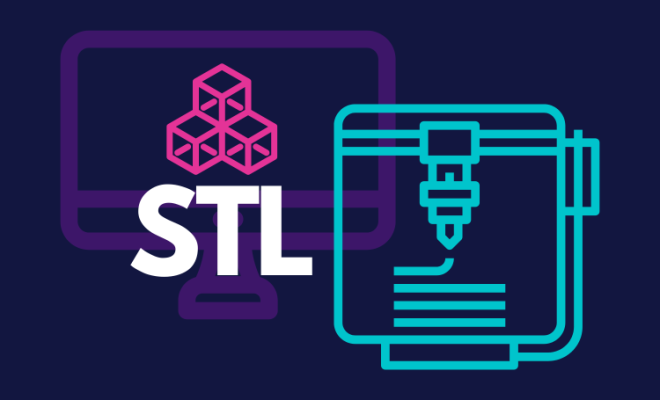
STL files are a unique file format that is commonly used in the field of 3D printing. The STL file format was first introduced by Charles Hull in 1987, and since then it has become one of the most widely used file formats for 3D printing. In this article, we will explore what an STL file is, how it works, and what it is used for.

What Is an STL File?

An STL file is a digital file format used in 3D printing. It is a format that describes the surface geometry of a 3D object using triangles. An STL file contains the surface geometry of a 3D object in a machine-readable format. These files can be created using various 3D modeling software and are designed specifically for 3D printing.

How Does an STL File Work?

An STL file is composed of a series of triangles that create the surface of a 3D object. These triangles are created based on the mesh of the 3D object. Each triangle is made up of three points that represent the vertices of the triangle. These vertices are defined by their x, y, and z coordinates.

The STL file also contains information about the orientation of the triangles. This information is used by 3D printers to determine how the object should be printed. The orientation of the triangles can affect the strength and stability of the printed object.

What Is an STL File Used For?

An STL file is used for 3D printing. It is the file format that is used by 3D printers to create physical objects from digital designs. These files are created using 3D modeling software and can be used to create prototypes, manufacturing parts, and even sculptures.

The printed object is created by extruding a material, such as plastic, layer by layer on a build plate. The information contained in the STL file directs the 3D printer on how to extrude the material and create the object.

Conclusion

STL files are an essential part of the 3D printing process. They are a unique file format that describes the surface geometry of a 3D object in a machine-readable format. These files are created using 3D modeling software and are used to create physical objects through 3D printing. As 3D printing technology continues to evolve, the use of STL files will only continue to grow.


Previous Article

How to Turn On Hibernate Mode on ...

Next Article

The Top CBT Apps to Improve Your ...

Matthew Lynch

Related articles More from author

  • Assistive TechnologyDigital & Mobile Technology

    How to Fix No Sound in Spotify on a Windows PC

    June 10, 2023
    By Matthew Lynch
  • Digital & Mobile Technology

    Uses for a First-Generation (Original) iPad

    July 5, 2023
    By Matthew Lynch
  • Digital & Mobile Technology

    What Is a BlackBerry Phone?

    June 4, 2023
    By Matthew Lynch
  • Digital & Mobile Technology

    Fixes to Try When Adobe Acrobat Reader Can’t Open PDF Files on Windows

    August 5, 2023
    By Matthew Lynch
  • Digital & Mobile Technology

    What is Long Term Evolution (LTE)?

    May 23, 2023
    By Matthew Lynch
  • Digital & Mobile Technology

    Best Android TV Apps Worth Installing ASAP

    June 22, 2023
    By Matthew Lynch

Search

Login & Registration

  • Log in
  • Entries feed
  • Comments feed
  • WordPress.org

Newsletter

Signup for The Tech Edvocate Newsletter and have the latest in EdTech news and opinion delivered to your email address!

About Us

Since technology is not going anywhere and does more good than harm, adapting is the best course of action. That is where The Tech Edvocate comes in. We plan to cover the PreK-12 and Higher Education EdTech sectors and provide our readers with the latest news and opinion on the subject. From time to time, I will invite other voices to weigh in on important issues in EdTech. We hope to provide a well-rounded, multi-faceted look at the past, present, the future of EdTech in the US and internationally.

We started this journey back in June 2016, and we plan to continue it for many more years to come. I hope that you will join us in this discussion of the past, present and future of EdTech and lend your own insight to the issues that are discussed.

Newsletter

Signup for The Tech Edvocate Newsletter and have the latest in EdTech news and opinion delivered to your email address!

Contact Us

The Tech Edvocate
910 Goddin Street
Richmond, VA 23231
(601) 630-5238
[email protected]

Copyright © 2026 Matthew Lynch. All rights reserved.