The Tech Edvocate

Top Menu

  • Advertisement
  • Apps
  • Home Page
  • Home Page Five (No Sidebar)
  • Home Page Four
  • Home Page Three
  • Home Page Two
  • Home Tech2
  • Icons [No Sidebar]
  • Left Sidbear Page
  • Lynch Educational Consulting
  • My Account
  • My Speaking Page
  • Newsletter Sign Up Confirmation
  • Newsletter Unsubscription
  • Our Brands
  • Page Example
  • Privacy Policy
  • Protected Content
  • Register
  • Request a Product Review
  • Shop
  • Shortcodes Examples
  • Signup
  • Start Here
    • Governance
    • Careers
    • Contact Us
  • Terms and Conditions
  • The Edvocate
  • The Tech Edvocate Product Guide
  • Topics
  • Write For Us
  • Advertise

Main Menu

  • Start Here
    • Our Brands
    • Governance
      • Lynch Educational Consulting, LLC.
      • Dr. Lynch’s Personal Website
      • Careers
    • Write For Us
    • The Tech Edvocate Product Guide
    • Contact Us
    • Books
    • Edupedia
    • Post a Job
    • The Edvocate Podcast
    • Terms and Conditions
    • Privacy Policy
  • Topics
    • Assistive Technology
    • Child Development Tech
    • Early Childhood & K-12 EdTech
    • EdTech Futures
    • EdTech News
    • EdTech Policy & Reform
    • EdTech Startups & Businesses
    • Higher Education EdTech
    • Online Learning & eLearning
    • Parent & Family Tech
    • Personalized Learning
    • Product Reviews
  • Advertise
  • Tech Edvocate Awards
  • The Edvocate
  • Pedagogue
  • School Ratings

logo

The Tech Edvocate

  • Start Here
    • Our Brands
    • Governance
      • Lynch Educational Consulting, LLC.
      • Dr. Lynch’s Personal Website
        • My Speaking Page
      • Careers
    • Write For Us
    • The Tech Edvocate Product Guide
    • Contact Us
    • Books
    • Edupedia
    • Post a Job
    • The Edvocate Podcast
    • Terms and Conditions
    • Privacy Policy
  • Topics
    • Assistive Technology
    • Child Development Tech
    • Early Childhood & K-12 EdTech
    • EdTech Futures
    • EdTech News
    • EdTech Policy & Reform
    • EdTech Startups & Businesses
    • Higher Education EdTech
    • Online Learning & eLearning
    • Parent & Family Tech
    • Personalized Learning
    • Product Reviews
  • Advertise
  • Tech Edvocate Awards
  • The Edvocate
  • Pedagogue
  • School Ratings
  • Cybersecurity vs. Green Energy: Which Path Will Make You Richer in 2026?

  • Why These 10 Renewable Energy Certifications Are Quietly Reshaping Careers by 2026

  • Why Millions Are Rushing to Online Renewable Energy Certifications Right Now

  • August AI vs. USMLE: The Unsettling Future of Medical Licensing

  • One AI’s Perfect USMLE Score Just Blew Up Medical Education As We Know It

  • This AI Just Aced the USMLE: Why Your Medical Career Might Never Be the Same

  • The Quiet Exodus: Why Senior FinTech Developers Are Abandoning Corporate Life

  • The Quiet Revolution: Where Elite FinTech Developers Are Fleeing in 2026

  • The Quiet Exodus: Why Senior FinTech Developers Are Ditching Corporate Life

  • AI Governance Software: Pricing and Features Comparison

Digital & Mobile Technology
Home›Digital & Mobile Technology›What Is an HPGL File?

What Is an HPGL File?
By Matthew Lynch
July 14, 2023
0
Spread the love

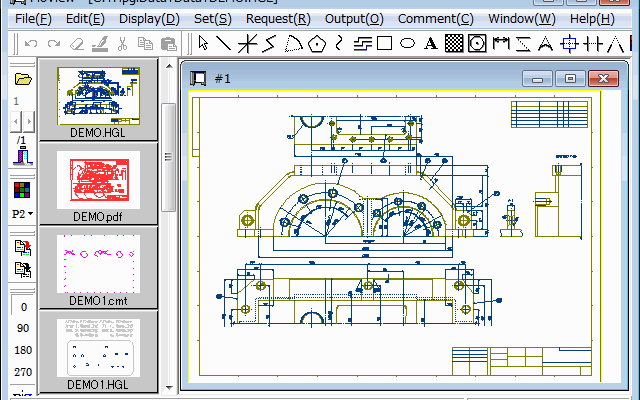
HPGL stands for Hewlett-Packard Graphics Language. It is a vector graphics format that was developed by Hewlett-Packard back in the 1970s. HPGL files are commonly used in the printing industry, as they are the standard format for controlling pen plotters and other types of printers.

How Does an HPGL File Work?

An HPGL file contains a series of commands that tell a printer how to draw lines, shapes, and text. These commands are written in a simple, text-based language that is easy to understand and modify.

For example, to draw a line, the HPGL file might contain the following command:

1PU,100,100;

2PD,200,200;

The first command, “PU”, stands for “pen up”. It tells the printer to move the pen to the starting position of the line, without actually drawing anything. The second command, “PD”, stands for “pen down”. It tells the printer to move the pen to the ending position of the line, while drawing the line.

Other commands in an HPGL file might include “PA” (pen absolute), “PR” (pen relative), “CI” (circle), and “LT” (line type).

Why Are HPGL Files Important?

While HPGL files are not as common as they once were, they are still used in some industries where vector graphics are important. For example, architects and engineers might use HPGL files to create detailed drawings of buildings and other structures.

HPGL files are also important because they are an open, standardized format. This means that they can be read and modified by a wide variety of software programs and devices. This makes it easy to share and collaborate on HPGL files, even if you are using different types of software or hardware.

How Do You Open an HPGL File?

To open an HPGL file, you will need to use a software program that can read and interpret the commands in the file. Some common programs that can open HPGL files include Adobe Illustrator, CorelDRAW, and Inkscape.

If you don’t have access to one of these programs, you can also try using a text editor to open the HPGL file. While you won’t be able to see the drawing itself, you will be able to view and modify the commands in the file.

Conclusion

In summary, an HPGL file is a vector graphics format that is used to control pen plotters and other types of printers. It contains a series of simple commands that tell the printer how to draw lines, shapes, and text. While not as common as they once were, HPGL files are still important in some industries where vector graphics are important.


Previous Article

Battery Life in Magic Mouse Pulls a ...

Next Article

Asus Unveils Steam Deck Competitor

Matthew Lynch

Related articles More from author

  • Digital & Mobile Technology

    How to Use the Ping Command in Windows

    June 1, 2023
    By Matthew Lynch
  • Digital & Mobile Technology

    Great Sites to Do a Book Search by Plot or Subject

    August 5, 2023
    By Matthew Lynch
  • Digital & Mobile Technology

    Best Walkie-Talkie Apps of 2023

    June 6, 2023
    By Matthew Lynch
  • Digital & Mobile Technology

    Raspberry Pi 3 vs. 4: What’s the Difference?

    June 14, 2023
    By Matthew Lynch
  • Digital & Mobile Technology

    Best Free Horror Movie Websites

    June 1, 2023
    By Matthew Lynch
  • Digital & Mobile Technology

    What is Ad Space?

    April 25, 2023
    By Matthew Lynch

Search

Login & Registration

  • Log in
  • Entries feed
  • Comments feed
  • WordPress.org

Newsletter

Signup for The Tech Edvocate Newsletter and have the latest in EdTech news and opinion delivered to your email address!

About Us

Since technology is not going anywhere and does more good than harm, adapting is the best course of action. That is where The Tech Edvocate comes in. We plan to cover the PreK-12 and Higher Education EdTech sectors and provide our readers with the latest news and opinion on the subject. From time to time, I will invite other voices to weigh in on important issues in EdTech. We hope to provide a well-rounded, multi-faceted look at the past, present, the future of EdTech in the US and internationally.

We started this journey back in June 2016, and we plan to continue it for many more years to come. I hope that you will join us in this discussion of the past, present and future of EdTech and lend your own insight to the issues that are discussed.

Newsletter

Signup for The Tech Edvocate Newsletter and have the latest in EdTech news and opinion delivered to your email address!

Contact Us

The Tech Edvocate
910 Goddin Street
Richmond, VA 23231
(601) 630-5238
[email protected]

Copyright © 2026 Matthew Lynch. All rights reserved.