The Tech Edvocate

Top Menu

  • Advertisement
  • Apps
  • Home Page
  • Home Page Five (No Sidebar)
  • Home Page Four
  • Home Page Three
  • Home Page Two
  • Home Tech2
  • Icons [No Sidebar]
  • Left Sidbear Page
  • Lynch Educational Consulting
  • My Account
  • My Speaking Page
  • Newsletter Sign Up Confirmation
  • Newsletter Unsubscription
  • Our Brands
  • Page Example
  • Privacy Policy
  • Protected Content
  • Register
  • Request a Product Review
  • Shop
  • Shortcodes Examples
  • Signup
  • Start Here
    • Governance
    • Careers
    • Contact Us
  • Terms and Conditions
  • The Edvocate
  • The Tech Edvocate Product Guide
  • Topics
  • Write For Us
  • Advertise

Main Menu

  • Start Here
    • Our Brands
    • Governance
      • Lynch Educational Consulting, LLC.
      • Dr. Lynch’s Personal Website
      • Careers
    • Write For Us
    • The Tech Edvocate Product Guide
    • Contact Us
    • Books
    • Edupedia
    • Post a Job
    • The Edvocate Podcast
    • Terms and Conditions
    • Privacy Policy
  • Topics
    • Assistive Technology
    • Child Development Tech
    • Early Childhood & K-12 EdTech
    • EdTech Futures
    • EdTech News
    • EdTech Policy & Reform
    • EdTech Startups & Businesses
    • Higher Education EdTech
    • Online Learning & eLearning
    • Parent & Family Tech
    • Personalized Learning
    • Product Reviews
  • Advertise
  • Tech Edvocate Awards
  • The Edvocate
  • Pedagogue
  • School Ratings

logo

The Tech Edvocate

  • Start Here
    • Our Brands
    • Governance
      • Lynch Educational Consulting, LLC.
      • Dr. Lynch’s Personal Website
        • My Speaking Page
      • Careers
    • Write For Us
    • The Tech Edvocate Product Guide
    • Contact Us
    • Books
    • Edupedia
    • Post a Job
    • The Edvocate Podcast
    • Terms and Conditions
    • Privacy Policy
  • Topics
    • Assistive Technology
    • Child Development Tech
    • Early Childhood & K-12 EdTech
    • EdTech Futures
    • EdTech News
    • EdTech Policy & Reform
    • EdTech Startups & Businesses
    • Higher Education EdTech
    • Online Learning & eLearning
    • Parent & Family Tech
    • Personalized Learning
    • Product Reviews
  • Advertise
  • Tech Edvocate Awards
  • The Edvocate
  • Pedagogue
  • School Ratings
  • The Reckless Ben Controversy: An Outrageous Fight for Justice

  • Outrageous: The Sydney Sweeney Ad Controversy You Didn’t See Coming — And Why It’s Working

  • The AI CRM War: Why Salesforce Just Made a $2 Billion Bid for a Startup

  • OpenAI’s Navier-Stokes ‘Solution’ Ignites Firestorm: Did They Steal It?

  • Blizzard’s Boldest Bet: Why a StarCraft Shooter in 2030 Could Redefine Gaming

  • Volatile: Why Top AI Bosses Just Triggered a Massive AI Stocks Decline

  • ‘Godfather of AI’ backs Anthropic chief’s call to slow down development

  • Why Millions Are Flocking to Trade Schools as AI Reshapes the Job Market

  • Unmasking the Bizarre ‘Cat in the Hat’ Trend: Why Schools Are Sounding the Alarm

  • Florida DMV Hacked: 200,000 Driver Records Exposed in Stunning Breach

Digital & Mobile Technology
Home›Digital & Mobile Technology›What Is Accelerated Graphics Port (AGP)?

What Is Accelerated Graphics Port (AGP)?
By Matthew Lynch
June 11, 2023
0
Spread the love

Accelerated Graphics Port (AGP) is a high-speed interface standard for attaching high performance video cards to a computer’s motherboard. It was developed in the late 1990s as a way to improve the graphics performance of personal computers. AGP offers several benefits over older graphics card interface standards, including faster data transfer rates, improved graphics quality, and better support for advanced features like 3D rendering and video playback.

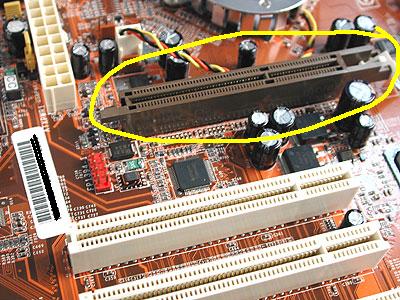
AGP is a dedicated graphics card slot that is found on most motherboards produced between 1997 and 2005. It replaced the earlier Peripheral Component Interconnect (PCI) standard for graphics cards and featured a much faster data transfer rate. AGP slots are usually colored brown and are located above the PCI slots on a motherboard.

AGP is designed to interface with a dedicated graphics card that contains its own processor and memory. The graphics card sits in the AGP slot and communicates with the rest of the system via the AGP bus. The AGP bus is a high-speed data path that allows the graphics card to transfer data quickly to and from the computer’s memory and the CPU.

AGP provides a number of performance benefits over older graphics card interfaces. For example, AGP is capable of transferring data at speeds of up to 2 GB per second, compared to 133 MB per second for PCI. This allows AGP graphics cards to display complex 3D graphics and high-resolution video without slowing down the system.

AGP also offers improved graphics quality thanks to its support for advanced features like texture mapping, shadowing, and hardware acceleration. These features are designed to reduce the workload on the CPU and improve the visual quality of games and other graphics-intensive applications.

Despite its many benefits, AGP has largely been replaced by newer graphics card interface standards like PCI Express (PCIe). PCIe offers even higher data transfer speeds and improved compatibility with a wide range of graphics cards. However, AGP remains a popular choice for retro gaming enthusiasts and those looking to build or upgrade an older computer system.

In conclusion, Accelerated Graphics Port (AGP) is a high-speed interface standard that was designed to improve the graphics performance of personal computers. Featuring faster data transfer rates, improved graphics quality, and better support for advanced features, AGP was a significant improvement over earlier graphics card interface standards. While it has largely been replaced by newer standards like PCIe, AGP remains a popular choice for retro gaming enthusiasts and those looking to build or upgrade older computer systems.


Previous Article

How to Connect an Android Phone to ...

Next Article

How to Unlock an HP Laptop

Matthew Lynch

Related articles More from author

  • Digital & Mobile Technology

    How to Use the Ngram Viewer Tool in Google Books

    June 4, 2023
    By Matthew Lynch
  • Digital & Mobile Technology

    How to Transfer EPUB to Kindle

    May 29, 2023
    By Matthew Lynch
  • Digital & Mobile Technology

    What is Split Domain Name System (Split DNS)?

    May 12, 2023
    By Matthew Lynch
  • Digital & Mobile Technology

    Netflix Party Not Working? A Troubleshooting Guide

    June 10, 2023
    By Matthew Lynch
  • Digital & Mobile Technology

    What Is an XSLT File?

    July 6, 2023
    By Matthew Lynch
  • Digital & Mobile Technology

    How to Automatically End Tasks While Shutting Down Windows

    May 18, 2023
    By Matthew Lynch

Search

Login & Registration

  • Log in
  • Entries feed
  • Comments feed
  • WordPress.org

Newsletter

Signup for The Tech Edvocate Newsletter and have the latest in EdTech news and opinion delivered to your email address!

About Us

Since technology is not going anywhere and does more good than harm, adapting is the best course of action. That is where The Tech Edvocate comes in. We plan to cover the PreK-12 and Higher Education EdTech sectors and provide our readers with the latest news and opinion on the subject. From time to time, I will invite other voices to weigh in on important issues in EdTech. We hope to provide a well-rounded, multi-faceted look at the past, present, the future of EdTech in the US and internationally.

We started this journey back in June 2016, and we plan to continue it for many more years to come. I hope that you will join us in this discussion of the past, present and future of EdTech and lend your own insight to the issues that are discussed.

Newsletter

Signup for The Tech Edvocate Newsletter and have the latest in EdTech news and opinion delivered to your email address!

Contact Us

The Tech Edvocate
910 Goddin Street
Richmond, VA 23231
(601) 630-5238
[email protected]

Copyright © 2026 Matthew Lynch. All rights reserved.