The Tech Edvocate

Top Menu

  • Advertisement
  • Apps
  • Home Page
  • Home Page Five (No Sidebar)
  • Home Page Four
  • Home Page Three
  • Home Page Two
  • Home Tech2
  • Icons [No Sidebar]
  • Left Sidbear Page
  • Lynch Educational Consulting
  • My Account
  • My Speaking Page
  • Newsletter Sign Up Confirmation
  • Newsletter Unsubscription
  • Our Brands
  • Page Example
  • Privacy Policy
  • Protected Content
  • Register
  • Request a Product Review
  • Shop
  • Shortcodes Examples
  • Signup
  • Start Here
    • Governance
    • Careers
    • Contact Us
  • Terms and Conditions
  • The Edvocate
  • The Tech Edvocate Product Guide
  • Topics
  • Write For Us
  • Advertise

Main Menu

  • Start Here
    • Our Brands
    • Governance
      • Lynch Educational Consulting, LLC.
      • Dr. Lynch’s Personal Website
      • Careers
    • Write For Us
    • The Tech Edvocate Product Guide
    • Contact Us
    • Books
    • Edupedia
    • Post a Job
    • The Edvocate Podcast
    • Terms and Conditions
    • Privacy Policy
  • Topics
    • Assistive Technology
    • Child Development Tech
    • Early Childhood & K-12 EdTech
    • EdTech Futures
    • EdTech News
    • EdTech Policy & Reform
    • EdTech Startups & Businesses
    • Higher Education EdTech
    • Online Learning & eLearning
    • Parent & Family Tech
    • Personalized Learning
    • Product Reviews
  • Advertise
  • Tech Edvocate Awards
  • The Edvocate
  • Pedagogue
  • School Ratings

logo

The Tech Edvocate

  • Start Here
    • Our Brands
    • Governance
      • Lynch Educational Consulting, LLC.
      • Dr. Lynch’s Personal Website
        • My Speaking Page
      • Careers
    • Write For Us
    • The Tech Edvocate Product Guide
    • Contact Us
    • Books
    • Edupedia
    • Post a Job
    • The Edvocate Podcast
    • Terms and Conditions
    • Privacy Policy
  • Topics
    • Assistive Technology
    • Child Development Tech
    • Early Childhood & K-12 EdTech
    • EdTech Futures
    • EdTech News
    • EdTech Policy & Reform
    • EdTech Startups & Businesses
    • Higher Education EdTech
    • Online Learning & eLearning
    • Parent & Family Tech
    • Personalized Learning
    • Product Reviews
  • Advertise
  • Tech Edvocate Awards
  • The Edvocate
  • Pedagogue
  • School Ratings
  • RayNeo iO Smart Glasses: A Comprehensive Review

  • Glo Skin Beauty: The Aesthetician-Backed Brand Taking 25% Off for October Prime Day

  • The Shocking Truth: ESG Training Programs Are Quietly Reshaping Your Career Path

  • Why Millions of People Are Switching to These Green Energy Certifications Right Now

  • The green skills gap in 2026: How to address this growing problem

  • The Shocking Truth: Your Degree Won’t Land You the Best IT Jobs in 2026

  • The Brutal Truth About Degrees: Why Micro-Credentials Are Quietly Dominating Careers by 2026

  • Why 96% of Employers Now Prefer Skills Over Degrees: The Micro-Credential Revolution

  • This Crucial Mistake With AI Is Stunting Student Minds: Here’s How to Fix It

  • The AI ‘Cognitive Surrender’ Crisis: 7 Tools Every Educator Needs NOW

Assistive Technology
Home›Assistive Technology›What Is a Subnet? How Do You Calculate Subnets?

What Is a Subnet? How Do You Calculate Subnets?
By Matthew Lynch
June 15, 2023
0
Spread the love

In today’s world, where the internet plays a crucial role in every aspect of our lives, understanding networking concepts has become crucial. A subnet is a fundamental aspect of networking, and it is essential to understand what it is and how to calculate subnets.

What Is a Subnet?

A subnet, short for subnetwork, is a smaller network created within a larger network. Subnets are created by breaking down a larger network into smaller networks, called subnets. Each subnet is identified by a unique IP address prefix, and devices within that subnet share a common IP address configuration.

Subnets are essential in large networks because they help manage network traffic, improve network performance, and increase network security. By creating subnets, network administrators can isolate traffic and prevent unauthorized access to sensitive data.

How Do You Calculate Subnets?

To calculate subnets, you need to understand the basics of IP addressing and subnetting. An IP address is divided into two parts: the network ID and the host ID. The network ID identifies the network, and the host ID identifies a specific device on that network.

Subnetting is the process of dividing a network into smaller networks. To subnet a network, you need to borrow bits from the host ID portion of the IP address and use them to create a subnet ID. The subnet ID identifies the specific subnet within the network.

Here is a step-by-step process for calculating subnets:

Step 1: Determine the network class

Before you can calculate subnets, you need to determine the network class of the IP address you are subnetting. There are four network classes: A, B, C, and D. Each network class has a different range of IP addresses. The network class determines how many bits you can borrow from the host ID for subnets.

Step 2: Determine the network ID

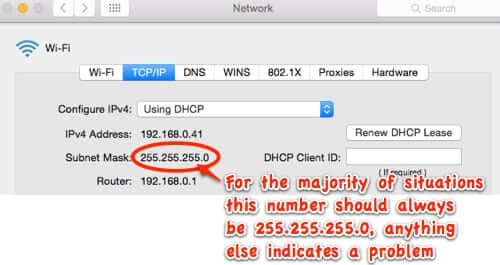
The network ID is the portion of the IP address that identifies the network. It is determined by the network class and the subnet mask. The subnet mask is a 32-bit number that identifies the portion of the IP address that represents the network ID.

Step 3: Determine the subnet mask

The subnet mask identifies the portion of the IP address that represents the network ID and the portion that represents the host ID. The subnet mask is expressed as a 32-bit binary number or as a dotted decimal notation.

Step 4: Determine the number of subnets

To determine the number of subnets you can create, count the number of bits you have borrowed from the host ID. The number of subnets is 2 to the power of the number of borrowed bits.

Step 5: Determine the number of hosts per subnet

To determine the number of hosts per subnet, count the number of bits that are left in the host ID portion of the IP address. The number of hosts per subnet is 2 to the power of the number of remaining bits minus 2.

Step 6: Determine the subnet ID

To determine the subnet ID for a device on the network, you need to perform a logical AND operation between the IP address and the subnet mask.


Previous Article

How to Create a Text Based Adventure ...

Next Article

How to Factory Reset Your Samsung Tablet

Matthew Lynch

Related articles More from author

  • Assistive Technology

    How to Connect a Projector to a Speaker

    June 10, 2023
    By Matthew Lynch
  • Assistive Technology

    How to Log out of Netflix on Xbox

    June 15, 2023
    By Matthew Lynch
  • Assistive Technology

    How to Unblock a Number on an iPhone

    August 5, 2023
    By Matthew Lynch
  • Assistive Technology

    How to Rebuild the BCD in Windows

    June 7, 2023
    By Matthew Lynch
  • Assistive Technology

    How to Clear Keyboard History on iPhone

    June 8, 2023
    By Matthew Lynch
  • Assistive Technology

    10 Common Dorm Room Tech Troubles & How to Fix Them

    June 13, 2023
    By Matthew Lynch

Search

Login & Registration

  • Log in
  • Entries feed
  • Comments feed
  • WordPress.org

Newsletter

Signup for The Tech Edvocate Newsletter and have the latest in EdTech news and opinion delivered to your email address!

About Us

Since technology is not going anywhere and does more good than harm, adapting is the best course of action. That is where The Tech Edvocate comes in. We plan to cover the PreK-12 and Higher Education EdTech sectors and provide our readers with the latest news and opinion on the subject. From time to time, I will invite other voices to weigh in on important issues in EdTech. We hope to provide a well-rounded, multi-faceted look at the past, present, the future of EdTech in the US and internationally.

We started this journey back in June 2016, and we plan to continue it for many more years to come. I hope that you will join us in this discussion of the past, present and future of EdTech and lend your own insight to the issues that are discussed.

Newsletter

Signup for The Tech Edvocate Newsletter and have the latest in EdTech news and opinion delivered to your email address!

Contact Us

The Tech Edvocate
910 Goddin Street
Richmond, VA 23231
(601) 630-5238
[email protected]

Copyright © 2026 Matthew Lynch. All rights reserved.