The Tech Edvocate

Top Menu

  • Advertisement
  • Apps
  • Home Page
  • Home Page Five (No Sidebar)
  • Home Page Four
  • Home Page Three
  • Home Page Two
  • Home Tech2
  • Icons [No Sidebar]
  • Left Sidbear Page
  • Lynch Educational Consulting
  • My Account
  • My Speaking Page
  • Newsletter Sign Up Confirmation
  • Newsletter Unsubscription
  • Our Brands
  • Page Example
  • Privacy Policy
  • Protected Content
  • Register
  • Request a Product Review
  • Shop
  • Shortcodes Examples
  • Signup
  • Start Here
    • Governance
    • Careers
    • Contact Us
  • Terms and Conditions
  • The Edvocate
  • The Tech Edvocate Product Guide
  • Topics
  • Write For Us
  • Advertise

Main Menu

  • Start Here
    • Our Brands
    • Governance
      • Lynch Educational Consulting, LLC.
      • Dr. Lynch’s Personal Website
      • Careers
    • Write For Us
    • The Tech Edvocate Product Guide
    • Contact Us
    • Books
    • Edupedia
    • Post a Job
    • The Edvocate Podcast
    • Terms and Conditions
    • Privacy Policy
  • Topics
    • Assistive Technology
    • Child Development Tech
    • Early Childhood & K-12 EdTech
    • EdTech Futures
    • EdTech News
    • EdTech Policy & Reform
    • EdTech Startups & Businesses
    • Higher Education EdTech
    • Online Learning & eLearning
    • Parent & Family Tech
    • Personalized Learning
    • Product Reviews
  • Advertise
  • Tech Edvocate Awards
  • The Edvocate
  • Pedagogue
  • School Ratings

logo

The Tech Edvocate

  • Start Here
    • Our Brands
    • Governance
      • Lynch Educational Consulting, LLC.
      • Dr. Lynch’s Personal Website
        • My Speaking Page
      • Careers
    • Write For Us
    • The Tech Edvocate Product Guide
    • Contact Us
    • Books
    • Edupedia
    • Post a Job
    • The Edvocate Podcast
    • Terms and Conditions
    • Privacy Policy
  • Topics
    • Assistive Technology
    • Child Development Tech
    • Early Childhood & K-12 EdTech
    • EdTech Futures
    • EdTech News
    • EdTech Policy & Reform
    • EdTech Startups & Businesses
    • Higher Education EdTech
    • Online Learning & eLearning
    • Parent & Family Tech
    • Personalized Learning
    • Product Reviews
  • Advertise
  • Tech Edvocate Awards
  • The Edvocate
  • Pedagogue
  • School Ratings
  • Baffling: CrowdStrike’s $500 Million AI Bet Reshapes Cybersecurity

  • This Crucial Autonomous Driving Rule Could Cost You Everything

  • Baffling: Microsoft AI CEO Demands Halt to Conscious AI Development

  • O seară în ritmul tău: atmosfera divertismentului de cazinou pe internet

  • Outrageous: AppLovin Hit With Lawsuit Over AI Claims — What Investors Need to Know

  • 9 Critical Ways AI Investment Fraud Is Quietly Draining Your Bank Account

  • Is the AI Bubble Bursting? OpenAI’s Funding Woes Revealed

  • Why Millions Are Skipping College for These 7 Online Courses Right Now

  • The Astonishing Truth About PS5 Pro vs Xbox Ally X Financing

  • The Urgent Truth About 2026 Privacy Laws: Why Your Business Could Face Catastrophic Fines

Digital & Mobile Technology
Home›Digital & Mobile Technology›What Is a PDB File?

What Is a PDB File?

By Matthew Lynch
July 15, 2023
0
Spread the love

A PDB (Protein Data Bank) file is a file format used to store the three-dimensional structure of proteins and nucleic acids. This file format is widely used by scientists and researchers in various fields, including biology, biochemistry, and structural biology, to store and share structural data about these complex molecules.

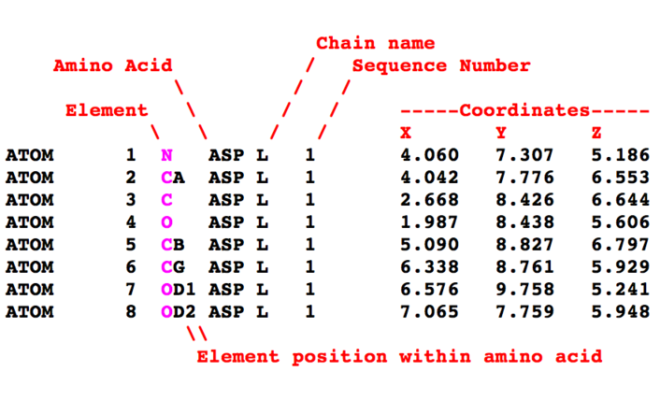
A PDB file contains information about the atoms and bonds that make up the protein or nucleic acid, as well as the coordinates of these atoms in three-dimensional space. This information is typically obtained using methods such as X-ray crystallography, NMR spectroscopy, or cryo-electron microscopy, which allow researchers to visualize the overall structure of the molecule.

The PDB file format was first introduced in 1971 by the Brookhaven National Laboratory in the United States, and since then it has become the de facto standard for storing and sharing protein and nucleic acid structural data. Today, the PDB is maintained by an international consortium of organizations, including the RCSB Protein Data Bank (USA), the PDBe (Europe), and the PDBj (Japan).

One of the key advantages of the PDB file format is its interoperability. Because it is a widely accepted standard, PDB files can be read and processed by a wide variety of software programs and tools, making it easier for researchers to share and analyze structural data. Some of the most commonly used software programs for working with PDB files include PyMOL, Chimera, and the CCP4 suite.

Another advantage of the PDB file format is that it allows researchers to explore the relationship between protein structure and function. By examining the shape and arrangement of atoms in a protein or nucleic acid, scientists can gain insights into the mechanisms underlying biological processes such as enzyme catalysis, DNA replication and transcription, and protein-protein interactions.

Despite its widespread use, the PDB file format is not without its limitations. One of the biggest challenges with PDB files is ensuring that they are accurate and free from errors or artifacts that could affect their interpretation. To address this issue, the PDB consortium has developed a set of standards and guidelines for data deposition and validation, which researchers must adhere to when submitting data to the PDB.

In conclusion, PDB files are a critical tool for structural biologists and other scientists working to understand the complex world of biological molecules. By providing a standardized format for storing and sharing structural data, PDB files help to facilitate collaboration and accelerate scientific discovery across a wide range of disciplines.


Previous Article

How to Safely Take Apart a Microwave ...

Next Article

The Best Rescue & Recovery Disks for ...

Matthew Lynch

Related articles More from author

  • Digital & Mobile Technology

    Funny Things to Ask Alexa

    August 3, 2023
    By Matthew Lynch
  • Digital & Mobile Technology

    What Is Google Lens? 6 Things You Didn’t Know You Could Do

    June 6, 2023
    By Matthew Lynch
  • Digital & Mobile Technology

    Best Foldable Bluetooth Keyboards

    April 11, 2023
    By Matthew Lynch
  • Digital & Mobile Technology

    How to Use FaceTime on the iPad

    June 3, 2023
    By Matthew Lynch
  • Digital & Mobile Technology

    What Is Realtek Card Reader Software?

    May 10, 2023
    By Matthew Lynch
  • Digital & Mobile Technology

    Reasons Why You Should Pick Android Over iPhone

    August 5, 2023
    By Matthew Lynch

Search

Login & Registration

  • Log in
  • Entries feed
  • Comments feed
  • WordPress.org

Newsletter

Signup for The Tech Edvocate Newsletter and have the latest in EdTech news and opinion delivered to your email address!

About Us

Since technology is not going anywhere and does more good than harm, adapting is the best course of action. That is where The Tech Edvocate comes in. We plan to cover the PreK-12 and Higher Education EdTech sectors and provide our readers with the latest news and opinion on the subject. From time to time, I will invite other voices to weigh in on important issues in EdTech. We hope to provide a well-rounded, multi-faceted look at the past, present, the future of EdTech in the US and internationally.

We started this journey back in June 2016, and we plan to continue it for many more years to come. I hope that you will join us in this discussion of the past, present and future of EdTech and lend your own insight to the issues that are discussed.

Newsletter

Signup for The Tech Edvocate Newsletter and have the latest in EdTech news and opinion delivered to your email address!

Contact Us

The Tech Edvocate
910 Goddin Street
Richmond, VA 23231
(601) 630-5238
[email protected]

Copyright © 2026 Matthew Lynch. All rights reserved.