The Tech Edvocate

Top Menu

  • Advertisement
  • Apps
  • Home Page
  • Home Page Five (No Sidebar)
  • Home Page Four
  • Home Page Three
  • Home Page Two
  • Home Tech2
  • Icons [No Sidebar]
  • Left Sidbear Page
  • Lynch Educational Consulting
  • My Account
  • My Speaking Page
  • Newsletter Sign Up Confirmation
  • Newsletter Unsubscription
  • Our Brands
  • Page Example
  • Privacy Policy
  • Protected Content
  • Register
  • Request a Product Review
  • Shop
  • Shortcodes Examples
  • Signup
  • Start Here
    • Governance
    • Careers
    • Contact Us
  • Terms and Conditions
  • The Edvocate
  • The Tech Edvocate Product Guide
  • Topics
  • Write For Us
  • Advertise

Main Menu

  • Start Here
    • Our Brands
    • Governance
      • Lynch Educational Consulting, LLC.
      • Dr. Lynch’s Personal Website
      • Careers
    • Write For Us
    • The Tech Edvocate Product Guide
    • Contact Us
    • Books
    • Edupedia
    • Post a Job
    • The Edvocate Podcast
    • Terms and Conditions
    • Privacy Policy
  • Topics
    • Assistive Technology
    • Child Development Tech
    • Early Childhood & K-12 EdTech
    • EdTech Futures
    • EdTech News
    • EdTech Policy & Reform
    • EdTech Startups & Businesses
    • Higher Education EdTech
    • Online Learning & eLearning
    • Parent & Family Tech
    • Personalized Learning
    • Product Reviews
  • Advertise
  • Tech Edvocate Awards
  • The Edvocate
  • Pedagogue
  • School Ratings

logo

The Tech Edvocate

  • Start Here
    • Our Brands
    • Governance
      • Lynch Educational Consulting, LLC.
      • Dr. Lynch’s Personal Website
        • My Speaking Page
      • Careers
    • Write For Us
    • The Tech Edvocate Product Guide
    • Contact Us
    • Books
    • Edupedia
    • Post a Job
    • The Edvocate Podcast
    • Terms and Conditions
    • Privacy Policy
  • Topics
    • Assistive Technology
    • Child Development Tech
    • Early Childhood & K-12 EdTech
    • EdTech Futures
    • EdTech News
    • EdTech Policy & Reform
    • EdTech Startups & Businesses
    • Higher Education EdTech
    • Online Learning & eLearning
    • Parent & Family Tech
    • Personalized Learning
    • Product Reviews
  • Advertise
  • Tech Edvocate Awards
  • The Edvocate
  • Pedagogue
  • School Ratings
  • Is AuraCam Pro’s Emotional AI a Privacy Nightmare or Security Breakthrough?

  • Unprecedented: N-able’s Global Shutdown After 30+ Zero-Days Revealed

  • The Urgent Truth: Your AI Tools for Financial Advisors Could Be a Compliance Nightmare

  • Unmasking the Troubling Truth About EU’s Digital Omnibus and Your Data

  • Outrageous: Your US Car Insurance 2026 Bill Is About to Explode – Here’s Why

  • Uncovering the Truth: Are AI Spending Concerns About to Tank Your Portfolio?

  • The Silent Revolution: How AI Property Valuation Is Quietly Reshaping Real Estate

  • The Astonishing Truth: Why Your Dream Car Is Now a $52,000 Illusion

  • Toxic Algorithms: Why Your Bank’s AI Could Cost You Everything

  • OpenAI’s GPT-6 Cyber: A Dangerous New AI Threat or Our Ultimate Digital Guardian?

Digital & Mobile Technology
Home›Digital & Mobile Technology›What is a Modem?

What is a Modem?

By Matthew Lynch
March 20, 2023
0
Spread the love

As technology continues to evolve, the need to access and transfer data has become a critical aspect of daily life. In this regard, the modem has emerged as an essential tool for interfacing with the internet or other networks. But what is a modem, and how does it work?

A modem, short for modulator-demodulator, refers to a device that facilitates communication between your computer network and the internet or other networks. The modem converts digital data from your computer to analog signals that can be transmitted over the telephone or cable lines, allowing you to access the internet.

The modem also receives incoming analog signals and converts them back to digital data that the computer can understand. These signals usually contain information regarding web pages, emails, and other data that you access over the internet.

There is a wide range of modem types available, depending on the type of network you are connecting to. Some modems work with telephone lines while others connect to cable or satellite systems.

Most commonly, internet service providers offer two types of modems: digital subscriber line (DSL) modems and cable modems. DSL modems work with telephone lines to provide access to the internet. They have a maximum speed of 35 Mbps and require an active telephone line for connectivity. Cable modems, on the other hand, use cable television lines to provide high-speed internet access. They have a maximum speed of up to 1 Gbps and do not rely on an active phone line.

Modems must be compatible with the network to which they are connecting. If you want to connect to the internet, you would require a modem that can establish a connection to the internet service provider (ISP).

In recent years, the internet landscape has changed dramatically with the proliferation of wireless technology. Today, there are various wireless modems that allow you to connect to the internet through Wi-Fi, Mobile networks such as 3G, 4G and 5G, and Satellite. These modems use radio frequencies to transmit signals from the device to the network.

In conclusion, modems are essential devices that connect your computer network to the internet or other networks. They facilitate communication by converting digital signals to analog signals and back, allowing you to access the internet. With the evolving technology landscape and the ever-increasing demand for faster internet speeds, modems will continue to play a critical role in the way we communicate and share data.

Previous Article

What is a PCI Compliance Audit?

Next Article

What is a Laboratory Information Management System ...

Matthew Lynch

Related articles More from author

  • Digital & Mobile Technology

    What Is Android?

    June 4, 2023
    By Matthew Lynch
  • Digital & Mobile Technology

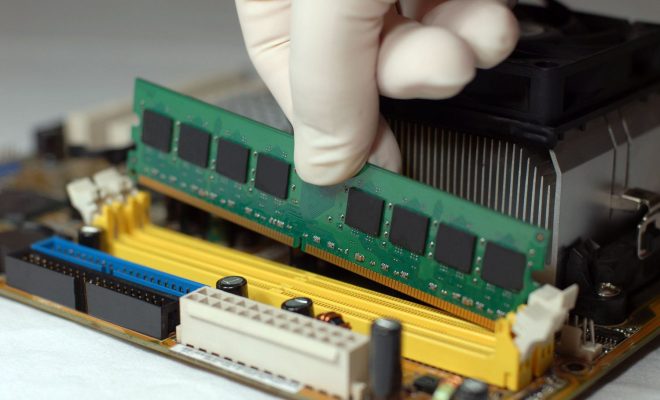
    How to Reseat a Desktop Memory Module

    June 10, 2023
    By Matthew Lynch
  • Digital & Mobile Technology

    Best Websites for Public Domain Images

    June 6, 2023
    By Matthew Lynch
  • Digital & Mobile Technology

    The Best End-to-End Encrypted Cloud Storage Providers

    June 12, 2023
    By Matthew Lynch
  • Digital & Mobile Technology

    What iPhones Are Waterproof?

    June 23, 2023
    By Matthew Lynch
  • Digital & Mobile Technology

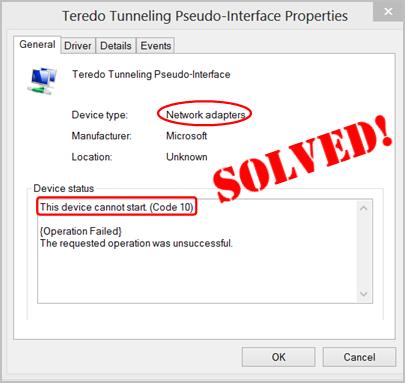
    How to Fix “This Device Cannot Start (Code 10)” Error in Windows

    July 30, 2023
    By Matthew Lynch

Search

Login & Registration

  • Log in
  • Entries feed
  • Comments feed
  • WordPress.org

Newsletter

Signup for The Tech Edvocate Newsletter and have the latest in EdTech news and opinion delivered to your email address!

About Us

Since technology is not going anywhere and does more good than harm, adapting is the best course of action. That is where The Tech Edvocate comes in. We plan to cover the PreK-12 and Higher Education EdTech sectors and provide our readers with the latest news and opinion on the subject. From time to time, I will invite other voices to weigh in on important issues in EdTech. We hope to provide a well-rounded, multi-faceted look at the past, present, the future of EdTech in the US and internationally.

We started this journey back in June 2016, and we plan to continue it for many more years to come. I hope that you will join us in this discussion of the past, present and future of EdTech and lend your own insight to the issues that are discussed.

Newsletter

Signup for The Tech Edvocate Newsletter and have the latest in EdTech news and opinion delivered to your email address!

Contact Us

The Tech Edvocate
910 Goddin Street
Richmond, VA 23231
(601) 630-5238
[email protected]

Copyright © 2026 Matthew Lynch. All rights reserved.